

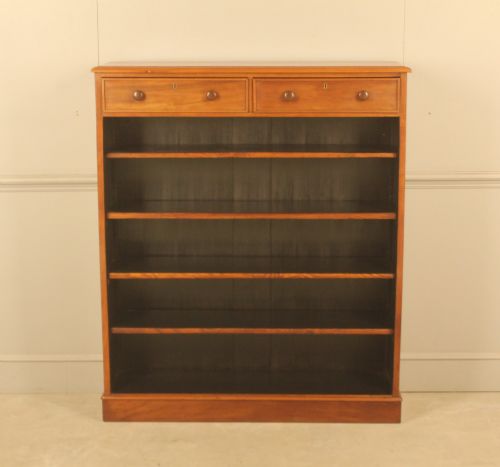


Victorian Mahogany Display Plinths
Victorian mahogany display plinths provide an elevated stage for sculpture and ornaments, bringing classical proportion and rich timber grain into a room.
Victorian Mahogany Display Plinths
When you search for victorian mahogany display plinths, you find sturdy columns, pedestals and stands designed to elevate objects of importance. These pieces span the nineteenth century into the early decades of the twentieth century, taking forms such as solid timber columns and marble topped display stands.
The versions most commonly met on this page include single pedestals and paired columns reflecting classical revival and neoclassical styles. Makers utilised rich timbers and occasionally combined them with pine, statuary marble or cast iron to create stable display surfaces.
How they were made
Makers constructed these pieces primarily from mahogany and mahogany veneer, often pairing the dense timber with pine or other hardwoods for internal structure. Selected items incorporate marquetry inlay or grain painted pine to achieve specific decorative effects.
The structural design frequently relies on classical architectural forms, resulting in solid pillars and column shapes that support heavy marble tops. Workshops shaped the timber to produce fluted or smooth vertical surfaces capable of bearing significant weight.
The object forms on this page extend beyond standard columns to include tall open bookcases and heavy portico tables functioning as display stands.
What varies in quality
The distinction between ordinary and superior pieces rests on the choice of timber and the precision of the classical detailing. Solid mahogany construction and crisp neoclassical carving separate finer examples from simpler vernacular stands.
Proportion and stability dictate the usefulness of a pedestal, with heavier builds and intact marble tops representing the higher end of the range. The integration of decorative elements like marquetry inlay further elevates the visual merit of the piece.
The Victorian Mahogany Display Plinths Glossary
- Pedestal
- A structural support or column used to elevate a statue, vase or display object above floor level. These forms anchor classical interior schemes.
- Neoclassical
- A style drawing on the architecture and ornamentation of classical antiquity. It favours symmetry, proportion and restrained decorative motifs.
- Mahogany veneer
- A thin layer of figured mahogany applied over a secondary timber base. This technique allowed workshops to display striking grain patterns economically.
- Marquetry inlay
- The art of applying decorative pieces of wood veneer to a structure to form intricate patterns. It adds distinct surface detail to select furniture forms.
Victorian Mahogany Display Plinths: Frequently Asked Questions
What were victorian mahogany display plinths used for?
These pieces served to elevate sculptures, large vases, and decorative arts within grand Victorian interiors, ensuring prominent display.
By raising objects to eye level, they allowed collectors to showcase prized possessions with proper architectural dignity.
How do I style a pedestal at home?
Place a single column in an empty corner or frame a doorway with a matched pair to create formal symmetry.
Top the surface with a heavy bronze, a ceramic urn, or leave it bare to appreciate the timber grain and classical carving.
Are marble top pedestals original?
Many nineteenth century examples paired timber columns directly with statuary marble tops to provide a cool, durable surface for heavy items.
Examining the fit and the seating of the stone reveals whether the top belongs to the original construction of the column.
How do I date a mahogany column?
Dating relies on observing the timber selection, construction methods, and stylistic cues such as classical revival or neoclassical proportions.
Pieces carrying nineteenth century markers typically show heavier timber grading and traditional joinery techniques distinct from later reproductions.