




Traditional Mahogany Pedestal Pair
These traditional mahogany pedestal pair selections bring matched timber forms and period utility to any room.
Traditional Mahogany Pedestal Pair
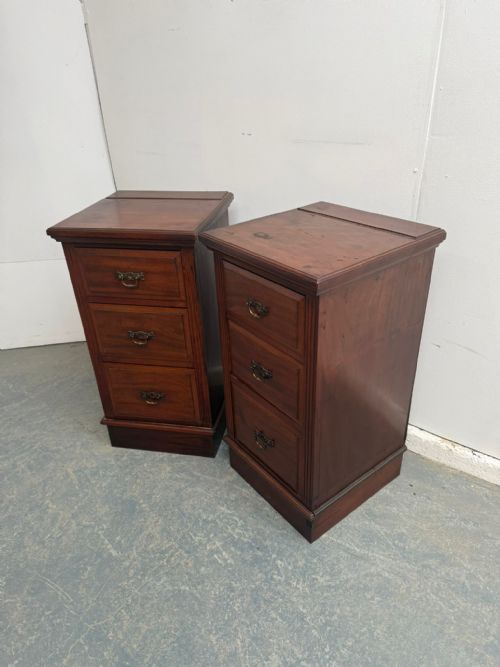
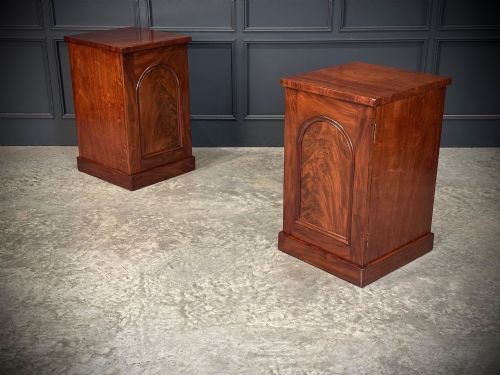
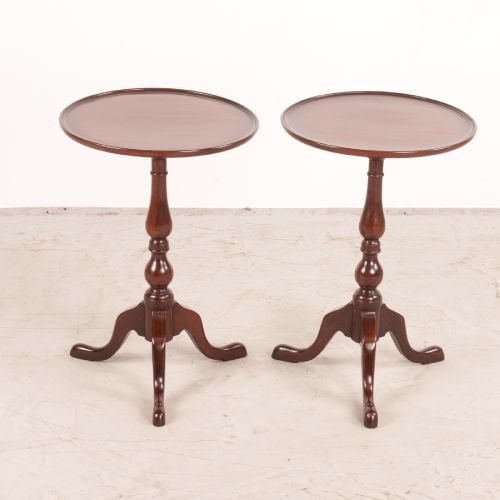
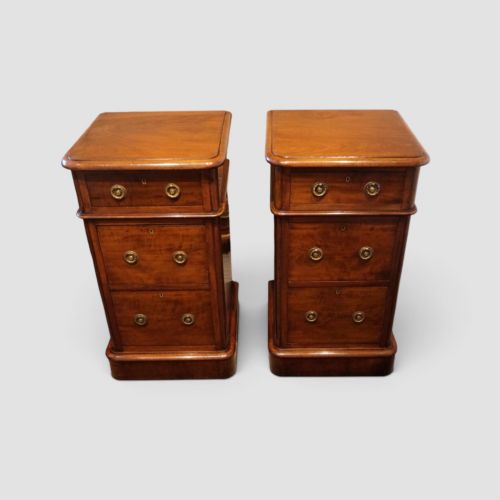
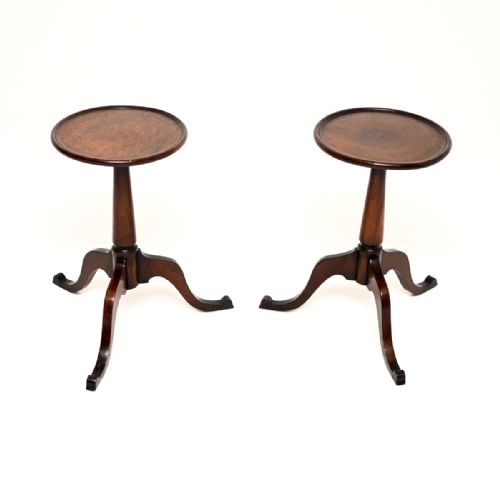
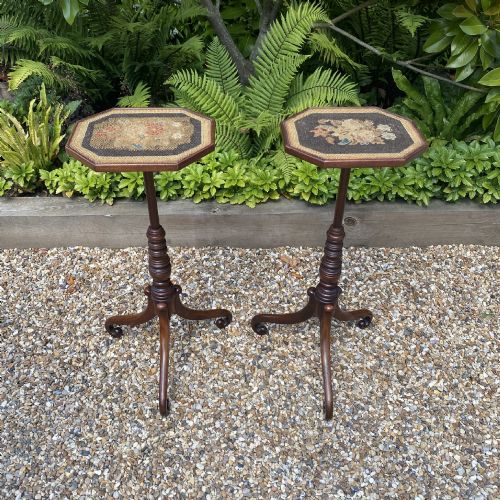
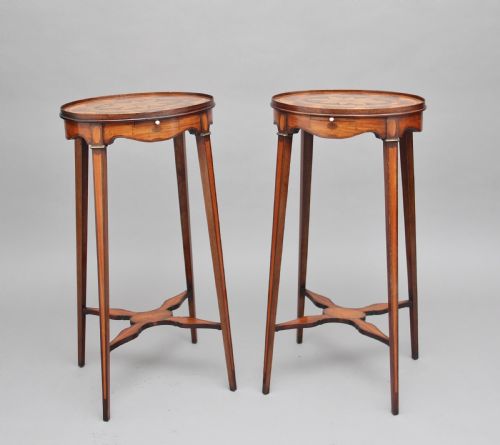
A traditional mahogany pedestal pair brings matched timber forms to the room, most frequently appearing as bedside chests, cabinets, and wine tables. These pieces span the Georgian, Victorian, and Edwardian periods, offering twin items designed to sit symmetrically.
The selection on this page relies heavily on bedside storage, small chests with drawers, and occasional tables supported on single or tripod bases. Buyers seeking these items will find examples ranging from compact lamp cabinets to taller urn stands and solid pedestals.
How they were made
Makers utilised solid mahogany and flame mahogany veneer over structural wood, often selecting cuts that displayed rich grain patterns. Cabinets and chests frequently incorporate brass hardware, leather tops, and delicate satinwood or bone inlay to define edges and panels.
Tripod tables and wine tables rely on turned pedestals and splayed legs, while larger bedside units employ panelled carcass construction with multiple drawers. Surfaces are traditionally finished with wax or polish to protect the timber while revealing its natural depth.
Listings span the Georgian, Victorian, and Edwardian eras, featuring mahogany, satinwood, leather, and brass.
What varies in quality
The hierarchy of quality in these pieces rests on the choice of timber and the precision of the cabinetmaker's joints. Flame mahogany veneers matched across twin pieces demonstrate a level of care superior to plain timber surfaces.
Proportion and stability separate standard utility pieces from finer examples, particularly in tripod tables and tall urn stands. Original brass fittings and clean inlay work further distinguish the upper tier of the range.
The Traditional Mahogany Pedestal Pair Glossary
- Flame mahogany veneer
- A thin slice of timber cut from the fork of the mahogany tree to create a distinctive, fiery grain pattern. This figure is prized for its decorative appearance on drawer fronts and cabinet doors.
- Tripod base
- A support structure featuring three splayed legs radiating from a central turned pillar. This design provides stability for small tables and stands without occupying excess floor space.
- Satinwood
- A durable, yellowish wood utilised for contrasting stringing and inlay work on Georgian and revival furniture. It provides a bright visual accent against dark mahogany surfaces.
- Carlton house desk
- A form of writing table featuring a curved superstructure of small drawers and compartments around the back and sides. This style offers compartmentalised storage above a leather-lined writing surface.
Traditional Mahogany Pedestal Pair: Frequently Asked Questions
What is a traditional mahogany pedestal pair used for?
These matched sets serve practical roles as bedside storage, lamp tables, or display stands in sitting rooms and bedrooms.
Their paired nature allows for balanced placement on either side of a bed or fireplace.
How do I date a traditional mahogany pedestal pair?
Dating relies on observing construction methods, timber thickness, and stylistic cues associated with Georgian, Victorian, or Edwardian periods.
Inlay styles and hardware fixings also provide clear indicators of the era in which the piece was constructed.
Are these pieces made of solid mahogany?
Many examples utilise solid mahogany for structural elements and turned legs, while cabinet doors and drawer fronts often feature flame mahogany veneers.
Secondary timbers were commonly employed for internal drawer linings and carcass backs.
How do I care for mahogany furniture?
Maintenance involves dusting with a soft cloth and occasionally applying traditional beeswax to nourish the timber and preserve the polish.
Placing items away from direct sunlight and heat sources protects the veneer and wood from drying out.