



Victorian Mahogany Cellarette
These victorian mahogany cellarette pieces are substantial dining room receptacles for bottles and decanters that bring period warmth and genuine utility to a modern home.
Victorian Mahogany Cellarette
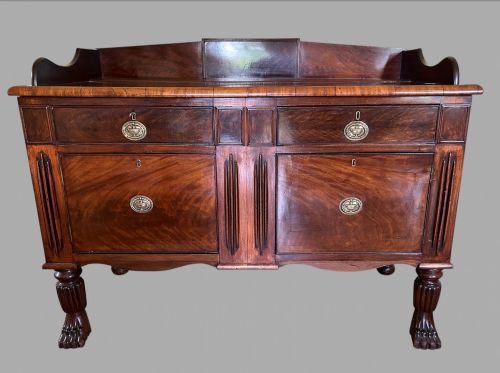
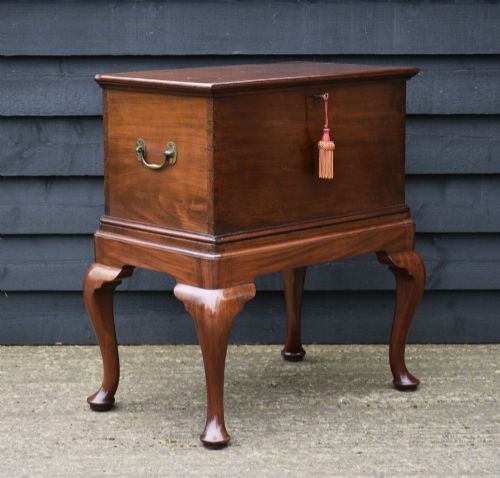
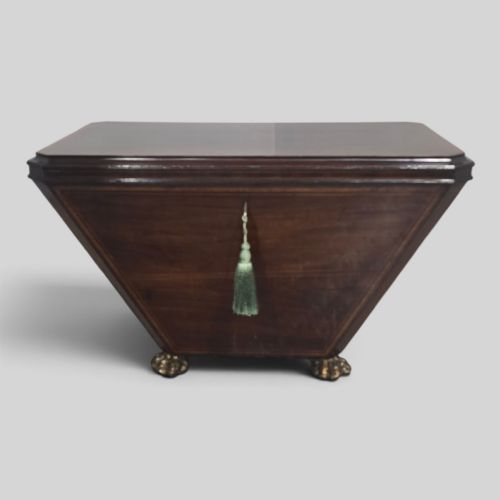
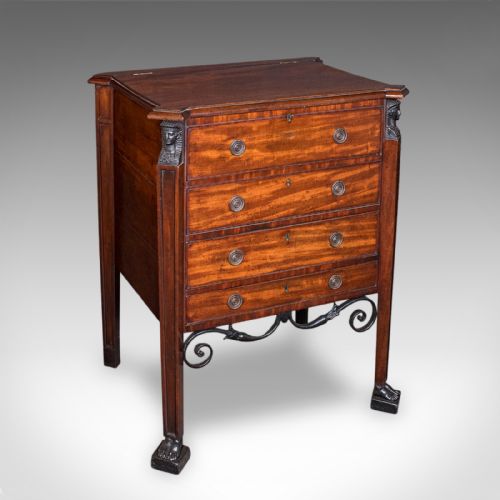
A victorian mahogany cellarette is a dedicated storage piece designed to keep wine and spirits close to the dining table during formal meals. These items range from standalone sarcophagus shaped boxes on feet to larger side cabinets and sideboards fitted with internal compartments.
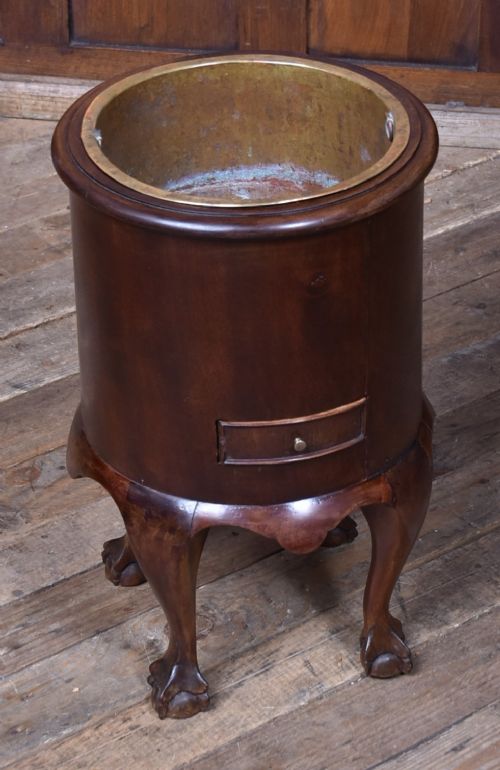
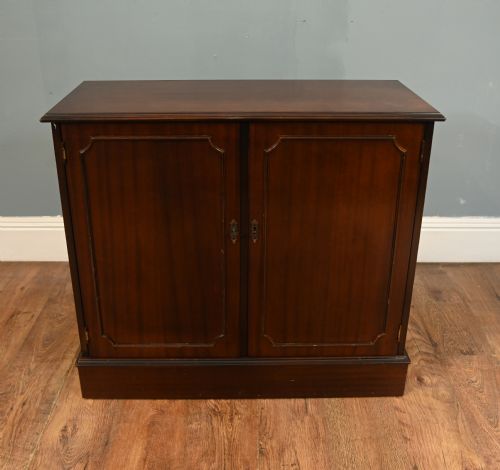
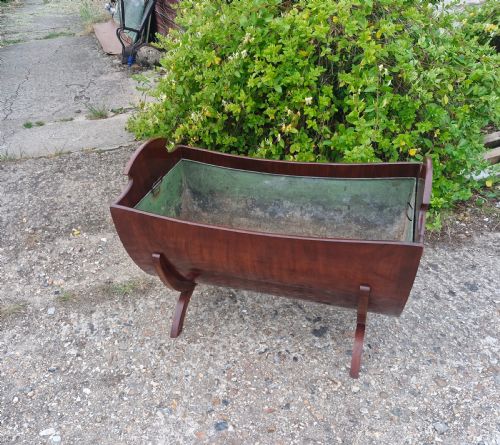
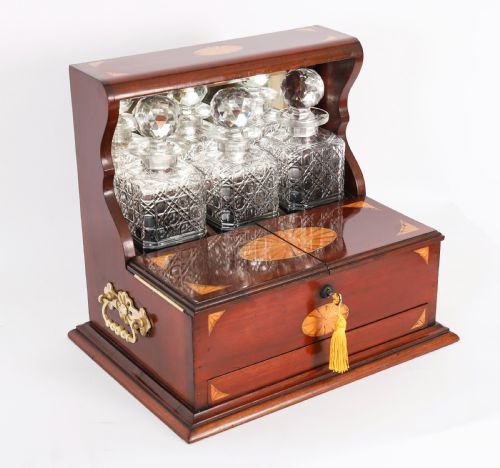
The materials seen on this page focus heavily on rich mahogany and flame mahogany, frequently accented with brass bands, satinwood inlay, or iron fittings. Alongside traditional wine coolers, the evidence shows related forms including log baskets, decanter tantaluses, and side cabinets with integrated cellarette storage.
Most examples date across the nineteenth century, drawing on Georgian styles as well as Regency, Egyptian Revival, and Sheraton Revival tastes. They bridge the gap between practical dining room furniture and sculptural cabinet making.
How they were made
Cabinet makers utilised solid mahogany and figured flame mahogany veneers over secondary timbers to construct the heavy carcases required to hold liquids safely. Brass bands, often secured with small pins, reinforce the joints and protect the edges of oval and rectangular bodies.
Surface decoration relies on contrasting timbers such as satinwood inlay rather than heavy carving, highlighting the natural grain of the mahogany. Metal liners in brass or zinc protect the wood from melting ice and moisture when bottles rested directly on ice within the cooler.
Some nineteenth century cellarettes doubled as log baskets when the claret ran dry.
What varies in quality
The grade of the timber defines much of the distinction between pieces, with heavily figured flame mahogany achieving a more striking visual depth than plain stock. Crispness in the execution of satinwood inlay and the weight of original brass mounts signal superior workshop production.
Construction methods also separate standard items from finer commissions, particularly in the joinery of the internal bottle dividers and the survival of original metal liners. Maker attribution to known firms adds considerable distinction to surviving examples.
Edwards and Roberts·Freemans of Norwich·Maples and Co·Robert Strahan and Co·Samual Norman
The Victorian Mahogany Cellarette Glossary
- Cellarette
- A lockable container or cabinet designed specifically to hold wine bottles and decanters near the dining table. They evolved from simpler bucket forms into elaborate architectural pieces during the nineteenth century.
- Sarcophagus form
- A tapering rectangular shape with a peaked lid, resembling an ancient stone coffin, which became a highly fashionable silhouette for wine coolers during the Regency and Victorian eras.
- Flame mahogany
- A veneer cut from the branch junction of the mahogany tree, producing a distinctive rippled flame pattern. Cabinet makers reserved this timber for the primary display surfaces of high quality furniture.
- Tantalus
- A locking beverage stand that holds decanters securely in a metal frame to prevent unauthorized access while still displaying the contents. They often incorporate games compartments or storage for glassware.
- Demi lune
- A half moon shape used for tables and cabinets designed to stand flat against a dining room wall. This form allows for compact placement while providing useful surface area.
Victorian Mahogany Cellarette: Frequently Asked Questions
How were cellarettes used?
Cellarettes sat beneath sideboard tables or beside the dining table during meals, holding bottles of wine and spirits ready for service. Servants would retrieve bottles from the lined interior, which often contained ice or cold water to chill the drink.
In many households, the cellarette was kept locked to control access to expensive imported wines. This dual role of storage and security made them essential furniture in large nineteenth century dining rooms.
How do I fit one into a modern room?
A standalone cellarette works well as a small side table or a distinctive storage chest in a living room or hallway. Their rich timber tones pair easily with other brown wood furniture or contemporary minimalist interiors.
Larger sideboard formats with integrated cellarette storage can serve as buffets or cocktail stations in a dining space. The flat tops provide a convenient surface for serving trays or lamps while the interior houses bottles.
What is the difference between a cellarette and a wine cooler?
The terms overlap significantly in nineteenth century furniture, but a wine cooler historically often featured a metal or lead lining designed to hold melting ice directly against the bottles. Cellarettes leaned towards being enclosed lockable boxes or cabinets for general bottle storage.
Over time, makers used both descriptions interchangeably for dining room receptacles intended to manage wine service. On this page, both forms share similar proportions and mahogany construction.
How do I identify a Regency style piece?
Regency style pieces draw heavily on classical architectural motifs, including lion paw feet, bold brass ring handles, and heavy bracket bases. The silhouette often mimics ancient Roman or Greek forms like the sarcophagus.
Makers working later in the nineteenth century frequently revived these classical designs, combining them with rich flame mahogany veneers. Look for restrained ornamentation that relies on proportion rather than fussy carving.