
Victorian Lounge Sofa
A victorian lounge sofa brings nineteenth-century drawing-room comfort home, offering deep lounging forms built to anchor a period interior.
Victorian Lounge Sofa
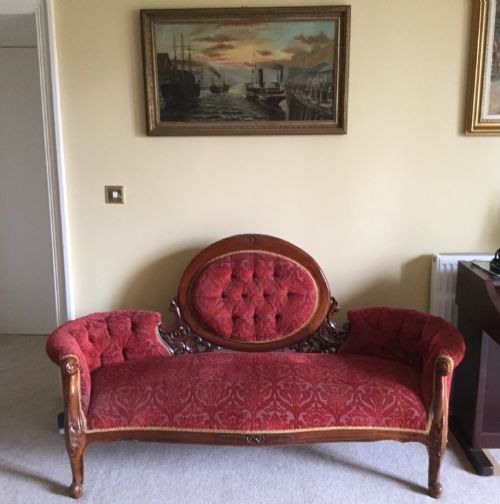
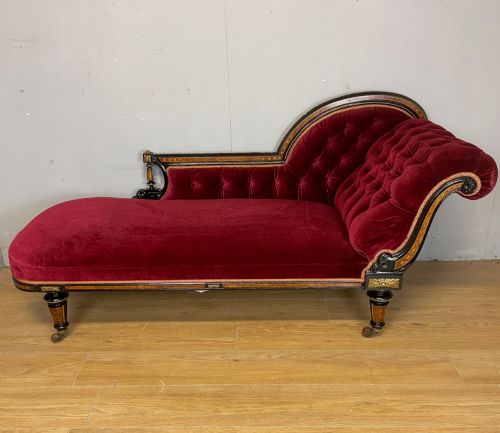
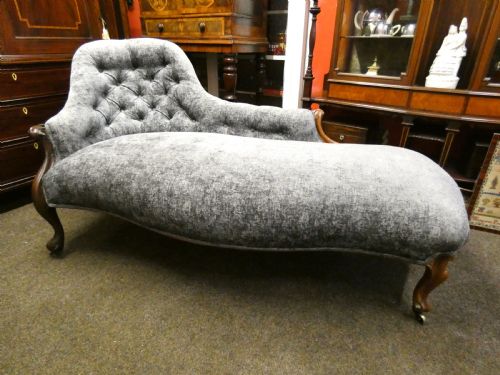
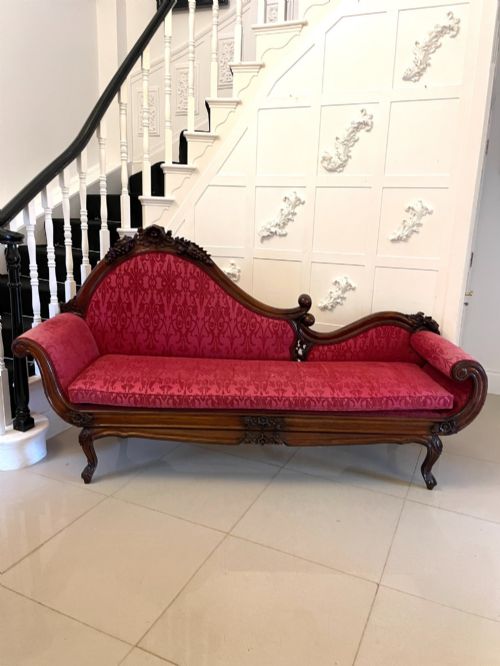
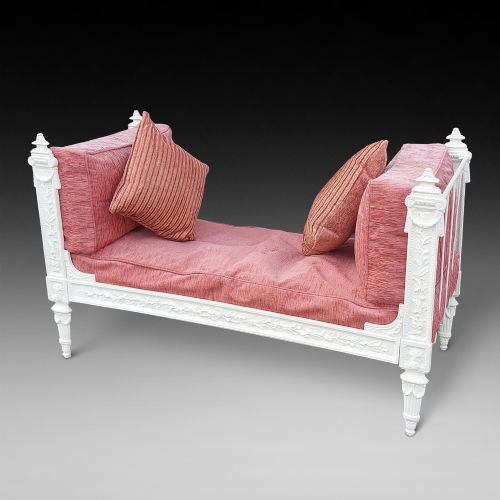
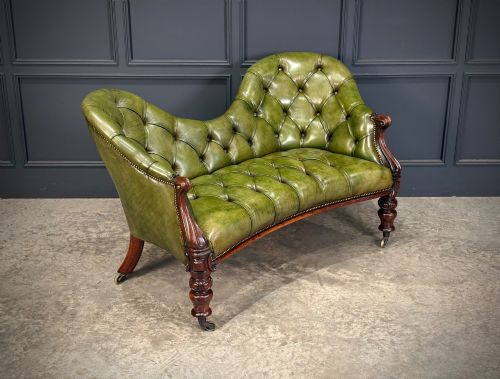
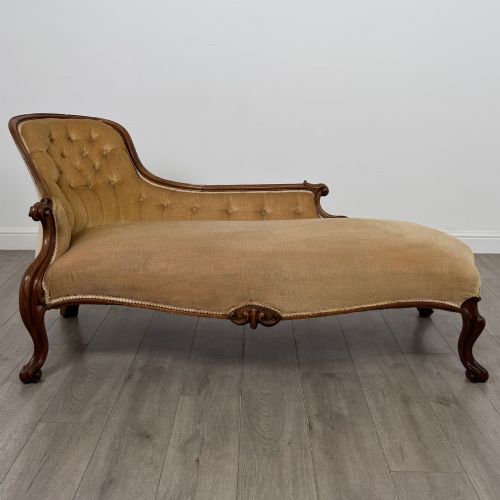
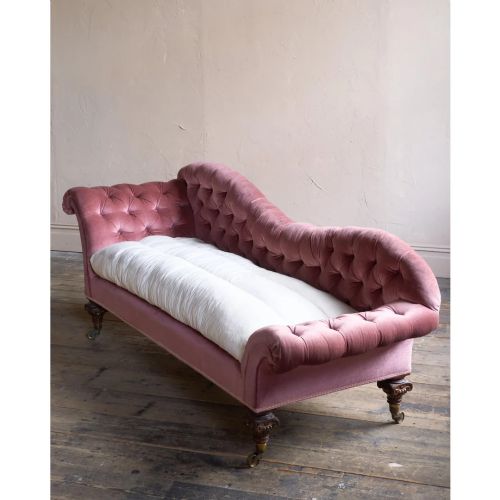
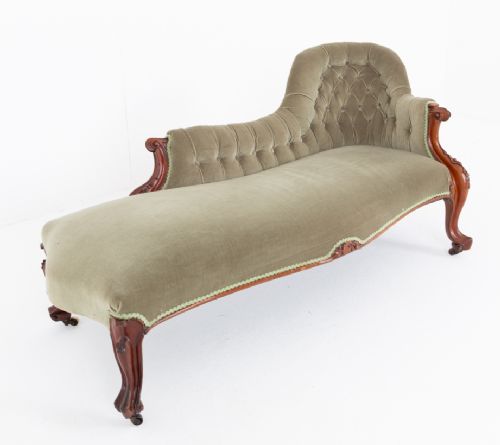
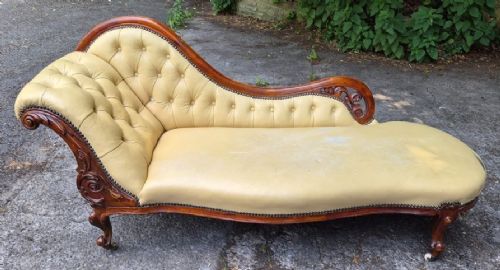
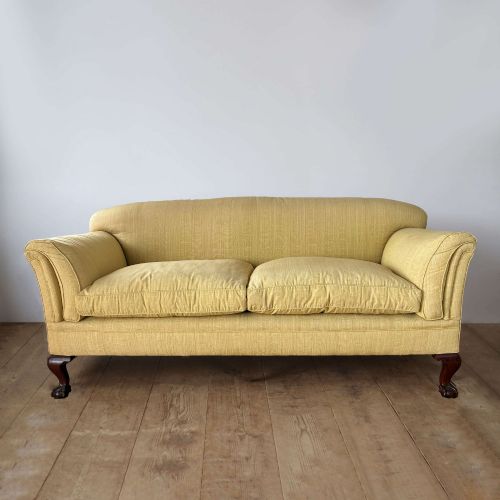
A victorian lounge sofa encompasses asymmetric daybeds, double-ended settees and button-backed couches designed for reclining in nineteenth-century reception rooms. The pieces appearing most frequently across these records are nineteenth-century chaise longues and upholstered sofas framed in mahogany, rosewood or walnut.
Makers and workshops of the period produced various formats ranging from low occasional daybeds to grand multi-piece lounge suites. Buyers encounter forms drawing upon William IV, French Rococo Revival and English Country traditions alongside standard Victorian manufacture.
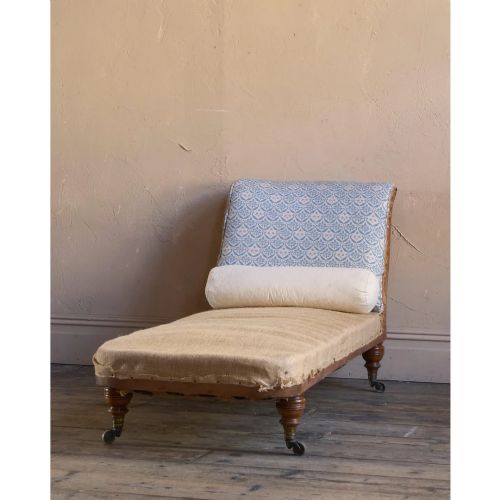
The selection ranges from ebonised frames with ormolu mounts to simpler turned wooden legs fitted with original castors. These seating options reflect the Victorian domestic shift towards dedicated relaxation spaces within the home.
How They Were Made
Frames rely on dense timbers such as mahogany, rosewood and walnut, carved by hand or turned into structural elements like ionic column legs. Cabinetmakers joined these dense hardwoods to support deep sprung settle bases and substantial daybed frames.
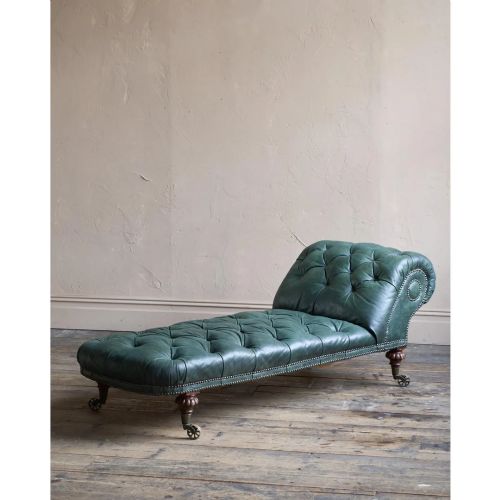
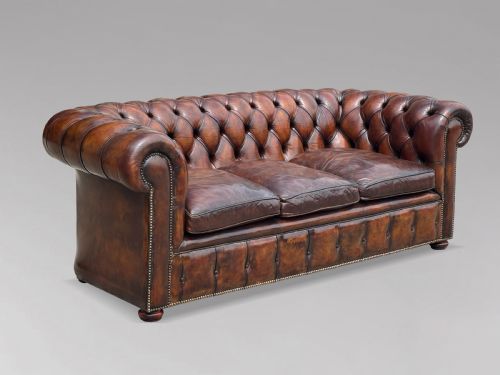
Upholstery methods utilised traditional stuffing secured over sprung bases, finished with deep buttoning or tight fabric covers. Materials span leather, velvet, brocade, damask and plain textiles held in place by close-nailing or decorative gimp.
The listings show nineteenth-century frames constructed primarily from mahogany, walnut and rosewood, paired with leather, velvet and damask upholstery.
What Varies in Quality
The distinction between ordinary and exceptional pieces lies in the crispness of the timber carving and the architectural ambition of the frame. Superior examples demonstrate fluid scroll arms, harmonious proportions and refined inlay work rather than purely utilitarian joinery.
Makers known for exceptional seating standards, such as certain established London workshops, integrated robust internal springing with balanced joinery. Quality reveals itself in the organic integration of show-wood frames with supportive internal upholstery foundations.
Howard and Sons·Holland and Sons·H. Goodall and Sons
The Victorian Lounge Sofa Glossary
- Chaise Longue
- A long upholstered chair or daybed designed for reclining, typically featuring a single raised headrest or scroll end.
- Chesterfield
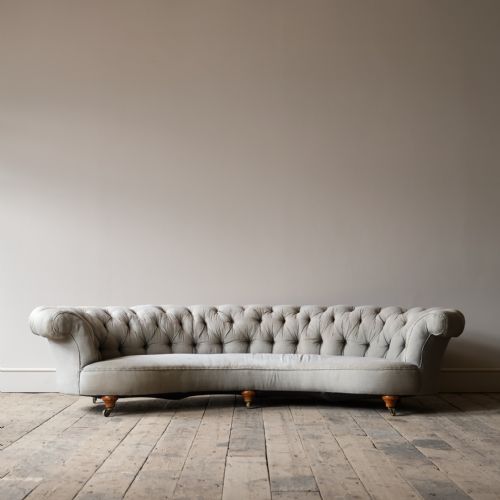
- A deep-buttoned upholstered sofa featuring arms and back of the same height, historically constructed with sprung bases.
- Ormolu
- Gilded bronze ornamentation applied to furniture frames during the nineteenth century to add decorative metallic contrast.
- Spoon-Back
- An upholstered chair or sofa back curved in the concave shape of a spoon to fit the human spine.
- Button-Back
- Upholstery pulled tight with buttons arranged in a geometric diamond pattern to create deep tufting and structural tension.
Victorian Lounge Sofa: Frequently Asked Questions
Where were these sofas used?
Nineteenth-century households placed these seating forms in drawing rooms, private boudoirs and morning rooms where family members rested during the day.
They served as comfortable spots for reading or receiving visitors without retiring fully to a bedroom.
How do I care for leather upholstery?
Victorian leather benefits from gentle cleaning with specialised saddle soaps and natural conditioning balms to maintain flexibility.
Keep these surfaces away from direct sunlight and heat sources to prevent the material from drying out over time.
Are these daybeds comfortable to sleep on?
Most historic daybeds and chaise longues feature firm sprung bases designed for semi-reclining posture rather than overnight sleeping.
Their short lengths and ergonomic scroll ends suit daytime lounging rather than flat recumbency.
How do I identify a Howard and Sons piece?
Makers such as Howard and Sons often stamped their structural wooden frames and castors with distinctive workshop signatures.
Their work typically exhibits superior joinery, specific upholstery webbing and refined proportions characteristic of high-end nineteenth-century production.