

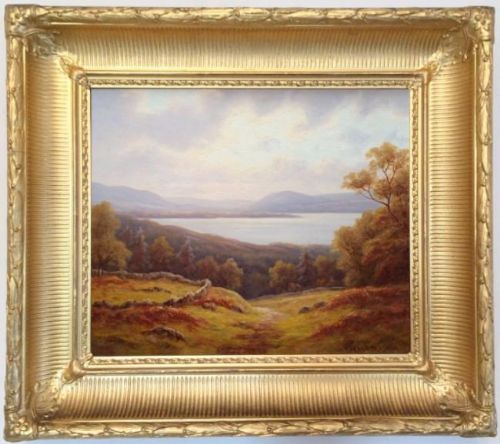


Victorian Loch Painting
A Victorian loch painting captures the wild serenity of Scottish waters, prized by collectors for bringing atmospheric nineteenth-century Highland scenery directly into the home.
Victorian Loch Painting
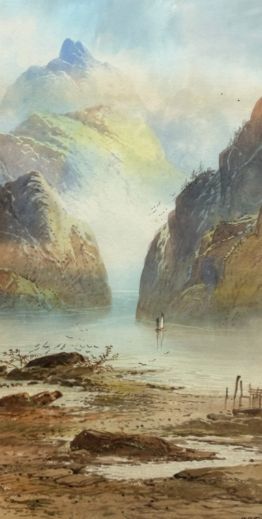
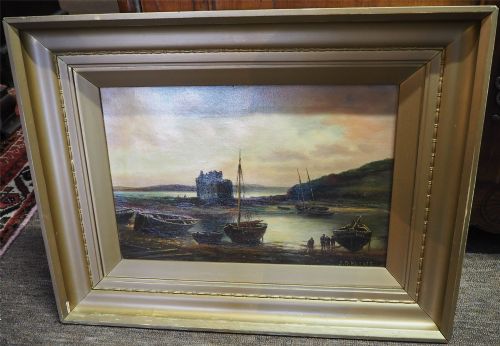
A Victorian loch painting transports the viewer to nineteenth-century Scottish landscapes featuring still waters, mountainous backdrops, and often Highland cattle or ruined castles. These works typically emerge from the Victorian, Edwardian, and nineteenth-century periods, capturing the romanticism of remote northern terrain.
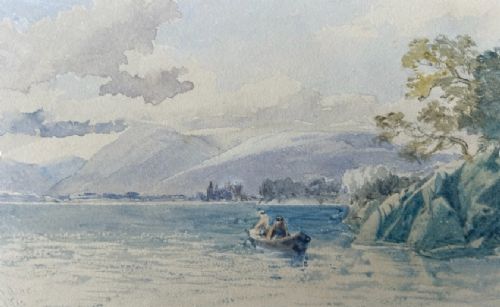
The most common formats on this page are framed oil paintings on canvas and detailed works on paper or canvas boards. Watercolours also appear frequently, often signed by listed artists who documented the lochs of Argyll and Perthshire.
Subjects range from tranquil morning mists over water to dramatic sunsets behind peaks like Ben Lawers. Buyers encounter specific bodies of water such as Loch Lomond, Loch Tay, and Loch Awe, rendered in styles spanning British realism and the Victorian Scottish School.
Materials and technique
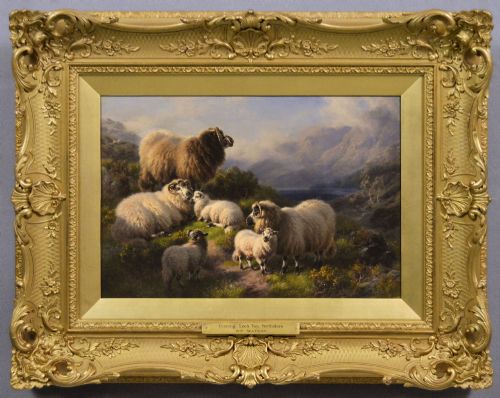
Artists utilised oil paint on stretched canvas or applied delicate watercolours to paper, capturing the shifting light of northern skies and the glassy surface of water. Canvases frequently sit within period gesso and gilt wood frames that enhance the depth of the composition.
Pigments were worked with confidence using brushes and palette knives to build texture in the mountainous crags and heather-clad shores. Gold leaf often accents the ornate frames accompanying these nineteenth-century works.
Victorian Loch Painting Retail Price Guide 2026
Typical asking prices for victorian loch painting among the pieces listed under this phrase on Sellingantiques today, from the lower quarter to the upper quarter. They describe what is for sale here now, not the wider market.
Common subjects include mountainous lake views, Highland cattle, and ruined castles by bodies of water like Loch Lomond and Loch Tay.
What separates the finer examples
The strength of a Victorian loch painting rests upon the artist's command of atmospheric light and topographical accuracy. Finer works display subtle gradations in the mist over the water and convincing animal anatomy, whereas weaker examples rely on formulaic brushwork and repetitive compositional tropes.
Condition and originality also dictate standing. Canvases retaining their original gilt wood frames and clear signatures command greater interest, while works showing heavy relining or extensive overpaint sit lower in the scale.
Thomas Miles Richardson Jnr·William Henry Earp·William Watson Jnr·Everett Watson Mellor·Henry Robinson Hall·Henry Hillier Parker·Frank Hider·Daniel Sherrin·Alfred de Breanski Snr·George Cole·James Kinnear·Gustave De Breanski·E. M. Seaton·F. E. Jamieson·F W Bartholomew
The Victorian Loch Painting Glossary
- Gesso
- A plaster-like material applied to wooden frames before gilding. It provides a smooth base for intricate moulded decoration.
- Gilt wood
- Wood coated with a thin layer of gold leaf or metallic paint. This finish was standard for framing nineteenth-century fine art.
- Realism
- An artistic movement focusing on everyday scenes and natural appearances without idealisation. In these pieces, it translates to faithful depictions of Highland topography.
- Watercolour
- A paint consisting of pigment suspended in a water-based solution, typically applied to paper. It allows for translucent washes of colour ideal for misty loch scenes.
- Monogram
- A motif made by overlapping or combining letters to form a logo or identifier. Artists frequently used these initials to sign their works discretely.
Victorian Loch Painting: Frequently Asked Questions
Are these paintings original Victorian works?
The selection includes original oils and watercolours created during the nineteenth and early twentieth centuries. Artists utilised traditional canvas and paper supports characteristic of the period.
Signatures, artist monographs, and framing styles help establish the historical context of each piece.
Which Scottish lochs appear most often?
Loch Lomond, Loch Tay, Loch Awe, and Loch Etive feature prominently across the collection. Artists frequently travelled north to paint these specific bodies of water.
Compositions often incorporate surrounding landmarks such as ruined castles, bothies, and grazing Highland cattle.
How should I frame and hang an oil painting?
Many works arrive in their original gesso and gilt wood frames, which complement the traditional aesthetic. Hanging them away from direct sunlight preserves the oil pigments and paper.
Stable indoor humidity prevents the canvas from slackening and protects the wooden stretcher bars.
What is the difference between oil and watercolour versions?
Oil paintings on canvas offer heavier texture and deeper colour saturation, often finished within ornate gilt frames. Watercolours on paper provide a lighter, more translucent quality well suited to misty morning scenes.
Both mediums were widely practised by nineteenth-century landscape artists documenting the Scottish Highlands.