



Victorian Liquor Cabinet
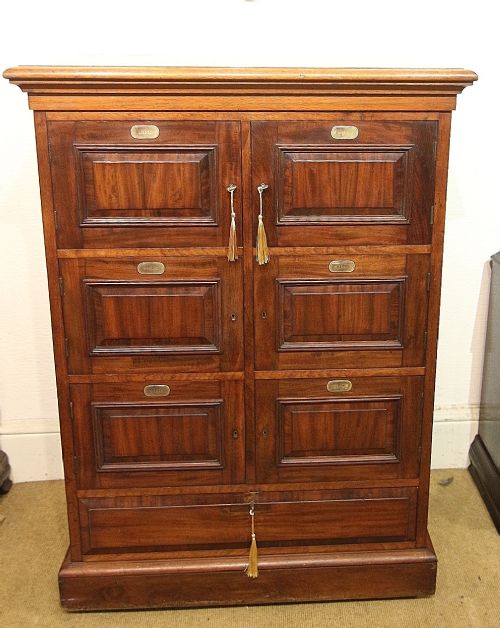
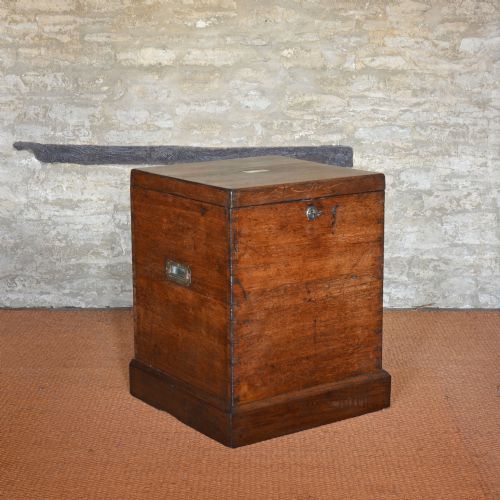
These Victorian liquor cabinets are fitted timber boxes and large cabinets designed to lock away fine spirits and decanters with architectural authority.
Victorian Liquor Cabinet
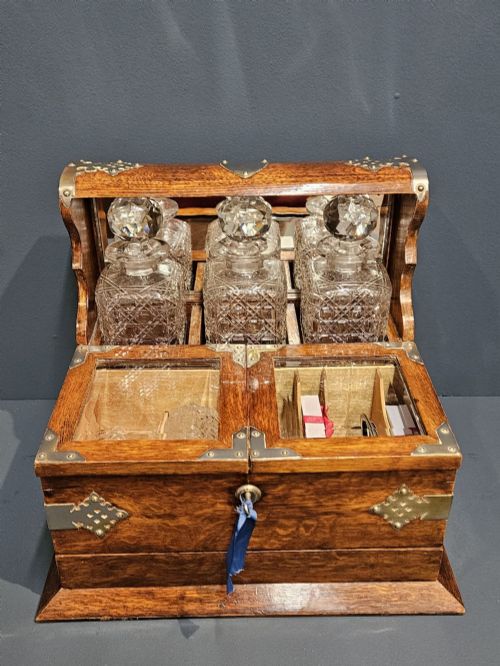
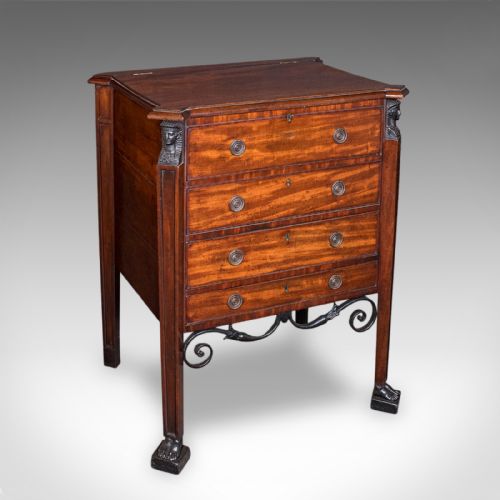
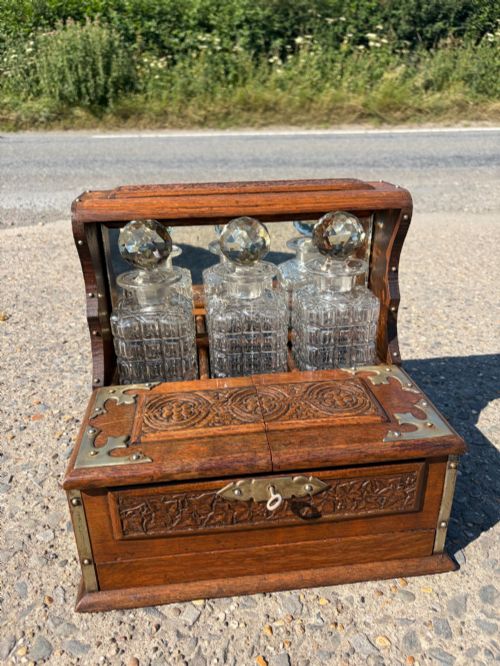
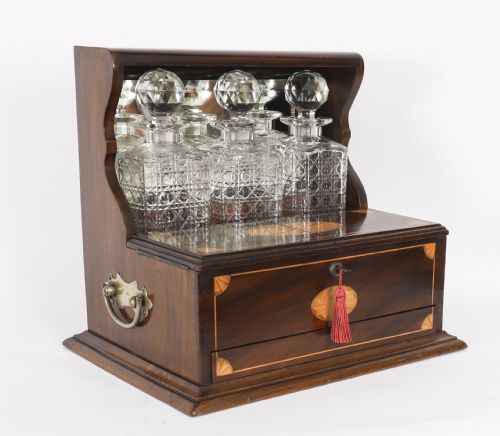
A victorian liquor cabinet brings together several forms spanning tantalus sets, cellarettes, decanter boxes, and drinks cabinets. The evidence shows these pieces surface primarily in solid oak, mahogany, and exotic timbers such as coromandel and rosewood.
Most examples found here date across the nineteenth century into the Edwardian period, often featuring fitted interiors with cut crystal decanters and games compendiums. Makers utilised various revivals, encompassing Egyptian taste, Regency lines, and Gothic elements alongside plain Victorian utility.
How they were made
Cabinetmakers constructed these pieces using dense hardwoods like oak, mahogany, walnut, and coromandel, occasionally employing marquetry stringing for surface decoration. Brass mounts, corner braces, and locking mechanisms provide structural reinforcement while securing the contents.
Interiors rely on fitted wooden partitions designed to cradle cut crystal and cut glass decanters securely during transit or storage. Mirror glass panels frequently line the back of drinks cabinets and bar compartments to reflect light through the glassware.
Victorian Liquor Cabinet Retail Price Guide 2026
Typical asking prices for victorian liquor cabinet among the pieces listed under this phrase on Sellingantiques today, from the lower quarter to the upper quarter. They describe what is for sale here now, not the wider market.
Listings span the Victorian and Edwardian eras, utilising oak, mahogany, walnut, coromandel, and rosewood alongside brass and cut crystal.
What varies in quality
Quality rests upon the selection of timber, ranging from standard oak to highly figured pollard oak, coromandel, and rosewood veneers. The sophistication of the locking mechanism and the weight of the brass mountings further separate standard boxes from exceptional examples.
The inclusion of original cut crystal decanters and integrated games compendiums elevates the standing of a piece. Finer cabinets display meticulous marquetry stringing and well-executed revival styles like the Egyptian taste.
The Victorian Liquor Cabinet Glossary
- Tantalus
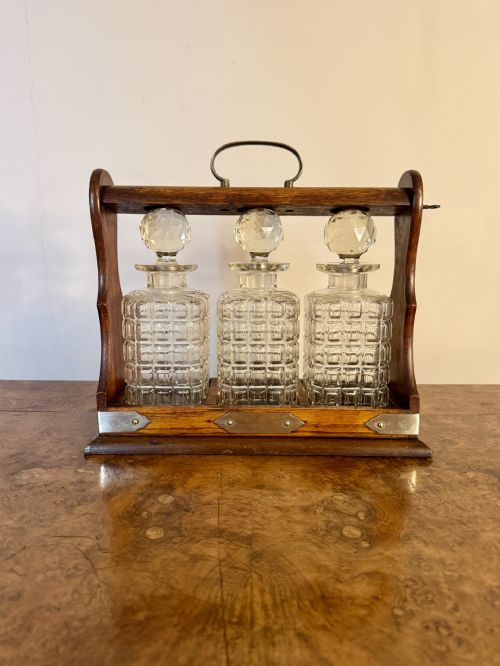
- A locking drinks stand that holds decanters upright in a metal frame, preventing access without a key while displaying the spirits inside.
- Cellarette
- A freestanding box or chest designed to hold bottles of wine and spirits, often lined with lead or fitted with internal dividers.
- Decanter Box
- A portable wooden case lined with velvet or silk, constructed to safely transport multiple glass decanters and sometimes drinking glasses.
- Marquetry
- Inlaid wood veneers arranged in decorative patterns or pictures on the exterior surfaces of furniture.
- Coromandel
- A dense, heavily figured southeast Asian timber with dark brown and black grain patterns used in high-end nineteenth-century cabinetmaking.
Victorian Liquor Cabinet: Frequently Asked Questions
What is a tantalus?
A tantalus is a locking beverage stand that holds decanters in place with a metal security bar. The name derives from Greek mythology, as the bottles remain visible yet out of reach until unlocked.
Most examples secure three cut crystal decanters within an oak or mahogany frame. They sat on sideboards or in studies during the nineteenth century.
How were drinks cabinets used?
These cabinets stored spirits, wines, and glassware securely away from household staff and children. Wealthy households kept them in dining rooms, libraries, and smoking rooms.
Many incorporate games compendiums, humidors for cigars, or metamorphic writing surfaces. They served as complete social stations for evening hospitality.
How do I date a piece?
Dating relies on timber choices, construction techniques, and stylistic revivals recorded across the nineteenth century. Pieces from the middle of the period often utilise coromandel and heavy brass mounts.
Later Victorian and Edwardian examples frequently feature simpler oak frames and machine-cut crystal. Comparing the lock hardware and secondary woods helps narrow the manufacturing decade.
Are the decanters usually original?
Many surviving cabinets retain their original matched sets of cut crystal or cut glass decanters, shaped specifically to fit the internal wooden partitions. Replacements do occur due to breakage over decades of use.
Inspect the fit within the base and the consistency of the cut glass patterns. Original vessels sit snugly in their dedicated compartments without excess movement.