



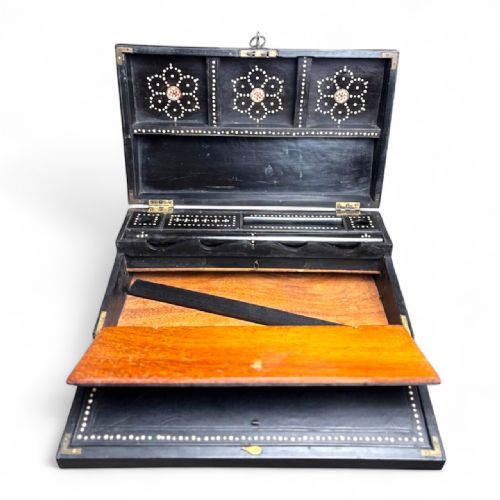


Victorian Leather Desk Box
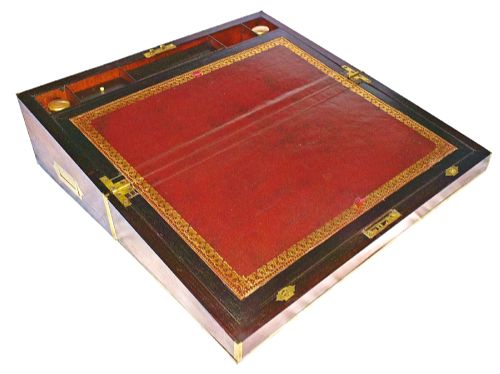
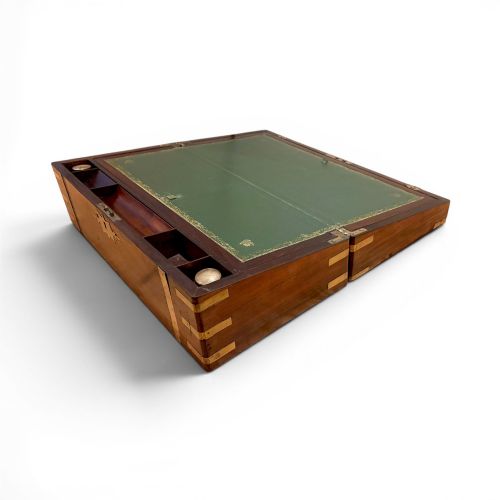
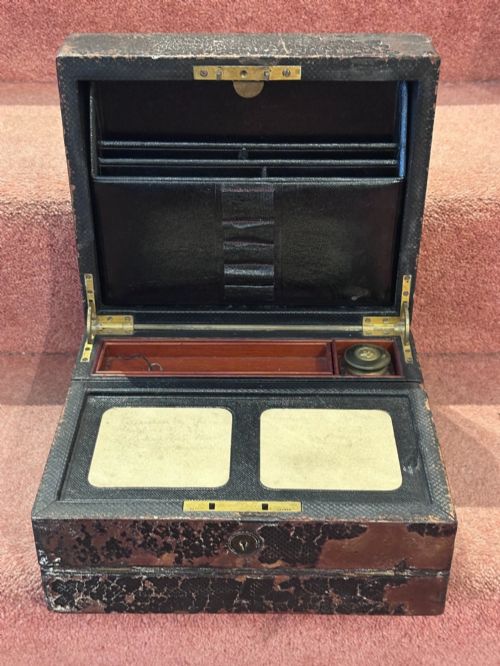
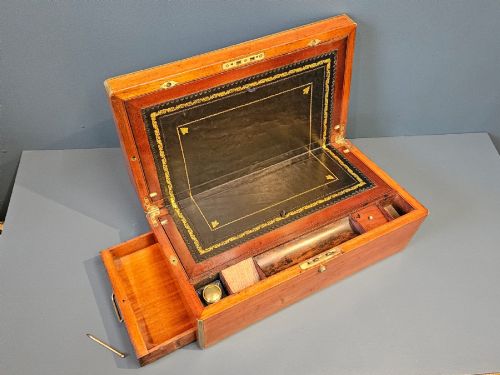
A victorian leather desk box is a portable writing container designed for travel and correspondence, offering fitted compartments for ink, pens and paper.
Victorian Leather Desk Box
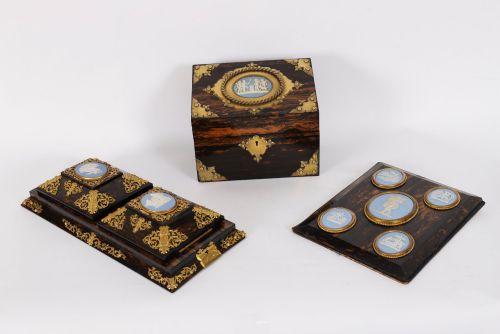
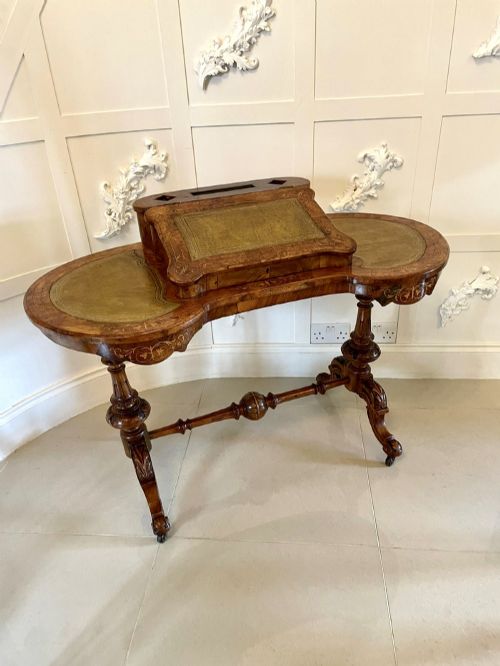
A victorian leather desk box encompasses portable writing slopes, stationary boxes and correspondence cases produced during the nineteenth century. These pieces emerge from periods spanning the Regency era through to the late Victorian years, encompassing styles such as campaign, Anglo-Indian and Arts and Crafts.
Originating from British workshops and international influences, these objects served the practical writing needs of travellers and homeowners alike. Materials range from oak and mahogany to burr walnut and coromandel, reflecting the diverse utility of nineteenth-century desk accessories.
Materials and Construction
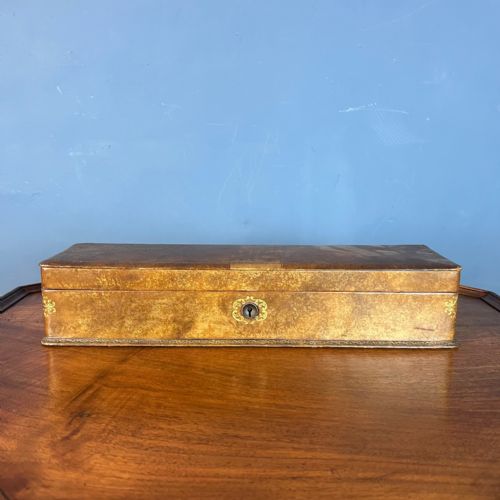
Construction relies heavily on sturdy timbers such as mahogany, oak and walnut, often finished with tooled leather coverings and brass bindings for durability during travel. Wood veneers like burr walnut and coromandel provide decorative external surfaces while maintaining structural integrity.
Interior fittings frequently involve secondary woods, glass inkwells, and metal hardware including working locks and keys. Details such as gold leaf tooling, ivory inlay and ormolu mounts demonstrate the intricate craftsmanship applied to these desk accessories.
Victorian Leather Desk Box Retail Price Guide 2026
Typical asking prices for victorian leather desk box among the pieces listed under this phrase on Sellingantiques today, from the lower quarter to the upper quarter. They describe what is for sale here now, not the wider market.
Several boxes conceal hidden compartments behind dummy drawers, offering secret spaces originally meant for private letters.
Quality and Craftsmanship
Superior examples distinguish themselves through the selection of choice timber veneers, precise brass inlay and robust internal mechanisms such as secret drawers and functioning locks. Master makers demonstrated refined skill in the alignment of hinges, the quality of leather tooling and the preservation of original fitted interiors.
Lesser items display simpler construction, missing interior components, or replacement hardware that disrupts the period integrity. The depth of embossing on leather surfaces and the inclusion of signed maker details elevate certain pieces well above standard utility boxes.
Edwards & Jones·W & J Milne·P&F Shafer·John Newman
The Victorian Leather Desk Box Glossary
- Writing slope
- A portable box with a hinged, slanted lid that opens to reveal a writing surface and internal storage compartments for paper and ink. These pieces were essential for correspondence before the widespread use of fitted fixed desks.
- Campaign box
- A sturdy chest or writing box reinforced with brass corners and straps, designed for military officers on the move. Such boxes prioritize structural resilience and secure locking mechanisms.
- Stationery box
- An upright desk cabinet or box created to hold folded writing paper, envelopes and cards in dedicated vertical slots. They frequently feature fall-front doors or sloping lids.
- Tooled leather
- Leather decorated by impressing heated metal tools into the surface to create patterns, often enhanced with gold leaf. This technique provides a durable and decorative writing surface inside the box.
- Secret drawer
- A concealed compartment hidden behind removable panels or triggered by a hidden spring catch within the box. These spaces were utilised for storing valuables and private documents.
Victorian Leather Desk Box: Frequently Asked Questions
What is a victorian leather desk box used for?
These boxes provided a portable workspace for writing letters, storing stationery and keeping personal documents organised during the nineteenth century. They housed inkwells, pens and paper securely for travel.
Today, they serve as decorative desktop organizers or functional repositories for modern correspondence and small keepsakes in the home.
How do I care for antique leather?
Leather surfaces require gentle dusting and occasional treatment with appropriate conservation waxes to prevent drying and cracking. Avoid exposure to direct sunlight and excessive moisture to preserve the material.
Proper environmental conditions in the room help maintain both the wood structure and the integrity of the original tooled leather panels.
How do I identify the age of a box?
Dating relies on examining the construction methods, wood types, hardware styles and any maker marks present on the piece. Regency and early Victorian pieces often feature heavier brass corner mounts and distinct internal layouts compared to later items.
Comparing the locks, hinges and secondary woods provides further clues to narrow down the decade of manufacture within the nineteenth century.
Can I use the inkwells?
Original glass and ceramic inkwells can be used for display or light writing, though collectors often inspect them for hairline cracks before adding liquid. Many period boxes retain their matching stoppers and collars.
Care should be taken when filling antique inkwells to avoid staining the surrounding wood or historic leather interiors.