



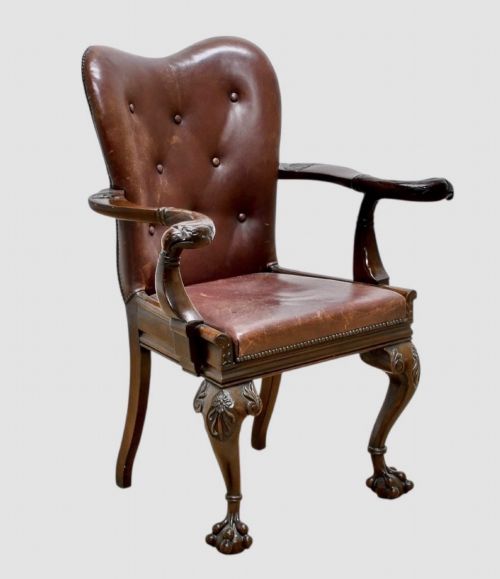
Victorian Leather Captain Chair
A victorian leather captain chair is a sturdy, revolving desk seat built for long hours at the ledger, combining deep upholstery with robust timber frames.
Victorian Leather Captain Chair
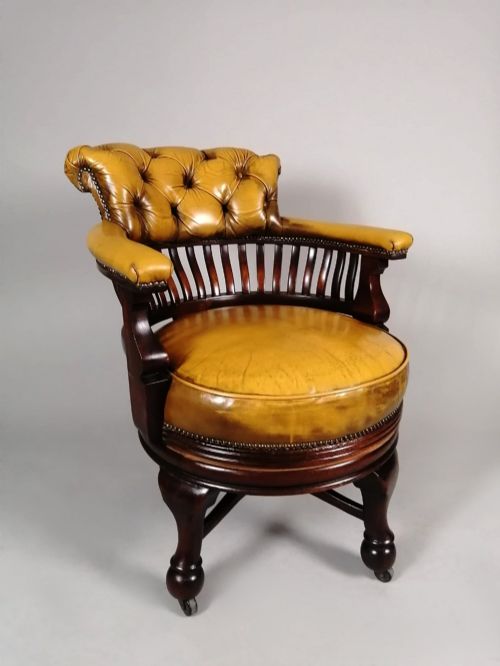
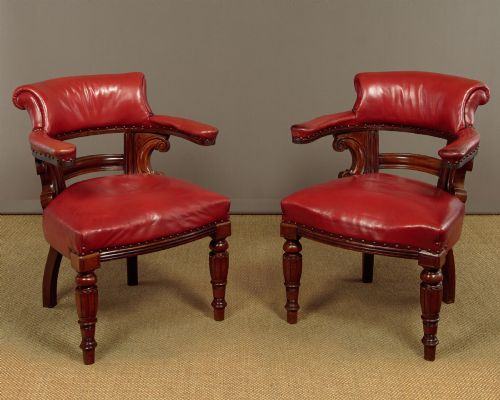
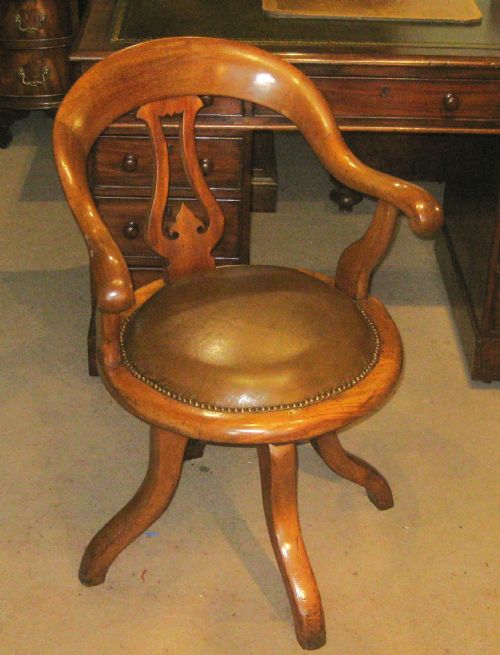
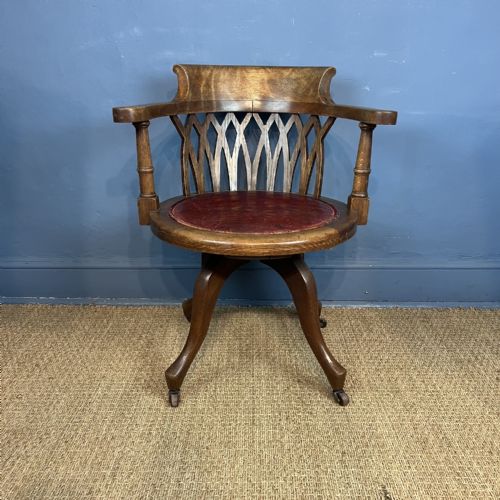
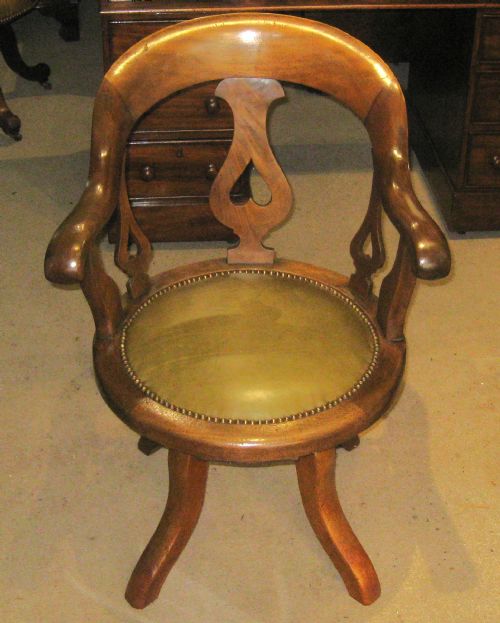
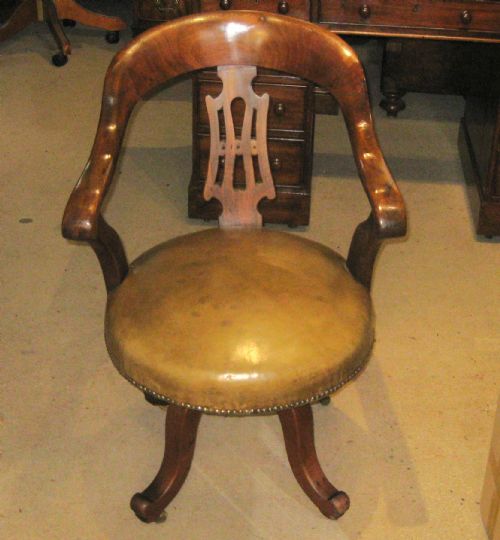
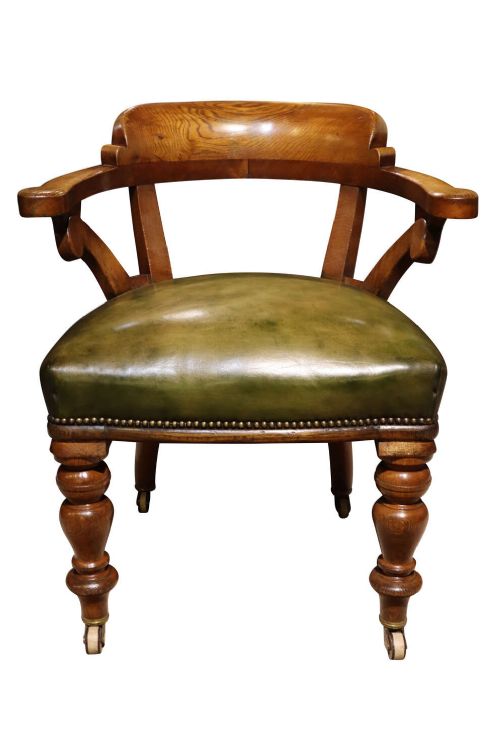
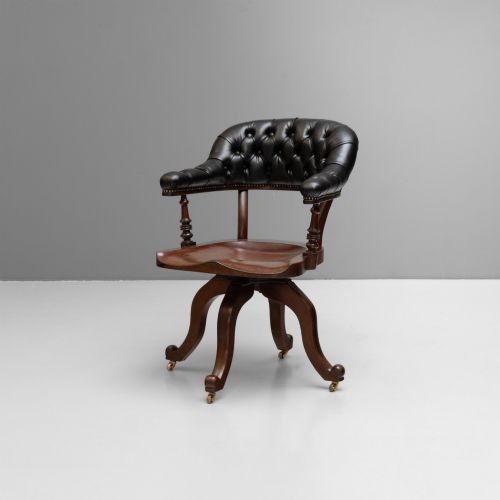
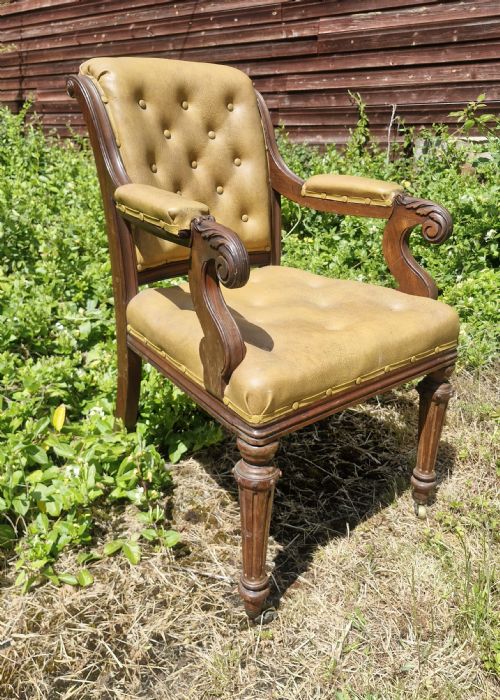
When searching for a victorian leather captain chair, collectors encounter robust revolving desk armchairs and library seats designed for nineteenth-century studies and offices. The versions most commonly met on this page are mahogany or oak framed armchairs featuring buttoned leather upholstery and swivel mechanisms.
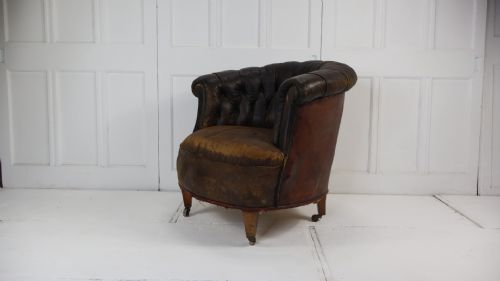
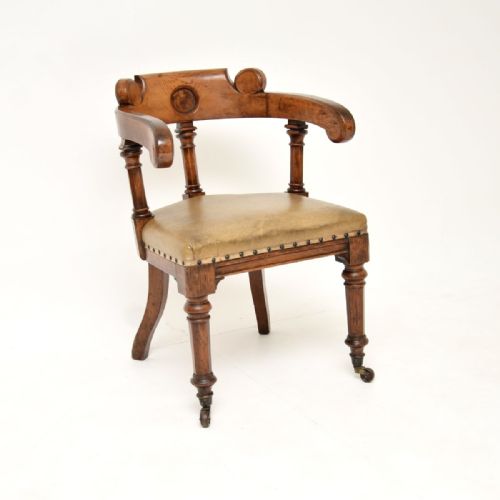
These forms span fixed library elbow chairs, solid oak swivel seats, and mahogany tub chairs adapted for administrative work. Makers constructed them to offer stable support with low backs and broad armrests suitable for writing desks.
Many examples utilise revolving bases fitted with brass castors to allow easy movement across study floors. Their practical design made them staples in nineteenth-century offices, captain's quarters, and private libraries.
How they were made
Carpenters built the frames principally from dense hardwoods such as mahogany, oak, and walnut, frequently shaping the timber through turning and carving. They integrated iron swivel mechanisms and brass castors into the heavy wooden bases to facilitate smooth rotation.
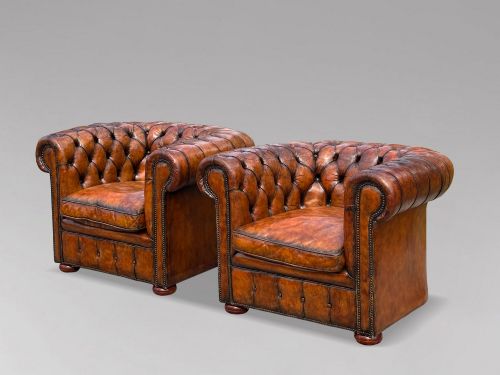
Upholsterers padded the seats and low backs with horsehair or wool stuffing before securing top-grain leather with iron or brass tacks. Deep buttoning provided structural tension while creating the characteristic pleated surface pattern.
Listings demonstrate a strong preference for mahogany and oak frames paired with green, brown, or crimson leather upholstery across the nineteenth century.
What varies in quality
The distinction between ordinary and superior pieces rests on the selection of timber and the complexity of the frame construction. Golden mahogany and figured burr elm signal higher ambition than standard utility oak.
Mechanisms also dictate merit, as heavy cast-iron revolving spindles and original stamped brass castors represent superior workshop output. The depth of the leather grain and the precision of the hand-stitched buttoning complete the evaluation.
Cope and Collinson·S and H Jewell·Alfred Allen
The Victorian Leather Captain Chair Glossary
- Captain chair
- A low-backed wooden armchair with a continuous curved armrail supported by numerous spindles, frequently adapted for office use with a revolving base and leather seat.
- Revolving mechanism
- The iron or wooden spindle and bearing assembly concealed beneath the seat that allows the chair to turn full circle.
- Tub chair
- An upholstered armchair with a rounded backrest that flows directly into the arms, enclosing the sitter.
- Castor
- A small wheel mounted in a swivel bracket at the foot of each leg to permit rolling across carpets and floorboards.
- Burr elm
- A prized timber harvested from growth excrescences on elm trees, displaying complex swirling grain patterns used for decorative veneer and solid panels.
Victorian Leather Captain Chair: Frequently Asked Questions
What is a captain chair?
A captain chair is a sturdy wooden armchair featuring a low, curved back and supportive armrests designed for working at a desk.
Nineteenth-century makers adapted these traditional forms by mounting them on revolving swivel bases and adding padded leather seats for office use.
Were all captain chairs revolving?
Not all examples rotate, as many traditional library armchairs and elbow chairs featured fixed four-legged wooden frames.
Swivel mechanisms became increasingly common toward the late nineteenth century as office furniture prioritised mobility for clerks and professionals.
What woods were used?
Cabinetmakers primarily utilised dense hardwoods such as mahogany, oak, and walnut to withstand the daily strain of a revolving office seat.
Some pieces also incorporated rarer timbers like burr elm or golden oak to satisfy the aesthetic demands of affluent Victorian studies.
How do I date these chairs?
Dating relies on examining the timber grain, construction joints, and the mechanical engineering of the iron swivel spindle beneath the seat.
Earlier nineteenth-century versions typically display hand-turned mahogany frames, whilst late Victorian and Edwardian examples often feature heavier oak construction with cast-iron components.