




Victorian Landscape Oil Board
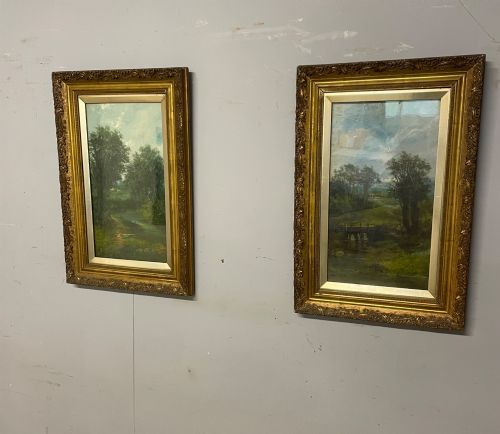
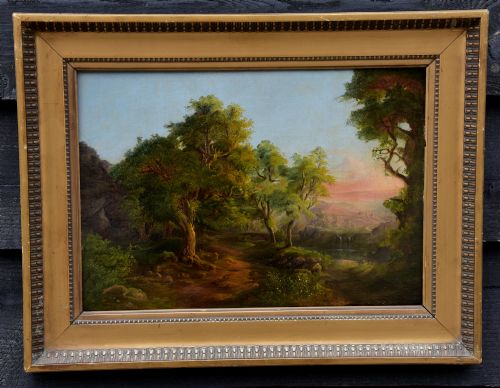
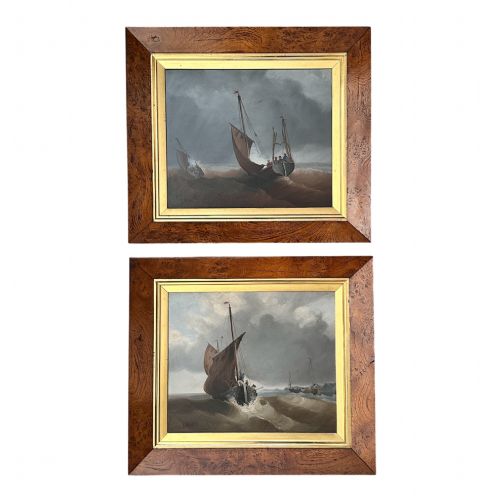
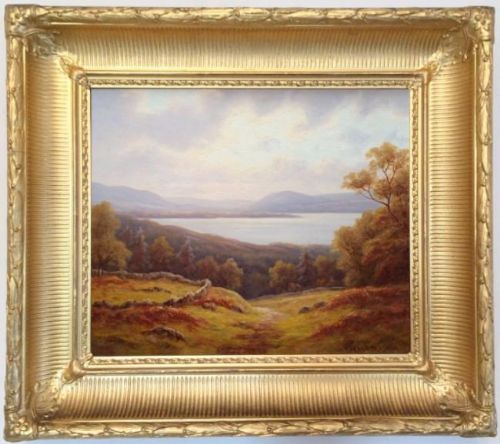
These Victorian landscape oil board works capture countryside scenes, coastal views and woodland vistas on solid panel supports.
Victorian Landscape Oil Board
A victorian landscape oil board presents a portable painted view executed on a rigid panel rather than stretched canvas, spanning the nineteenth century. These works capture woodlands, coastal scenes, rivers and rural cottages in oil paint.
The selection here encompasses periods from the eighteenth century through to the early twentieth century, alongside Victorian and Georgian examples. Such paintings range from naive folk art primitives to detailed topographical and romantic subjects.
Buyers encounter individual pictures and paired works framed in wood and gesso. Subjects extend from quiet streams and Scottish crofts to marine views and piers.
Judging quality and execution
Quality rests upon the confidence of the brushwork and the precision of the composition. Stronger pieces display assured handling of light and atmosphere within the landscape.
The execution of the subject matter distinguishes finer academic paintings from naive folk art examples. Condition of the oil paint surface and the integrity of the original gilt wood frame further influence the standing of each piece.
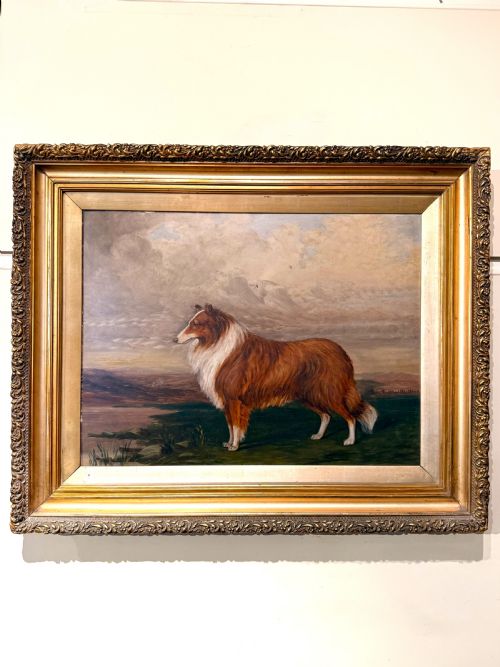
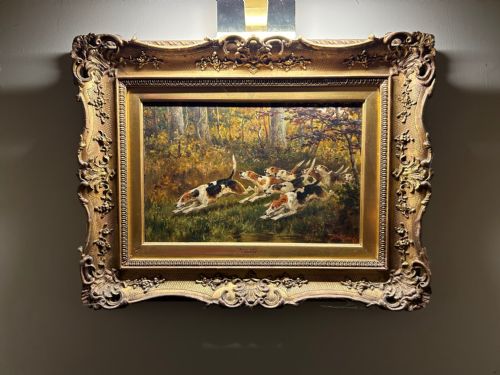
Canines occasionally steal the show alongside grand landscapes, proving Victorian artists loved their dogs just as much as their scenery.
John Moore of Ipswich·Miles Birkett Foster·Everett Watson Mellor·John Bell·William Mellor·George Hilditch·Thomas Blinks·John Falconar Slater·Benjamin Callow·Richard Wilson·R Allan
The Victorian Landscape Oil Board Glossary
- Oil on board
- A painting technique where oil pigments are applied directly to a wooden or composite panel rather than a woven fabric canvas.
- Gilt wood
- Timber frames covered with a thin layer of gold leaf or metallic gilt, frequently utilised in the nineteenth century.
- Gesso
- A plaster-like mixture applied to wooden frames as a smooth base for gilding and ornamentation.
- Tondo
- A circular painting or relief sculpture, appearing within nineteenth-century decorative formats.
- Naive art
- Artwork created by an artist without formal academic training, often characterised by a simplified perspective and direct charm.
Victorian Landscape Oil Board: Frequently Asked Questions
What is a landscape oil board?
It is an artwork painted in oil colours upon a rigid wooden or composition board rather than stretched canvas. These panels provided a durable and portable surface for outdoor sketching and finished studio works.
Artists during the nineteenth century favoured boards for their stability and convenience. Today they survive framed in wood and gesso, preserving historic views of the countryside and coast.
How do I date these paintings?
Dating relies on stylistic evidence, artist signatures, framing materials and period characteristics recorded in the title. Victorian and nineteenth-century examples often display specific framing styles and subject matter typical of the era.
Examining the reverse of the board can sometimes reveal period labels, inscriptions or dates applied by the artist. Comparing the subject with documented works by known painters also assists with dating.
Were these painted outdoors?
Many nineteenth-century painters took portable boards outdoors to capture natural light and transient weather effects directly from nature. This practice produced fresh topographical studies and preliminary sketches.
Other works were completed in the studio using outdoor sketches as a reference. Both methods resulted in durable oil paintings on rigid panel supports.
How should I display them?
These works suit placement on walls away from direct sunlight and excessive moisture to protect the oil paint and gilt frames. Most arrive ready to hang within their period wood or gesso surrounds.
Pairing complementary scenes or grouping them by period creates a balanced display. Ensuring stable indoor temperatures preserves the condition of both the board and the frame.