



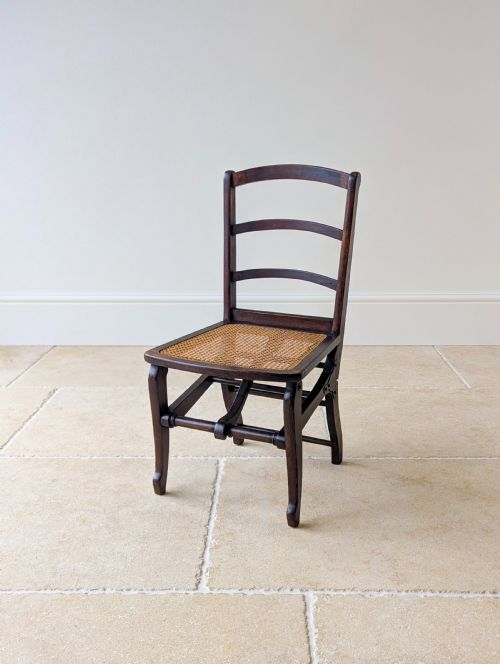


Victorian Ladder Back Chairs
Victorian ladder back chairs bring honest vernacular craft and robust timbers into daily rooms.
Victorian Ladder Back Chairs
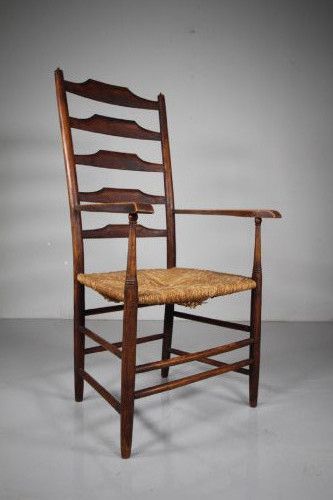
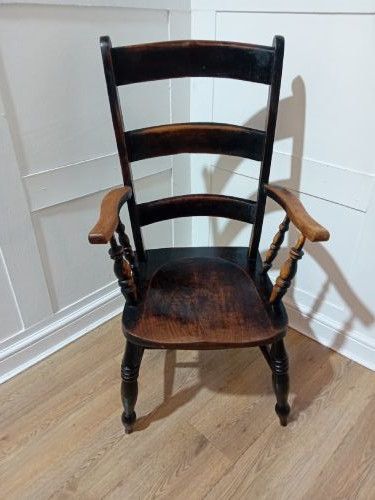
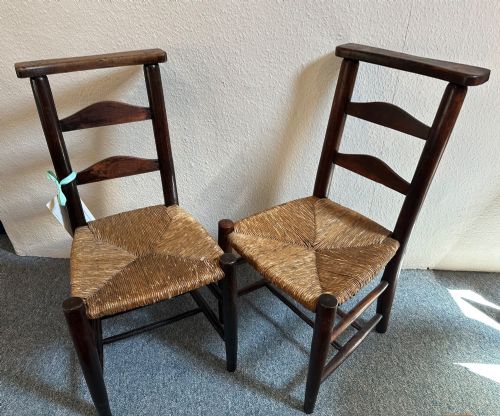
Victorian ladder back chairs combine practical vernacular design with durable timber frames intended for daily use in dining rooms, kitchens, and studies. These pieces most commonly appear as oak, ash, or elm country chairs, often featuring rush or timber seats arranged singly or in sets.
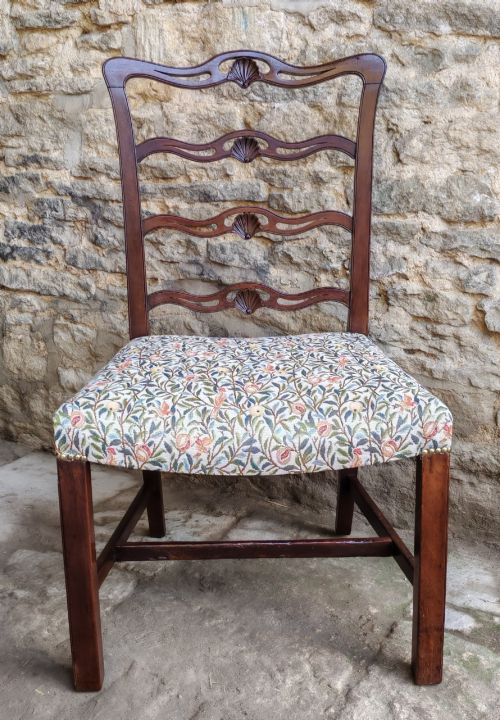
Makers produced these chairs across various regional styles, including Lancashire and Thames Valley interpretations, alongside formal revival versions in mahogany. The search for victorian ladder back chairs encompasses everything from simple fireside rockers and armchairs to extensive dining sets with multiple stretchers.
Buyers frequently encounter nineteenth-century versions showing regional turns, such as wavy slats, spindle backs, or rush seating. The selection ranges from robust farmhouse carvers to refined Chippendale revival models created for domestic interiors.
Materials and Construction
Cabinet makers and vernacular joiners utilised solid regional timbers like oak, elm, ash, and mahogany for the frames, matched with woven rush or leather for the seats. Frames often incorporated turned legs, multiple stretchers, and curved horizontal rails known as ladders to provide structural strength.
Makers shaped the timbers using traditional turning and joining techniques, securing uprights and slats with pegged mortise and tenon joints. Brass fittings, fabric upholstery, and leather pads appeared on more formal revival pieces, whilst country versions relied on natural rush cord woven directly around the seat rails.
Victorian Ladder Back Chairs Retail Price Guide 2026
Typical asking prices for victorian ladder back chairs among the pieces listed under this phrase on Sellingantiques today, from the lower quarter to the upper quarter. They describe what is for sale here now, not the wider market.
Listings feature oak, ash, elm, and mahogany frames paired with rush, leather, and fabric seats across the nineteenth century.
Evaluating Quality and Construction
Quality in these chairs rests upon the integrity of the timber frame, the tightness of the joinery, and the retention of original surface finishes. Pieces retaining undisturbed patination, tight rush weaving, and matching sets display superior craftsmanship compared to composite groups assembled later.
The distinction between a top-tier chair and a standard example lies in the subtlety of the turning on the uprights, the balance of the horizontal rails, and the matching grain of the wood. Original finishes and authentic maker or institutional markings elevate the standing of a piece significantly.
Philip Clissett·S&H Jewell
The Victorian Ladder Back Chairs Glossary
- Ladder back
- A chair featuring a backrest composed of several horizontal wooden slats or rails resembling the rungs of a ladder. These slats are often curved to fit the spine.
- Rush seat
- A seating surface woven from dried marsh grass or rushes wound around the seat rails. It provides a flexible and durable texture common in country chairs.
- Carver
- An armchair designed to match a set of smaller dining chairs, typically featuring open arms and used at the head of a table.
- Stretcher
- A horizontal wooden brace connecting the legs of a chair to provide structural rigidity and strength.
- Patina
- The surface sheen and colour developed on wood through age, wear, and regular polishing over decades.
Victorian Ladder Back Chairs: Frequently Asked Questions
How do I care for rush seats?
Rush seats require gentle cleaning with a dry brush to remove dust and should be kept away from excessive moisture to prevent the natural fibres from becoming brittle.
Applying a light, periodic mist of water can help maintain the flexibility of the dried grass in very dry indoor environments.
Can I mix carvers with side chairs?
Mixing carvers with side chairs reflects traditional dining arrangements where armchairs sat at the head of the table while simpler chairs lined the sides.
Harlequin sets often combine pieces of similar period and timber to achieve an authentic vernacular look.
Are these chairs suitable for daily dining?
These pieces were built for robust everyday use in kitchens, farms, and dining rooms, making them well-suited for modern dining.
Checking the stability of the stretchers and joints ensures the frame handles daily sitting without strain.
How do I identify country styles?
Country styles typically feature native timbers such as elm, ash, and oak alongside turned uprights and woven rush seats. They prioritise sturdy utility over decorative carving.
Regional variations often display distinctive turning on the legs and specific arrangements of the back rails.