


Victorian Lacquered Tables
These victorian lacquered tables bring together glossy surfaces and intricate painted scenes to form striking accent pieces for any room.
Victorian Lacquered Tables
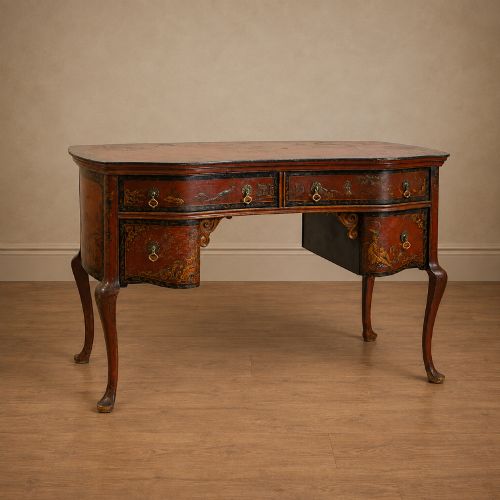
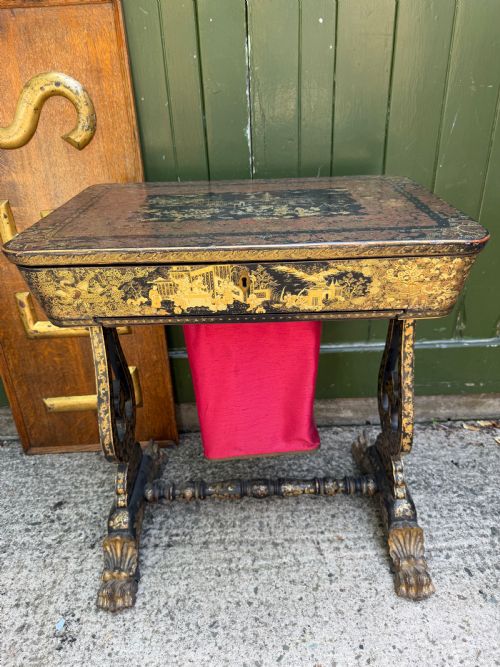
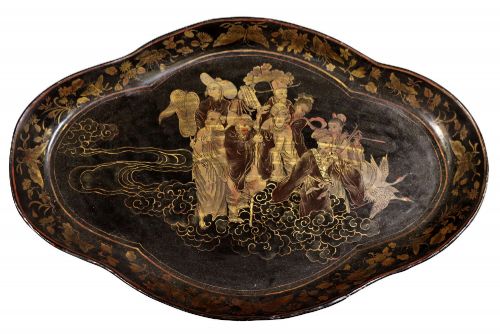
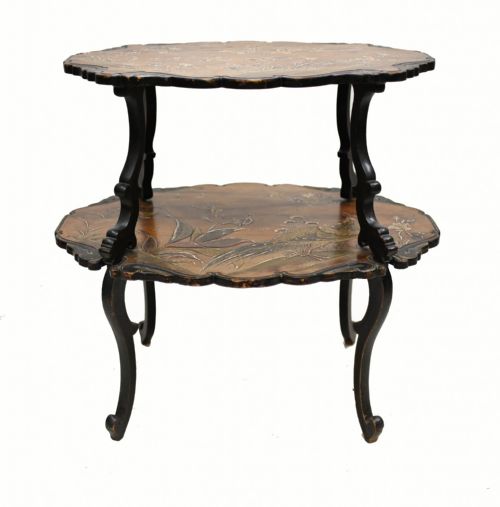
When you search for victorian lacquered tables, you encounter an array of occasional furniture, tray tables, and side pieces spanning the nineteenth century. These items often feature dark painted surfaces embellished with gold leaf or elaborate oriental motifs.
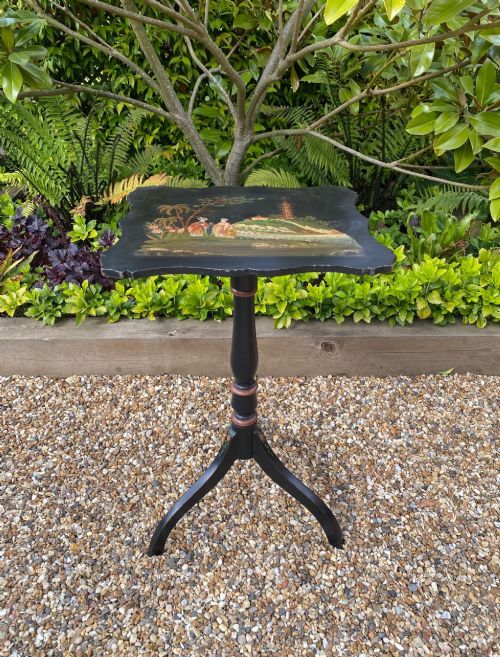
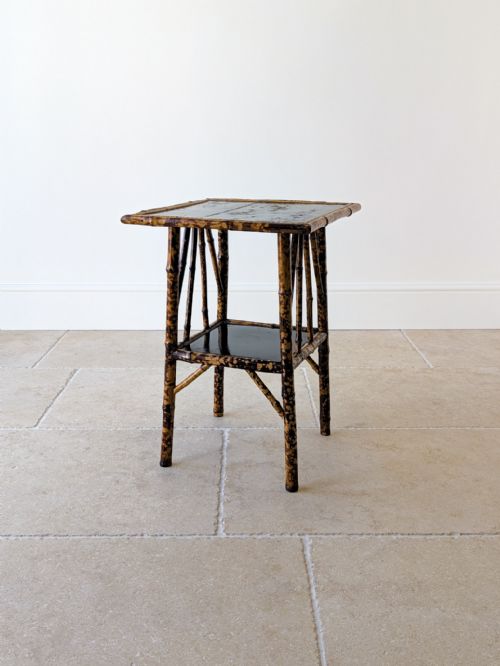
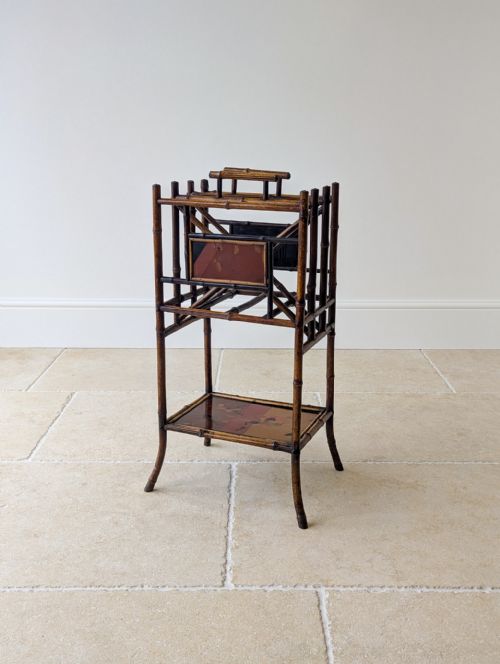
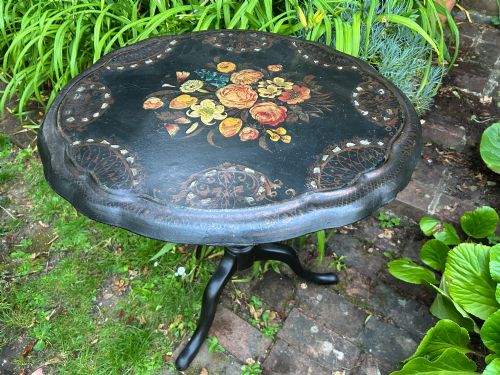
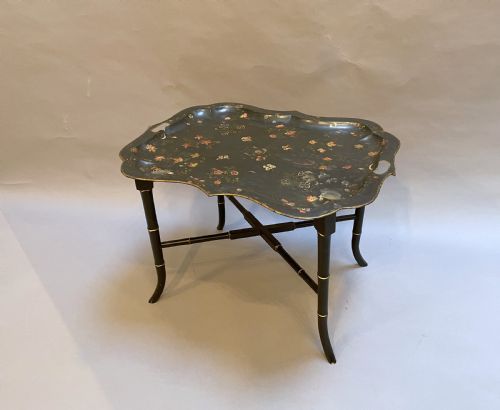
The selections on this page lean heavily towards papier-mâché tray tables on stands and bamboo frames fitted with lacquered panels. Side tables and occasional forms dominate, reflecting the period taste for compact decorative accents.
Origins range from English interpretations of eastern motifs to pieces produced during the Aesthetic Movement and the later craze for Japonisme. Buyers frequently select these forms to add a reflective dark surface and patterned detail to a corner or seating group.
Materials and Construction
Makers built these pieces using varied foundational materials, including sturdy timber, moulded papier-mâché, and lightweight bamboo. Papier-mâché layers received rigorous smoothing before receiving deep coats of black or cream lacquer.
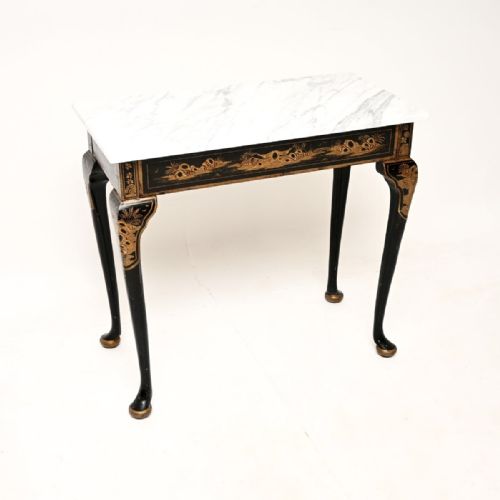
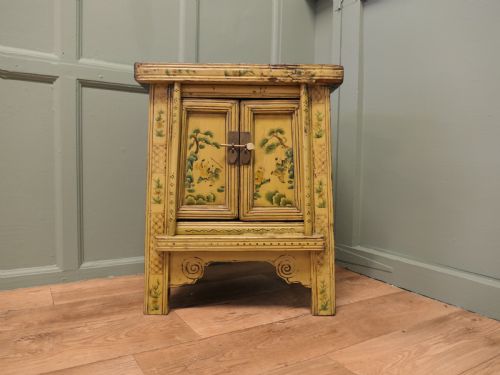
Surface decoration relied on paint, gold leaf, and gilt details applied by hand to render Chinoiserie landscapes, figures, and floral arrangements. Brass fittings, occasional marble tops, and toleware elements also appear to complete the construction.
Listings feature items dated from the nineteenth century onward, encompassing Victorian, Regency, and Edwardian periods with finishes in lacquer, bamboo, and paint.
Assessing Quality
Quality rests in the crispness of the hand-painted decoration and the depth of the lacquer finish. Superior examples display finely rendered figures and landscapes in gold leaf that retain their intricate detail without excessive rubbing.
The structural integrity of the underlying support, whether a turned wooden base, a papier-mâché tray on a stand, or a bamboo frame, dictates the durability of the piece. Well-preserved surfaces show minimal craquelure and stable joins between the top and its base.
Jennens & Bettridge
The Victorian Lacquered Tables Glossary
- Chinoiserie
- European theatrical interpretation of Chinese and East Asian artistic traditions, widely applied to furniture surfaces.
- Papier-mâché
- A composite material made from paper pulp or layers of paper bound with glue, pressed into moulds to form rigid trays and table tops.
- Japonisme
- The late nineteenth-century European interest in Japanese art and aesthetics, influencing the design of bamboo and lacquered furnishings.
- Aesthetic Movement
- A late Victorian artistic movement emphasising art for art's sake, yielding furniture with slender bamboo frames and exotic panels.
- Japanning
- A European technique of finishing wood or papier-mâché with hard, glossy varnishes intended to imitate East Asian lacquer.
Victorian Lacquered Tables: Frequently Asked Questions
What are tray tables used for?
These pieces served originally for serving tea or drinks before resting on folding or fixed stands as permanent display furniture.
Today they function effectively as low coffee tables or decorative side surfaces in a reception room.
How do I care for lacquer?
Keep these surfaces away from direct sunlight and excessive moisture to prevent the glossy finish from fading or lifting.
Dust gently with a soft dry cloth and avoid chemical polishes that can damage the underlying painted decoration.
Are bamboo tables sturdy?
Victorian bamboo frames utilise natural plant stems joined with internal dowels and pins to create lightweight yet resilient structures.
They support normal display items like lamps and books easily when placed on level flooring.
How do I spot papier-mâché?
Papier-mâché forms feel surprisingly light compared to solid timber while offering a smooth, seamless surface that accepts dark lacquer evenly.
Under magnification, the dense composite material reveals a solid matte interior beneath the glossy outer varnish.