


Victorian Kneehole Writing Desk
These nineteenth-century pieces offer solid workspace alongside central compartments, combining sturdy proportions with functional drawer arrangements.
Victorian Kneehole Writing Desk
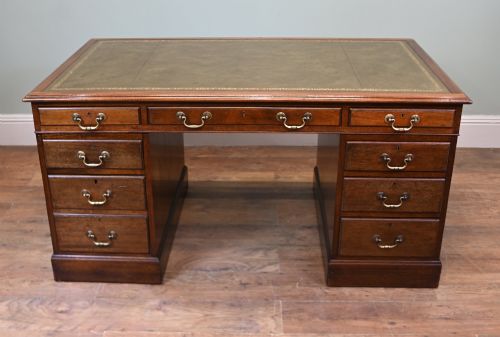
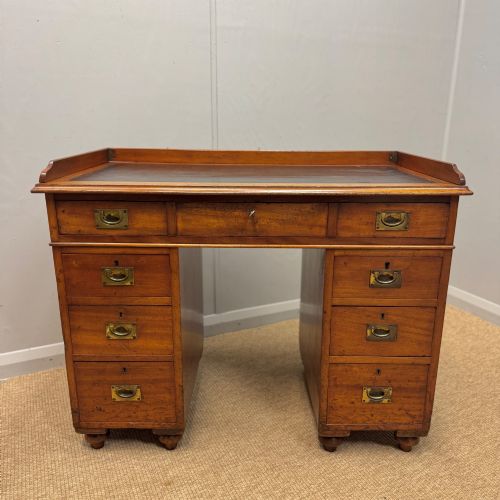
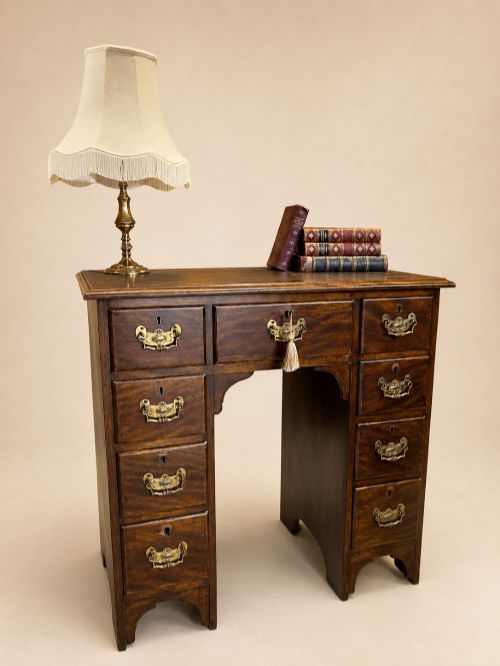
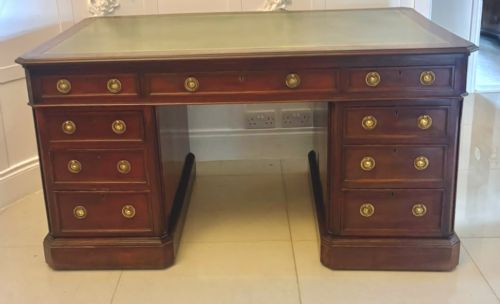
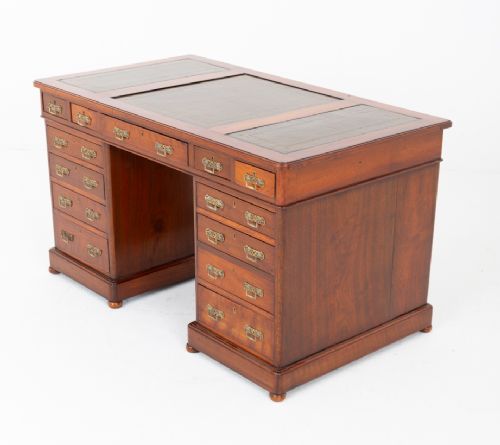
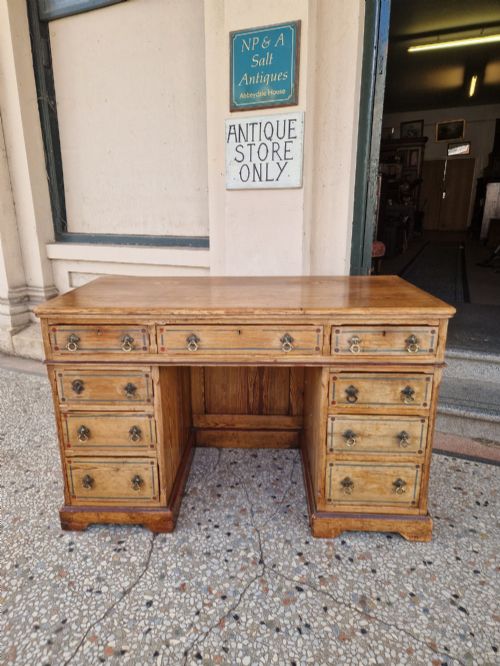
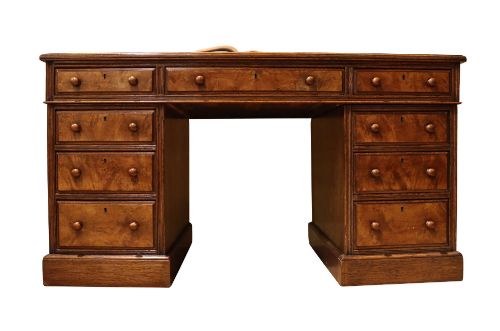
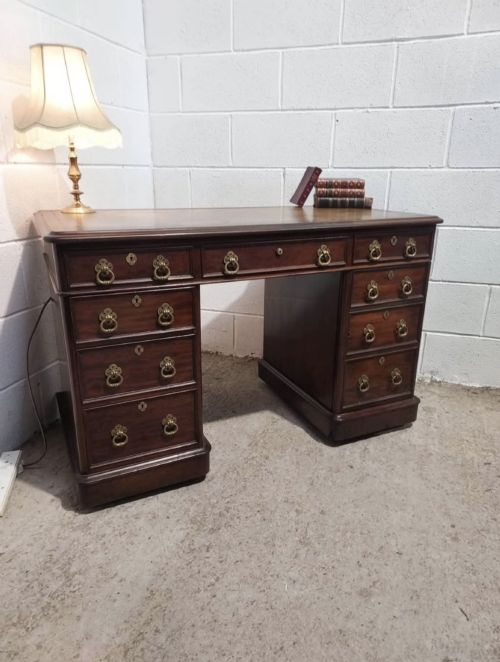
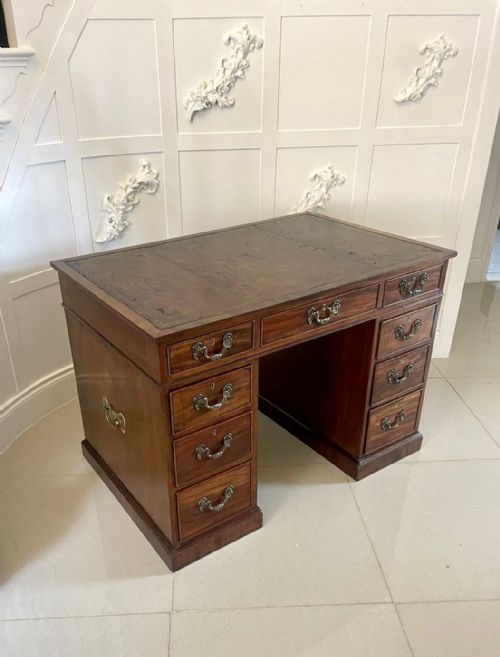
A victorian kneehole writing desk organises workspace through twin pedestals flanking a central recess, a practical layout suited to nineteenth-century studies and libraries.
Most examples encountered here date from the Victorian era and the broader nineteenth century, constructed as pedestal forms with multiple side drawers.
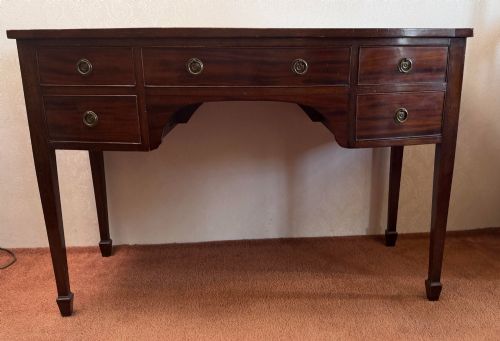
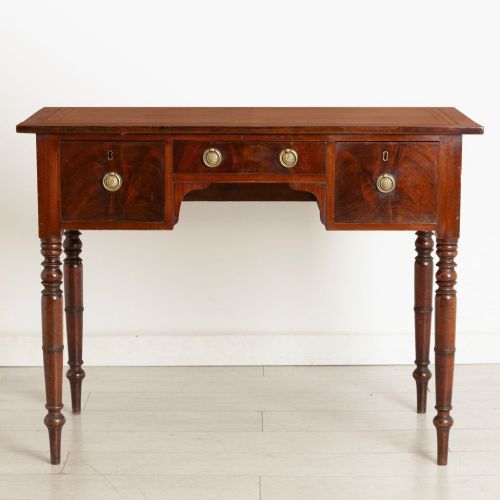
Beyond standard pedestal variants, related pieces on this page include dressing tables and writing tables sharing similar structural layouts.
Materials and Construction
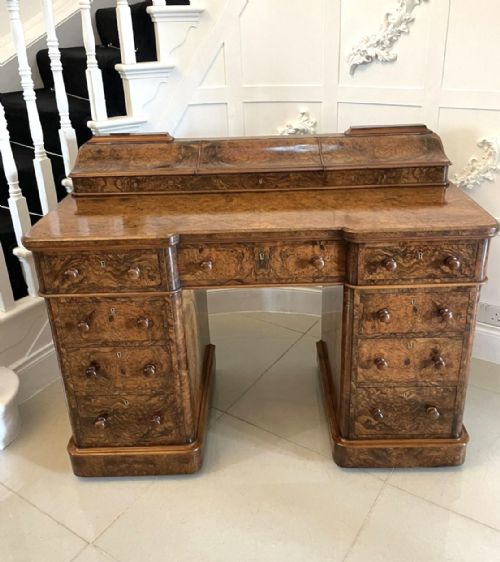
Cabinetmakers utilised dense timbers such as mahogany and oak for carcases, often applying burr walnut or satin birch veneers to primary display surfaces.
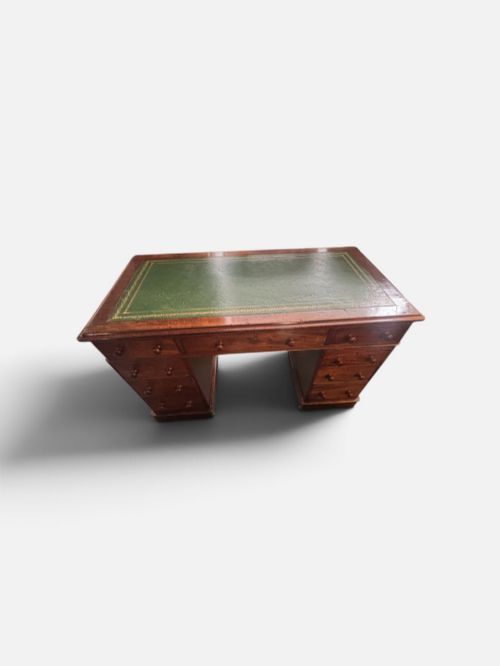
Writing surfaces typically feature inset leather panels, frequently tooled in gilt alongside fitted stationery drawers and internal writing slides.
Brass handles and hardware accent the timber constructions, while secondary woods like pine appear in drawer linings and internal framing.
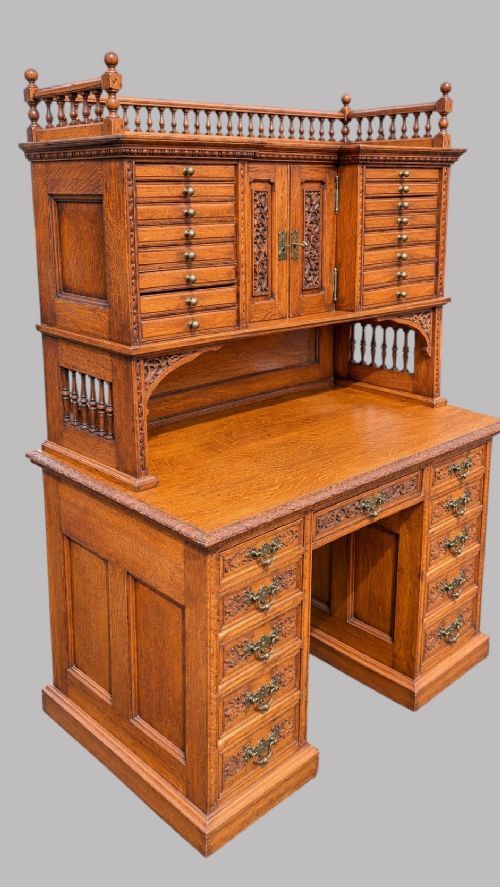
One remarkably fierce nineteenth-century oak desk incorporates carved lions' heads guarding the drawers.
Distinction and Craft
Superior examples display figured timber grains, such as burr walnut or figured mahogany, selected for visual impact across pedestal fronts and writing surfaces.
Maker attribution elevates certain pieces, with workshops like Maple & Co. or Holland & Sons demonstrating refined joinery and meticulous hardware integration.
Internal organisation, including fitted stationery compartments and secondary writing slides, separates standard functional desks from more elaborate cabinetwork.
Trollope & sons·Maple & Co.·Holland & Sons·Heals
The Victorian Kneehole Writing Desk Glossary
- Kneehole
- The central recessed space beneath a desk designed to accommodate the user's legs while seated.
- Pedestal
- A structural support block containing multiple stacked drawers, positioned beneath the main writing surface.
- Writing slide
- A pull-out shelf positioned above the drawers to provide extra surface area when writing.
- Burr walnut
- Timber cut from the warted excrescences of walnut trees, yielding highly figured patterns utilised for decorative veneer.
Victorian Kneehole Writing Desk: Frequently Asked Questions
What is a kneehole desk?
A kneehole desk is a pedestal writing table featuring a central recessed space for seating, flanked by stacks of drawers.
This layout became standard during the nineteenth century for domestic studies and home offices.
How do I maintain the leather top?
The leather writing surface requires occasional gentle dusting and specialised leather dressing to prevent drying and cracking over time.
Avoid applying harsh modern cleaning chemicals to the gilt tooling surrounding the edges.
Were these desks used by women?
Certain lighter variations, sometimes termed ladies desks, were manufactured in scaled-down proportions using timbers like satin birch or walnut.
These smaller versions offered functional workspace within more compact nineteenth-century domestic settings.
How are different periods identified?
Victorian examples display specific stylistic markers, ranging from plain mahogany pedestals to ornate burr walnut veneers and carved oak details.
Construction methods, handle styles, and secondary woods like pine help narrow down the manufacturing decade.