





Victorian Kitchen Hutch
A victorian kitchen hutch is the honest workhorse of domestic utility, bringing timber warmth and utilitarian grace to modern spaces.
Victorian Kitchen Hutch
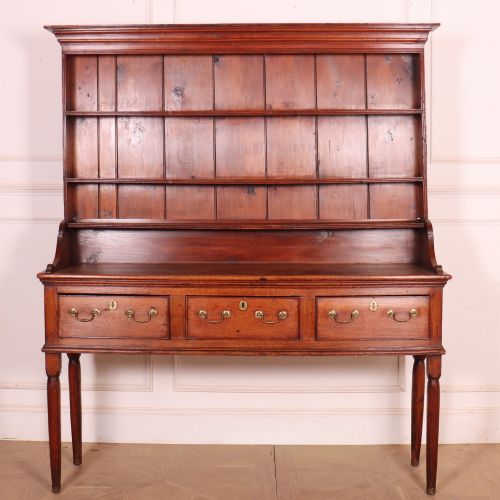
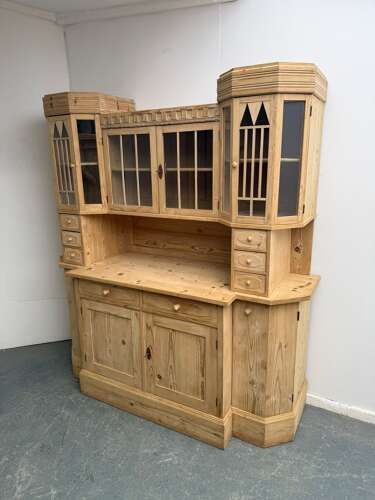
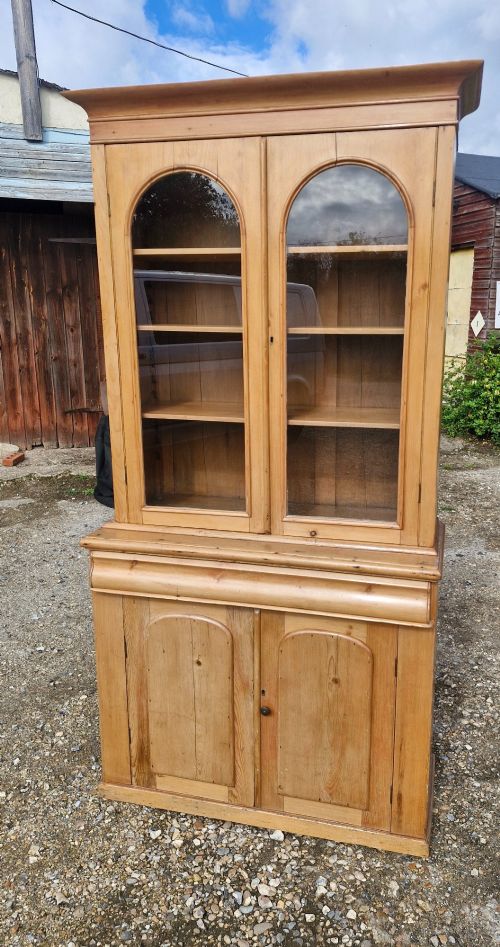
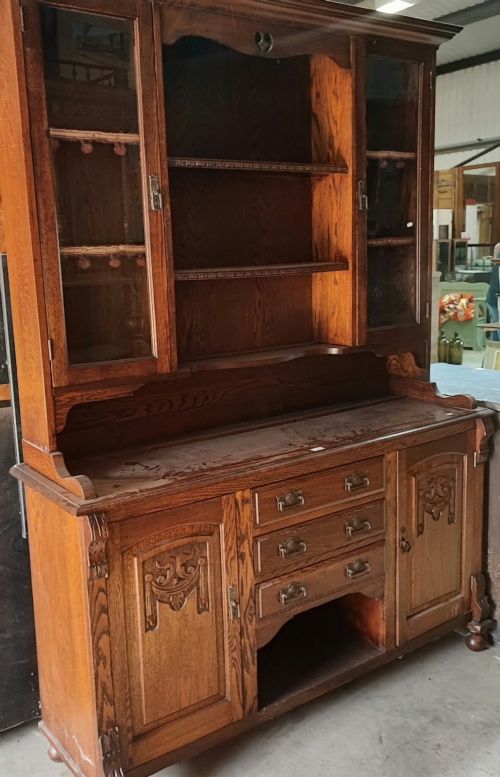
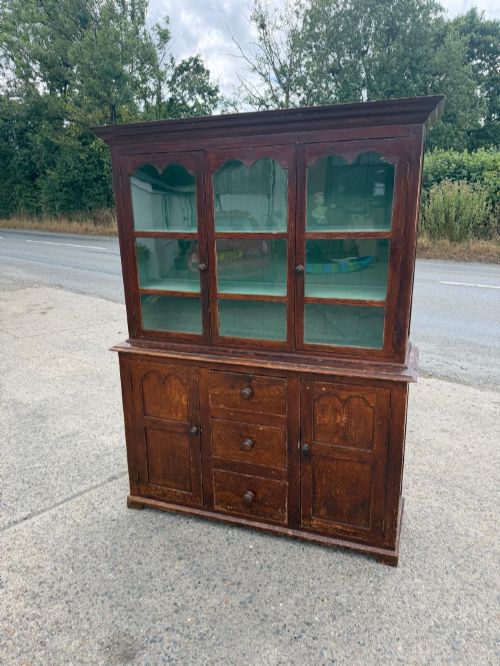
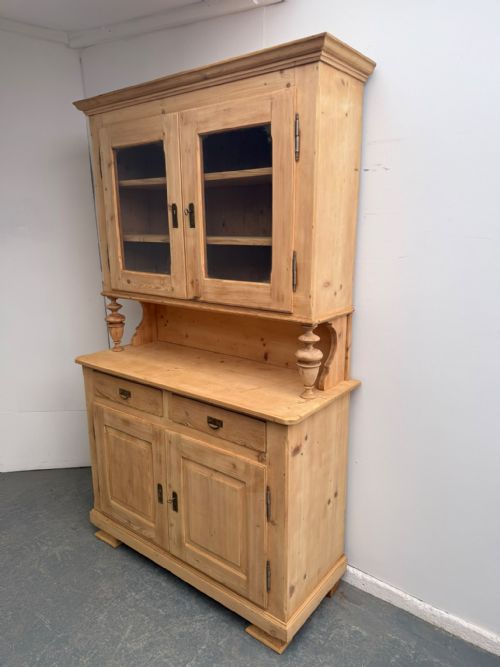
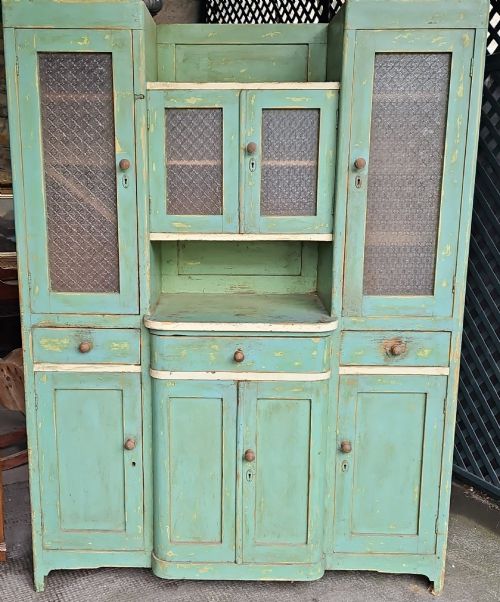
A victorian kitchen hutch encompasses the substantial dressers, cupboards and glazed cabinets that anchored nineteenth-century domestic life. These pieces served to store tableware, dry goods and utilitarian crockery, combining open display racks with enclosed lower cupboards.
The selection here draws primarily upon nineteenth-century examples in pine and oak, spanning regional English formats from the West Country, Cornwall and Wales, alongside continental variations from Hungary. Forms range from compact provincial dressers to monumental country house pieces fitted with breakfront drawers or clock faces.
Materials and construction
Makers relied heavily on solid pine, tiger oak and mahogany, often enhanced by brass hardware and textured or clear glass panel doors. Surfaces received various treatments, from traditional wax finishes and scrumbled paint to historical cream and teal coatings.
Construction techniques reflect regional traditions, utilising sturdy dovetailed drawers, planked timber backs and two-piece modular builds where the upper rack sits atop the lower sideboard. Carved details like green man motifs appear alongside simpler panelled construction.
Victorian Kitchen Hutch Retail Price Guide 2026
Typical asking prices for victorian kitchen hutch among the pieces listed under this phrase on Sellingantiques today, from the lower quarter to the upper quarter. They describe what is for sale here now, not the wider market.
Factors of quality
Structural honesty and original hardware elevate certain examples above standard utility furniture. The balance between the upper rack and lower base, together with clean joinery and untouched proportions, separates fine provincial craftsmanship from simpler workshop output.
The Victorian Kitchen Hutch Glossary
- Welsh dresser
- A traditional kitchen storage unit featuring an open plate rack above a base of drawers and cupboards. They were designed for everyday display and access to domestic pottery.
- Breakfront
- A cabinet design where the central section projects forward from the flanking sides. This adds architectural depth and presence to larger oak and pine examples.
- Scrumbled paint
- A decorative surface treatment involving translucent oil glaze manipulated over a base coat to simulate wood grain or texture. It was widely utilised on nineteenth-century pine furniture.
- Glazed top
- An upper cabinet section fitted with glass panelling to protect delicate china from kitchen dust while keeping contents visible. These doors often utilise timber framing and brass catches.
- Plate back
- The grooved shelving section of a dresser designed to hold plates upright without slipping. It forms the upper half of a standard two-piece kitchen hutch.
Victorian Kitchen Hutch: Frequently Asked Questions
What is a victorian kitchen hutch?
A victorian kitchen hutch is a sturdy nineteenth-century storage piece combining open shelving or glazed cabinets with a lower sideboard. They were built to hold kitchenware and foodstuffs in domestic spaces.
These pieces reflect distinct regional styles across Britain and Europe, utilising durable timbers like pine and oak. Their practical layout makes them functional storage units for contemporary homes.
How do I clean a painted pine hutch?
Cleaning requires a soft, dry cloth to remove dust from carved details and panelled surfaces. Avoid harsh chemical cleaners that can damage original historical paint finishes.
Waxed pine surfaces benefit from occasional application of traditional beeswax to nourish the timber. Gentle maintenance preserves the patinated character accumulated over the nineteenth century.
Can I separate the top rack from the base?
Most large dressers and hutches are constructed in two separate sections for ease of transport. The upper rack typically rests on top of the lower sideboard base rather than being permanently fixed.
When positioning the piece in a room, ensure the junction is stable and secure against the wall. Two-piece construction was standard practice for nineteenth-century cabinet makers.
Where were these hutches originally made?
Original pieces originate from various regions including the West Country, Cornwall, Wales and Scotland, alongside continental workshops in Hungary. Each area developed slight stylistic preferences in timber and hardware.
Local timber availability dictated whether a maker used native pine, oak or mahogany. Provincial workshops focused on robust utility rather than high court fashions.