



Victorian Italian Landscape Painting
A victorian italian landscape painting captures the luminous light and classical ruins of the southern peninsula through nineteenth-century eyes.
Victorian Italian Landscape Painting
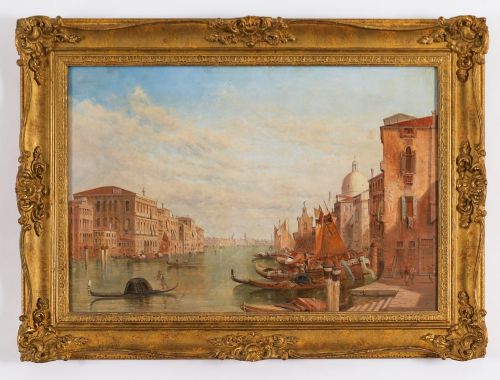
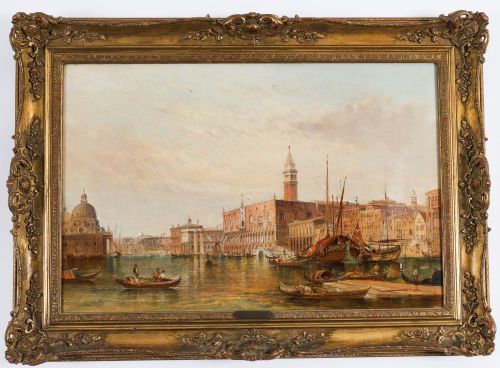
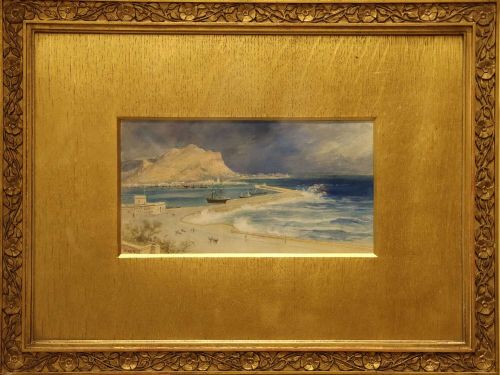
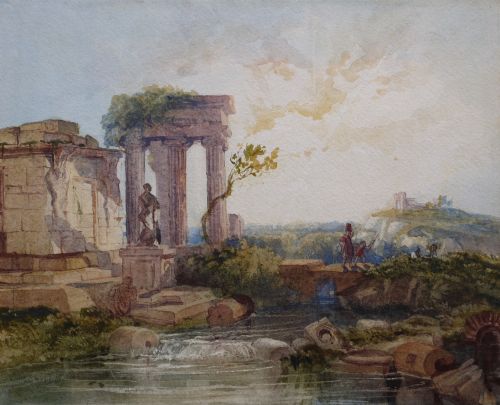
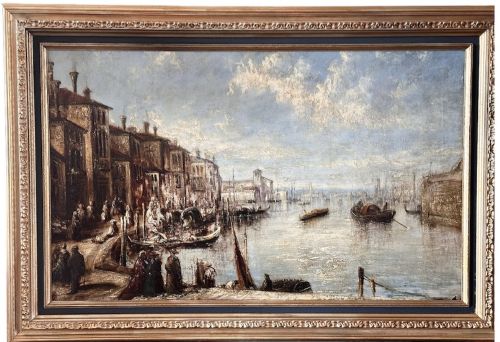
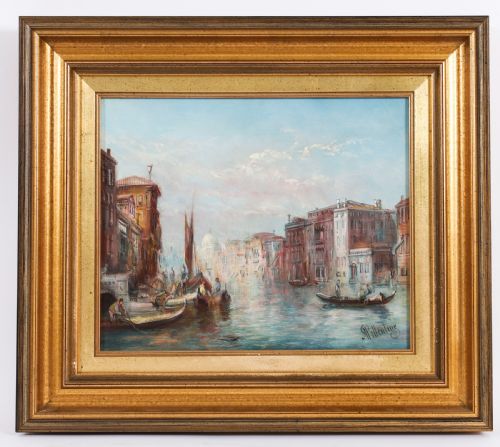
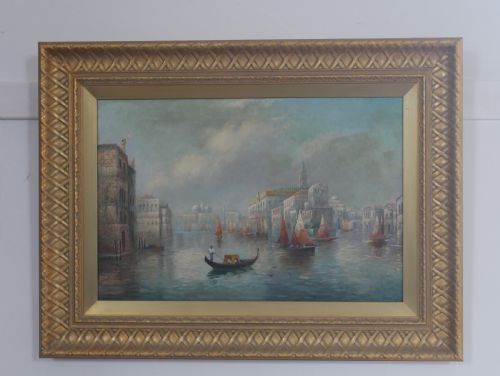
A victorian italian landscape painting depicts scenes ranging from the sunlit canals of Venice to mountainous northern vistas and quiet countryside views. These works capture the nineteenth-century fascination with Mediterranean light, classical architecture, and picturesque coastal towns.
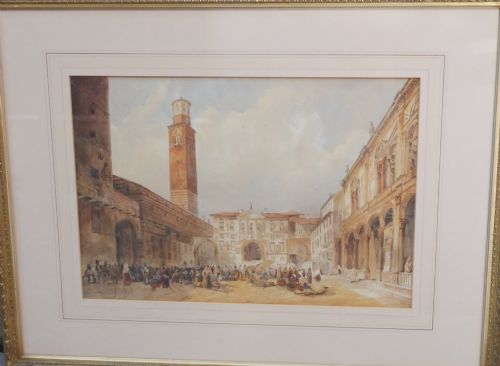
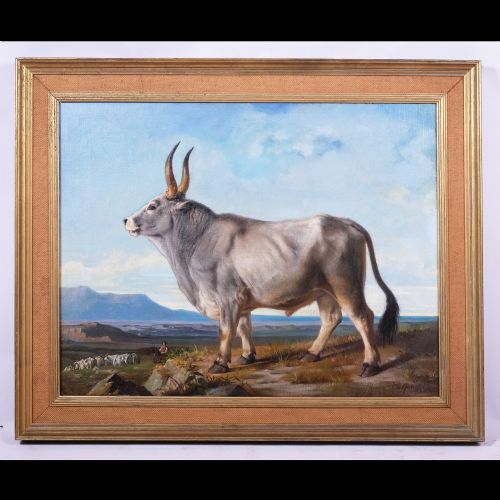
Buyers meet both oil on canvas works and delicate watercolours on paper. The selection includes townscapes of the Grand Canal alongside rural studies of vineyards, fisherfolk, and ancient ruins.
The period spans the nineteenth century, encompassing Regency examples through to the late Victorian era. These pieces reflect the Grand Tour tradition where artists recorded travels across Tivoli, Rome, Naples, and the Venetian lagoon.
Materials and Technique
Artists employed oil paint on canvas or watercolour applied to paper, mounted within wood and giltwood frames. The application ranges from smooth, detailed architectural renderings of palazzos and monuments to fluid washes capturing atmospheric lagoon mists.
Pigs and binders were handled to achieve the characteristic warmth of the Italian sun, contrasting deep shadows in canals with luminous skies. Gilt frames completed the presentation, designed to catch the interior candlelight of nineteenth-century drawing rooms.
Victorian Italian Landscape Painting Retail Price Guide 2026
Typical asking prices for victorian italian landscape painting among the pieces listed under this phrase on Sellingantiques today, from the lower quarter to the upper quarter. They describe what is for sale here now, not the wider market.
Listings feature works spanning the nineteenth century, utilising oil on canvas, watercolour, and giltwood framing.
Judging Quality
Quality rests upon the confidence of the brushwork and the precision of perspective, particularly in complex architectural subjects like the Doge's Palace or the Santa Maria della Salute. Stronger examples demonstrate a sure handling of atmospheric light and water reflections rather than stiff, mechanical reproduction.
The distinction also lies in the atmosphere captured within the composition and the preservation of the original medium, whether oil on canvas or watercolour on paper. Finer pieces maintain clear pigment vibrancy and retain their period giltwood frames without heavy restoration.
Alfred Pollentine·Jane Vivian·Hercules Brabazon Brabazon·Charles H Poingdestre·Arthur Joseph Meadows
The Victorian Italian Landscape Painting Glossary
- Grand Canal
- The main water thoroughfare in Venice, frequently depicted in nineteenth-century townscapes featuring palazzos and gondolas. Artists returned to this subject repeatedly to study the play of light on water.
- Giltwood
- Wood carved and coated with gold leaf, commonly used for nineteenth-century picture frames. These heavy frames were designed to complement the warmth of Italian landscape paintings.
- Townscape
- A painting depicting urban architecture, streets, or canals rather than purely natural scenery. In nineteenth-century Italian art, these often recorded specific recognizable monuments like the Colosseum or San Marco.
- Watercolour
- A paint consisting of water-soluble pigments applied to paper. This medium was favoured by artists travelling on the continent for its portability and speed in capturing shifting light.
Victorian Italian Landscape Painting: Frequently Asked Questions
What subjects appear in these paintings?
The works primarily feature Venetian canals, Roman ruins, coastal ports, and mountainous rural landscapes. Scenes often include identifiable landmarks such as the Doge's Palace, the Grand Canal, and the Arch of Titus.
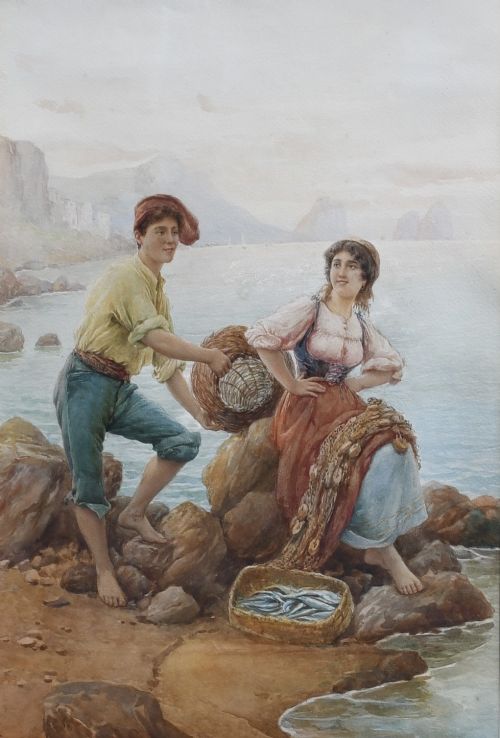
Artists also recorded local figures including fisherfolk and women near vineyards, placing human activity within the classical scenery.
How do oils and watercolours differ?
Oil paintings use canvas supports and heavier paint layers, allowing for rich textures and deep colour saturation particularly suited to architectural townscapes. Watercolours utilise paper supports, offering a transparent, luminous quality ideal for capturing atmospheric light and skies.
Both mediums were popular during the nineteenth century for recording Italian subjects.
Where were these scenes painted?
Locations focus heavily on Venice, Rome, Tivoli, Naples, and the surrounding northern lakes and countryside. Artists travelled across Italy during the nineteenth century to document these celebrated views for collectors at home.
Many works specify exact locations within their titles, ranging from the Gulf of Genoa to San Remo.
How should I frame and display them?
These works suit traditional interiors, especially when housed in their original nineteenth-century giltwood frames. Proper placement avoids direct sunlight to protect watercolours on paper and sensitive oil pigments.
Ensuring stable room humidity preserves both the canvas or paper support and the gilded wooden surrounds.