


Victorian Interior Watercolour Painting
A victorian interior watercolour painting captures domestic life of the era with delicate pigment, offering a direct window into nineteenth-century rooms.
Victorian Interior Watercolour Painting
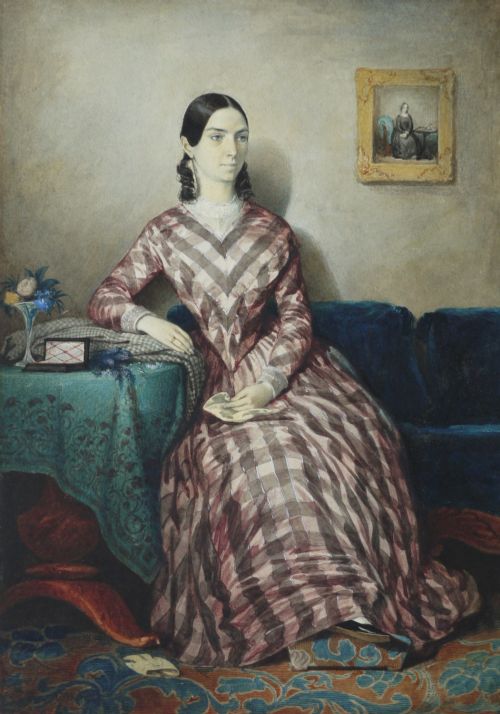
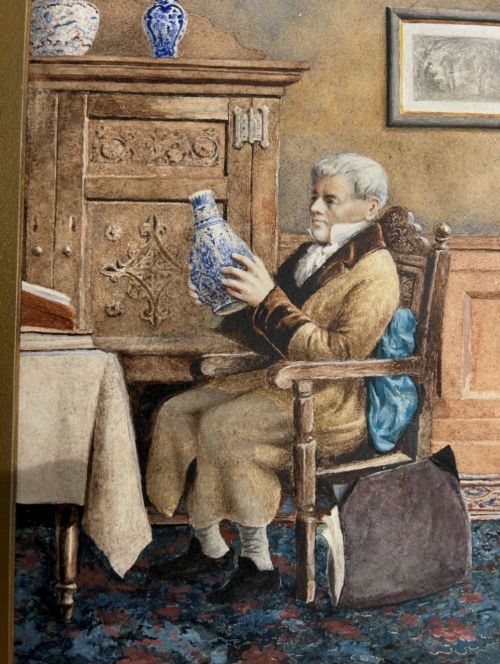
A victorian interior watercolour painting depicts domestic spaces, grand halls, and cottage rooms, often featuring figures engaged in daily routines or quiet leisure. You will frequently encounter works attributed to named British artists alongside accomplished pieces by the English School.
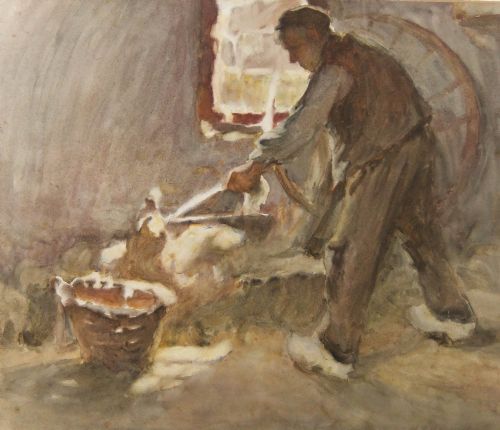
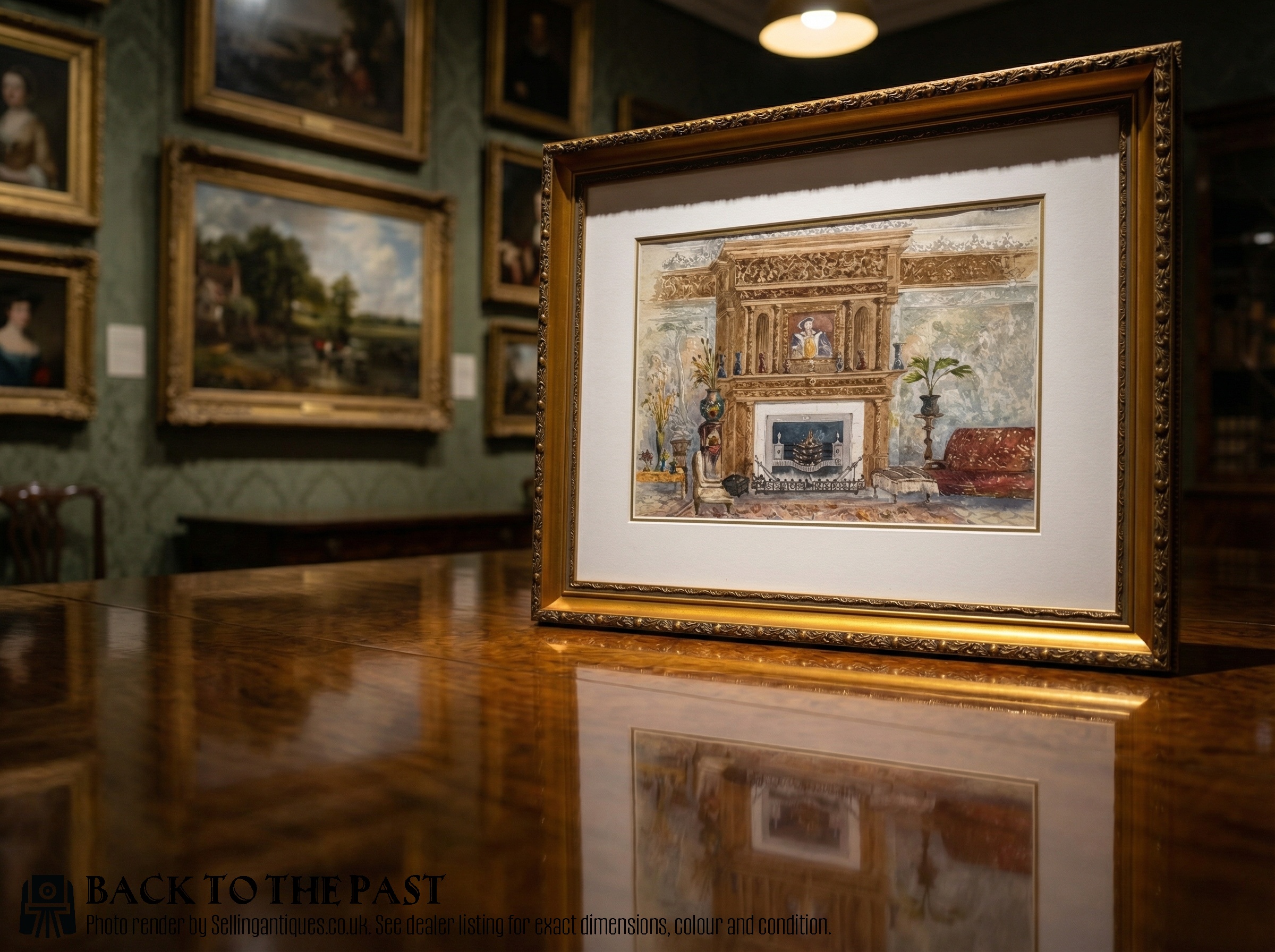
The subjects range from humble smithies and Scottish inns to the sumptuously decorated long galleries and summer drawing rooms of historic English houses. These compositions rely on paper supports and careful washes to render period furniture, firesides, and architectural details.
Many examples date from the nineteenth century into the early twentieth century, spanning Victorian and Edwardian periods. Genre realism and figurative interior scenes dominate the selection, showing how inhabitants lived, read, and rested.
Materials and methods
Artists painted these watercolours on paper, utilising translucent pigment layers to build depth and light within domestic interiors. Gum arabic was often added to intensify darks and provide highlights on fabrics or polished wood.
Surviving works are typically preserved behind glass and housed within wooden frames, occasionally enhanced with gilt wood mouldings. This traditional framing protects the delicate water-soluble pigments from atmospheric moisture and handling.
Listings feature works executed on paper using watercolour, spanning the nineteenth and early twentieth centuries.
Judging quality
Quality rests upon the artist's command of perspective, light, and architectural scale within enclosed spaces. Superior watercolours handle complex interiors - such as long galleries or panelled rooms - with confident draftsmanship and subtle tonal gradations.
The handling of human figures distinguishes accomplished genre pieces from simpler folk art or amateur sketches. Stronger works capture character and narrative depth without losing the crispness of the surrounding interior details.
Henry Silkstone Hopwood·James Hayllar·George Goodwin Kilburne·Henry Spernon Tozer·John R Houston·George Cattermole·Leonardo Morello
The Victorian Interior Watercolour Painting Glossary
- Watercolour
- A painting method where fine pigment is suspended in a water-soluble binder and applied to paper. It allows for luminous washes and delicate detail.
- Genre realism
- Art depicting scenes from everyday life with a high degree of fidelity and descriptive detail. In these watercolours, it often shows domestic chores or fireside leisure.
- Gilt wood
- Wood that has been coated with a thin layer of gold leaf or metallic paint. It is commonly found on traditional frames enclosing nineteenth-century works.
- English School
- A designation used to describe works by British artists whose specific training or individual identity is lost or unrecorded. These pieces reflect the broader traditions of British painting.
Victorian Interior Watercolour Painting: Frequently Asked Questions
What subjects appear in these paintings?
The compositions record a variety of domestic environments, ranging from country cottages and blacksmiths' shops to grand stately homes like Hatfield House. Figures are frequently shown reading, resting, or dining in period interiors.
Artists also documented historic interiors, including long galleries decorated with armour and paintings. These scenes provide valuable records of nineteenth-century domestic arrangement and furnishing.
How should I hang a watercolour?
Watercolours are sensitive to bright sunlight, which can fade pigments and discolour paper over time. You should position them away from direct rays and damp walls.
Retaining the original glass and wooden frame helps protect the paper from dust and atmospheric changes. Professional framing with acid-free backing ensures the longevity of the piece.
How do I date a Victorian watercolour?
Dating relies on stylistic clues, artist signatures, inscriptions, and framing materials. Clothing styles and interior furnishings within the painting often reflect the specific decade of creation.
Many works bear direct date signatures or are associated with documented exhibition periods. Comparison with dated works by the same artist or school provides further confirmation.
What is Victorian genre painting?
Genre painting portrays aspects of everyday life by depicting ordinary people in familiar settings. In the context of interiors, it captures moments of quiet domestic routine.
These works focus on narrative and mood, showing subjects by firesides, in inns, or engaged in household tasks. The emphasis is on realism and character observation.