
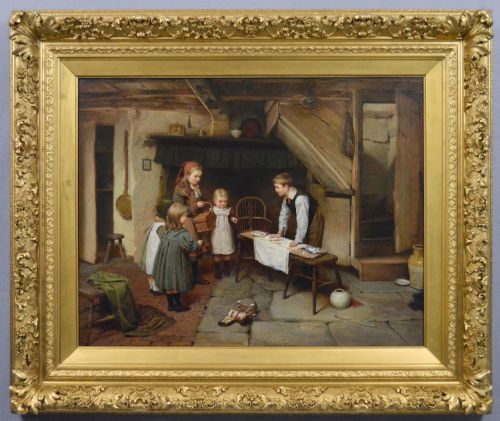


Victorian Interior Genre Picture
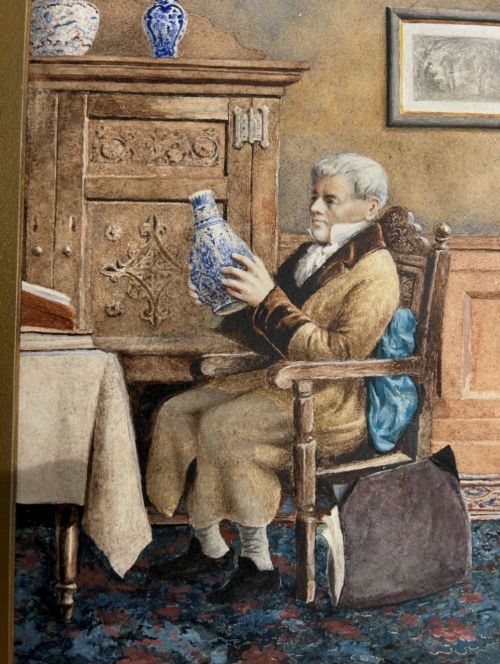
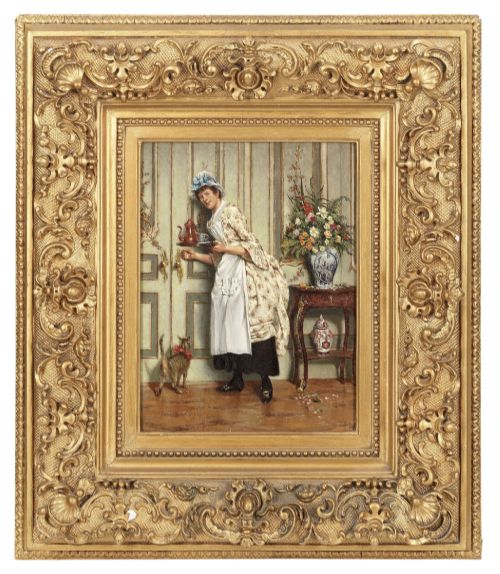
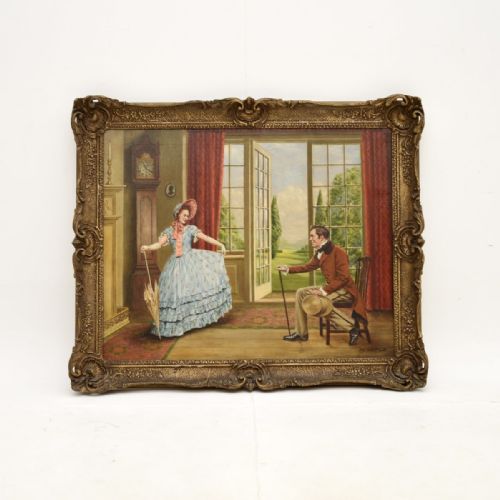
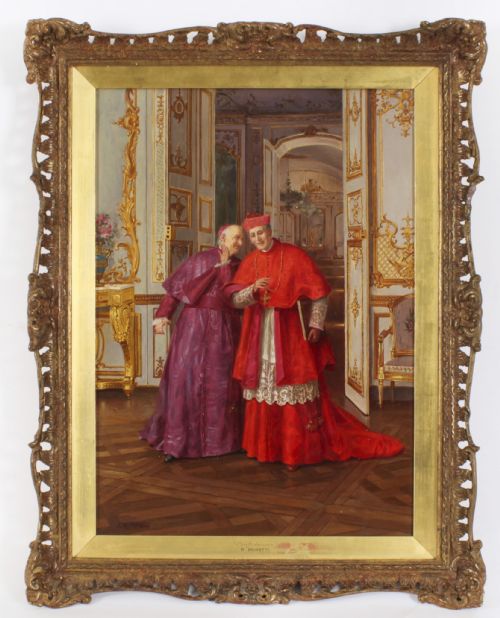
These Victorian interior genre pictures capture domestic narratives and domestic life, framed in wood and gold leaf.
Victorian Interior Genre Picture
A victorian interior genre picture portrays everyday scenes inside domestic rooms, cottages, and long galleries, recording domestic habits and social interactions. The works range from cottage interiors with children and animals to country house tea times and historical figures in furnished spaces.
Most examples found here date across the nineteenth century, including works executed in watercolour and oil paint on canvas, panel, tin, and paper. These pieces capture the daily routines and domestic dramas favoured by academic realism and British genre painting.
Framed artwork dominates the selection, often preserved in original or period gesso and giltwood frames that complete the presentation of the wall art. Buyers encounter both signed original paintings and watercolours alongside followers and after-manner works.
Materials and Techniques
Artists applied oil paint and watercolour onto supports such as canvas, paper, wood board, and tin, building up narrative detail through layered pigments. Gilders and framers encased these paintings in gessoed wood frames finished with gold leaf.
Techniques span detailed academic realism and looser nineteenth-century genre styles, capturing light entering cottage windows or long galleries. Chrystoleum techniques also appear, adding hand-tinted layers to glass prints for domestic display.
The listings show nineteenth-century works executed in oil and watercolour, incorporating wood, gesso, gold leaf, and glass.
Distinctions in Quality
Quality rests in the handling of narrative detail, facial expression, and interior lighting within the composition. Masterful brushwork distinguishes works by named artists from generic follower pieces.
The preservation of the original paint surface and the matching giltwood or gesso frame elevates the piece. Superior examples maintain crisp detail in textiles, furnishings, and figures without heavy restoration.
Henry Stacy Marks·Stephen Samuel Lewin·Alfred Lyndon Grace·Renato Moretti·Harry Brooker·John Arthur Lomax·Edwin Hughes·Hermann Armin Kern·Henry Silkstone Hopwood·George Goodwin Kilburne·Francesco Bergamini·Charles Hunt Jnr·George Cattermole·George Harcourt Sephton
The Victorian Interior Genre Picture Glossary
- Genre painting
- Depiction of aspects of everyday life by depicting ordinary people occupied in mundane activities. These works provide visual records of nineteenth-century domestic habits.
- Chrystoleum
- A method of applying hand-coloured paint to the back of a convex glass print. This technique created a three-dimensional illusion popular in the Victorian period.
- Gesso
- A plaster-like mixture applied to wood frames before gilding. It provides a smooth surface for intricate moulded ornament.
- Watercolour
- Pigments bound in a water-soluble vehicle applied to paper. It offers transparency and luminous washes often seen in nineteenth-century interiors.
- Oil on canvas
- Pigment mixed with drying oil applied to a woven fabric support. This method allowed artists to achieve rich colour saturation and depth.
Victorian Interior Genre Picture: Frequently Asked Questions
What is a genre picture?
A genre picture depicts scenes from everyday life rather than historical, religious, or mythological subjects. These works focus on ordinary people in domestic interiors, cottages, or country houses.
In Victorian art, these scenes often carry subtle moral narratives or domestic anecdotes. They record contemporary manners, furnishings, and clothing with careful attention to detail.
How do I date these paintings?
Dating relies on artist signatures, period framing styles, and dated inscriptions recorded on the canvas or reverse. Many works carry specific nineteenth-century dates or reflect the working spans of named painters.
Clothing styles, interior architecture, and household objects depicted within the scene also offer clues to the decade of creation.
Where should I hang a framed oil?
Framed oil paintings require placement away from direct sunlight and excessive humidity to protect the canvas and gold leaf gesso frames. Wall art of this scale suits living spaces and studies where lighting can be controlled.
Ensuring stable wall fixings supports the weight of heavy wood and giltwood frames safely.
What is a chrystoleum?
A chrystoleum is a Victorian picture created by sticking a photograph or print to glass, making the paper transparent, and then hand-colouring the reverse. This technique produced a layered, glossy finish that mimics an oil painting.
They were widely produced in the nineteenth century for domestic interior decoration.