
Victorian Inlay Side Cabinet
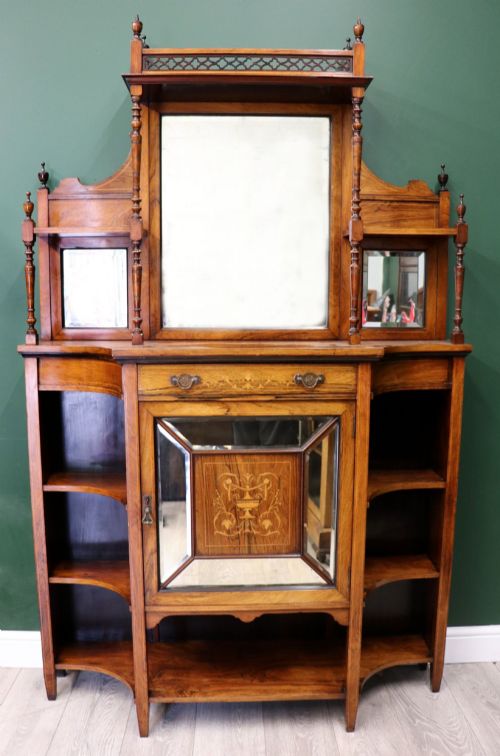
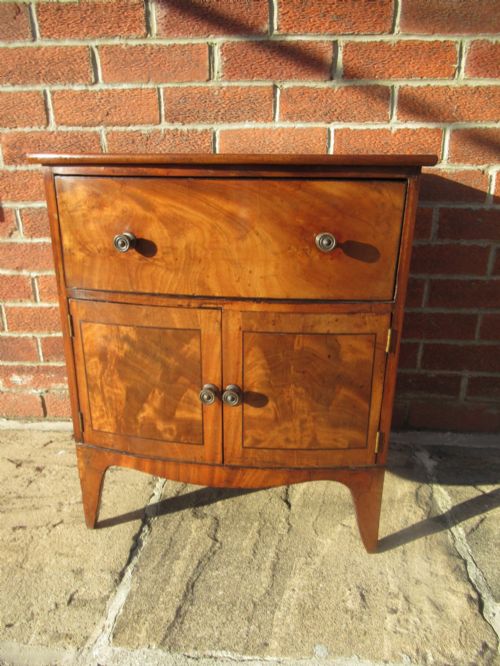
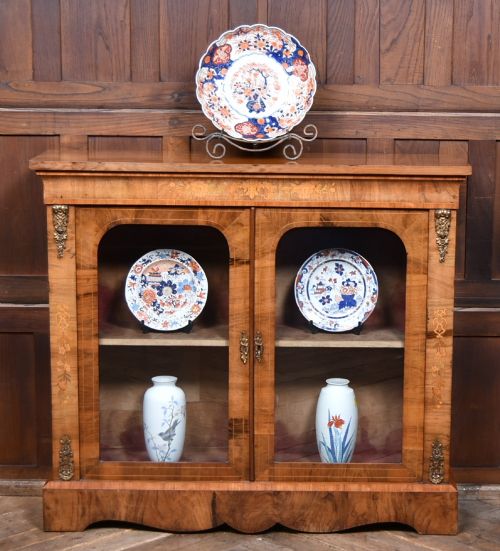
A victorian inlay side cabinet brings refined marquetry and rich timber into a room, serving as a display piece or storage.
Victorian Inlay Side Cabinet
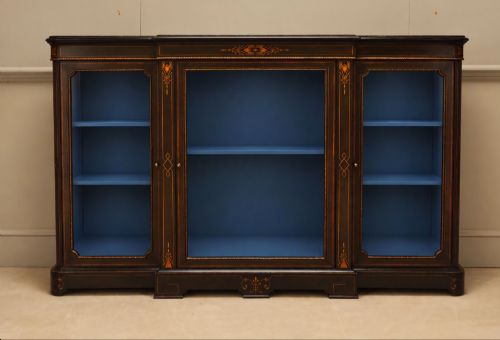
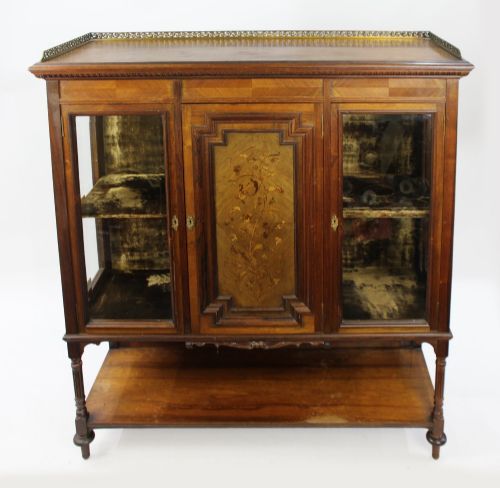
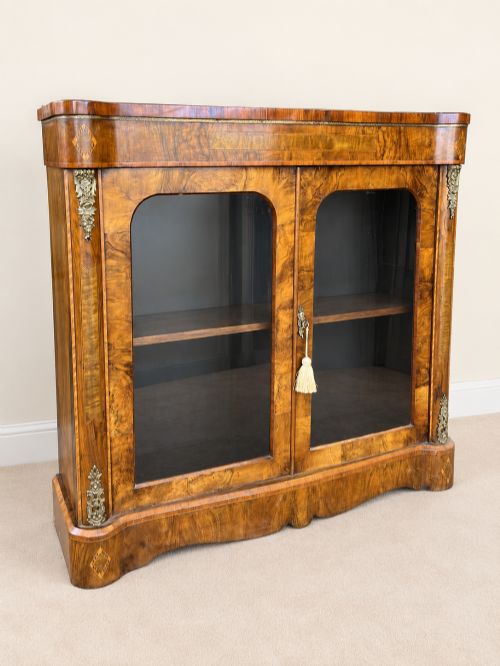
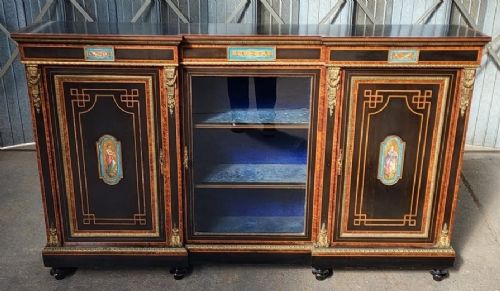
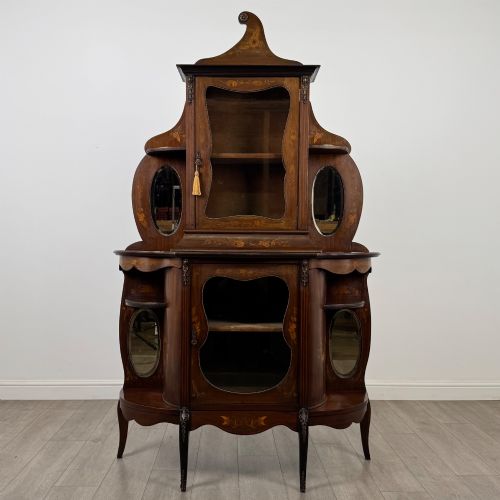
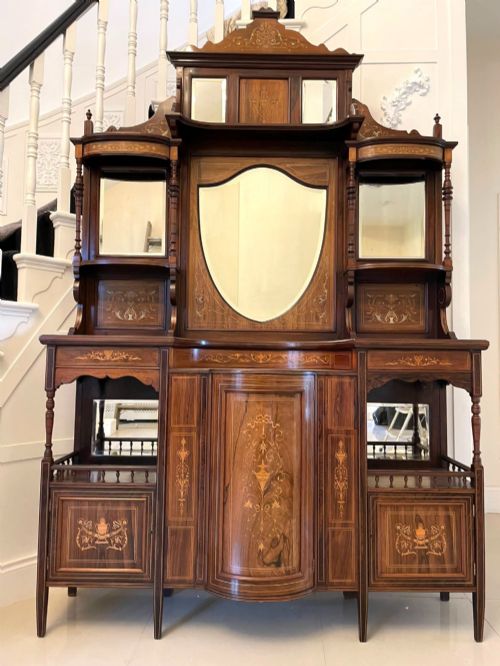
A victorian inlay side cabinet covers a range of forms from credenzas and display cabinets to narrow pier cabinets and bedside units. These pieces emerge from the nineteenth century across decades spanning the eighteen sixties to the eighteen nineties.
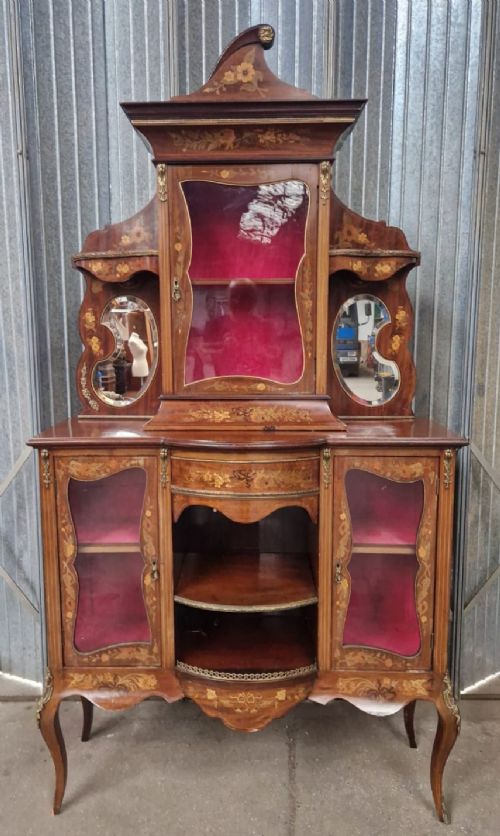
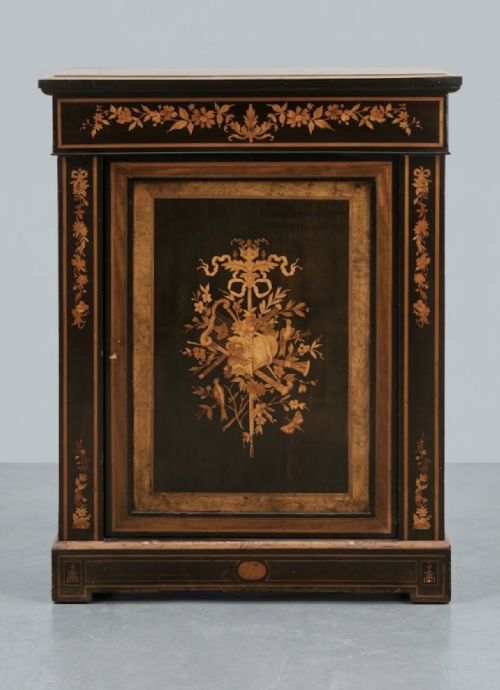
The walnut, rosewood, and mahogany carcases appear alongside ebonised wood and exotic veneers like burr walnut and amboyna. Makers apply satinwood and marquetry inlay to enrich the surface design.
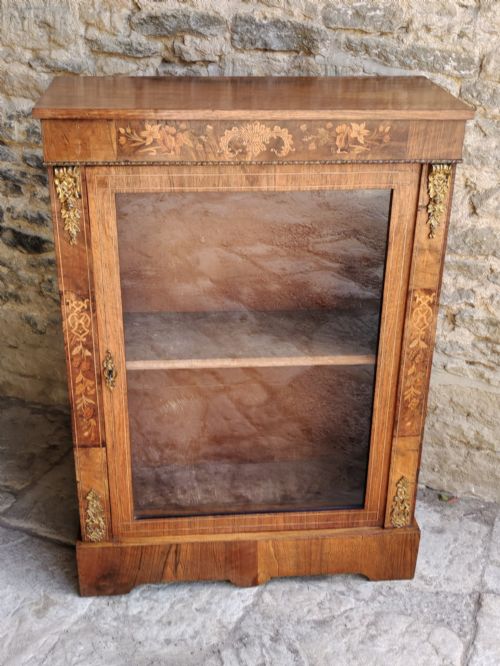
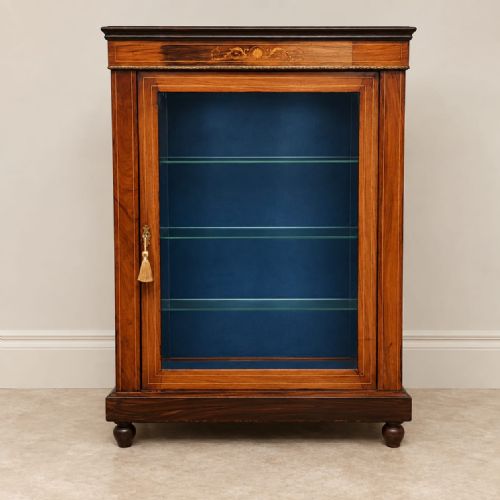
Revival styles dominate the selection, showing Sheraton Revival, French Louis XVI Revival, and Aesthetic Movement influences. Pier cabinets and glazed display cases offer shelving behind glass doors for precious items.
Materials and technique
Carcases utilise solid timbers like walnut, mahogany, and rosewood, frequently faced with decorative burr walnut or satinwood veneers. Marquetry patterns combine various contrasting woods to create floral or geometric motifs.
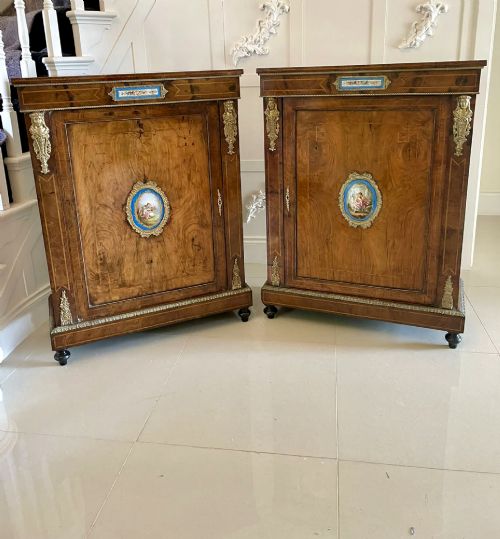
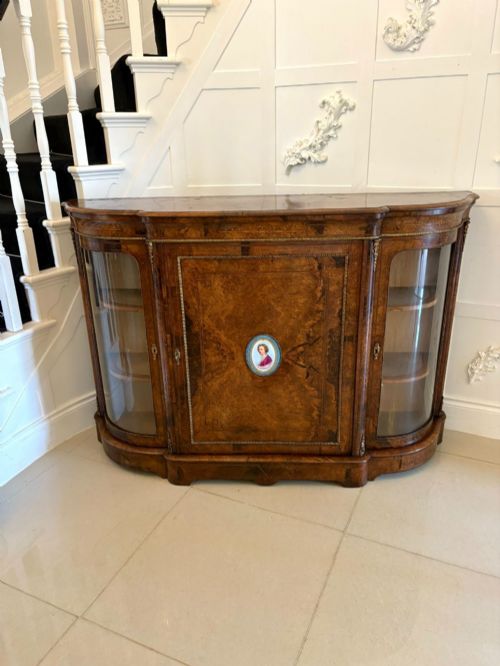
Mounts in ormolu, brass, and occasional tortoiseshell provide structural accent and decorative trim. Porcelain plaques and panels insert into the woodwork on finer credenzas and pier cabinets, secured with brass bezels.
Glass panels glaze the doors of display cabinets and bookcase variants, while velvet lines interior shelving. Ebonised finishes offer a dense black surface that highlights contrasting brass inlay.
Listings feature burr walnut, rosewood, mahogany, and ebonised wood alongside porcelain plaques and ormolu mounts.
What varies in quality
The standard of the marquetry and inlay work dictates the visual success of the piece, with crisp, finely cut botanical motifs separating superior cabinets from simpler linear banding. Timber selection also defines grade, where heavily figured burr walnut or dense grain rosewood commands attention.
Hardware and mounts distinguish the workshop origin, as heavy cast ormolu mounts and stamped maker signatures indicate higher tier production. Porcelain plaques mounted into the door panels introduce another layer of cost and skill.
Collinson and Lock·Gillows·Lamb of Manchester
The Victorian Inlay Side Cabinet Glossary
- Credenza
- A large low cabinet designed for side storage and display, often featuring three glass doors and curved end sections. This form frequently incorporates extensive marquetry and ormolu mounts.
- Pier cabinet
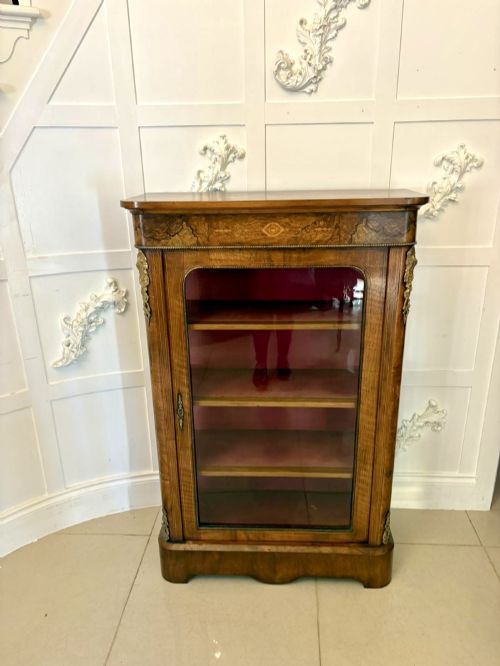
- A tall narrow display cabinet built to stand against the wall space between windows. These glazed cases often house porcelain collections and display delicate satinwood inlay.
- Ormolu
- Gilt bronze mounts applied to furniture edges and panels for decorative effect. The material catches the light and frames the timber doors.
- Marquetry
- Inlaid wood veneers assembled to form pictorial or decorative patterns across a surface. Artisans cut contrasting timber slices to build intricate floral arrangements.
Victorian Inlay Side Cabinet: Frequently Asked Questions
How do I style a pier cabinet?
A pier cabinet fits narrow wall spaces, particularly between windows, without dominating the room. Its glass door and interior shelves suit the display of small ceramics and glass.
The dark wood tones and inlaid patterns coordinate with traditional and eclectic room schemes alike.
What is burr walnut?
Burr walnut is a decorative timber taken from the growth growths on walnut trees, known for swirling, knotty grain patterns. Cabinet makers prized this veneer for its rich texture.
Applied to the front panels of side cabinets, it creates striking visual movement across the surface.
How do I spot revival styles?
Revival styles draw on earlier historic designs, such as Sheraton or French Louis XVI aesthetics, reinterpreted by Victorian craftsmen. Look for classical symmetry, urn motifs, and delicate satinwood banding.
These pieces blend eighteenth-century inspiration with nineteenth-century cabinet-making techniques.