
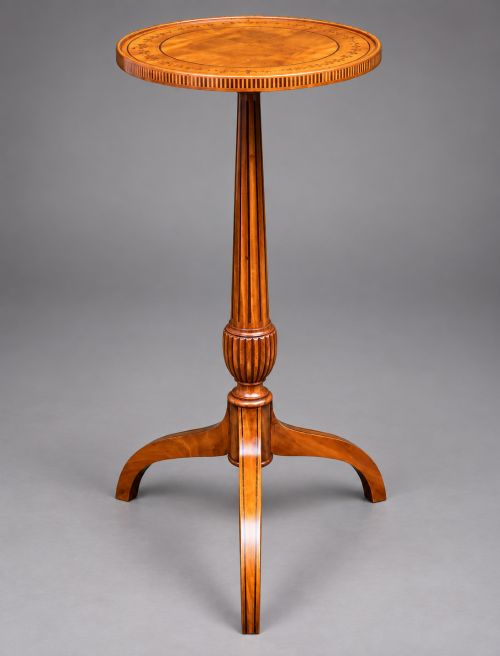
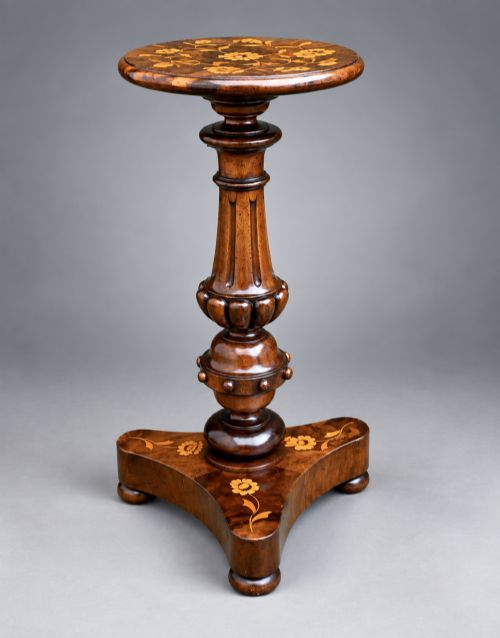
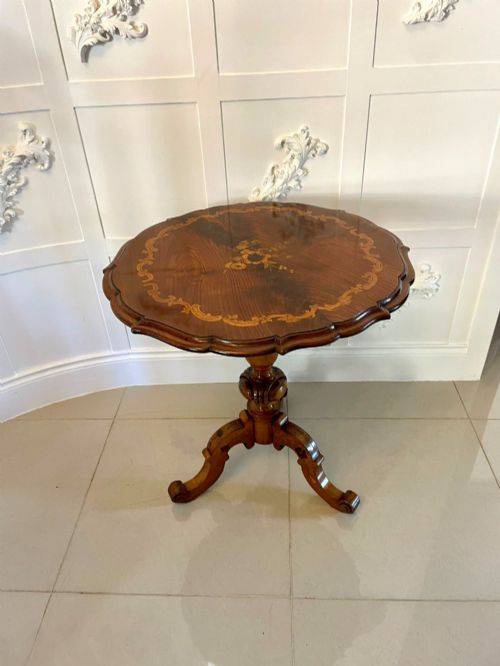
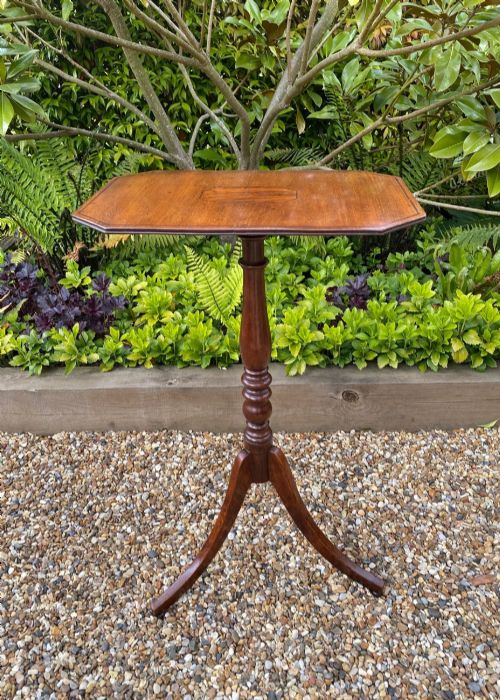
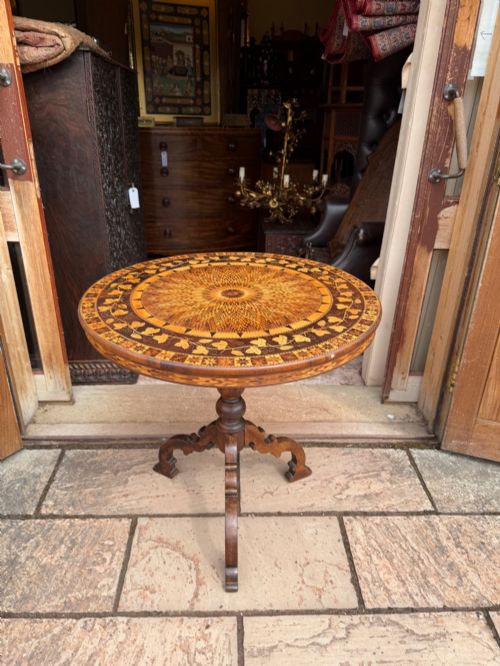
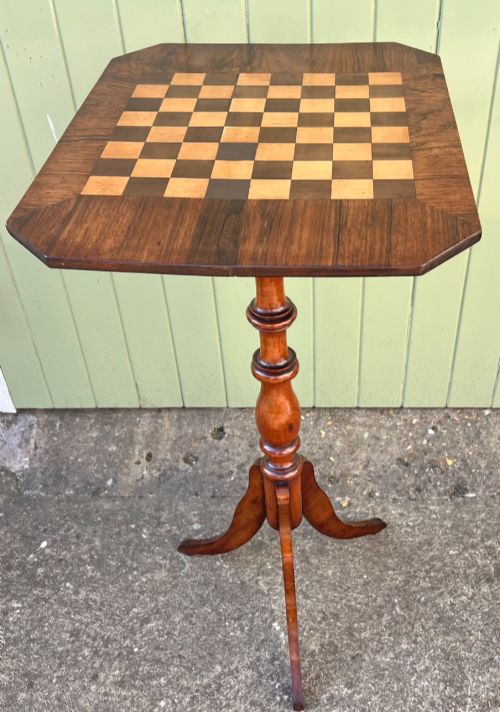
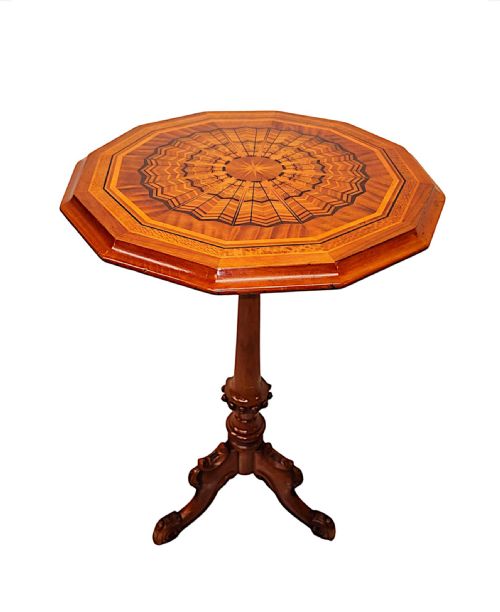
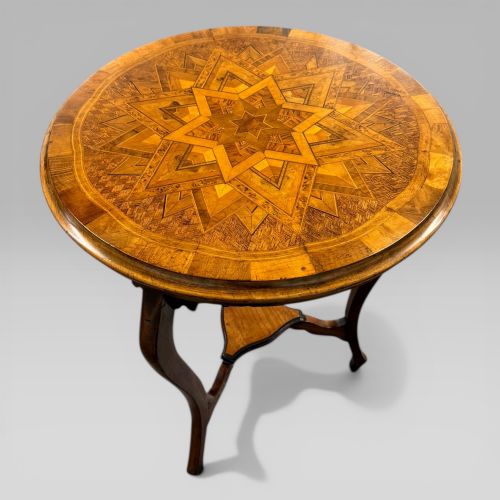


Victorian Inlaid Tripod Table
A victorian inlaid tripod table brings intricate marquetry and a slender pedestal base together, offering a compact surface suited to any corner of a period room.
Victorian Inlaid Tripod Table
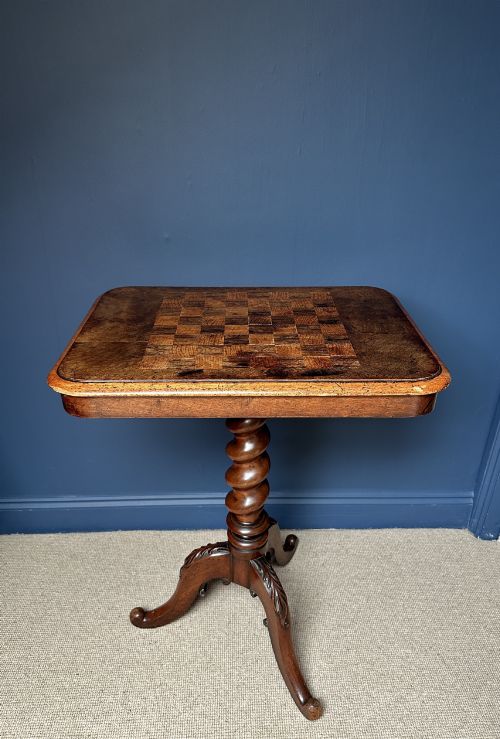
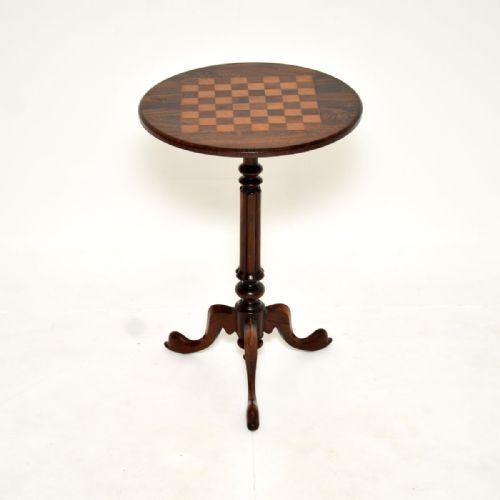
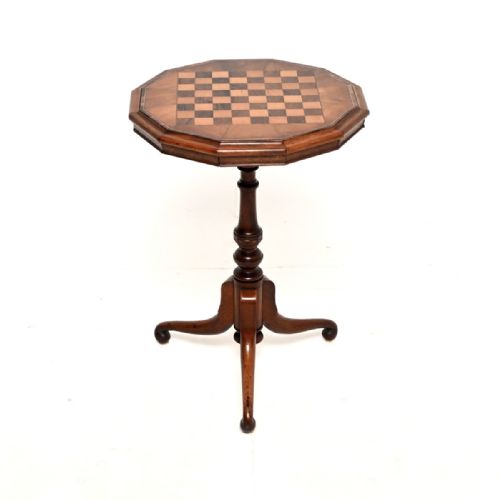
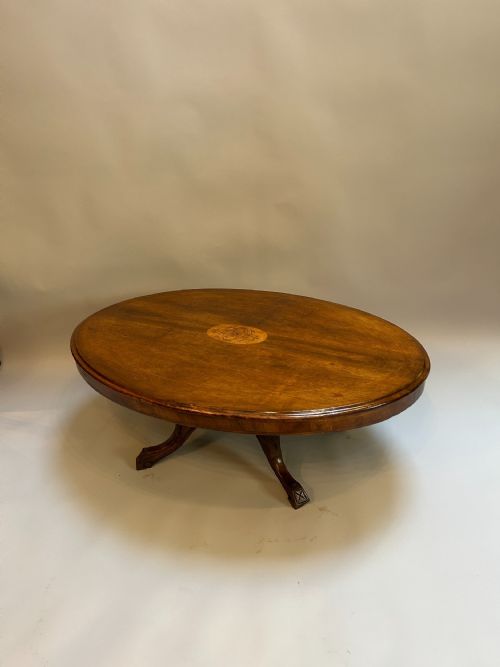
A victorian inlaid tripod table serves primarily as an occasional, chess, or wine table, designed with a central pedestal and three swept legs that support a decorative top. These pieces emerge predominantly from the nineteenth century, reflecting the craftsmanship of the Victorian era alongside international workshops from Italy and India.
Burr walnut and rosewood form the main body of the pieces most frequently met on this page, often detailed with intricate marquetry or wood inlay depicting floral motifs and geometric patterns. Buyers encounter circular, oval, scallop, and serpentine edges, with some versions featuring tilt-top mechanisms or built-in game boards.
The form adapts easily to modern interiors while retaining the distinct character of nineteenth-century cabinet making. Whether utilised as a lamp table beside a reading chair or as a centre piece in a modest study, the compact footprint remains one of the primary attractions for collectors.
Materials and technique
Cabinet makers utilised dense hardwoods like walnut, rosewood, and mahogany as the structural foundation, often selecting burr veneers to create richly figured surfaces on the table tops. Specialised timbers such as satinwood, fruitwood, and various exotic specimen woods provided contrasting colours for detailed marquetry and parquetry patterns.
The decorative schemes rely on precision cutting of thin veneer slices, which are fitted together by hand and glued onto the primary timber base before being polished. Turned columns and three-way leg assemblies require precise joinery to ensure the central pedestal remains stable without sacrificing the slender silhouette characteristic of the style.
Some nineteenth-century tables doubled as secret sewing boxes, concealing threads and needles beneath their intricately inlaid chess boards.
Distinctions in quality
The distinction between standard domestic pieces and top-tier examples lies in the complexity of the marquetry and the choice of timbers used for the veneer. Elaborate multi-wood pictorial inlays, combined with sculpted edges like scalloped or serpentine profiles, separate ambitious exhibition pieces from everyday parlour tables.
Structural integrity of the central pedestal and the crispness of the turned legs reveal the level of care invested by the original maker. Finer examples maintain alignment in their tilt-top mechanisms and display seamless integration between the inlaid top and the solid wood framing.
Gillows·Anton Seuffert
The Victorian Inlaid Tripod Table Glossary
- Marquetry
- The art of forming decorative patterns by fitting together small pieces of wood veneer, often incorporating various coloured timbers and exotic materials. This technique defines the intricate floral and geometric surfaces seen across nineteenth-century table tops.
- Tripod base
- A support structure consisting of a central turned column resting on three curving legs. This design allows the table to stand firmly on uneven floors while occupying minimal floor space.
- Tilt-top
- A mechanism that allows the table top to pivot ninety degrees into a vertical position for storage when not in use. Such tables often feature a brass catch or wooden latch to secure the top in place.
- Burr walnut
- Wood taken from the abnormal growth of a walnut tree, characterised by swirling, highly figured grain patterns. Cabinet makers prized this material for creating decorative focal points on table surfaces.
- Sorrento ware
- Woodwork decorated with micro-mosaic marquetry, originating from the Italian town of Sorrento during the nineteenth century. These pieces frequently depict architectural scenes or intricate geometric motifs.
Victorian Inlaid Tripod Table: Frequently Asked Questions
What is a tilt-top mechanism?
A tilt-top mechanism allows the upper surface of the table to pivot upright through the use of a hinge and catch assembly beneath the surface. This functional addition enabled owners to store the furniture flat against a wall when floor space was required.
In period examples, the hinge components consist of brass or fitted wood, designed to operate smoothly without wobbling when the table is locked in the horizontal position.
How do I identify Sorrento ware?
Sorrento ware is identified by its distinctive micro-mosaic marquetry, which often incorporates pale and dark woods to create pictorial scenes or complex geometric borders. These imported tables frequently arrived from Italy during the nineteenth century.
The technique relies on minute pieces of timber assembled to form intricate imagery, setting them apart from standard domestic British floral inlay.
Where should I place an occasional table?
An occasional table suits small spaces, corners, or beside seating where a full-sized desk or dining piece would overwhelm the room. The narrow footprint of the three-legged base allows it to fit neatly into restricted areas.
Care should be taken to place them away from direct heat sources and strong sunlight to protect the polished wood finishes and delicate veneer work.