


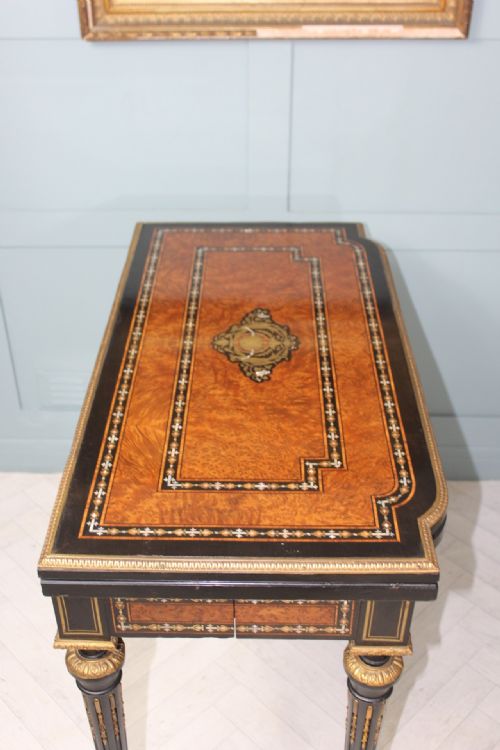


Victorian Inlaid Foldover Table
A victorian inlaid foldover table combines ingenious pivoting timber mechanisms with striking marquetry, offering dual-purpose surfaces that transform from compact consoles to generous display areas.
Victorian Inlaid Foldover Table
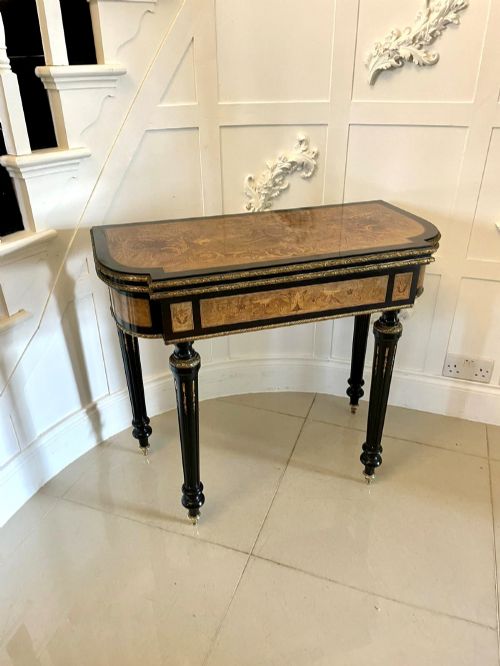
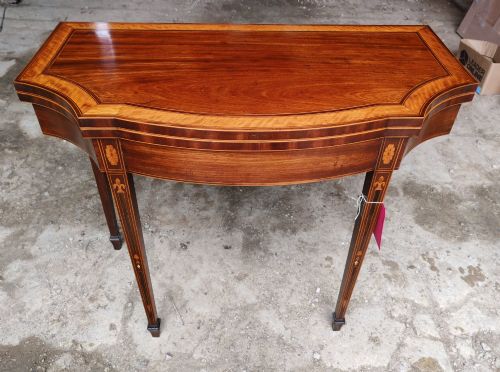
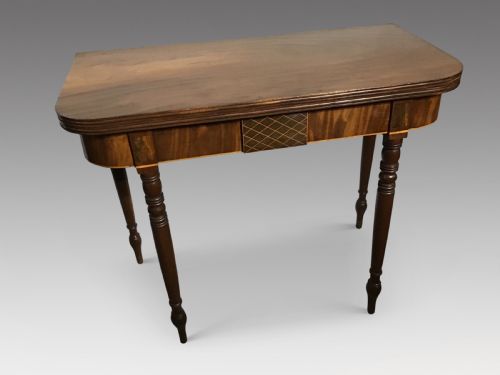
A victorian inlaid foldover table functions primarily as a card, games or tea table, engineered with a hinged top that rotates and drops flat to double its surface area. The pieces documented here span the mid to late nineteenth century, predominantly displaying the Victorian aesthetic alongside occasional Regency, Georgian and Napoleon III examples.
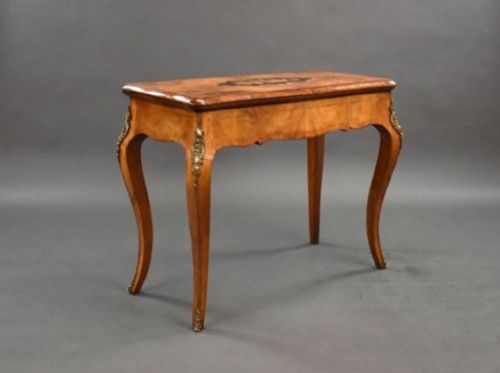
Makers utilised rich native and exotic timbers such as burr walnut, plain walnut, satinwood and mahogany as canvases for elaborate marquetry and boxwood inlay. The most common forms encountered on this page are card and games tables, often supported on central pedestals with carved feet or stretcher bases.
While the majority of examples stem from the Victorian period, the physical evidence includes earlier Georgian tea tables and French Napoleon III designs featuring brass and mother-of-pearl detail. Buyers encounter everything from simple mahogany tea surfaces to highly decorative Victorian Sheraton Revival and Rococo Revival card tables.
How they were made
Cabinetmakers built these tables using solid timber frames veneered with highly figured burr walnut, mahogany or satinwood to create dynamic grain patterns across the folding top. Artisans then recessed contrasting woods like boxwood into the surface to form intricate marquetry inlay, botanical motifs and geometric borders.
Structural integrity relied on sturdy turning for pedestals and legs, sometimes supplemented by brass fittings, ceramic casters and mother-of-pearl accents as seen on French Napoleon III models. The pivoting mechanism required precise joinery so the upper leaf could swivel smoothly on its base and rest level when unfolded.
Listings feature walnut, mahogany, satinwood and burr walnut across Victorian, Georgian and Napoleon III periods.
What varies in quality
The sophistication of the marquetry inlay and the choice of veneer distinguish standard production from exceptional pieces. Tables featuring dense burr walnut and fine boxwood scrolling demand greater craftsmanship than plain mahogany surfaces.
The precision of the pivoting hinge mechanism and the stability of the base determine the overall mechanical success of the table. Superior examples maintain a perfectly flat surface when open without sagging at the unsupported edge.
The Victorian Inlaid Foldover Table Glossary
- Foldover table
- A dual-purpose table with a hinged top leaf that opens out to double the available surface area. This mechanism usually incorporates a pivoting action to support the open leaf.
- Marquetry
- Decorative veneer work arranged in pictorial or geometric patterns using various coloured woods. Artisans cut thin slices of timber to fit together precisely within the primary surface.
- Burr walnut
- Timber taken from a growth on a walnut tree, yielding highly twisted and mottled grain patterns. Cabinetmakers prized this wood for its decorative qualities on prominent surfaces.
- Sheraton Revival
- A late nineteenth-century design movement inspired by the lighter furniture styles of the eighteenth century. These pieces often incorporate satinwood, delicate inlay and tapered legs.
Victorian Inlaid Foldover Table: Frequently Asked Questions
What is a foldover table used for?
These tables served primarily for social pastimes such as card games, chess or serving tea in nineteenth-century drawing rooms. When closed, they functioned as compact side or console tables against a wall.
Opening the top leaf revealed a baize-lined playing surface or a polished wooden top suited to entertaining guests.
How do I identify a Victorian table?
Victorian pieces often display rich walnut or mahogany timbers combined with dark finishes, heavy pedestals and distinct revival styles like Rococo or Sheraton. The construction methods typically involve machine-sawn elements alongside hand-cut dovetails.
Examining the underside and secondary timbers helps confirm the nineteenth-century origin of the piece.
What is marquetry inlay?
Marquetry is the art of applying thin pieces of wood veneer to a structural carcase to form decorative patterns or pictures. Craftsmen cut contrasting timbers like boxwood into the background veneer.
This technique created the elaborate floral and geometric motifs seen on nineteenth-century card tables.
How do I care for a walnut table?
Keep wooden tables away from direct sunlight and sudden temperature changes to prevent the delicate veneer from lifting or cracking. Dust regularly with a soft, dry cloth and avoid silicone-based polishes.
Waxing occasionally helps nourish the historic timber and maintains the natural sheen of the finish.