


Victorian Inlaid Dressing Table
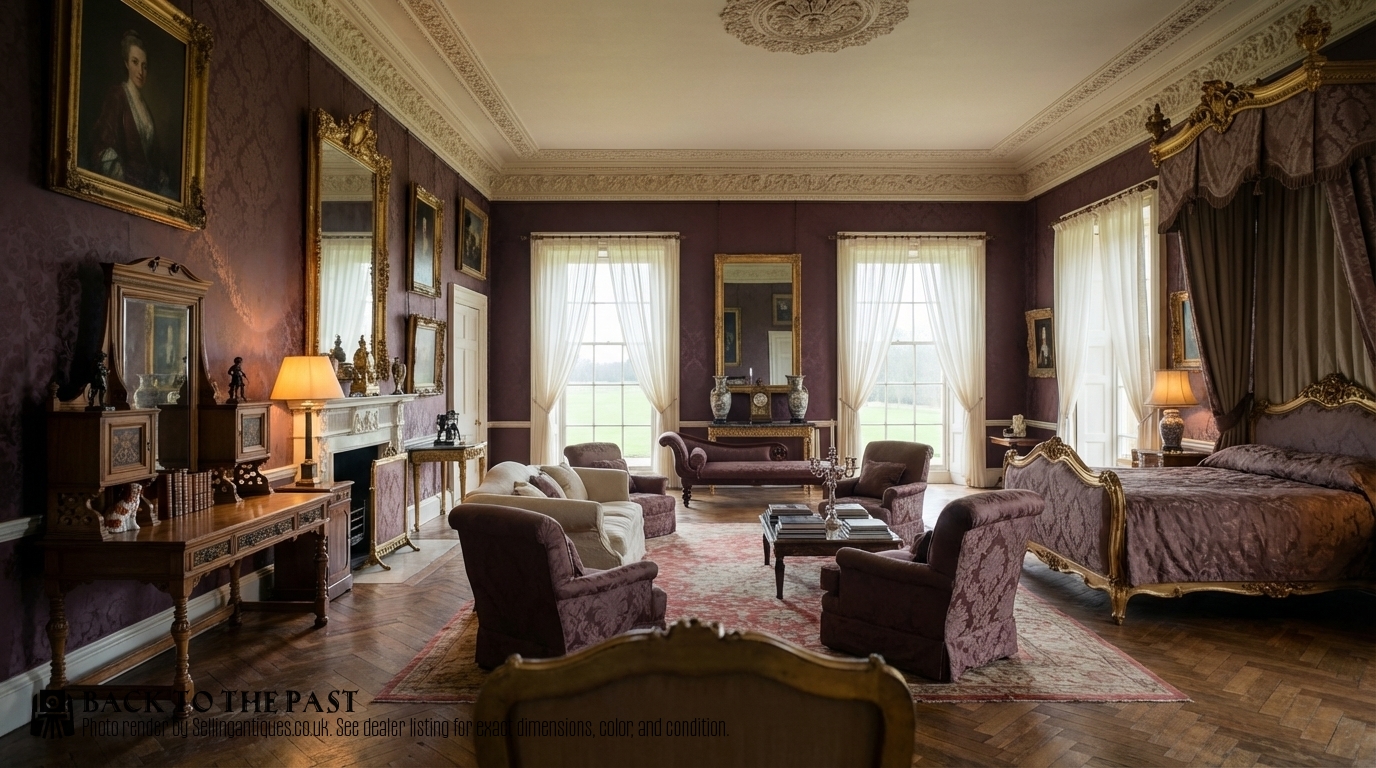
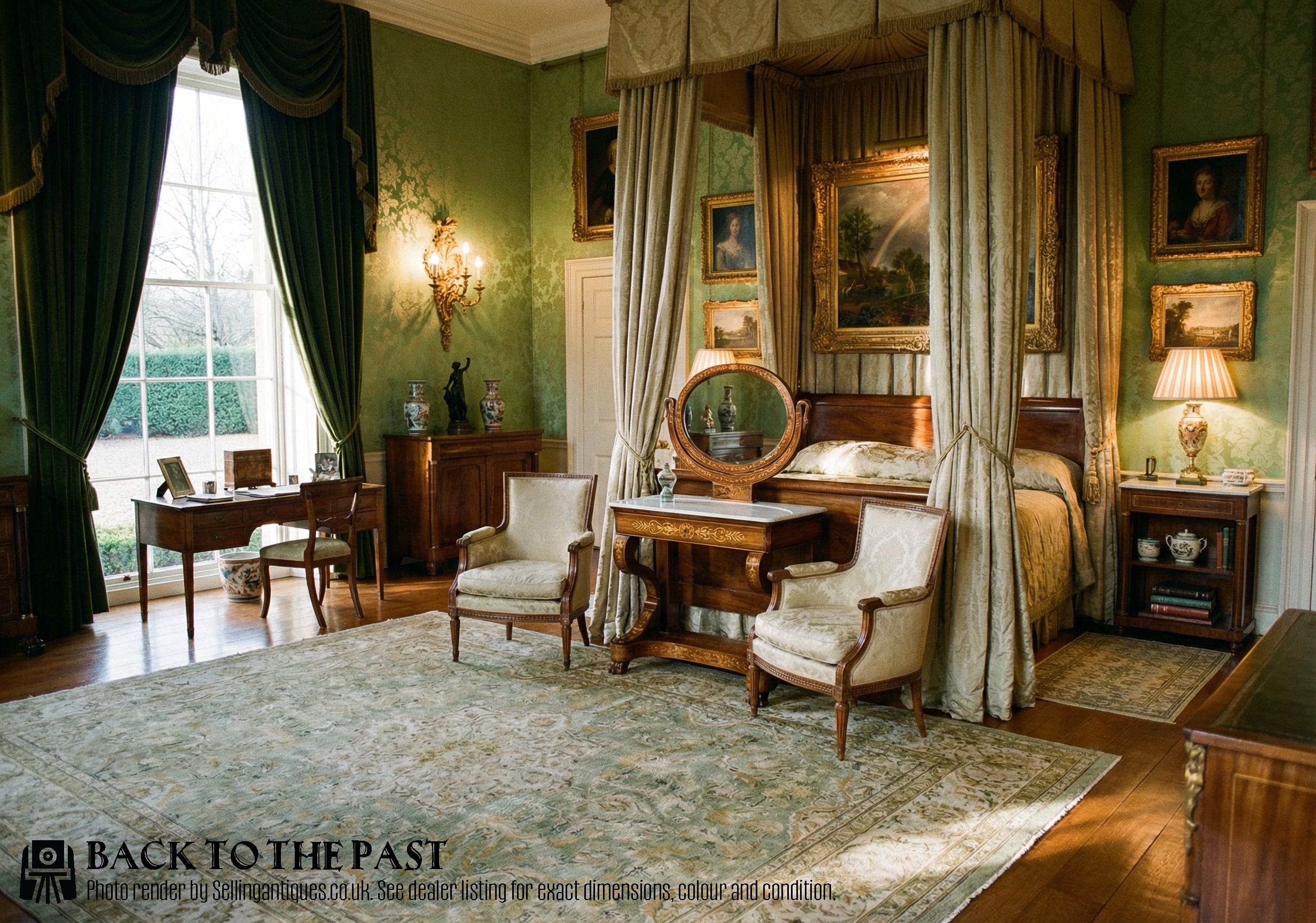
A victorian inlaid dressing table brings refined cabinet-making and intricate surface decoration straight into a bedroom.
Victorian Inlaid Dressing Table
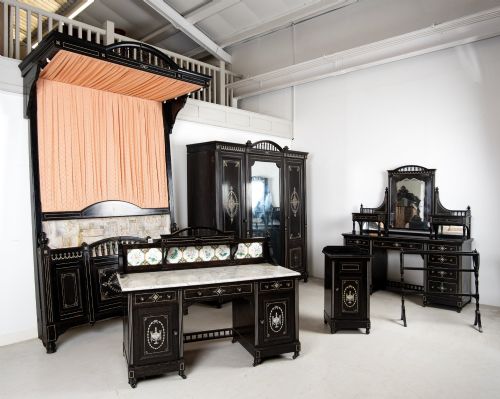
A victorian inlaid dressing table is a dedicated piece of bedroom furniture designed for personal grooming and morning routines, combining a useful writing or display surface with integrated mirrors and storage compartments. These pieces emerge predominantly from the nineteenth century, ranging from mid-Victorian walnut examples to late-century satinwood and mahogany creations decorated with contrasting timber details.
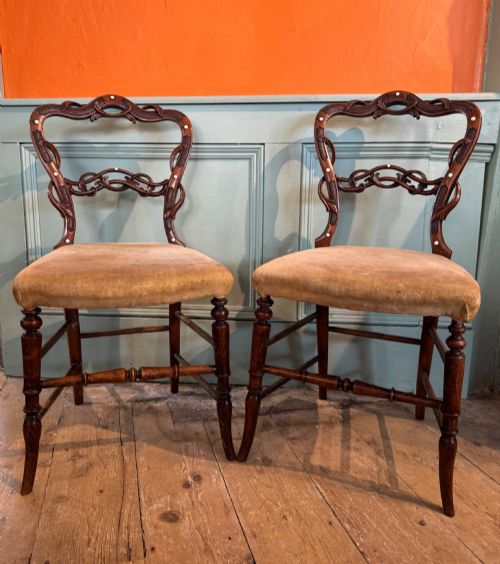
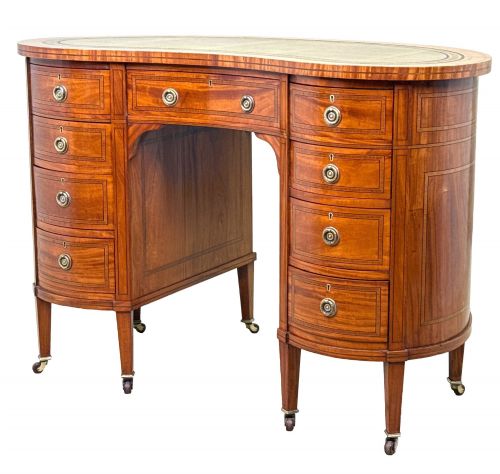
The objects seen here reflect a wide variety of cabinet forms, from kidney-shaped desks and kneehole dressing tables to smaller poudreuse designs and pieces accompanied by matching stools or mirrors. Makers applied various stylistic influences to these dressing tables, incorporating Sheraton Revival symmetry, French Rococo curves, and the linear geometry of the Aesthetic Movement.
Buyers will encounter both larger freestanding tables with swinging vanity mirrors and compact variants intended for boudoir use. The integration of satinwood, rosewood, and walnut veneers provides these tables with striking visual depth, often complemented by boxwood stringing and floral marquetry.
Materials and Technique
Cabinet-makers constructed these dressing tables using solid framing timbers such as mahogany, oak, and walnut, applying fine veneers of satinwood or rosewood to prominent exterior surfaces. The decorative surface patterns rely on marquetry and inlay techniques, embedding contrasting woods, bone, or brass into the primary timber to form floral motifs and geometric banding.
Structural integrity depended upon traditional joinery methods, including dovetailed drawer construction and mortise and tenon joints for the underframes and mirror supports. Glass was utilised for the adjustable swing mirrors, while specialised hardware such as brass handles, locks, and hinges secured the fitted interiors and smaller compartments.
The listings show dressing furniture from the nineteenth century utilising mahogany, walnut, satinwood, and rosewood alongside brass and bone details.
Evaluating Quality
The distinction between ordinary and superior pieces rests on the precision of the cabinet-making and the complexity of the decorative scheme. Finer dressing tables display crisp, seamless marquetry where contrasting timbers fit together without visible gaps or excessive filler, utilising choice veneers with rich natural grain figures.
Construction details also dictate standard, evident in the weight of the timber, the hand-dovetailing of internal drawers, and the original quality of the brass hardware. Pieces carrying attribution to documented workshops or retaining fitted interior compartments reflect a higher tier of nineteenth-century craftsmanship.
Edwards & Roberts·Wright & Hunter·Gillows·Collinson and Lock·H Mitchell
The Victorian Inlaid Dressing Table Glossary
- Marquetry
- Decorative veneer work forming pictures or patterns by arranging small pieces of wood, shell, or ivory onto a structural ground. This technique allows cabinet-makers to create elaborate floral and scroll designs across drawer fronts and tabletops.
- Satinwood
- A durable, lustrous timber native to the tropics, prized for its golden-yellow colour and natural sheen. It was frequently used as a primary veneer on late nineteenth-century dressing furniture.
- Poudreuse
- A French-style dressing table equipped with folding lids that conceal a mirror and compartments for cosmetics and powders. These pieces represent a specialised form of personal vanity furniture.
- Kneehole
- A desk or dressing table configuration featuring a central recess for the user's legs, flanked by pedestals of small drawers. This layout became particularly popular in nineteenth-century bedroom and writing furniture.
- Stringing
- Thin lines of contrasting wood inlaid into the surface of a piece to outline drawers, tabletops, or legs. It provides a subtle geometric border that accentuates the primary timber.
Victorian Inlaid Dressing Table: Frequently Asked Questions
What is a victorian inlaid dressing table?
A victorian inlaid dressing table is a nineteenth-century vanity piece featuring decorative wood inlays, a usable surface, and usually an attached or matching mirror.
These tables were standard bedroom furnishings for upper and middle-class homes during the Victorian period, serving as functional spaces for personal grooming.
How do I care for polished wood?
Polished wood surfaces require protection from direct sunlight, excess moisture, and extreme temperature fluctuations to prevent veneer cracking or fading.
Applying occasional applications of appropriate natural wax helps maintain the lustre of the timber without damaging historical finishes.
Are mirrors original to the tables?
Many dressing tables retain their original swing mirrors and mounting arms, though some sustained damage over time and received replacements.
Checking the bevel of the glass, the oxidation on the mirror back, and the fit of the support brackets helps determine period authenticity.
What styles of inlay exist?
Inlay styles range from simple geometric boxwood stringing to elaborate floral marquetry executed in satinwood, tulipwood, and rosewood.
Cabinet-makers also drew inspiration from Sheraton Revival, French Rococo, and Aesthetic Movement design vocabularies when planning the surface decoration.