






Victorian Inlaid Commode
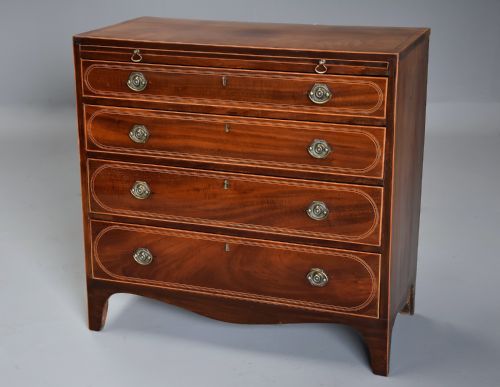
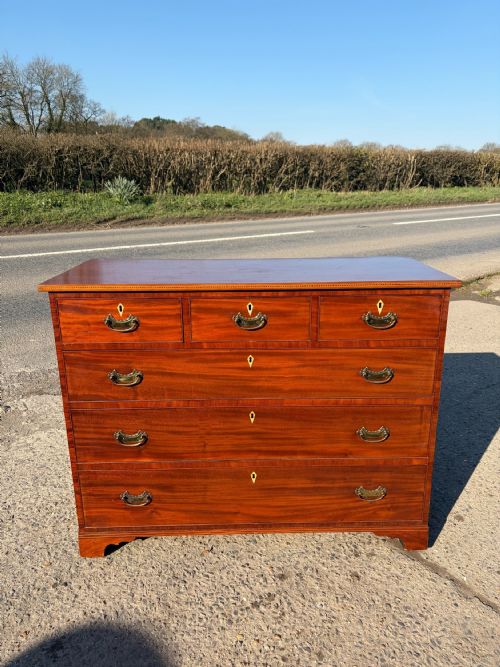
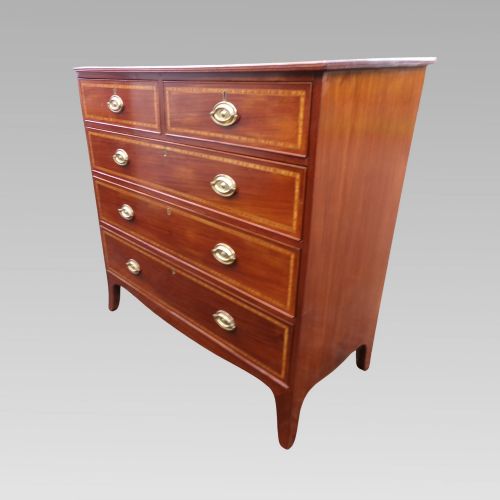
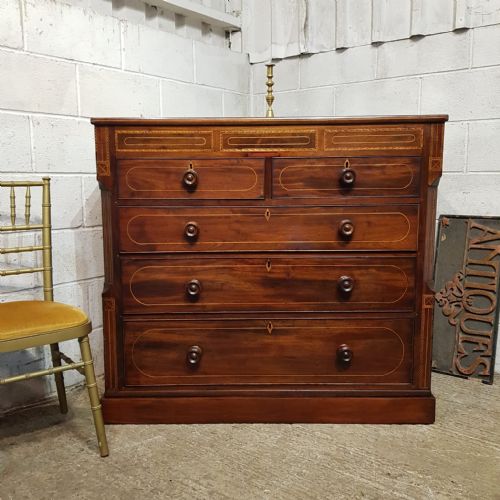
A victorian inlaid commode brings together the warmth of traditional cabinet woods and the crisp geometry of decorative stringing.
Victorian Inlaid Commode
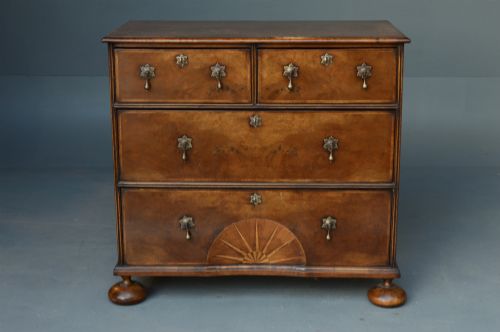
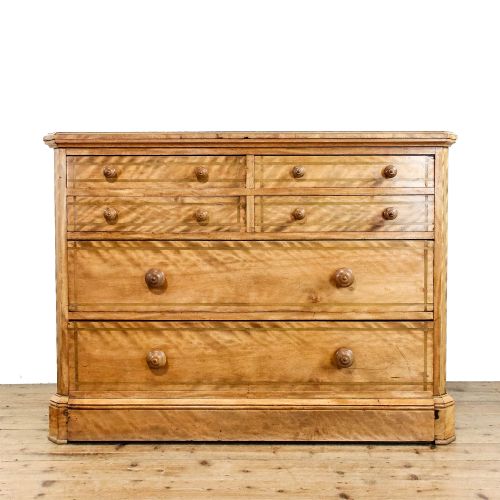
The term victorian inlaid commode covers a range of storage forms produced across the nineteenth century, most frequently appearing as mahogany, satinwood or walnut chests of drawers and side cabinets. These pieces combine utilitarian drawer space with surface decoration, utilising contrasting timbers and borders.
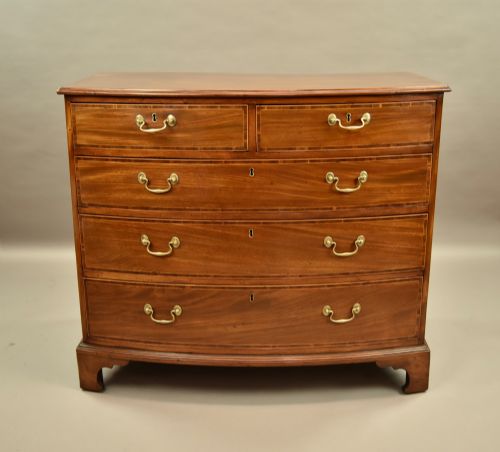
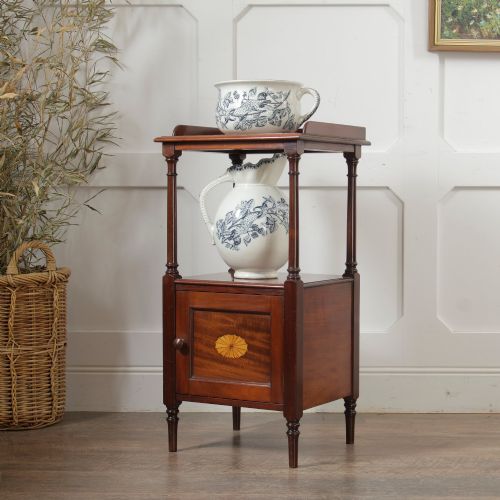
The selection ranges from robust bowfront chests and tall four-height drawer units down to serpentine cabinets, side tables and miniature furniture. Many examples emerge from the later decades of the period, drawing on Sheraton Revival and classical design influences.
Origins stretch from standard nineteenth century production through to Edwardian interpretations, incorporating regional workshops and named retailers. Buyers will encounter both dense mahogany carcases and lighter satinwood finishes accented with boxwood and diverse wood inlay.
Materials and construction methods
Cabinetmakers built these pieces using solid timbers such as mahogany, pitch pine and walnut for structural stability, frequently applying finely figured veneers to drawer fronts and top surfaces. Flame mahogany and birdseye maple provide natural decorative grain patterns across the main bodies.
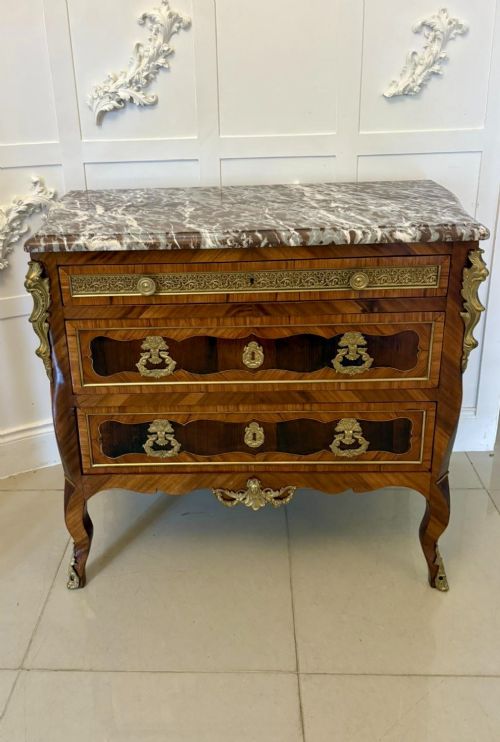
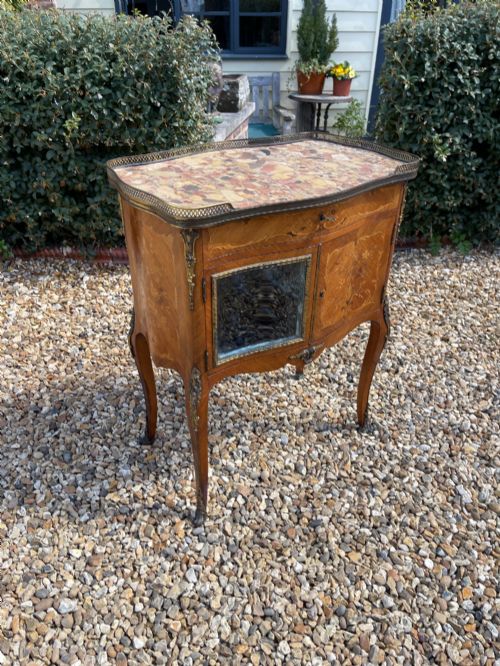
Surface embellishment relies on precise wood inlay and stringing, often combining boxwood, satinwood and darker contrasting woods to form geometric borders and classical motifs. Ormolu mounts, brass handles and marble tops appear on select French-influenced or high-status variants.
Victorian Inlaid Commode Retail Price Guide 2026
Typical asking prices for victorian inlaid commode among the pieces listed under this phrase on Sellingantiques today, from the lower quarter to the upper quarter. They describe what is for sale here now, not the wider market.
Among the full-sized wardrobes and tall cabinets, tiny hands carefully constructed miniature amboyna chests of drawers to test advanced joinery skills.
Evaluating craftsmanship and detail
Quality reveals itself in the crispness of the inlay and the selection of timber veneers, where finer pieces display tight, symmetrical grain alignment and meticulously fitted banding. The depth of hand-carved details, the weight of the brass hardware and the neatness of dovetail joints in the drawer construction separate standard production from superior workshop output.
Proportion and execution define the distinction between straightforward utility furniture and elevated revival pieces. Superior examples maintain balanced lines across serpentine or bowfront shapes, ensuring that decorative additions enhance rather than crowd the structural form.
Druce & Co·Mawer & Stephenson
The Victorian Inlaid Commode Glossary
- Inlay
- A technique where pieces of contrasting wood, metal or shell are inserted into depressions flush with the surface to create decorative patterns. It defines the characteristic ornamentation on these cabinets.
- Crossbanding
- A border of veneer laid around the perimeter of a drawer front or tabletop so that the grain runs at right angles to the central panel. This frames the primary wood.
- Serpentine
- A furniture front or top that curves outward at the centre and inward at the sides in a gentle 'S' shape. It requires advanced woodworking skill to execute properly.
- Ormolu
- Gilded bronze or brass applied as mounts, handles or feet on decorative furniture. It frequently highlights pieces influenced by French rococo design.
- Satinwood
- A durable, lustrous timber native to India and Ceylon with a yellowish-gold sheen. Cabinetmakers utilised it extensively for late nineteenth-century revival pieces.
Victorian Inlaid Commode: Frequently Asked Questions
How do I date a Victorian commode?
Dating relies on examining the secondary timbers inside the carcase, the style of the drawer dovetails, and the specific revival motifs used in the decoration. Earlier nineteenth-century examples tend to feature solid mahogany and simpler linear inlays.
Later Victorian and Edwardian pieces often display lighter satinwood, painted panels, and more complex Sheraton Revival or classical ornament patterns.
What is the difference between a commode and a chest of drawers?
In nineteenth-century British usage, the term commode often overlaps with decorative low cabinets, side cupboards, and serpentine chests designed for formal rooms. A standard chest of drawers focuses primarily on stacked horizontal storage for linens or clothing.
Many pieces listed under this phrase combine enclosed cupboard space or side cabinet doors with traditional drawer configurations.
Are marble top commodes French?
Marble top variants frequently reflect French Rococo Revival influence or Italian workshop production imported for the British market. They combine traditional timber carcases with stone surfaces designed for practical washstand or serving use.
These pieces stand apart from standard British mahogany chests through their heavier tops and gilt bronze or ormolu mounts.
How do I care for inlaid wood?
Inlaid surfaces require protection from direct sunlight and extreme humidity changes to prevent the delicate boxwood and satinwood stringing from lifting or drying out. Gentle dusting with a dry, soft cloth preserves the polished finish.
Avoid heavy silicone polishes and maintain stable indoor temperatures to safeguard the underlying veneers and timber.