
Victorian Inlaid Chest
A victorian inlaid chest combines sturdy nineteenth-century timber with delicate contrasting wood details, offering functional storage alongside ornate decorative character.
Victorian Inlaid Chest
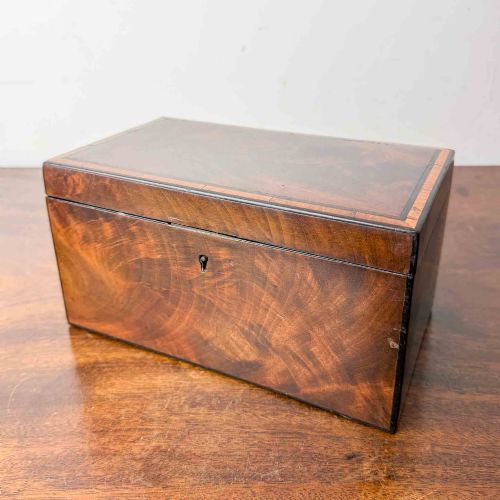
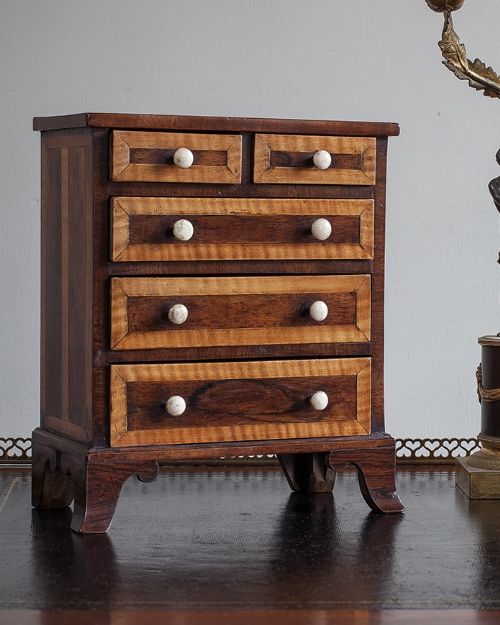
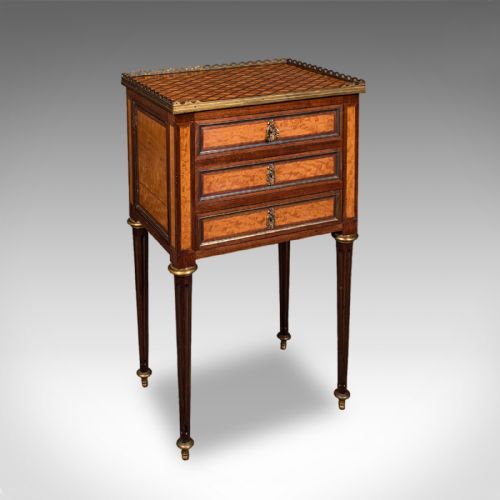
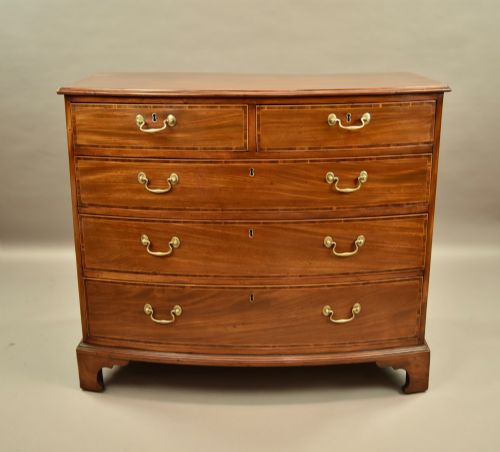
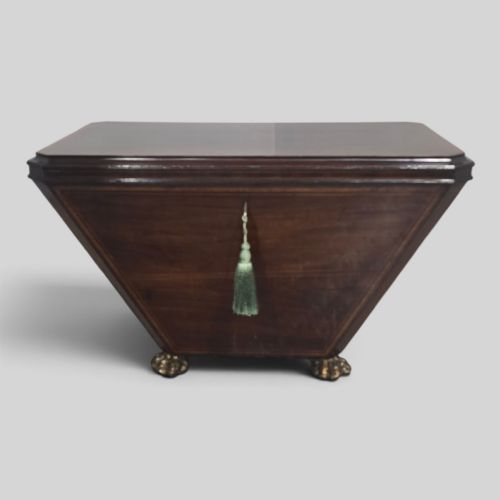
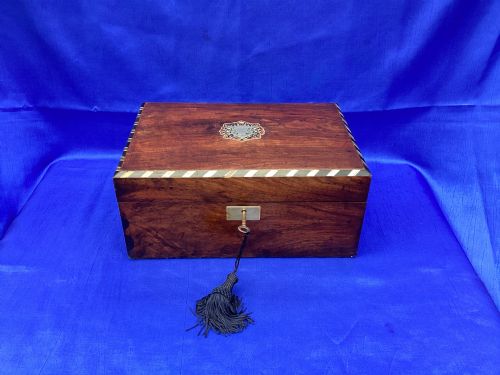
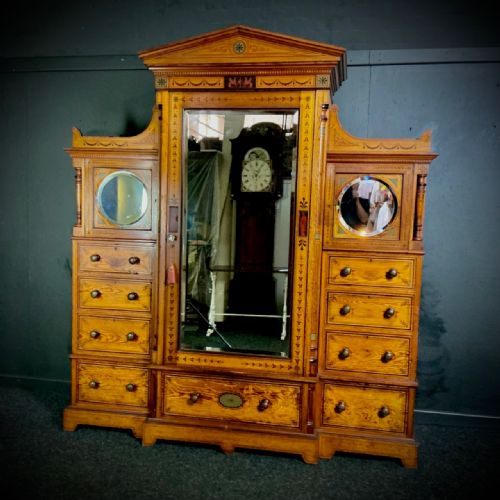
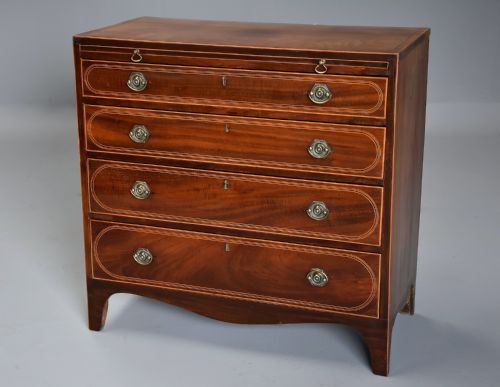
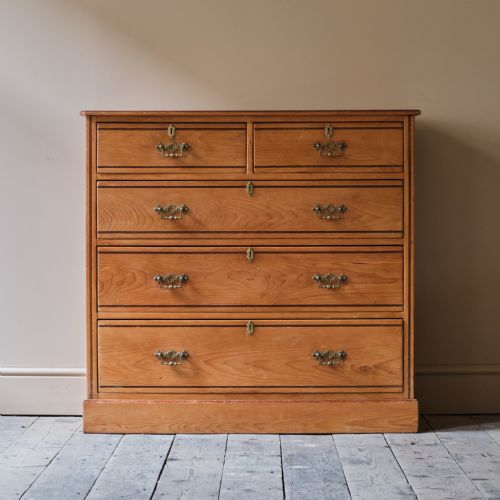
A victorian inlaid chest typically takes the form of a substantial timber set of drawers, alongside smaller bedside cabinets and commodes originating from the nineteenth century.
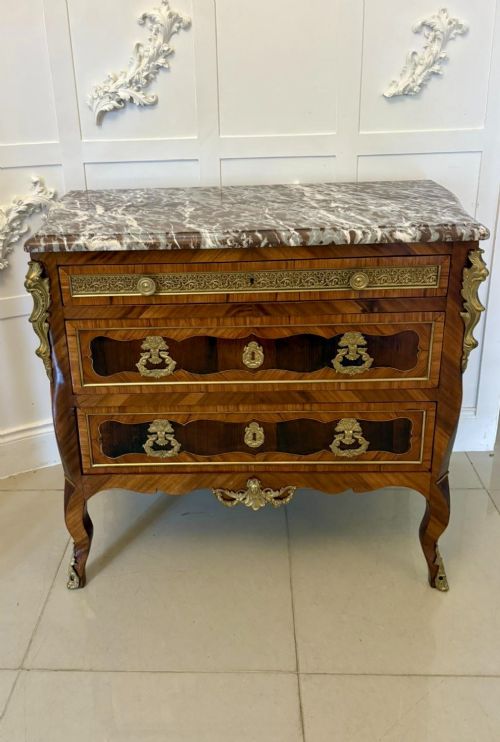
The selections span standard upright drawer configurations, bowfront designs, and serpentine fronts, often showcasing decorative wood marquetry and contrasting banding.
Makers and workshops of the period utilised various revival styles, ranging from Sheraton and Hepplewhite influences to French Louis XVI interpretations.
How they were made
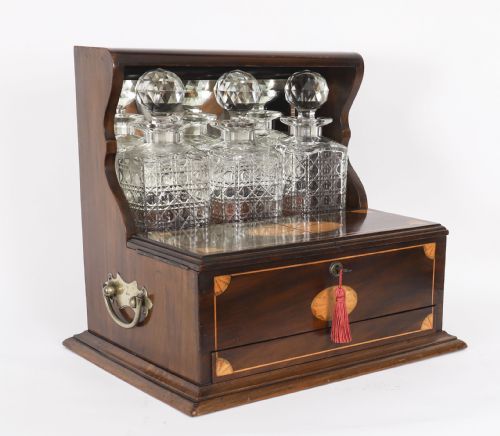
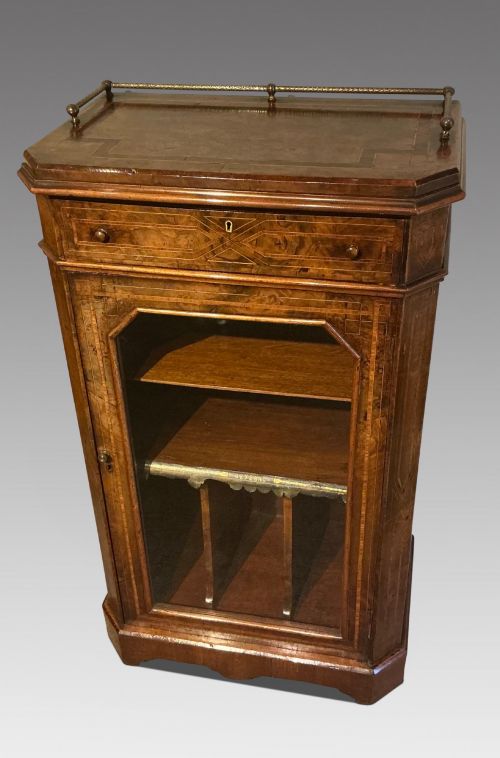
Cabinet makers constructed carcass frames from solid timbers such as mahogany, walnut, rosewood, and pine, applying finely sliced decorative veneers to flat drawer fronts and top surfaces.
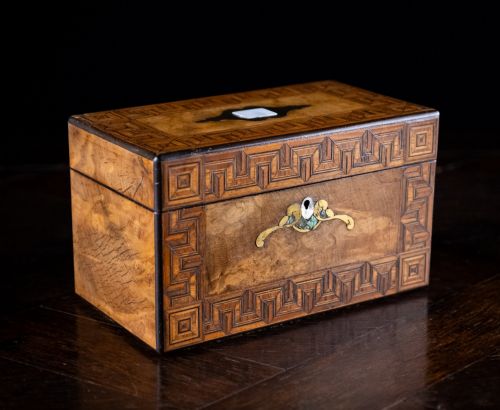
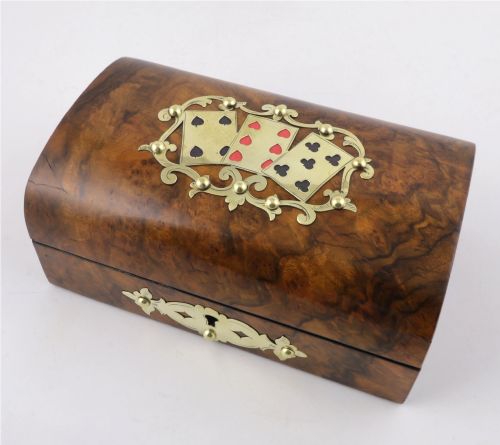
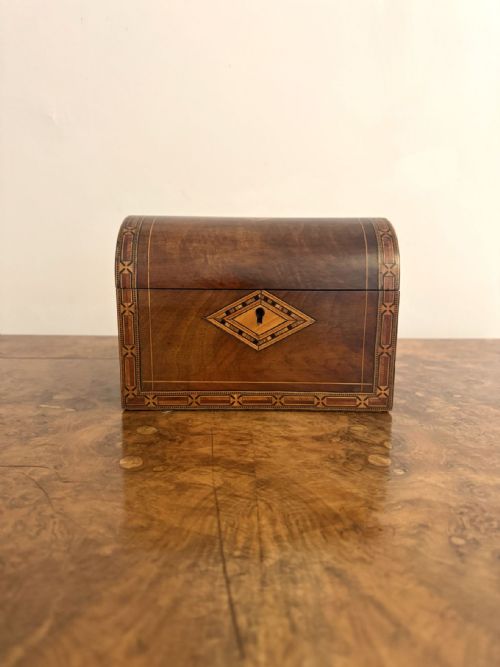
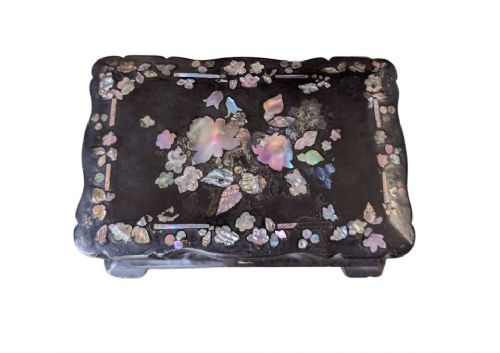
Wood inlay, parquetry, and Tunbridge work employed contrasting botanical species and materials like brass, mother of pearl, and tortoiseshell to build intricate geometric or floral motifs into the timber.
Traditional joinery methods secured drawer boxes and frames, often complemented by cast brass handles, escutcheons, and occasional marble tops on continental-influenced commodes.
Listings feature nineteenth-century furniture built from walnut, mahogany, and rosewood, incorporating brass, mother of pearl, and Tunbridge inlay.
What varies in quality
The standard of timber selection and veneer matching defines the visual harmony of the piece, where superior examples exhibit continuous grain patterns and precise tonal transitions across the drawer banks.
The execution of the inlay work marks the division between standard production and master craftsmanship, distinguishing sharp, tight joints in contrasting woods from simpler painted or crude insertions.
Internal construction details, such as solid secondary woods for drawer linings, hand-cut dovetails, and the presence of original locks and handles, reflect the initial workshop grade.
Edwards and Roberts·Druce and Co·Henry Hollamby·Mawer and Stephenson·Holland and Sons
The Victorian Inlaid Chest Glossary
- Marquetry
- The art of forming decorative patterns by fitting together small pieces of wood veneer, shell, or ivory onto a structural surface. This technique creates pictorial or geometric scenes across drawer fronts and tops.
- Parquetry
- A geometric mosaic of wood pieces used for decorative floors and cabinet surfaces. Triangular or square tiles of contrasting timber build up repeating patterns.
- Tunbridge Ware
- A distinct type of decorative woodwork characterised by tiny mosaic tesserae assembled to form intricate pictorial scenes. Each motif is built from thousands of microscopic wood sections.
- Serpentine
- A furniture front or top shaped with a convex centre flanked by concave curves, creating a flowing wavy line. This profile demands advanced woodworking skill to match the veneer accurately.
- Crossbanding
- A narrow strip of veneer applied across the grain direction around the border of a panel. It frames the central timber and provides a neat visual boundary.
Victorian Inlaid Chest: Frequently Asked Questions
How do I date a Victorian inlaid chest?
Dating relies on observing a combination of timber choices, handle styles, and construction techniques typical of the nineteenth century. Makers often incorporated specific revival styles that shifted from heavy classical proportions toward lighter satinwood designs by the end of the era.
Examining the secondary woods inside drawer linings and the precision of the hand-cut dovetails also helps narrow down the decade of production between the early and late periods.
Where were these chests placed in a period home?
These pieces primarily served bedrooms as tall drawer chests or bedside cabinets for personal garments and accessories. Finer marquetry examples frequently stood in reception rooms or parlours to display ornaments and store linens.
Larger commodes and secretaire chests also functioned in studies or drawing rooms, providing both a writing surface and concealed compartment storage.
How should I clean and care for the wood surface?
Regular maintenance involves dusting with a soft, dry cloth to prevent grit accumulation on the delicate veneer and inlay. Application of traditional beeswax helps nourish the timber and preserve the polish without sealing the pores.
Direct sunlight and sudden humidity changes must be avoided to prevent the delicate wood veneers and small brass or mother of pearl inlay elements from lifting or cracking.
What is the difference between marquetry and parquetry?
Marquetry focuses on creating curved, pictorial, or floral designs using various coloured wood veneers arranged into elaborate scenes. Artisans cut these shapes together to form seamless pictorial panels on drawer fronts and tabletops.
Parquetry relies on strict geometric and symmetrical patterns, such as cubes, triangles, and squares, built from contrasting wood tiles to cover surfaces in repeating mathematical layouts.