


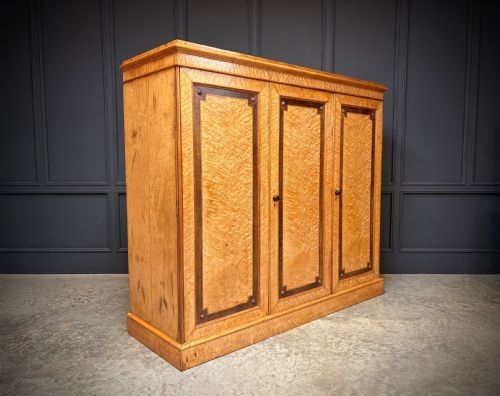
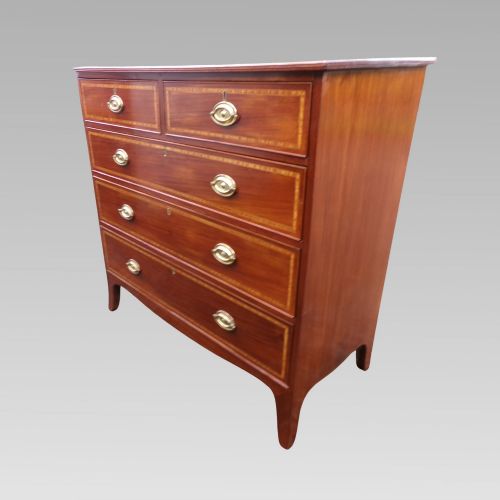
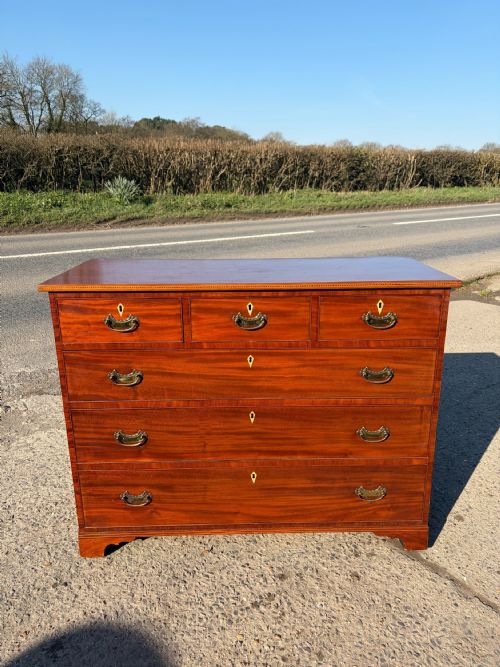


Victorian Inlaid Bedroom Storage
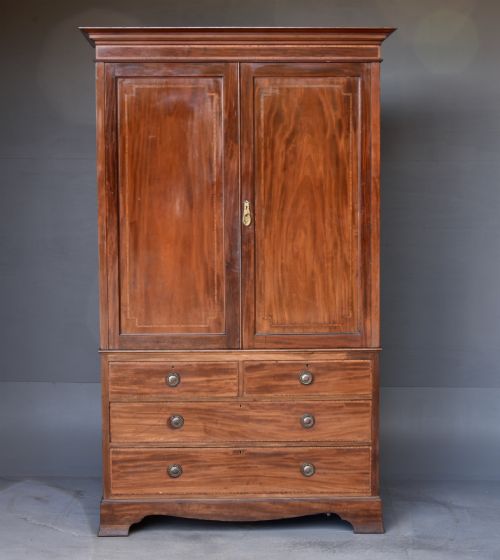
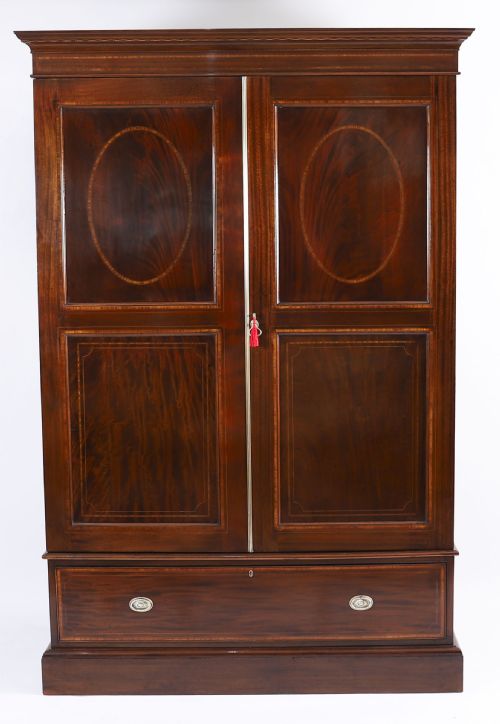
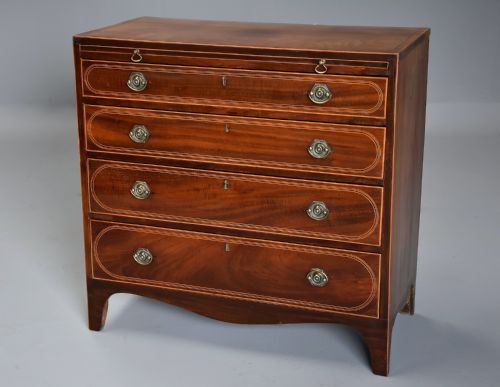
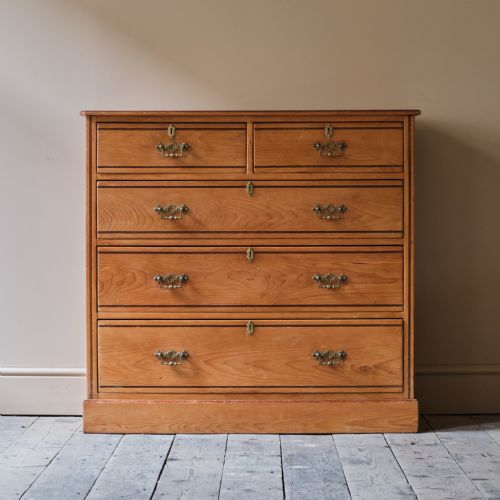
Victorian inlaid bedroom storage comprises period wardrobes, bedside tables and chests of drawers that bring substantial timber and careful marquetry to daily domestic organisation.
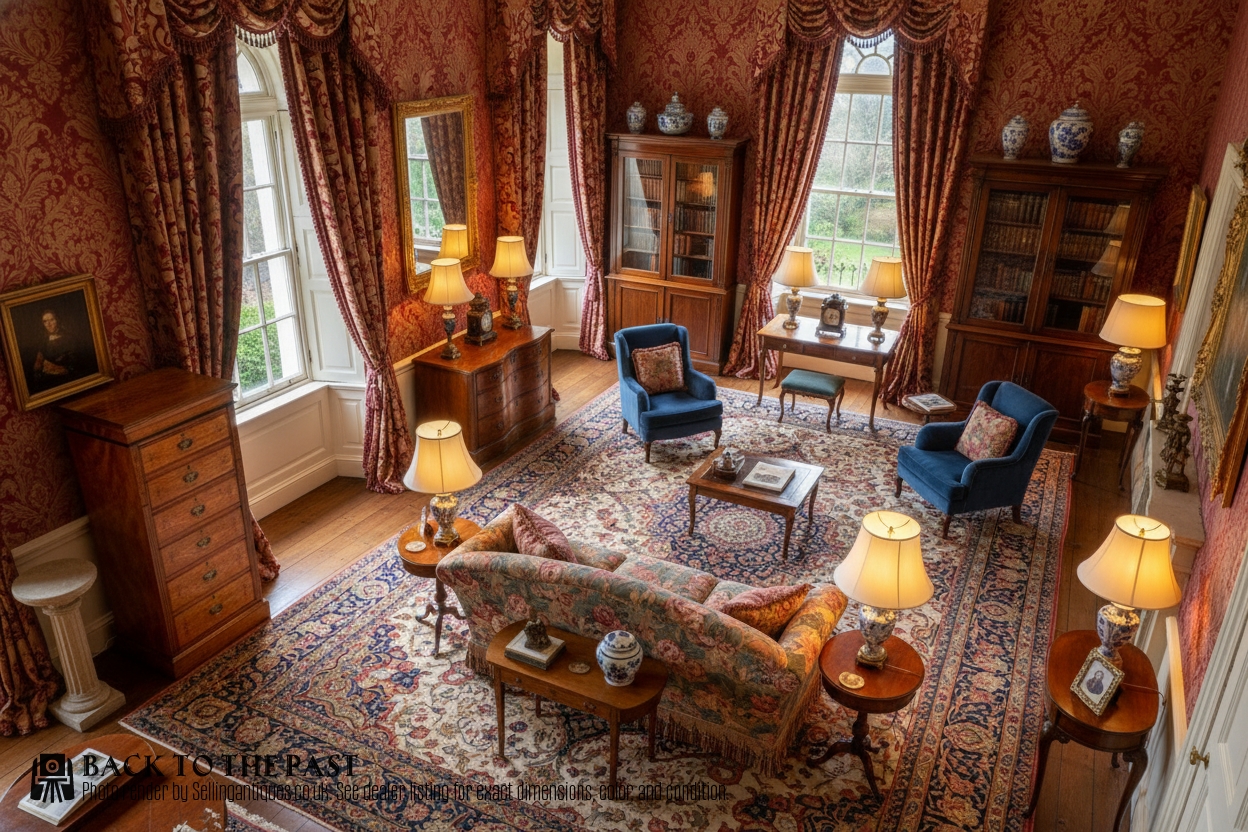
Victorian Inlaid Bedroom Storage
When you examine Victorian inlaid bedroom storage, you encounter practical furniture designed for domestic quarters, ranging from compact bedside tables to towering multi-door wardrobes and tall chests of drawers.
The pieces appearing here span the nineteenth century and into the Edwardian era, showing influences from Sheraton, Hepplewhite and Aesthetic Movement revivals alongside straightforward Victorian utility.
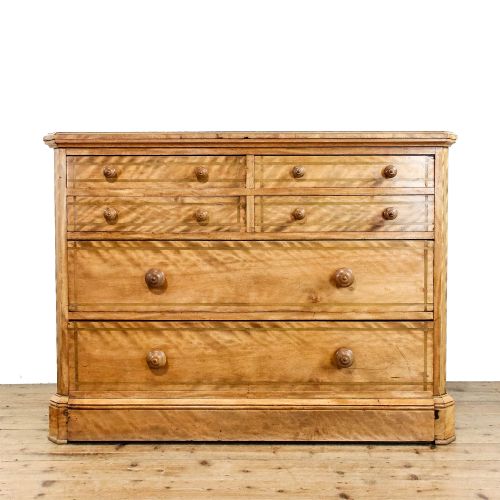
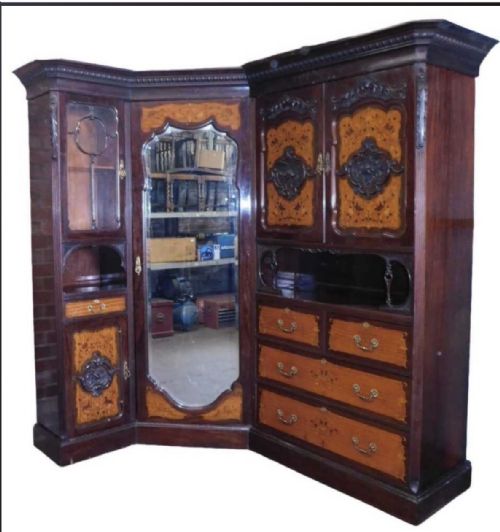
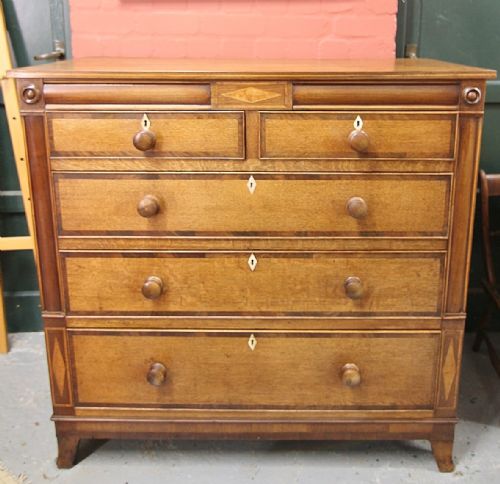
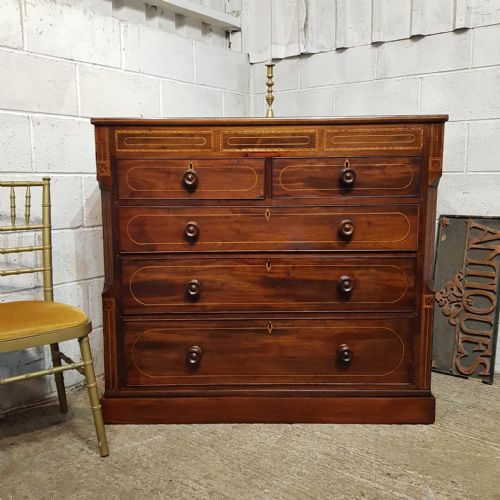
Chests of drawers and wardrobes dominate the selection, utilising timbers such as mahogany, satinwood, pine, oak and birds eye maple embellished with contrasting boxwood and satinwood stringing or marquetry.
What varies in quality
The calibre of Victorian inlaid bedroom storage rests upon the selection of timber veneers and the precision of the marquetry, where tight, clean joins between contrasting woods distinguish superior workshop output.
Internal construction reveals standard timber selection versus finer secondary woods, alongside the depth of drawer linings and the integrity of original brass mounts and working locks.
Proportion and scale dictate the visual success of revival styles, separating restrained interpretations from heavier, less balanced commissions.
Secret drawers hidden within larger chests offered Victorian owners a private spot for midnight snacks or secret diaries.
Maples & Co·Druce & Co·Mawer & Stephenson·Gillows of Lancaster
The Victorian Inlaid Bedroom Storage Glossary
- Compactum
- A multi-compartment wardrobe combining hanging space, shelves and internal drawers within a single fitted unit. These pieces maximise storage capacity whilst maintaining a unified exterior facade.
- Crossbanding
- A border of veneer laid around the perimeter of a drawer front or tabletop so that the grain runs perpendicular to the central panel. This technique frames the primary timber.
- Marquetry
- Decorative patterns formed by fitting together thin slices of various coloured woods, veneers and other materials onto a structural surface. It differs from inlay by covering the entire background.
- Wellington chest
- A tall, narrow chest of drawers secured by a hinged locking stile on one vertical edge that fastens over all drawer fronts simultaneously. Originating in the nineteenth century, it provided secure storage for papers or linen.
- Flame mahogany
- A distinct veneer figure cut from the branch junction of a mahogany tree, displaying undulating, flame-like patterns. Cabinet makers prized this timber for central drawer fronts and door panels.
Victorian Inlaid Bedroom Storage: Frequently Asked Questions
How do I clean mahogany surfaces?
Dust regularly with a soft, dry cloth to prevent particulate accumulation on polished timber.
Apply a traditional beeswax polish sparingly when the wood appears dry, buffing to a soft sheen without building up heavy wax layers.
Will a large wardrobe fit upstairs?
Many nineteenth-century wardrobes, particularly compactum models, were constructed in modular sections to facilitate movement through domestic hallways and stairwells.
Check whether your chosen piece separates into cornice, base and central carcass components before delivery.
What is a Wellington chest used for?
A Wellington chest provides tall, narrow vertical storage designed to fit into restricted wall spaces within a bedroom.
The locking stile secures every drawer at once, a feature originally intended for keeping personal valuables safe.
How do I identify Sheraton revival pieces?
Sheraton revival furniture exhibits classical proportions, tapered legs and delicate contrasting inlay work inspired by eighteenth-century designs.
These later interpretations often utilise satinwood or mahogany with fine boxwood stringing and symmetrical urn motifs.