





Victorian Imari Bowls
Victorian imari bowls bring together British ceramic forms and Japanese palette influences, offering decorative bowls and pedestal bowls for the table.
Victorian Imari Bowls
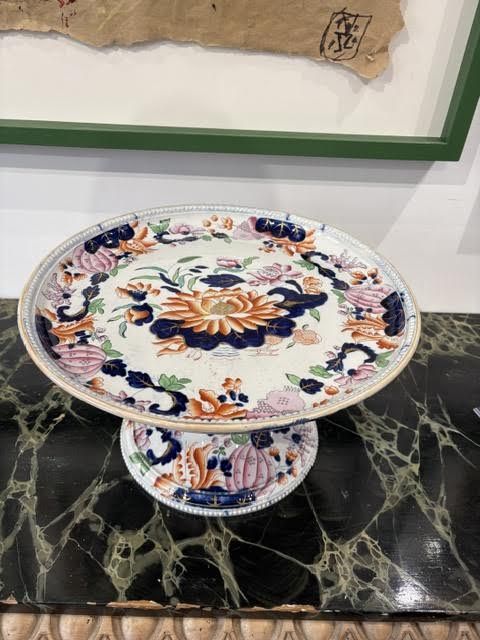
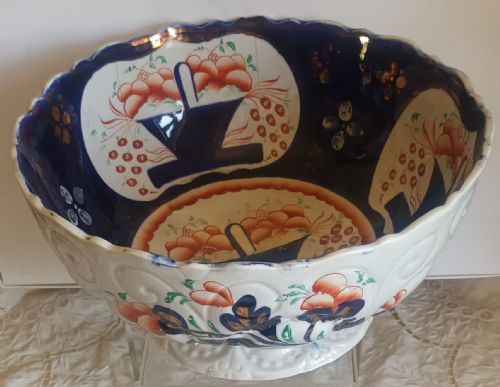
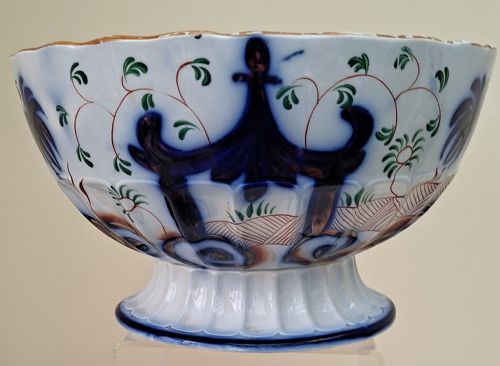
Victorian imari bowls encompass pieces produced during the nineteenth century, ranging from large pedestal bowls to serving dishes and soup bowls. These items draw on traditional aesthetics, appearing in patterns such as Amherst Japan and Witches Imari.
The selection includes English pottery and ironstone alongside examples originating from Japanese makers of the Meiji period. Buyers will encounter both deep lobed serving dishes and footed pottery bowls bearing characteristic motifs.
Forms extend beyond standalone vessels to include components of tea services, sugar bowls, and jug and basin sets. Each piece reflects the nineteenth century taste for contrasting ironstone bodies and patterned earthenware.
Materials and construction
Potters constructed these objects using ironstone, bone china, earthenware, and porcelain as the ceramic base. Manufacturers then applied enamel colours and gold leaf highlights across the surface.
Gilt details and hand-painted enamels define the decorative surface work on these pieces. Kiln firing fixed the cobalt blue, iron red, and gilding onto the earthenware and ironstone bodies.
Victorian Imari Bowls Retail Price Guide 2026
Typical asking prices for victorian imari bowls among the pieces listed under this phrase on Sellingantiques today, from the lower quarter to the upper quarter. They describe what is for sale here now, not the wider market.
Listings feature ironstone, bone china, and porcelain decorated with enamel and gold leaf across the nineteenth century.
Evaluating the pieces
The crispness of the painted enamel design and the precision of the gold leaf application distinguish finer examples from standard production. Richness in the colour palette indicates careful workshop execution.
Intact form without structural repair preserves the integrity of pedestal bowls and footed serving dishes. The weight and density of the ironstone or bone china body also reflect the manufacturing standard.
Royal Crown Derby·Royal Davenport·Coalbrookdale
The Victorian Imari Bowls Glossary
- Ironstone
- A heavy, durable type of earthenware patented in the nineteenth century. It provides a sturdy body for large pedestal bowls and serving dishes.
- Imari
- A decorative style characterised by a palette of cobalt blue, iron red, and gilt. It influenced British ceramic patterns throughout the Victorian era.
- Comport
- A shallow bowl raised on a pedestal, designed for serving fruit or sweets at the table. These form part of the larger vessel types found in nineteenth-century dining sets.
- Gilt
- A thin layer of gold applied to the surface of ceramic pieces. It highlights rims, handles, and patterns within the design.
Victorian Imari Bowls: Frequently Asked Questions
How are victorian imari bowls dated?
Dating relies on recorded manufacturing periods, factory marks found on the base, and stylistic traits associated with the nineteenth century.
Changes in ceramic bodies and pattern registrations help narrow the production window for specific items.
Can these bowls be used daily?
Most antique ceramic pieces benefit from gentle handling rather than heavy everyday use. Hand washing preserves the delicate enamel and gold leaf decorations.
Displaying them as decorative vessels or serving dry items protects the historic glaze.
What is the difference between ironstone and porcelain?
Ironstone is a dense, opaque earthenware developed for durability and heavy utility ware. Porcelain is vitrified, harder, and translucent when held to the light.
Both materials were decorated with imari patterns during the nineteenth century.
Where were these bowls manufactured?
Production occurred across English potteries as well as Japanese kilns during the Meiji period. British factories adapted traditional aesthetic elements for domestic dining.
Imported Japanese pieces circulated alongside local Staffordshire and Derby wares.