
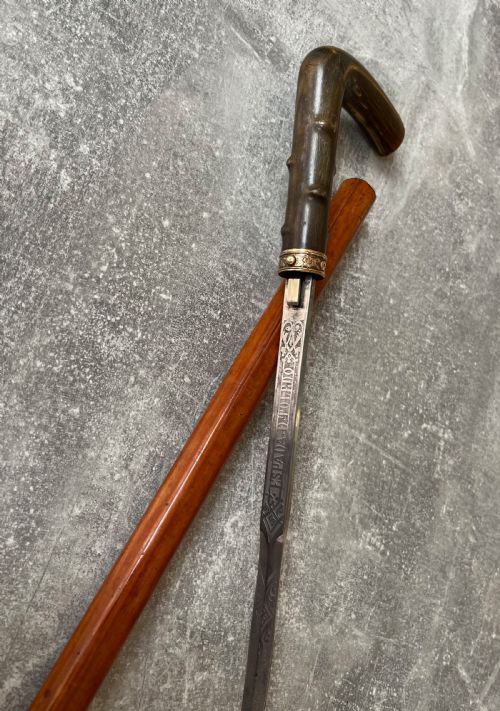


Victorian Horn Handle Cane
These Victorian horn handle cane pieces combine practical support with concealed blades or tools, offering both utility and distinctive nineteenth-century style.
Victorian Horn Handle Cane
A victorian horn handle cane combines a robust natural horn or antler grip with a wooden shaft, frequently paired with malacca or rosewood. These items served gentlemen as both walking aids and discreet tools of defence or convenience.
The selections span the nineteenth century into the Edwardian era, featuring French and British origins alongside maritime folk art styles. Many examples double as sword sticks or incorporate hidden corkscrews and musical flutes beneath the handle.
Buyers frequently encounter variations featuring silver collars, brass mounts, or carved animal motifs such as rabbits. The shafts range from simple timber to snakeskin-covered hafts and shark vertebrae constructions.
Materials and construction techniques
The handles utilise natural horn, antler, and domed horn pommels, shaped and carved to fit the hand securely. These grips are joined to shafts of malacca, rosewood, or timber using metal collars made of silver or brass.
Concealed elements require precise metalworking, integrating etched Toledo blades with button release mechanisms or hidden corkscrews. Shafts occasionally house functional wooden flutes or feature intricate snakeskin coverings.
Some Victorian gentlemen required a walking stick that could simultaneously serve wine via a hidden corkscrew and defend against intruders.
Evaluating craftsmanship and condition
Quality rests in the precision of the carving on the horn handle and the secure integration of any hidden blade or mechanism. Tighter tolerances in button releases and cleaner etching on Toledo blades indicate superior manufacture.
The choice of shaft material and the presence of hallmarked silver collars or intricate maritime folk art details elevate individual pieces. Condition depends on the stability of the natural horn and the straightness of the wooden shaft.
The Victorian Horn Handle Cane Glossary
- Malacca
- A sturdy rattan cane imported from Southeast Asia, prized for its flexibility and mottled brown finish. It forms the lightweight shaft of many walking sticks.
- Toledo blade
- A steel blade produced in the Spanish city renowned for weapon smithing. These high-grade blades are frequently etched and concealed within sword sticks.
- Pommel
- The rounded knob forming the top of the handle. On these canes, it is carved from horn or antler to provide a comfortable grip.
- Gadget cane
- A walking stick that conceals a functional tool such as a corkscrew, flute, or blade. These items reflect Victorian ingenuity and demand for discreet utility.
Victorian Horn Handle Cane: Frequently Asked Questions
Are these swords legal to own?
Regulations regarding concealed blades vary by jurisdiction, so buyers must check local laws concerning sword sticks and antique weapons before purchase.
Many historic pieces feature deactivated or decorative blades, yet legal classifications still depend heavily on regional legislation.
How should I clean the horn?
Natural horn responds well to gentle dusting and occasional treatment with neutral wax to prevent drying. Avoid harsh chemical cleaners that can degrade the organic material.
Keeping the cane away from direct heat sources protects both the horn handle and the wooden shaft from warping.
What is a gadget cane?
A gadget cane is a walking stick that hides a practical instrument inside the shaft or handle, such as a corkscrew, flute, or blade. These were popular among Victorian gentlemen for personal use.
Button releases and threaded collars often secure these hidden compartments safely within the timber.
How do I identify the period?
Dating relies on material combinations, hallmarked silver collars with assay office marks, and distinct styles like Victorian Gothic or maritime folk art. Construction techniques also help narrow down the decade of production.
Comparing the style of the horn carving to dated archive examples provides further chronological context.