


Victorian Heraldic Wall Panel
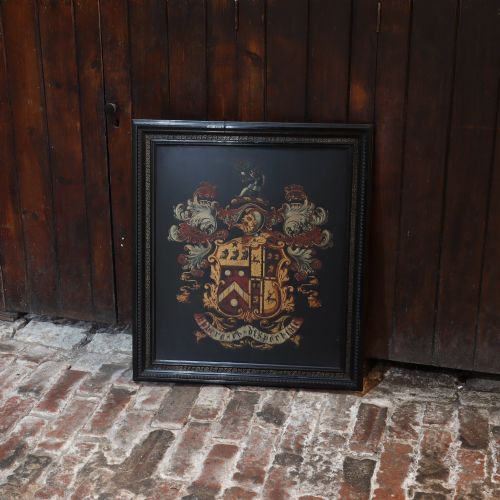
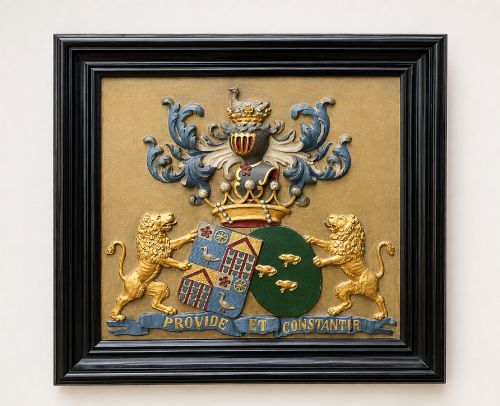
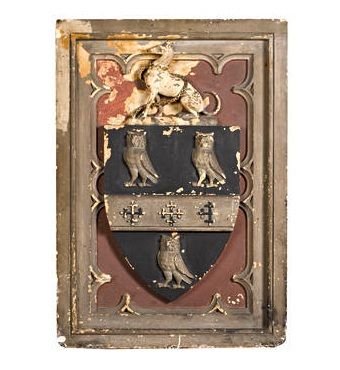
These nineteenth-century pieces of carved wood, bronze and painted plaster carry coats of arms, bringing tangible heraldry and historic lineage directly into a room.
Victorian Heraldic Wall Panel
A victorian heraldic wall panel displays armorial bearings, family crests or commemorative coats of arms designed for interior display. When searching this phrase, a buyer looks at wall plaques, wall art and wall reliefs produced during the nineteenth century.
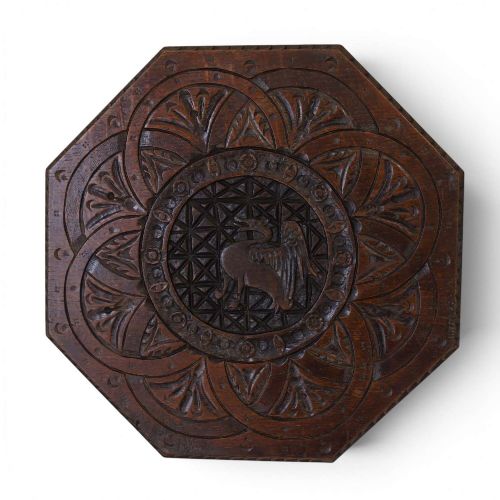
The versions most commonly met on this page include carved wooden panels in oak and fruitwood, alongside painted plaster and bronze reliefs. These objects often record specific family lineages, marriages or military units from periods such as the eighteen-eighties and eighteen-nineties.
Many examples lean heavily into Gothic Revival aesthetics, incorporating architectural framing or structural elements adapted from earlier tabletops and crests. They serve as striking focal points for a study, library or hallway, combining historic provenance with decorative presence.
How they were made
Maker's hands shaped these pieces primarily from solid timbers like oak, walnut and fruitwood, utilising deep relief carving techniques to give dimensionality to shields, mantling and charges. Selected elements frequently incorporate polychrome pigment and gilt to highlight specific heraldic tinctures and familial colours.
Beyond woodwork, craftsmen cast metals such as bronze to capture intricate architectural details like castle reliefs and armorial bearings. Other examples employ painted plaster or mounted brass frames, combining diverse material properties to achieve durable and visually rich wall decoration.
Listings feature oak, walnut, fruitwood, bronze, and painted plaster across nineteenth-century wall plaques.
What varies in quality
The division between standard and superior pieces rests on the crispness of the carving and the fidelity of the heraldic design. Finer panels display deeply undercut timber work and precise proportions in the charges and mantling, whereas lesser examples show softer, shallower relief.
Material selection and surface preservation dictate the upper tiers of the range. Original polychrome pigment, authentic gilt and well-preserved bronze casting elevate an armorial panel, while poorly executed later surface alterations diminish the integrity of the historic object.
The Victorian Heraldic Wall Panel Glossary
- Heraldic
- Pertaining to armorial bearings, crests and coats of arms. It defines the visual language of lineage and family history displayed upon these panels.
- Gothic Revival
- An architectural and decorative style popular during the nineteenth century. It draws inspiration from medieval forms, pointed arches and rich ornamentation.
- Polychrome
- Decorated in multiple colours. This term describes painted surfaces where various pigments bring out the details of a coat of arms.
- Armorial
- Relating to heraldic arms or a shield displaying a coat of arms. These panels function primarily as armorial displays of family identity.
- Mantling
- The ornamental foliage or drapery depicted around and above the shield in a coat of arms. It derives from the cloth attached to a medieval helmet for protection against the sun.
Victorian Heraldic Wall Panel: Frequently Asked Questions
How were these panels displayed?
These panels were hung directly on interior walls within libraries, great halls or studies to signal family lineage, alliances or military achievements.
Many incorporated hanging loops or were fitted into architectural timber schemes to anchor them firmly within the room's overall design.
What woods were commonly used?
Makers relied heavily on sturdy hardwoods such as oak, walnut and fruitwood for carved armorial panels. These timbers provided the structural stability needed for deep relief work.
Oak offered particular durability for larger wall plaques, while finer fruitwoods allowed for intricate detail in crests and figures.
How do I identify a marriage plaque?
Marriage plaques typically display two distinct coats of arms impaled or quartered side by side to represent the union of two families. Inscriptions or specific dates often accompany the armorial bearings to record the exact occasion.
These pieces were commissioned to commemorate matrimonial alliances and celebrate combined family heritage.
Are all panels made of wood?
While carved wood forms a large portion of the selection, materials extend to cast bronze, painted plaster and framed embroidery. Metal reliefs capture fine architectural and armorial details with sharp precision.
Plaster panels offer a different sculptural texture, often finished with polychrome pigment to simulate richer materials.
What is Gothic Revival style?
Gothic Revival is a nineteenth-century aesthetic movement that revives medieval architectural forms, pointed arches and heavy tracery. It heavily influenced the framing and decorative borders surrounding heraldic panels of the period.
This style lends the panels a distinctly historic character that complements period interiors.