



Victorian Heraldic Crest
These pieces of victorian heraldic crest capture family lineage and institutional identity through carved wood, cast iron, and painted glass.
Victorian Heraldic Crest
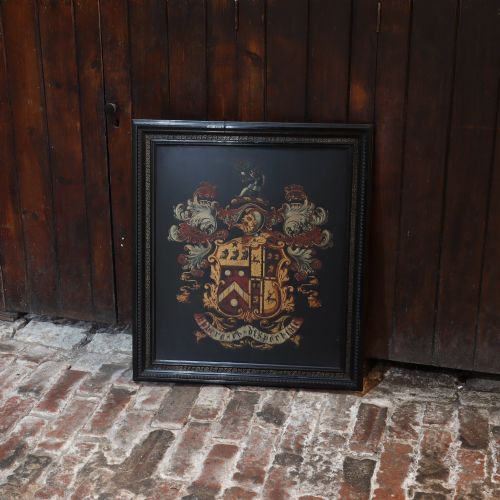
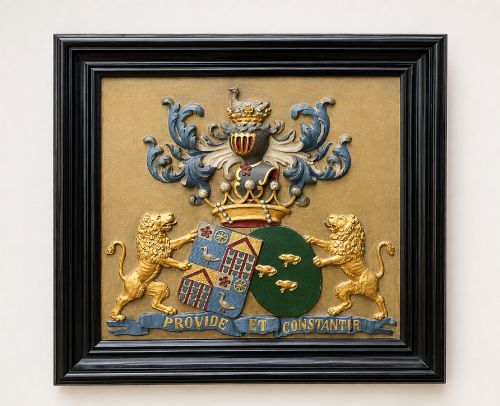
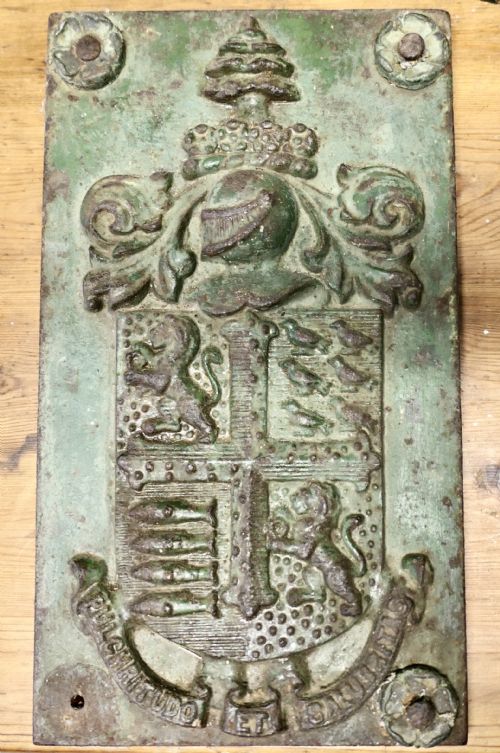
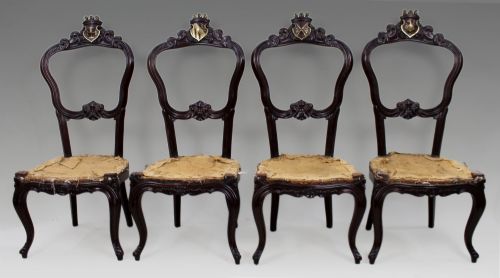
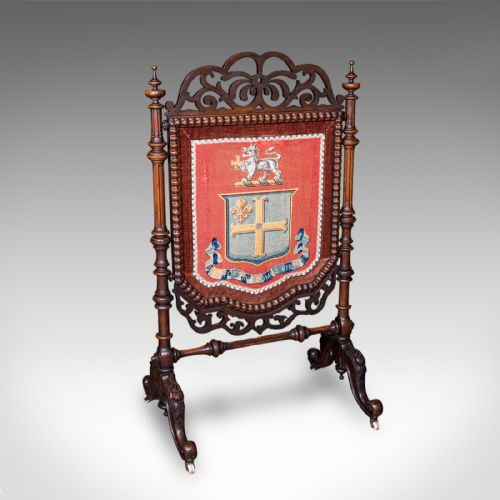
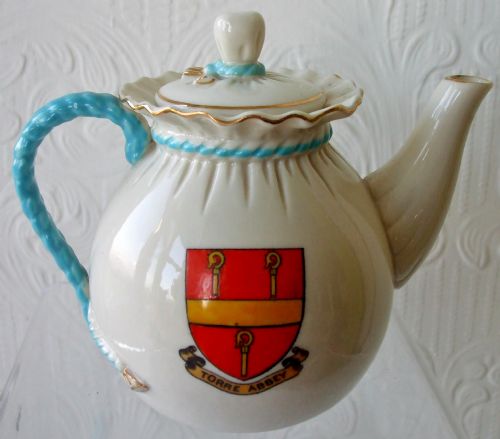
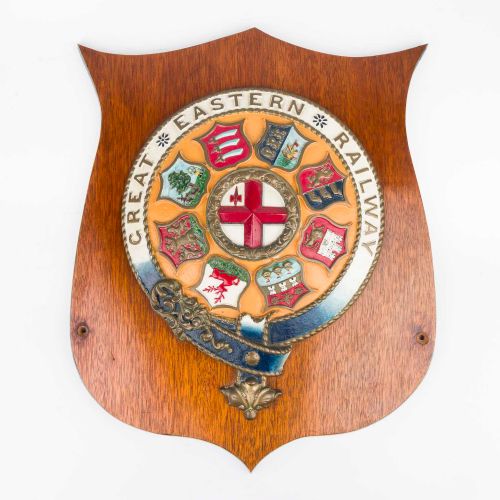
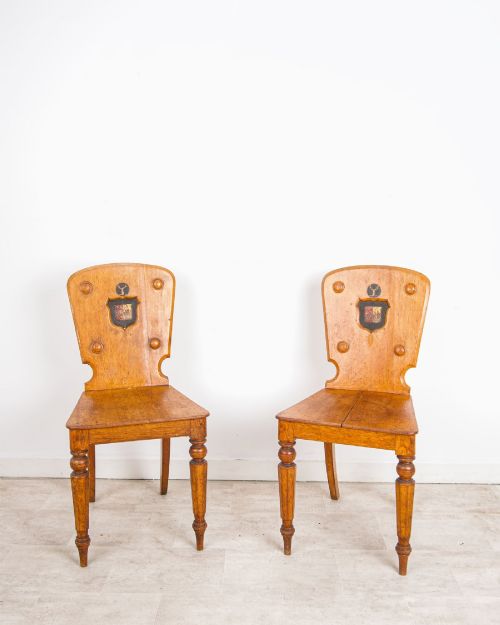
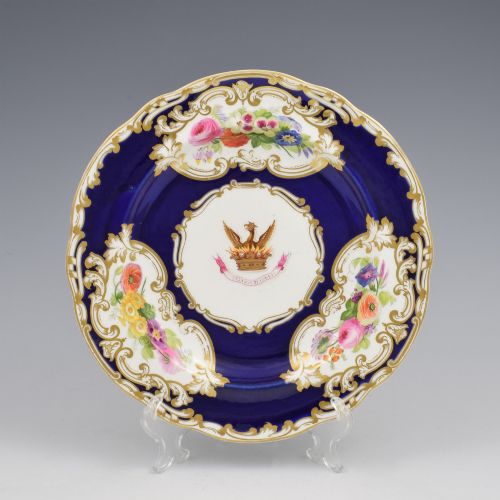
A victorian heraldic crest encompasses wall plaques, fire screens, hall chairs, and decorative plates bearing coats of arms. These objects display familial lineages, railway authorities, or civic bodies through painted, carved, or cast representations.
Buyers frequently encounter cast iron panels and oak items originating from the nineteenth century alongside porcelain plates and brass furnishings. The selection spans domestic seating with shield backs and heavy metal plaques designed for architectural display.
Originating largely from the nineteenth century with occasional earlier elements, these pieces reflect the Victorian appetite for genealogy and heraldic symbolism. They surface in materials ranging from carved tiger oak and walnut to glazed pottery and glass.
Materials and construction methods
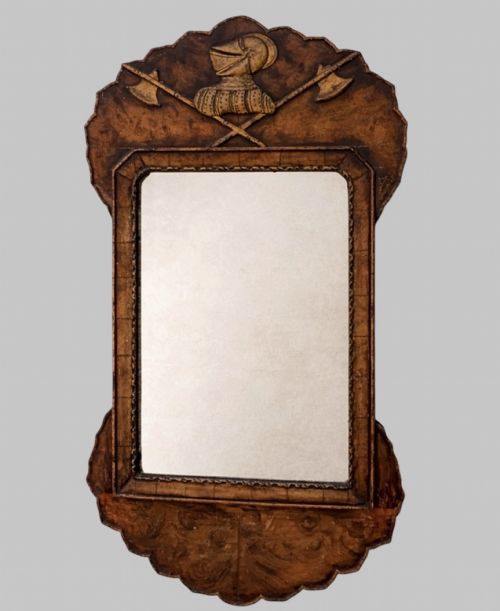
Makers utilised solid timbers such as oak, mahogany, and walnut to carve heraldic shields, mirror frames, and seating. These woods were often shaped into robust forms like hall chairs with shield backs and fire screens.
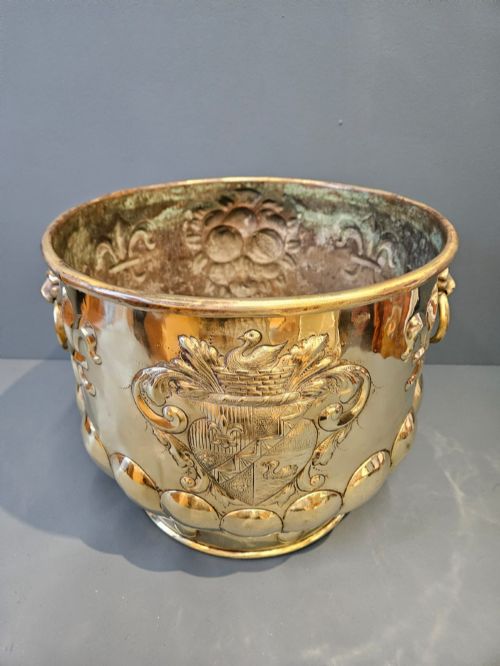
Metalwork played a central role, utilising cast iron for monumental wall plaques and brass for planters, fire buckets, and inlaid frames. Artisans also employed enamel, paint, and needlepoint embroidery on linen or wool panels to render precise armorial details.
The listings demonstrate a strong presence of nineteenth-century oak and cast iron, alongside brass furnishings and painted glass panels.
Distinguishing quality in armorial pieces
Quality emerges through the crispness of the carving in wood and the depth of relief in cast iron or embossed brass. Superior examples exhibit sharp heraldic details and well-defined lines that remain legible across the entire shield or crest.
The integration of materials dictates the standard of execution, where hand-painted glass, finely stitched needlepoint, and properly seasoned oak demonstrate superior craftsmanship. Inferior items often present worn painted surfaces or poorly cast metal details that obscure the underlying armorial identity.
W.H. Goss·Copeland
The Victorian Heraldic Crest Glossary
- Armorial
- Relating to heraldry or bearing a coat of arms. This term describes items decorated with familial or institutional crests.
- Fire screen
- A decorative panel placed before a fireplace when not in use. These objects often incorporate wooden frames holding embroidered or painted heraldic panels.
- Jardiniere
- An ornamental pot or stand for plants or flowers. In this context, they frequently feature applied or embossed brass crests.
- Intaglio
- A design engraved into the material so that the impression sinks below the surface. This technique appears on seals and fobs.
- Pugin design
- A decorative style associated with the Gothic Revival architect Augustus Pugin. Pieces in this manner display medieval architectural motifs and heraldry.
Victorian Heraldic Crest: Frequently Asked Questions
How were these crests used?
These items served functional and decorative purposes in nineteenth-century interiors, acting as symbols of status and lineage. They appeared on hall furniture, fire screens, and architectural plaques mounted on walls.
Items like brass buckets and ceramic plates combined utility with displays of civic or familial identity. Railway plaques and regimental pieces marked institutional affiliation in public spaces.
What materials are most common?
Oak, walnut, and mahogany form the primary wooden structures for chairs, mirrors, and fire screens. Cast iron and brass dominate the heavier wall plaques and umbrella stands.
Paint, enamel, and needlepoint provide the colour and detail for the armorial bearings themselves. Glass appears in windows and painted panels depicting specific family or municipal crests.
How do I date a piece?
Dating relies on the stylistic markers of the Victorian period and the specific manufacturing techniques used in the metal or wood. Nineteenth-century examples often combine Gothic Revival forms with traditional joinery.
Assay marks on silver elements or maker stamps on porcelain offer precise chronological markers. The specific form of the heraldic attribution can also point toward a particular decade.
How should I clean them?
Maintenance requires gentle dusting for carved wood and needlepoint panels to prevent fibre and surface degradation. Metal components like brass and cast iron respond best to dry cloths without abrasive chemical polishes.
Glass and glazed pottery elements tolerate mild damp cleaning with soft cloths. Preserving the original painted surfaces on wood or metal remains paramount during any maintenance.