
Victorian Hat Tree
A victorian hat tree organises hallway daily life through upright timber, bentwood, or metal branch hooks designed for outdoor garments.
Victorian Hat Tree
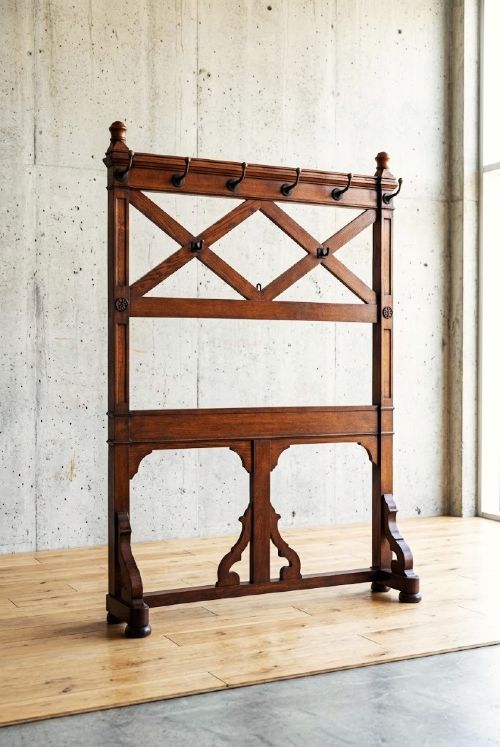
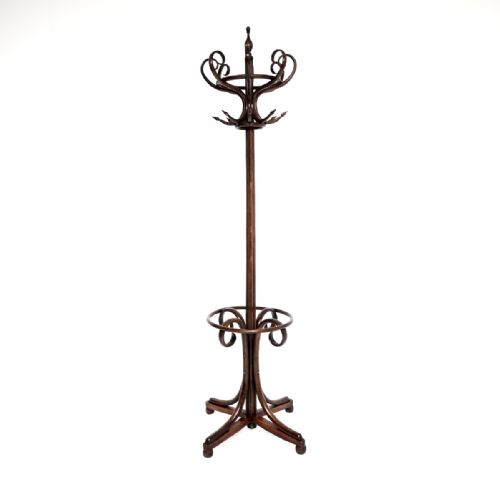
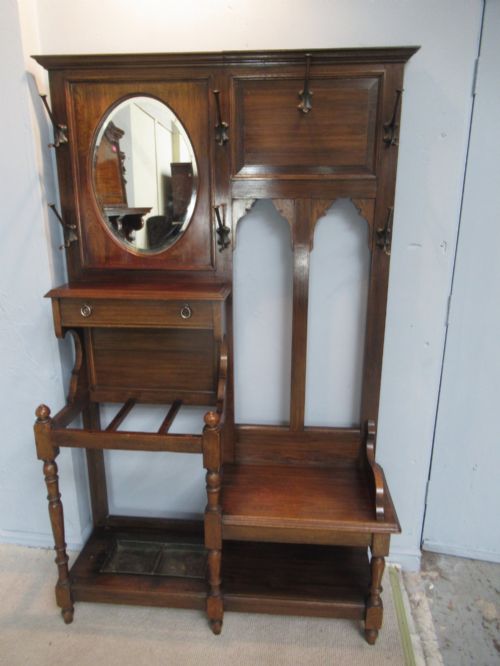
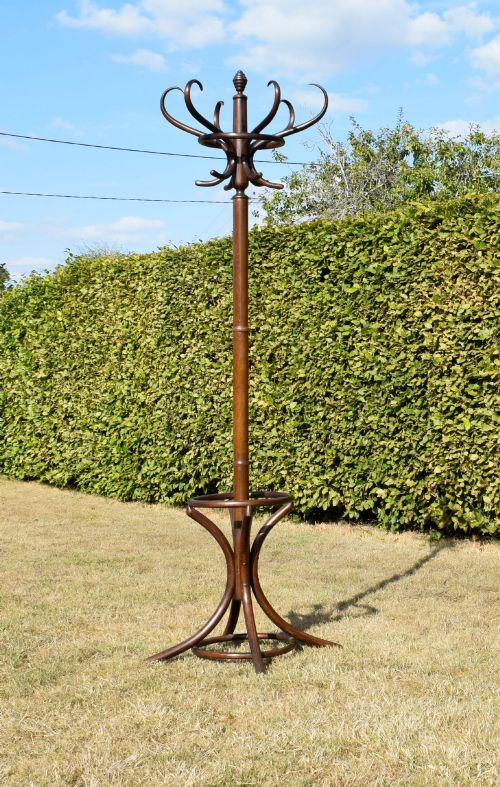
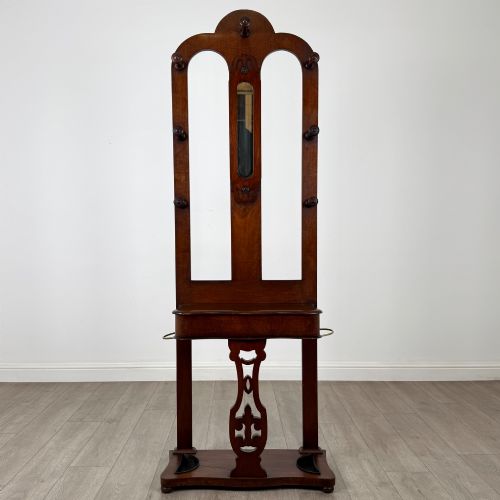
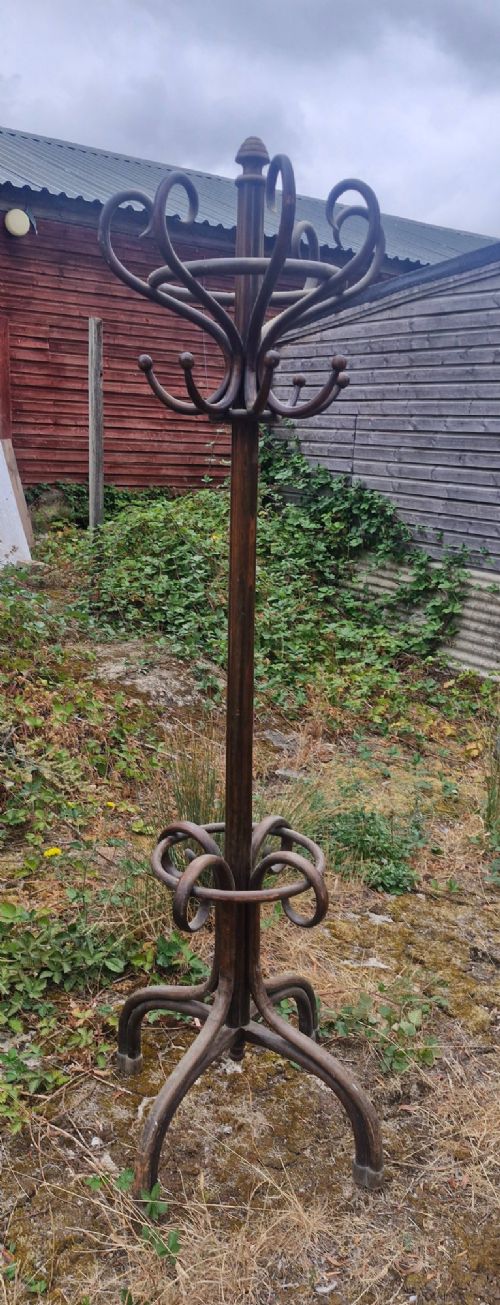
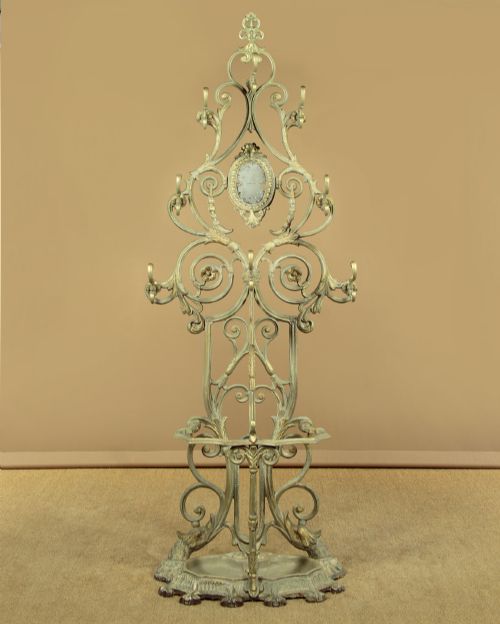
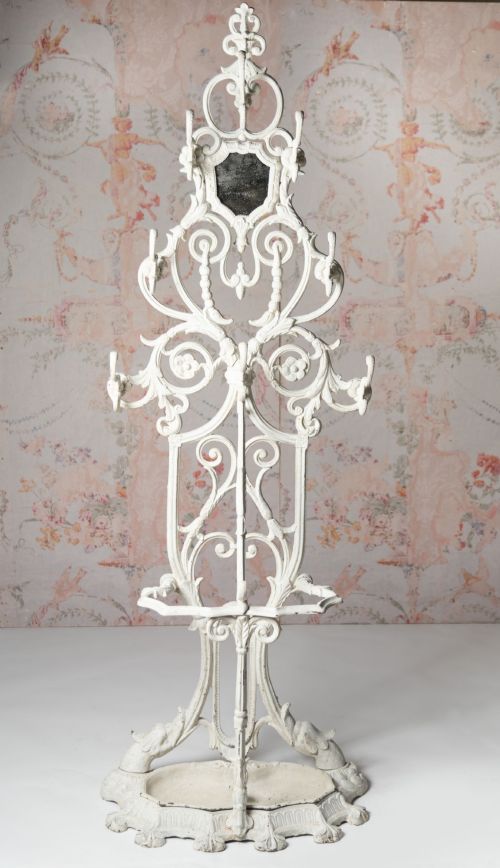
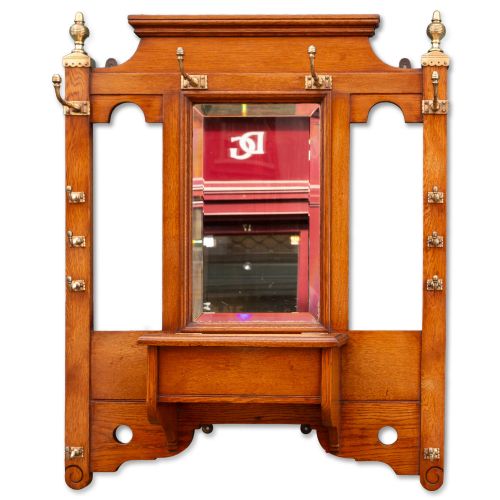
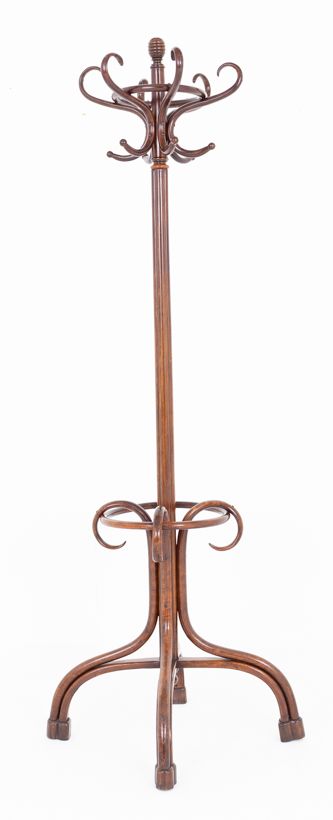
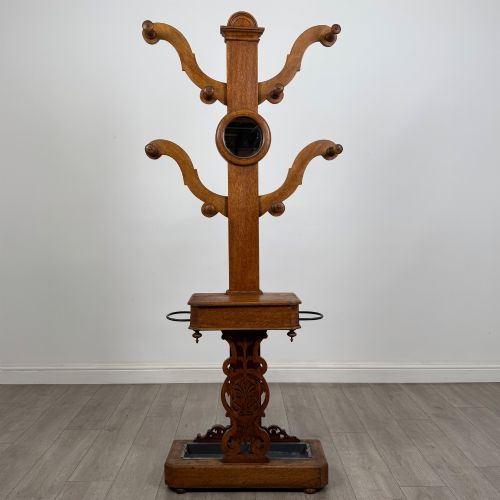
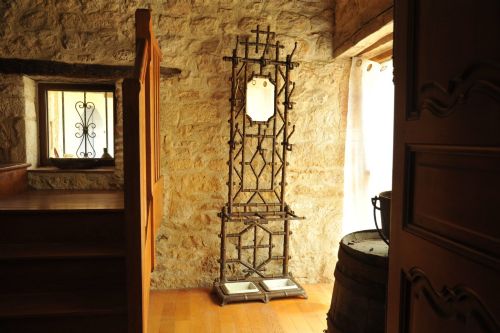
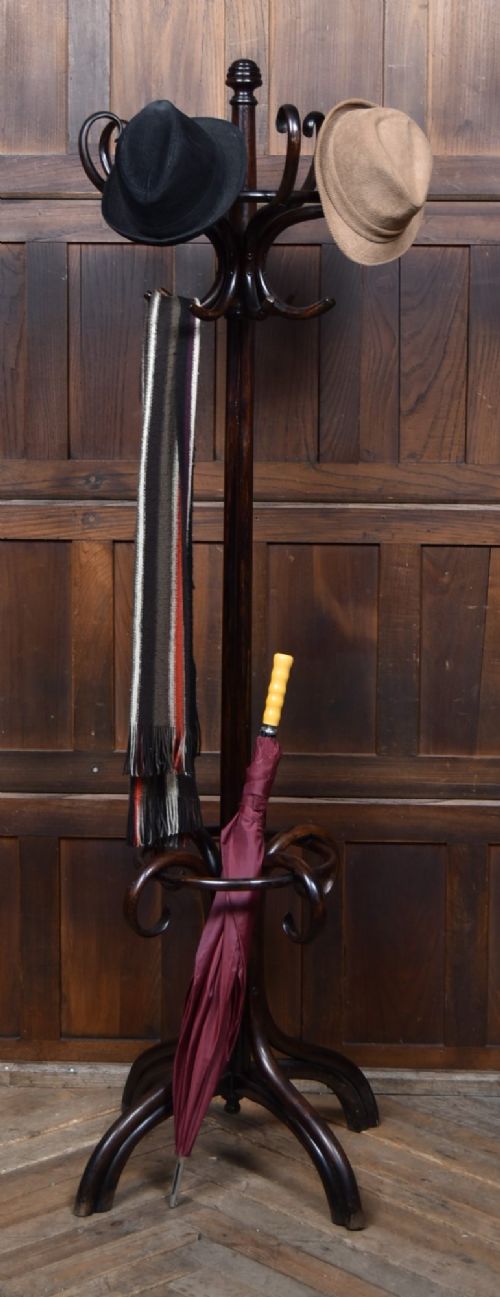
A victorian hat tree appears primarily as a tall freestanding hall stand or coat rack designed for corridors and entranceways. The selection ranges from robust carved oak and mahogany examples to light bentwood and bamboo frames.
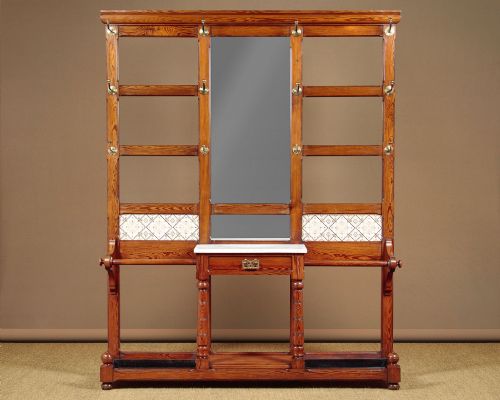
Most entries belong to the nineteenth and early twentieth centuries, spanning Victorian, Edwardian, and aesthetic periods. Stand configurations often incorporate umbrella wells, mirrors, or small key boxes alongside multiple tiers of hanging hooks.
Assessing execution
Construction heft and material selection determine stability, as tall stands require solid weighted bases to prevent tipping under heavy garments. Timber carving depth and the crispness of applied mouldings separate standard production items from ambitious architectural commissions.
Hardware integrity matters, including original brass hooks, intact drip pans, and secure mirror plates. Maker attribution via stamps, paper labels, or cast signatures adds distinct historical clarity.
Late Victorian hallways welcomed visiting bears in the form of carved Black Forest hall stands holding card trays.
J. Parker of Woodstock·Thonet·Jas. Shoolbred·Fischel·Coalbrookdale·William Whiteley
The Victorian Hat Tree Glossary
- Bentwood
- Wood softened through steam application and bent into curved structural forms using metal straps and wooden moulds. This technique creates lightweight, resilient frames without traditional joinery.
- Hall Stand
- A hallway furnishing combining coat hooks, a hat rack, an umbrella stand, and frequently a central mirror and glove drawer. These pieces anchored Victorian entrance hall organisation.
- Gothic Revival
- An architectural and decorative style drawing on medieval ecclesiastical motifs, visible in heavy carved oak, pointed arches, and tracery. Pugin popularized this vernacular during the mid-nineteenth century.
- Aesthetic Movement
- A late nineteenth-century design current promoting art for art's sake, incorporating Japanese-inspired motifs, bamboo frames, and asymmetrical layouts. It rejected heavy Victorian moralizing in decor.
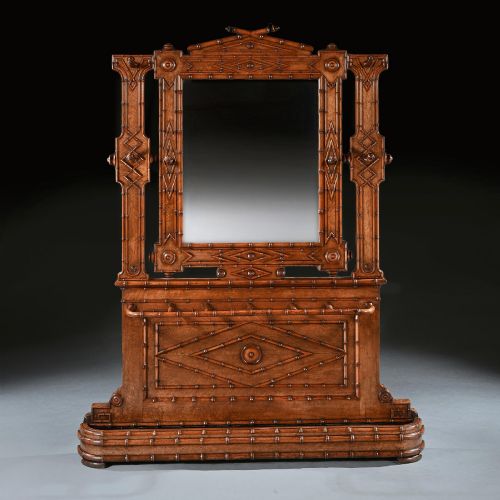
- Faux Bamboo
- Timber or metal turned and painted to imitate natural bamboo stalks. This decorative finish proved popular during the aesthetic and late Victorian periods.
Victorian Hat Tree: Frequently Asked Questions
How do I secure a tall hall stand?
Freestanding timber and bentwood stands rely on wide-splayed legs and weighted umbrella bases for balance during everyday use. Placing heavier coats on lower tiers maintains equilibrium.
Heavier architectural oak examples require minimal intervention, while slender wall-mounted racks need proper fixing into masonry or studs to support heavy winter garments safely.
What is a faux bamboo hall stand?
Faux bamboo pieces feature hardwood or cast iron turned to mimic segmented bamboo stems rather than using real plant cane. Makers finished these surfaces with paint or varnish to simulate natural grain.
This technique provided the exotic look of Japanese-influenced design while ensuring structural durability for heavy coats and umbrellas.
How do I distinguish bentwood from carved timber?
Bentwood stands utilise continuous curved lengths of steamed beech formed into loops and arches without complex corner joints. They offer a lightweight, skeletal silhouette.
Carved timber stands employ solid oak or mahogany joined at right angles, featuring deep relief carving, panels, and applied mouldings typical of Victorian cabinetmaking.
Where were hall stands placed?
Hall stands stood directly inside the main entrance of nineteenth-century homes to receive hats, coats, and walking accessories immediately upon entry. The integrated mirror allowed last-minute appearance checks before departure.
Umbrella trays and drip pans protected timber floors from wet weather gear brought in from outside.