



Carved Oak Hallstand
A carved oak hallstand welcomes visitors with robust timber and carved detail, making it a practical and striking focal point for any entrance.
Carved Oak Hallstand
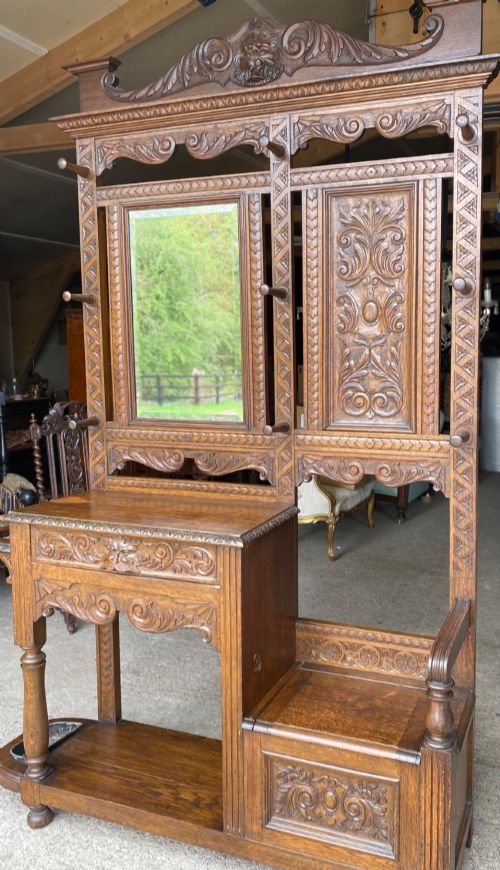
A carved oak hallstand serves as a grand and functional piece for an entrance, combining coat hooks, umbrella holders and often a mirror into a single heavy unit. When exploring these items, the pieces met most often date from the Victorian period through to the early twentieth century, spanning styles such as Arts and Crafts, Gothic Revival and Flemish Renaissance Revival.
The forms range from narrow wall-mounted mirrors and coat racks to large country house hall stands with box seats and impressive carved proportions. Pieces frequently incorporate carved details such as knights or the iconic green man motif, alongside practical elements like zinc drip pans and brass or metal hooks.
Assessing quality and craftsmanship
The depth and crispness of the carving dictate much of the distinction between standard examples and exceptional works, particularly in pieces featuring complex green man or knight details. Heavy proportions and grand scale, often seen in large country house or Flemish revival items, elevate the presence of the furniture.
Integration of secondary materials such as original bevelled mirror glass, intact brass hardware and fitted zinc drip trays contributes to the overall integrity of the piece. The choice of quarter-sawn oak and the complexity of the architectural or Gothic elements further separate simpler hall stands from ambitious workshop productions.
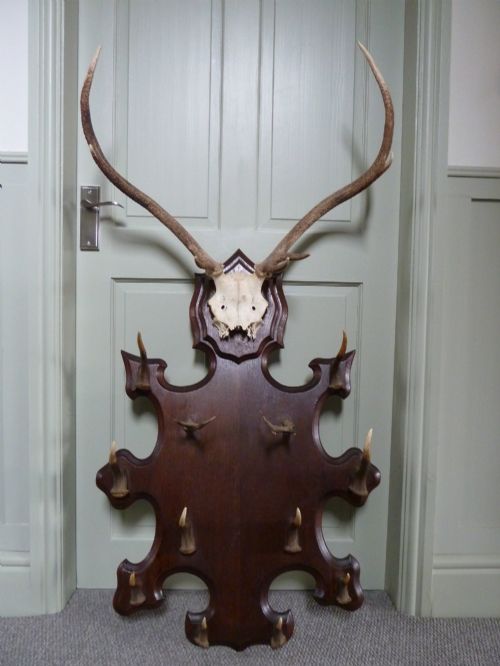
Stag horn makes an appearance among the materials, ensuring muddy coats hang alongside a touch of the wilderness.
The Carved Oak Hallstand Glossary
- Greenman
- A sculptural motif depicting a human face surrounded by or entwined from leaves and vines. This ancient symbol of rebirth appears frequently in nineteenth century Gothic and Victorian woodwork.
- Gothic Revival
- An architectural and decorative style drawing inspiration from medieval design. It employs pointed arches, heavy tracery and solemn proportions.
- Flemish Renaissance Revival
- A nineteenth century decorative movement reviving sixteenth century continental motifs. It is characterised by elaborate strapwork, deep relief carving and dynamic figural compositions.
- Box seat hall stand
- A hall stand incorporating a bench with a hinged lid for storage. This form allows muddy boots and outdoor accessories to be concealed within the base.
Carved Oak Hallstand: Frequently Asked Questions
What is a carved oak hallstand used for?
These items provide an organised space in an entrance hall for hanging coats, hats and scarves upon sturdy hooks. They also incorporate dedicated sections for storing umbrellas and walking sticks.
Many examples include built-in mirrors for a final check before leaving the house, and some feature box seats to store footwear out of sight.
Where should I place a hall stand?
A hall stand requires a generous hallway or entrance lobby with sufficient wall space to support its substantial timber frame. Because these pieces are heavy and often tall, positioning them against a solid wall ensures stability.
Consider the proximity to the front door so wet umbrellas and heavy coats can be stored immediately upon entry.
How do I care for antique oak furniture?
Maintain the timber by dusting regularly with a soft, dry cloth and avoiding harsh chemical cleaning products that can strip the finish. Keep the piece away from direct heat sources and dramatic humidity changes to prevent the oak from splitting.
Inspect metal hooks and brass fittings periodically to ensure they remain secure in the dense wood.