


Victorian Hall Furniture Mirror
A victorian hall furniture mirror anchors an entrance, combining a looking glass with heavy timber frames, brass hooks and umbrella storage for daily use.
Victorian Hall Furniture Mirror
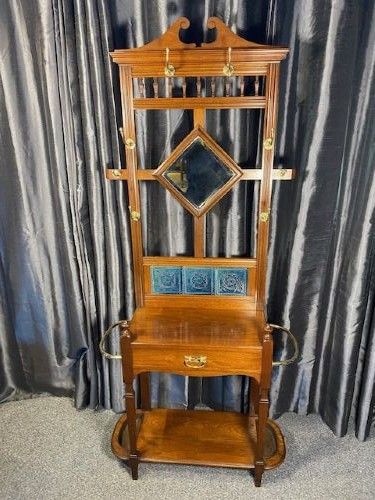
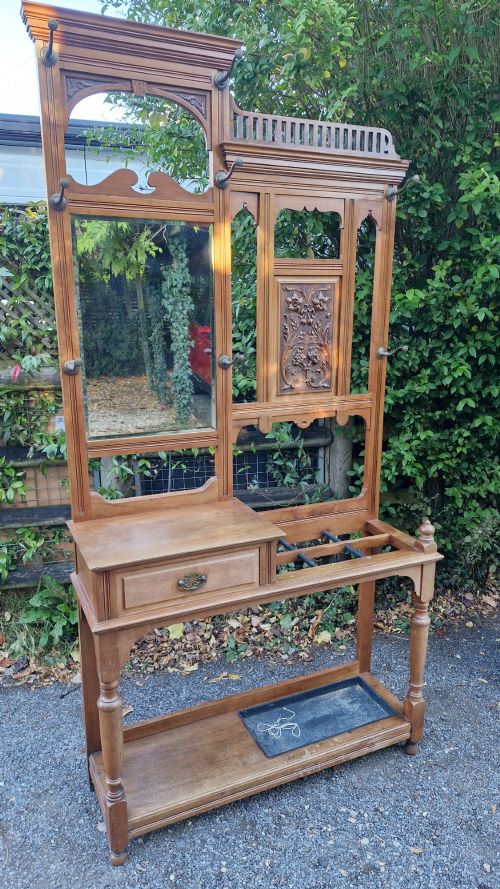
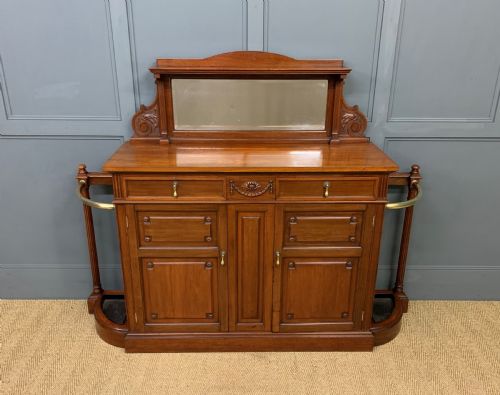
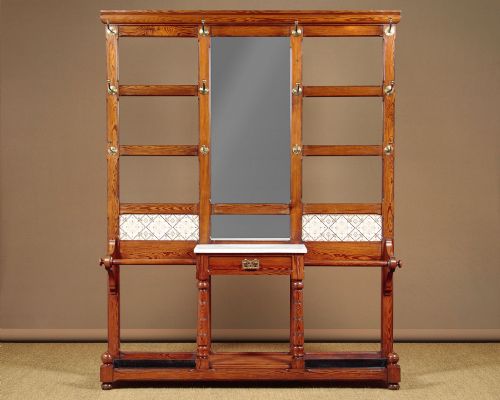
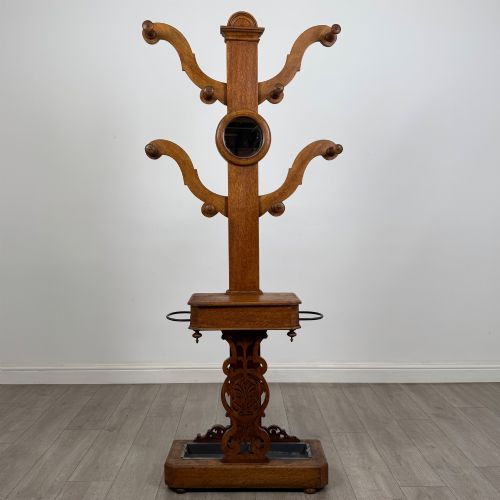
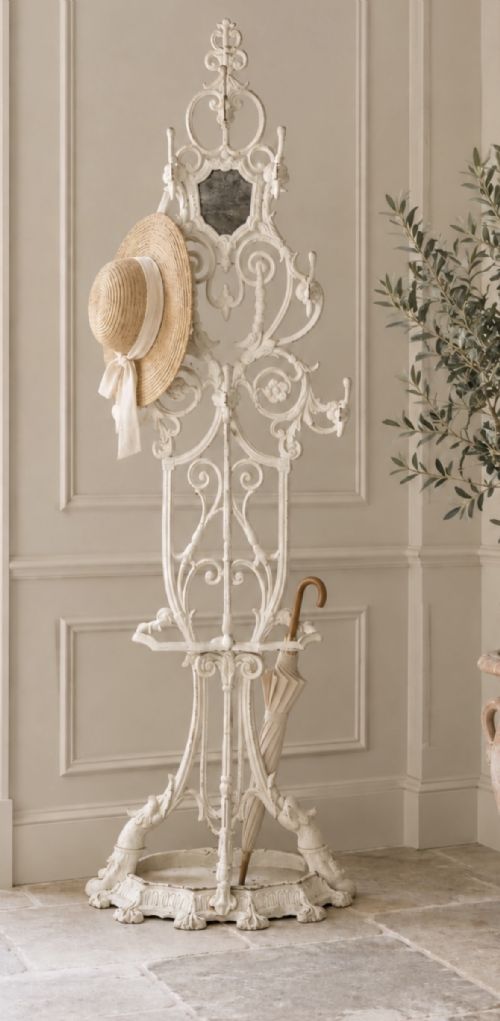
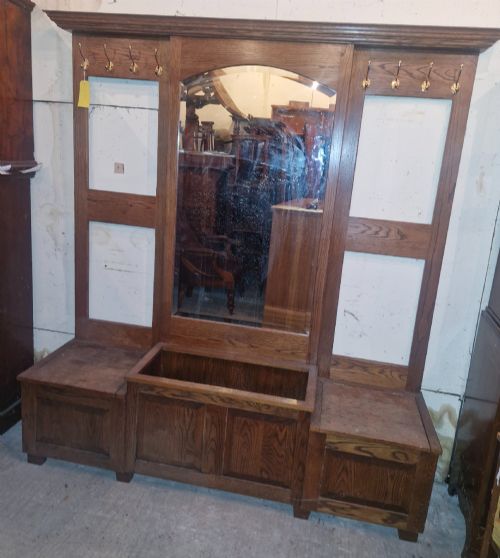
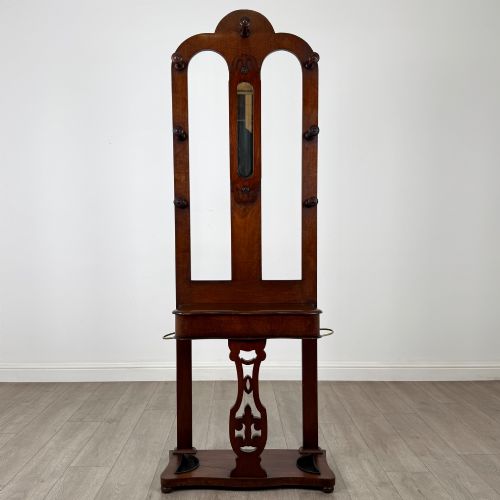
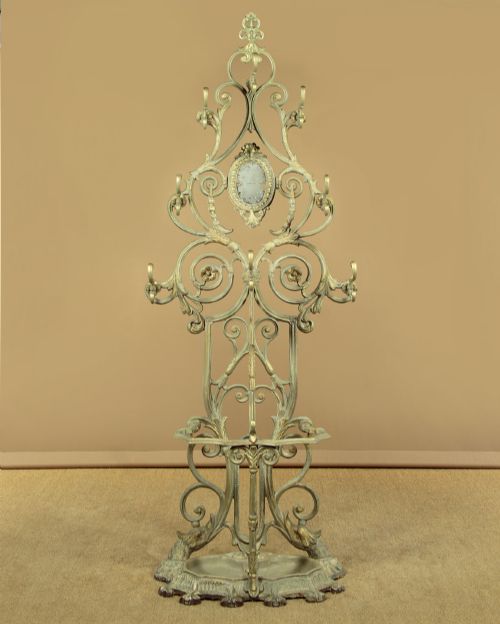
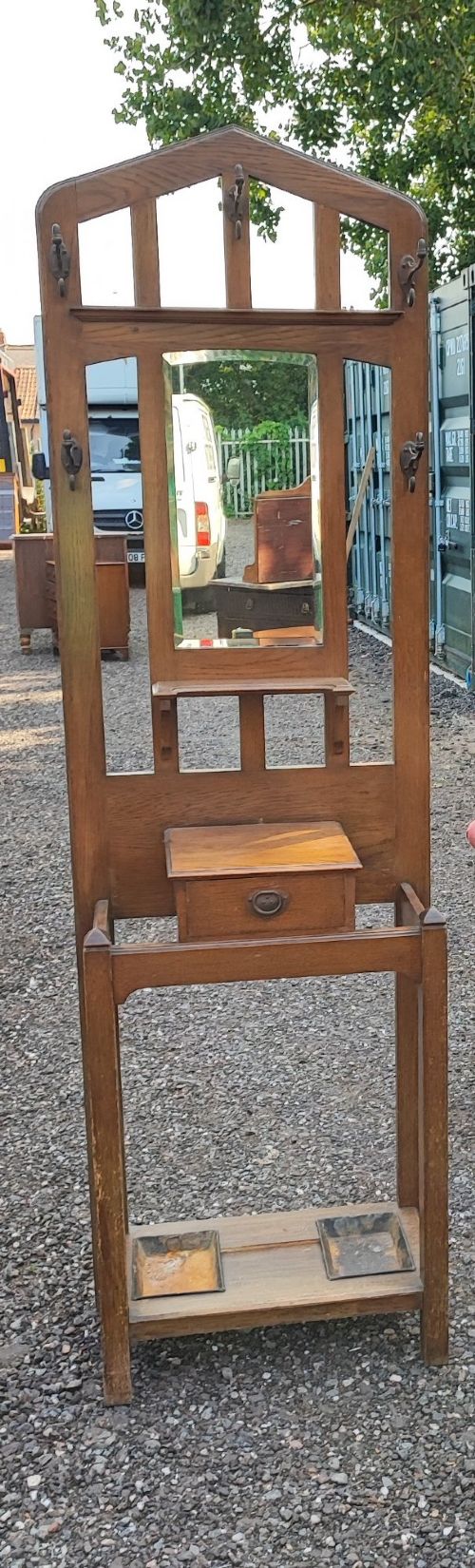
A victorian hall furniture mirror typically takes the form of a substantial hall stand or combined hat, coat and umbrella rack incorporating an integrated looking glass. These entrance pieces emerge primarily from the Victorian and Edwardian periods, spanning the late nineteenth century through to the early twentieth century.
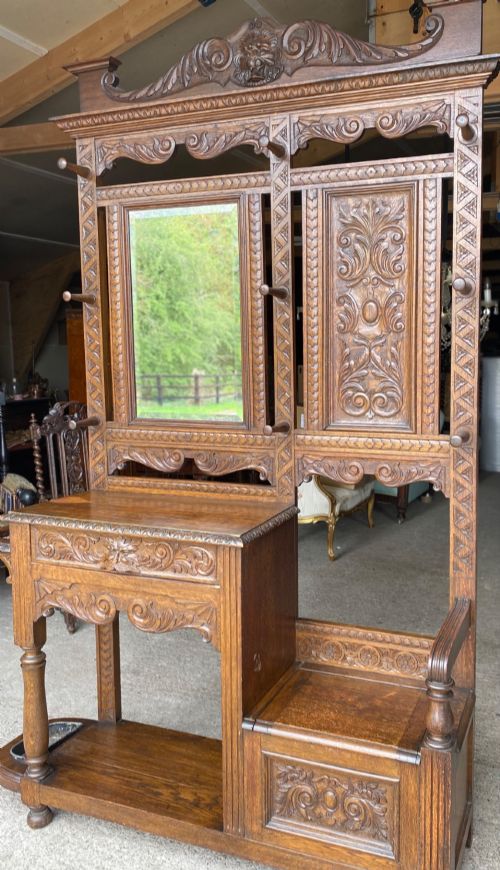
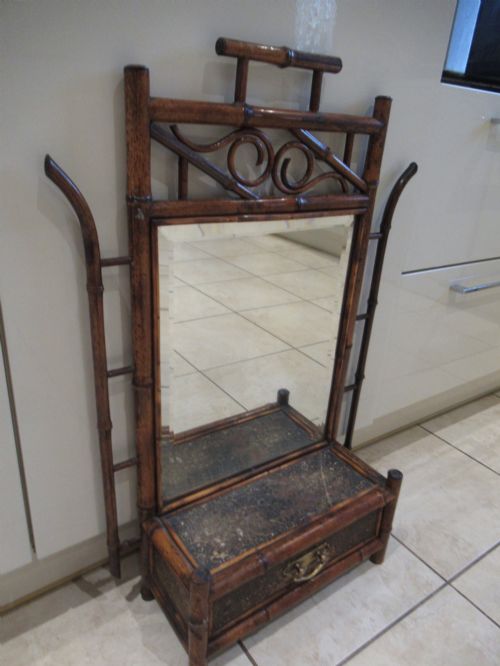
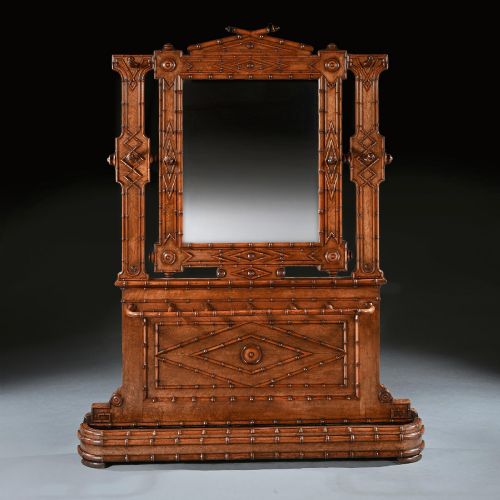
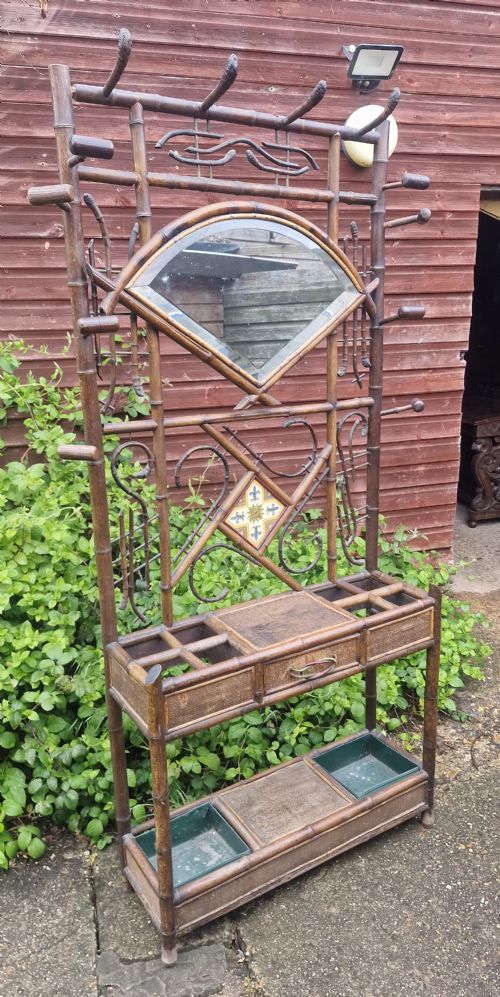
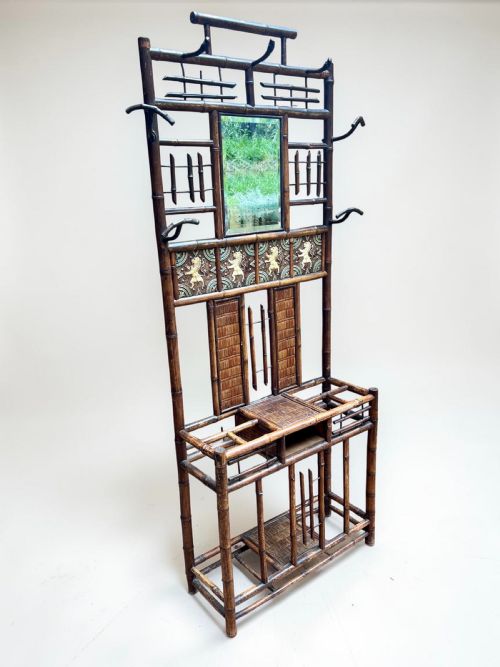
The prevailing examples met on this page appear in oak, mahogany and bamboo, often displaying styles such as Aesthetic Movement, Arts and Crafts, or Gothic Revival. Pieces range from large carved oak cupboards and multi-functional hall seat stands down to narrow wall-mounted coat racks and bamboo items.
Materials and Construction
Cabinet makers utilised dense hardwoods such as oak, walnut and mahogany alongside alternative materials like cast iron, metal, brass and marble inserts for shelves or surfaces. Bamboo and faux bamboo also appear frequently, particularly within pieces influenced by the Aesthetic Movement and Japonisme.
Victorian Hall Furniture Mirror Retail Price Guide 2026
Typical asking prices for victorian hall furniture mirror among the pieces listed under this phrase on Sellingantiques today, from the lower quarter to the upper quarter. They describe what is for sale here now, not the wider market.
Green Man carvings peer out from the woodwork, keeping a watchful wooden eye over incoming visitors.
Evaluating the Pieces
Construction scale and timber selection dictate the baseline of a piece, with dense golden oak, figured mahogany and substantial walnut holding greater presence than simpler pine or basic framing. The integration of high-status elements such as inset marble shelves, heavy bevelled mirror plates, and Coalbrookdale cast iron elevates certain examples above standard utility furniture.
Carving depth and stylistic execution distinguish standard production from exceptional design, seen in elaborate Green Man motifs or works attributed to specific makers like Shoolbred and Co. or the manner of Christopher Dresser. The complexity of multi-functional forms, such as those combining seats, cupboards and umbrella wells, determines the sophistication of the surviving object.
Shoolbred and Co.·Coalbrookdale
The Victorian Hall Furniture Mirror Glossary
- Hallstand
- A multi-functional item of entrance furniture combining coat hooks, a mirror, and umbrella wells, often with a central glove drawer or bench seat.
- Aesthetic Movement
- A late nineteenth-century design style that favoured simplicity, asymmetry and influences from Japanese art, frequently resulting in bamboo and faux bamboo frames.
- Bevelled plate
- A mirror glass featuring a slanted, polished edge around the perimeter, typical of quality nineteenth-century looking glasses.
- Faux bamboo
- Turned and painted timber shaped to imitate the segmented stalks of natural bamboo, popular in late Victorian furniture.
- Gothic Revival
- An architectural and decorative style drawing on medieval forms, characterised in hall furniture by pointed arches, heavy mouldings and dark oak.
Victorian Hall Furniture Mirror: Frequently Asked Questions
What is a victorian hall furniture mirror?
It is a combined entrance furnishing that integrates a mirror plate with wooden framing, coat hooks, and umbrella storage designed for hallways.
Such pieces provided a practical station for outerwear while adding decorative presence to the entrance of a nineteenth-century home.
How were these pieces used?
Householders used them to hang hats and coats, check their appearance in the mirror before leaving, and store walking sticks or umbrellas in the base wells.
Some iterations included small ledges or drawers for gloves, calling cards and keys.
How do I identify an Aesthetic Movement hall stand?
These pieces typically utilise bamboo, faux bamboo, or ebonised wood with Japanese-inspired motifs rather than heavy carved oak or mahogany.
They often appear lighter in scale, reflecting the late nineteenth-century shift away from dark, formal Victorian designs.
Where should I place one in a modern home?
They suit entrance halls, boot rooms and corridors where wall space allows for tall wooden or metal frames.
The integrated mirror helps to bounce light into narrower spaces while the hooks handle daily coats and bags.