
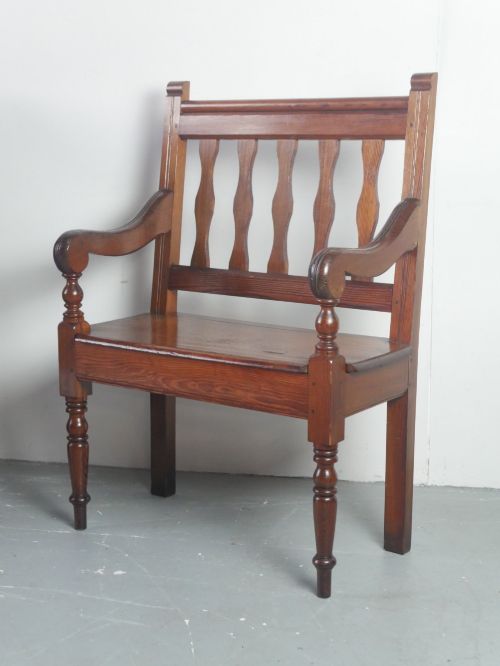
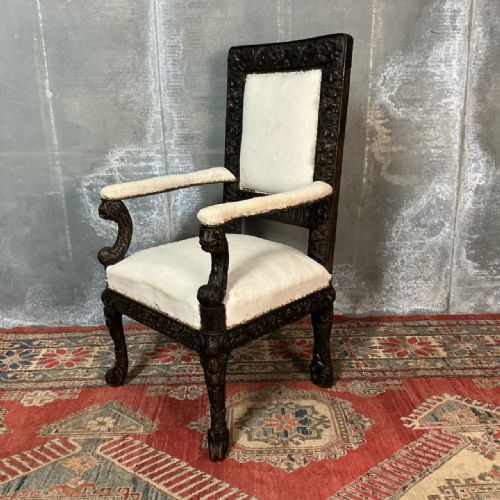
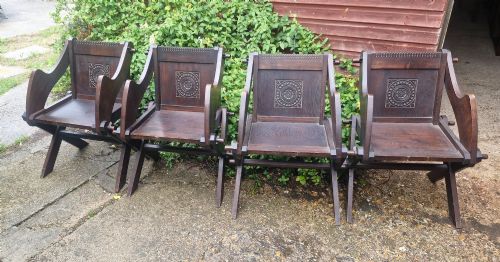
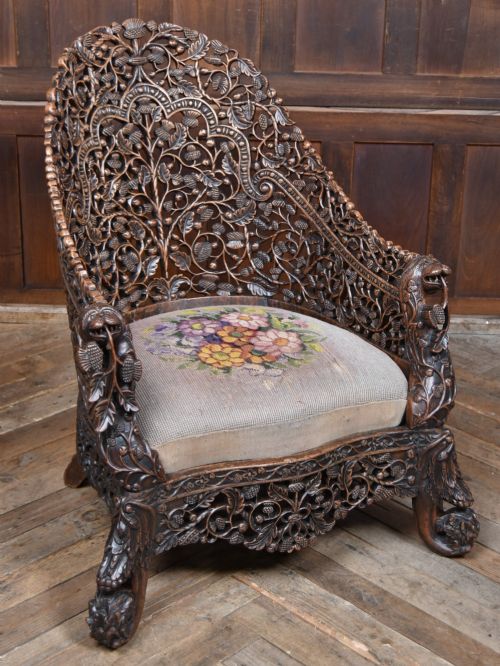


Victorian Hall Armchairs
Victorian hall armchairs are robust, carved seating forms intended for grand entrances, offering substantial presence and historical character to a hallway.
Victorian Hall Armchairs
Victorian hall armchairs comprise sturdy seating forms designed for nineteenth-century entrance halls, vestibules, and corridors. Buyers encounter numerous heavy wooden pieces produced during the nineteenth century, alongside occasional examples bearing revival styles.
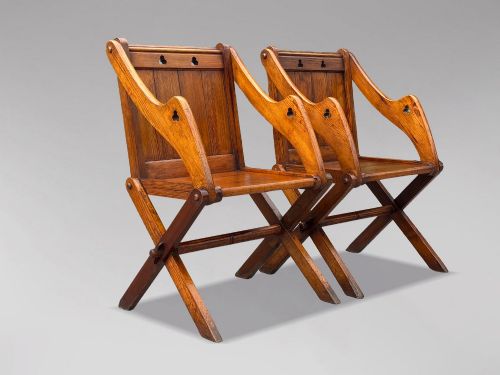
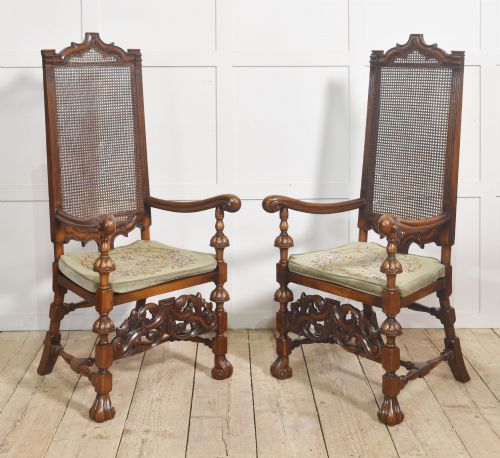
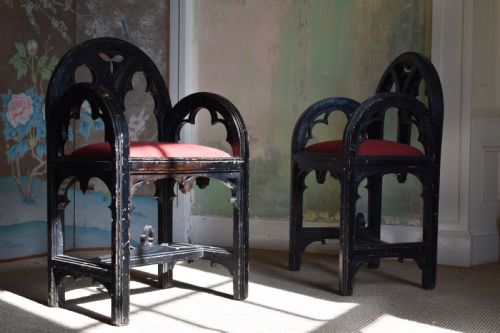
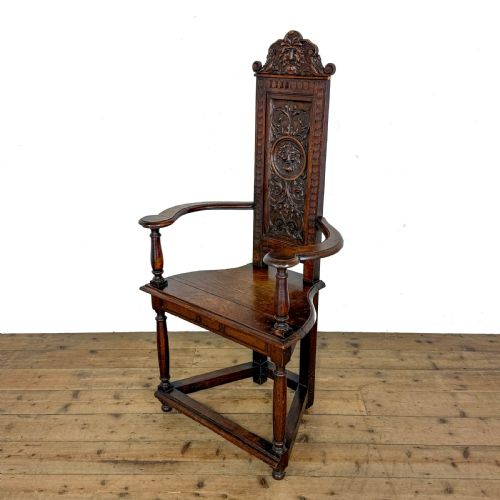
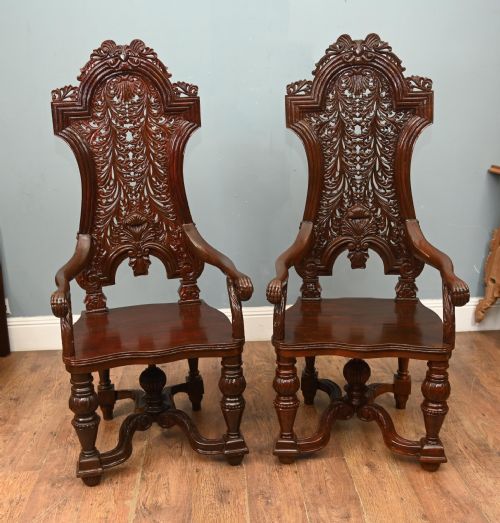
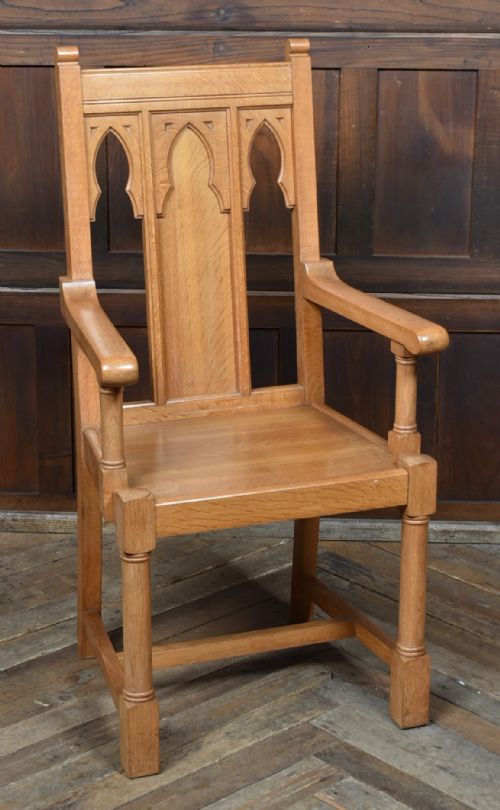
The selection spans substantial oak throne chairs, Glastonbury models with folding X-frames, and architectural hall chairs influenced by Gothic revival movements. Many examples incorporate high backs, carved armorial details, and structural paneling suited to formal interior spaces.
Materials and Construction
Cabinetmakers constructed these armchairs predominantly from solid English, Welsh, or Scottish oak, supplemented by walnut, mahogany, pitch pine, and fruitwood. Carpenters utilised traditional joinery techniques, employing pegged mortise and tenon joints to ensure stability in heavy seating.
Upholstered versions integrate supple leather panels, woven leather seats, velvet textiles, and brass buttoning fixed directly to the wooden frames. Carvers applied deep relief ornamentation, depicting foliage, thistle motifs, and green man carvings across the structural timber.
Listings feature nineteenth-century oak, walnut, and mahogany, alongside revival styles including Gothic, Jacobean, and Carolean forms.
Assessing Craftsmanship
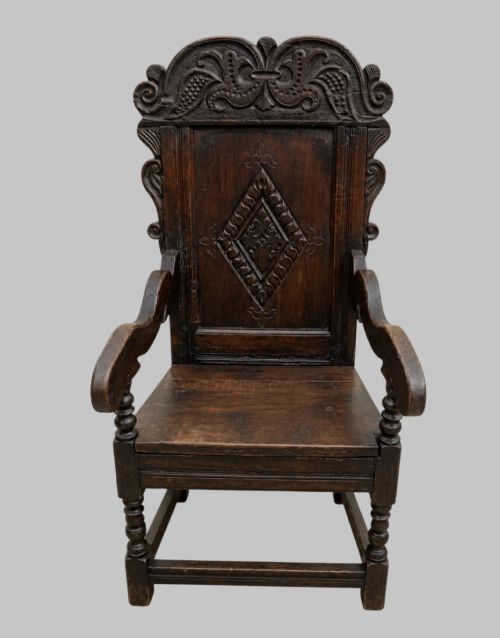
Quality rests upon the depth and crispness of the hand-carved ornamentation, distinguishing sharp relief work from shallow, mechanical secondary decoration. Dense, straight-grained hardwoods provide superior structural integrity compared to softer secondary timbers prone to splitting under heavy use.
Proportion and architectural balance dictate the overall success of the piece, particularly in revival forms referencing seventeenth-century models. Original upholstery materials, intact leather panels, and retained surface patination elevate the standing of surviving examples.
The Victorian Hall Armchairs Glossary
- Glastonbury chair
- An ecclesiastical X-frame armchair design with a sloping back and panel seat, popular during the Gothic revival. This form derives from medieval precedents associated with Somerset.
- Wainscot chair
- A heavy wooden armchair constructed primarily from oak, featuring a paneled back and solid seat. These pieces emulate seventeenth-century domestic seating forms.
- Throne chair
- A towering armchair featuring an elevated backrest, elaborate armorial carvings, and imposing proportions. Makers designed these seats for dramatic effect in large halls.
- Gothic Revival
- An architectural and decorative style drawing inspiration from medieval forms, pointed arches, and ecclesiastical motifs. Cabinetmakers applied these elements extensively throughout the nineteenth century.
- Green Man
- A sculptural architectural ornament depicting a human face disgorging foliage or vines. Carvers frequently incorporated this motif into nineteenth-century oak furniture.
Victorian Hall Armchairs: Frequently Asked Questions
Where did these chairs stand?
These imposing seats stood in grand entrance halls, vestibules, and corridors of nineteenth-century residences. Owners placed them where visitors waited or where they served an architectural purpose.
Their robust construction suited high-traffic entryways, offering a formal impression to arriving guests.
Are these seats comfortable?
Many examples prioritize architectural presence and upright posture over modern lounging comfort. High wooden backs and rigid frames encourage an upright seating position.
Versions upholstered in leather or velvet with padded panels offer a softer sit for daily use.
How do I identify a Gothic revival piece?
Gothic revival items display pointed arches, trefoil motifs, cusping, and structural references to medieval architecture. Cabinetmakers utilised solid oak and deep relief carving to emulate ecclesiastical furnishings.
These designs often mirror theoretical work associated with nineteenth-century architects.
What woods were used?
Oak predominates among surviving pieces, sourced locally and valued for its strength and dark patination. Walnut, mahogany, pitch pine, and beech also appear across various regional workshops.
Carpenters selected dense timbers capable of supporting intricate hand-carved details without fracturing.