



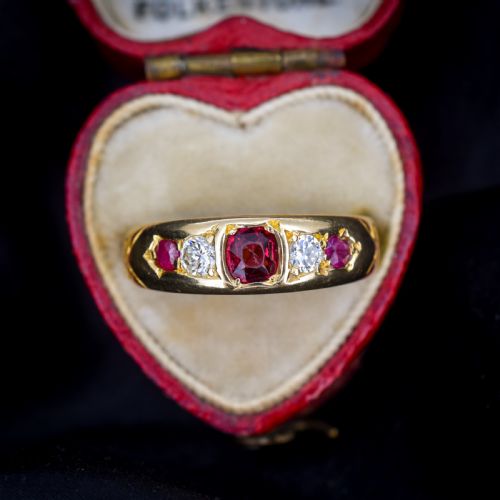


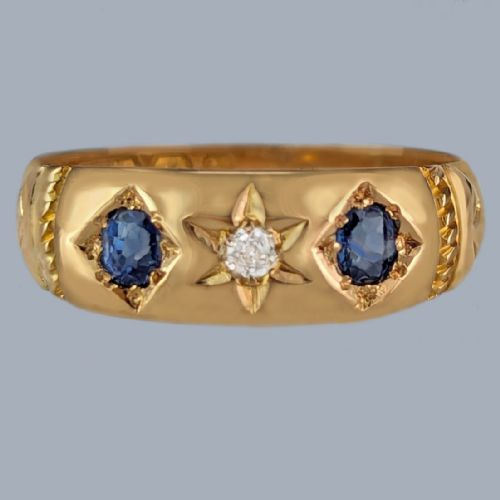


Victorian Gypsy Ring
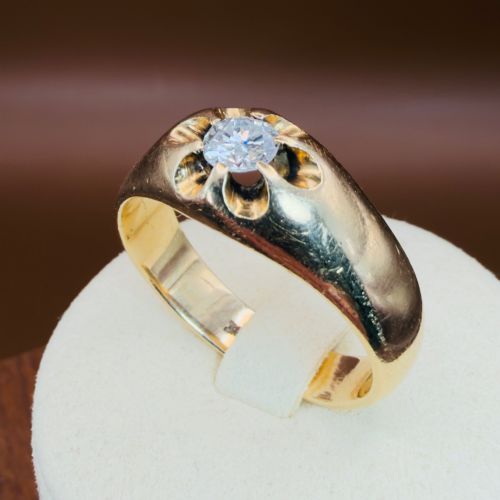
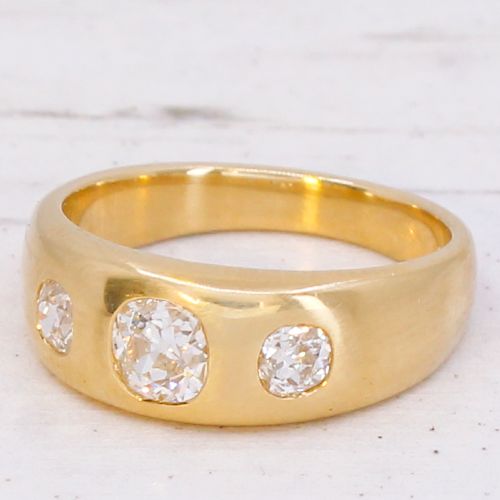
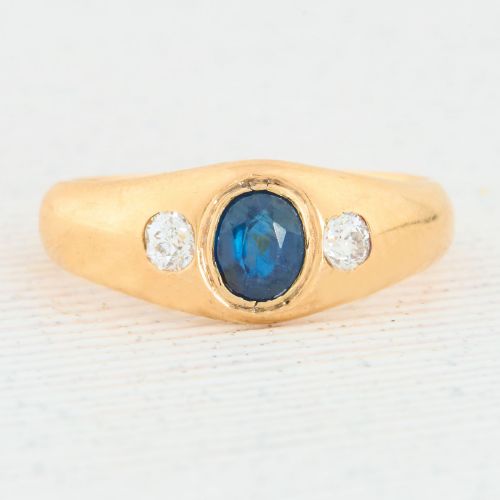
When you examine a victorian gypsy ring, you meet a flush-set band designed for daily wear during the late nineteenth century.
Victorian Gypsy Ring
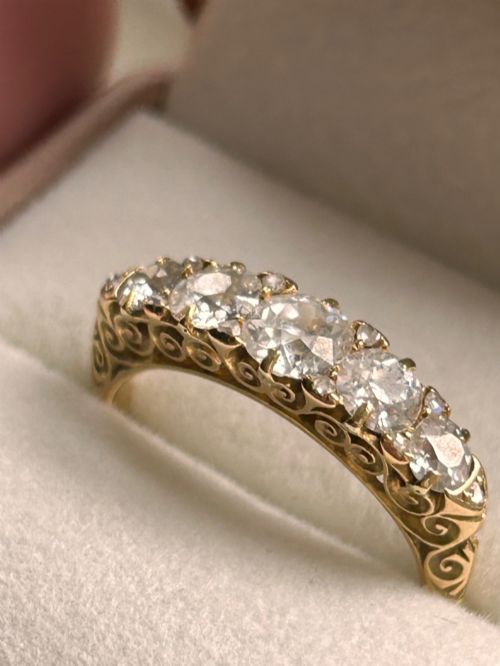
The pieces on this page span the Victorian and Edwardian periods, stretching into later mid-century revivals. Most examples rely on classic nineteenth-century forms, housing single diamonds, multi-stone trilogies, or starburst arrangements alongside sapphires, rubies, and turquoises.
Makers fashioned these bands from various grades of gold, predominantly 18ct yellow gold, alongside 9ct and 15ct variations. The surface often carries star or celestial chasing around the flush settings, framing the old-cut diamonds and coloured gems.
Materials and Construction
Goldsmiths constructed these rings from substantial gold tubing or cast heavy gauge bands, allowing them to carve starburst patterns directly into the thick metal around the stones. This technique involved recessing the gem so the girdle sat level with or slightly below the outer band.
Jewellers utilised hand-cut stones, predominantly old-cut diamonds exhibiting chunky facets and open culets, paired with natural rubies, sapphires, and turquoise. The metalsmiths secured each gem by pushing the surrounding gold tightly over the edge of the stone.
Victorian Gypsy Ring Retail Price Guide 2026
Typical asking prices for victorian gypsy ring among the pieces listed under this phrase on Sellingantiques today, from the lower quarter to the upper quarter. They describe what is for sale here now, not the wider market.
Listings feature periods spanning from the Victorian era and 1880s through to the 1960s, using 9ct, 15ct, and 18ct gold.
Assessing Craftsmanship and Condition
Quality in these bands rests upon the weight of the gold and the crispness of the hand-chased star motifs surrounding the gems. Thicker bands retain their structural integrity and keep the flush-set stones secure against daily friction.
Superior examples display well-matched old-cut diamonds with clean faceting and securely hammered collets that show minimal thinning from past resizing. The proportion between the width of the band and the size of the set gems dictates the visual balance of the piece.
The Victorian Gypsy Ring Glossary
- Gypsy setting
- A mounting style where the gemstone is flush with the metal surface, secured by pushing the surrounding gold over the stone. This technique protects the girdle from knocks.
- Old-cut diamond
- A hand-faceted diamond cut before modern machinery, typically featuring a smaller table, higher crown, and a noticeable open culet at the base. These stones exhibit broad flashes of light under low candle or gas lighting.
- Trilogy ring
- A ring featuring three stones set in a row, often symbolising the past, present, and future. In gypsy settings, these three gems sit flush across the top of the band.
- Belcher mounting
- A ring style where the metal forms rounded, raised prongs or settings around the stone, occasionally overlapping with gypsy designs in nineteenth-century workshops.
- Starburst chasing
- Hand-engraved star lines radiating outward from a flush-set stone into the surrounding gold band. This decorative technique accentuates the perceived size of the central gem.
Victorian Gypsy Ring: Frequently Asked Questions
What is a gypsy ring?
A gypsy ring is a style of finger ring featuring a thick band where the gemstones are set flush into the metal surface rather than held in raised claws.
Originating in the Victorian era, this design protects the stones and prevents the ring from snagging on fabrics during daily wear.
How do I wear an antique gypsy ring?
These bands suit daily wear on any finger due to their smooth, low-profile settings that sit flush against the skin.
Many people wear them alone as a wedding band or stack them alongside simple gold bands and vintage engagement rings.
How do I tell Victorian from Edwardian rings?
Victorian examples tend to use heavier 18ct or 15ct yellow gold with deep starburst chasing and warm-toned rubies, sapphires, or old-cut diamonds.
Edwardian pieces often feature lighter mountings, sometimes utilising 9ct gold or incorporating delicate millegrain detailing around the flush-set stones.
Are these rings suitable for engagements?
Many people choose these antique bands for engagements because the flush setting offers exceptional durability for everyday use.
The secure mounting protects old-cut diamonds and coloured stones from knocks, making them practical historical alternatives to modern raised solitaire rings.