

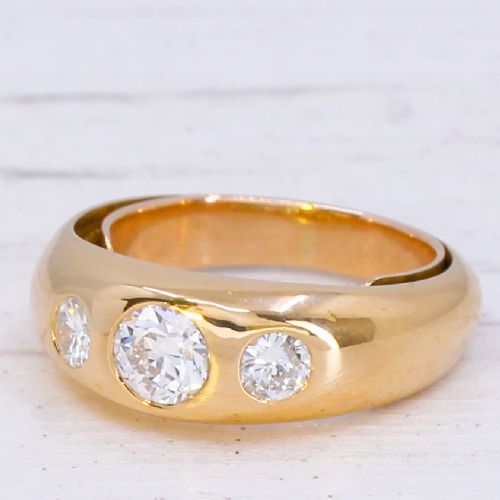


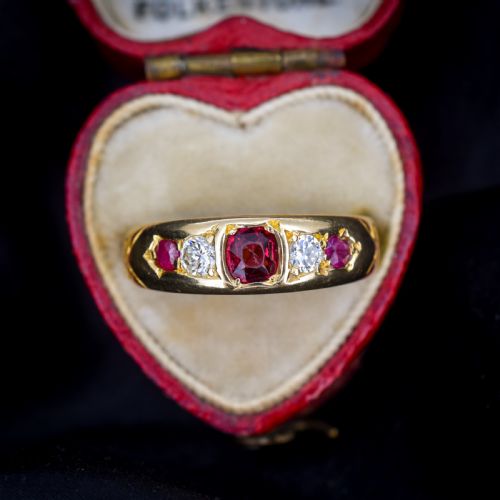


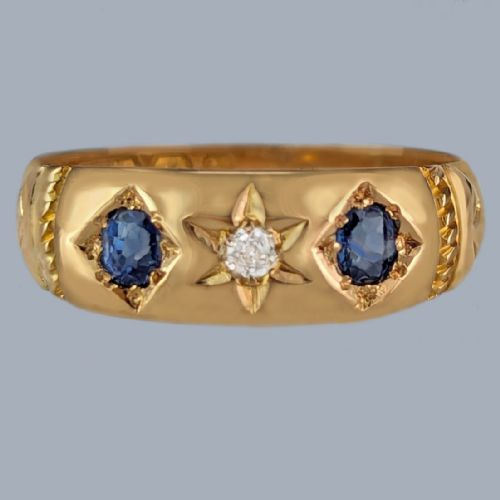
Gold Diamond Gypsy Ring
A gold diamond gypsy ring sits flush to the finger, pairing low-profile security with the fire of old-cut stones.
Gold Diamond Gypsy Ring
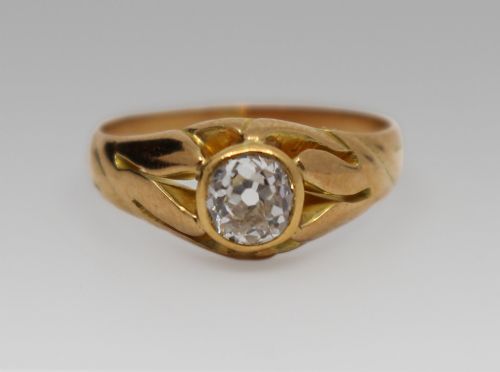
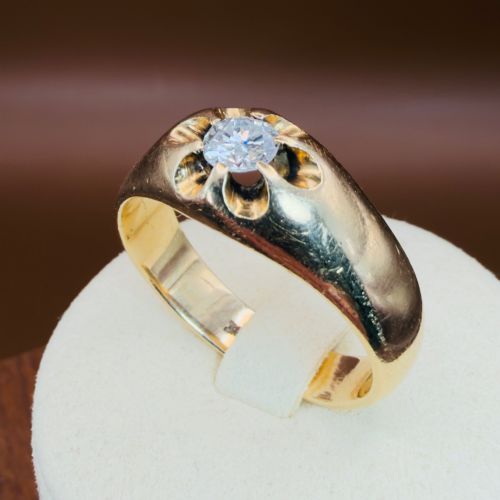
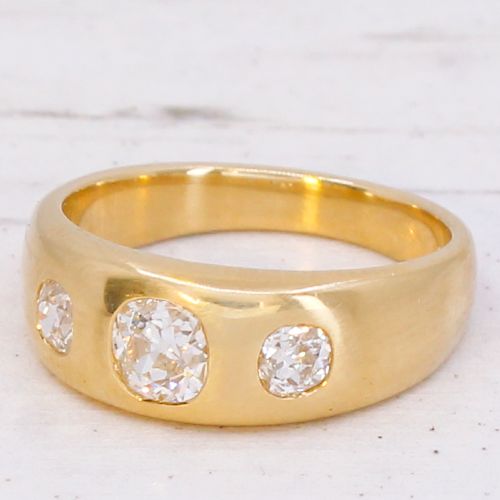
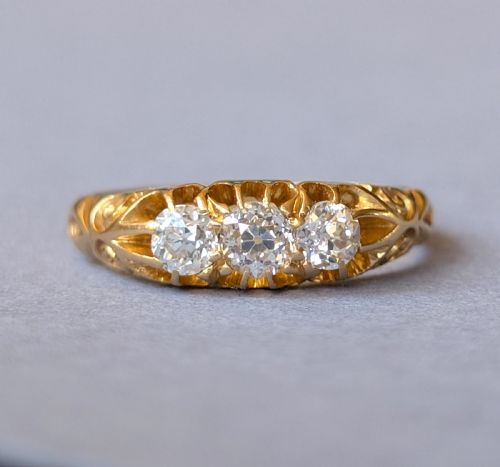
A gold diamond gypsy ring uses a flush or star-set mounting where the metal tapers smoothly up to enclose the stone, leaving the table level with the band. These rings appear frequently in Victorian and Edwardian iterations, spanning single stones through to multi-stone arrangements.
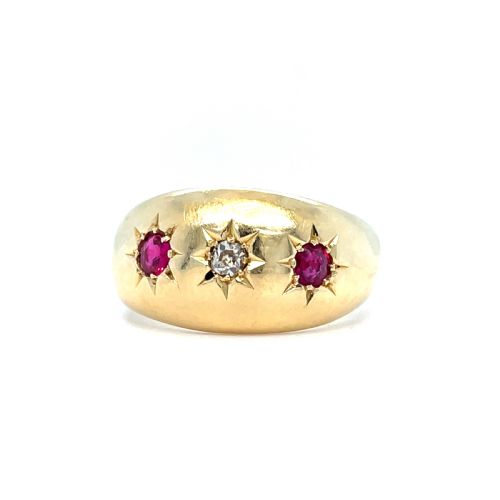
Most examples found here date from the late nineteenth century into the early decades of the twentieth century, formed in yellow or rose gold. The surface often carries starburst engravings or decorative chasing radiating from the gems.
How They Were Made
Goldsmiths cast or forged the heavy bands in 18ct or 9ct gold, utilising high-carat yellow and rose alloys that provided the necessary malleability for gypsy settings. The stones, predominantly old mine-cut or rose-cut diamonds, were pushed directly into thick metal bezels and burnished securely into place.
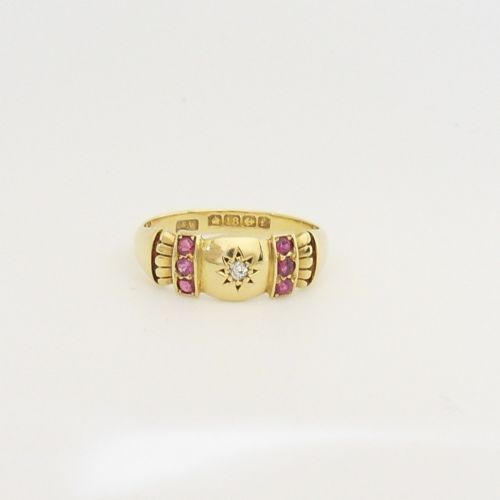
Many bands feature hand-engraved star motifs surrounding the gemstone settings, sinking the metal around the edges to catch the light alongside the diamond facets.
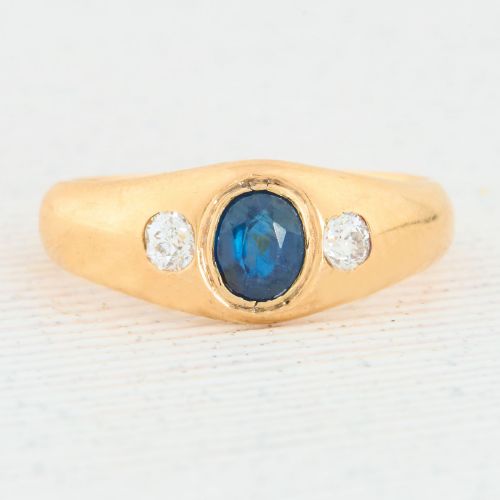
Listings span Victorian, Edwardian, and mid-century periods, utilising 9ct and 18ct yellow and rose gold combined with diamonds, rubies, and sapphires.
What Varies in Quality
The weight and thickness of the gold band dictate the structural longevity, with sturdier, heavier examples resisting distortion around the finger over generations of wear. Finer pieces maintain substantial metal walls even where the band tapers toward the shoulders.
Stone selection introduces further distinction, separating standard single-cut gems from bright, well-matched old mine cuts or combinations paired with natural rubies and sapphires. The precision of the hand-chased starburst engraving also marks the dividing line between standard commercial output and finer bench work.
The Gold Diamond Gypsy Ring Glossary
- Gypsy setting
- A mounting style where the gemstone is set flush into the surface of a thick metal band, sloping down at the edges.
- Old cut
- A hand-faceted diamond cut prevalent before modern machine precision, characterised by a smaller table, higher crown, and open culet.
- Rose cut
- A vintage diamond cut featuring a flat base and a domed crown covered in triangular facets resembling an unopened rosebud.
- Belcher ring
- A specific ring style featuring strong, rounded prongs or bezels holding the stone high or flush within a heavy, uniform band.
- Trilogy ring
- A ring featuring three stones set side by side, traditionally representing the past, present, and future.
Gold Diamond Gypsy Ring: Frequently Asked Questions
What is a gypsy ring?
A gypsy ring is a style of band where gemstones are set flush into the metal rather than held in raised claws. The shoulders of the ring typically taper smoothly toward the stone.
This low-profile design made the rings exceptionally practical for daily wear, protecting the girdle of the diamond from daily knocks.
How do I date a gold diamond gypsy ring?
Dating relies heavily upon hallmarks stamped inside the shank, indicating assay offices such as Birmingham or Chester alongside specific date letters. Stylistic clues like hand-engraved starbursts and the use of old-cut diamonds generally point to the Victorian and Edwardian eras.
Heavier gauge bands and specific carat marks like 15ct further narrow down the production period to the late nineteenth and early twentieth centuries.
Are these rings suitable for daily wear?
The flush setting makes these rings remarkably well-suited for everyday use because the stones do not catch on clothing or surfaces. The thick gold bands typical of this style offer robust structural support.
One should still inspect the security of the bezel walls periodically to ensure the metal has not worn thin over the diamond girdle.
What stones accompany the diamond?
Many variations incorporate coloured gems alongside the central diamond, most commonly deep red rubies and rich blue sapphires. Garnets and emeralds also appear in multi-stone configurations.
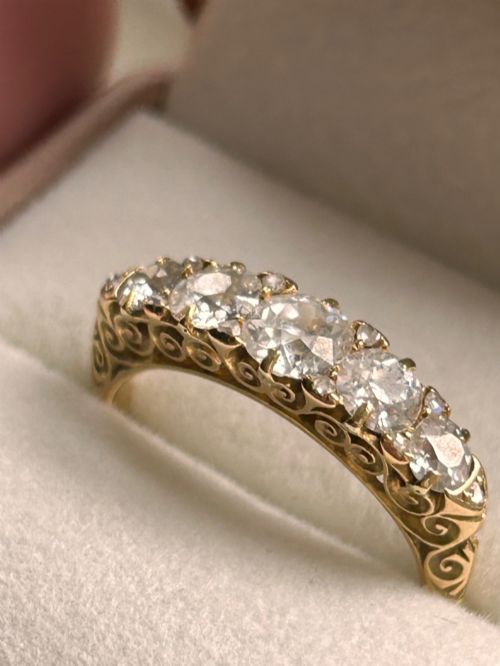
These complementary stones are typically flush-set in alternating patterns or arranged in traditional three-stone and five-stone trilogy layouts.