

Victorian Green Velvet Chairs
Victorian green velvet chairs bring rich colour and deep upholstery to a room, ranging from intimate nursing seats to grand dining sets.
Victorian Green Velvet Chairs
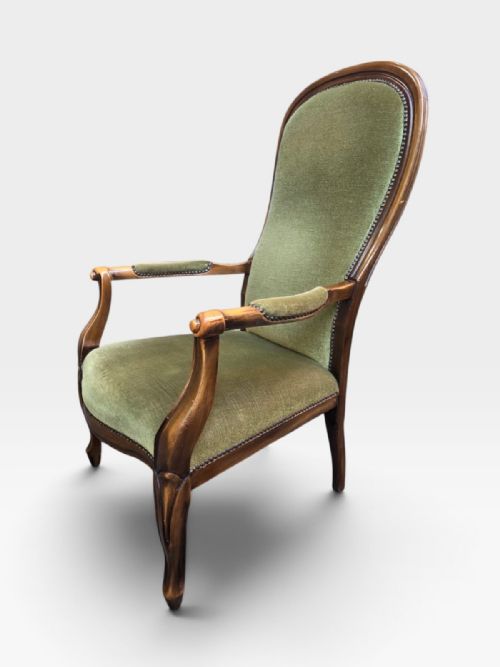
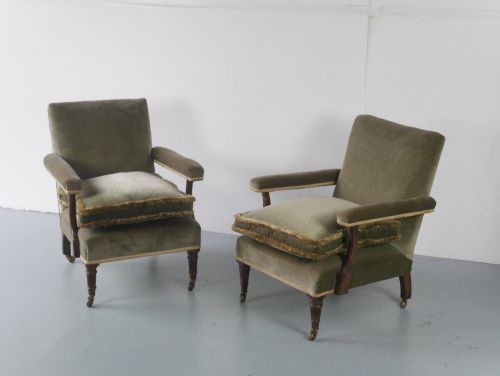
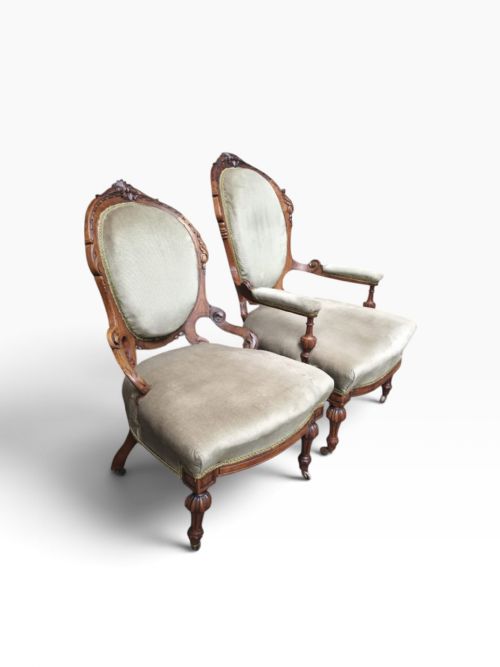
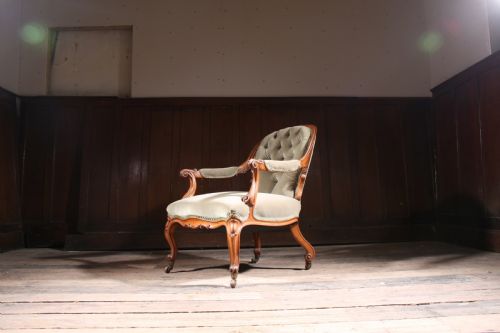
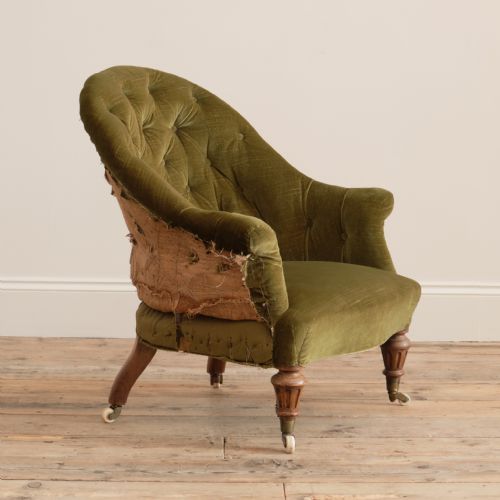
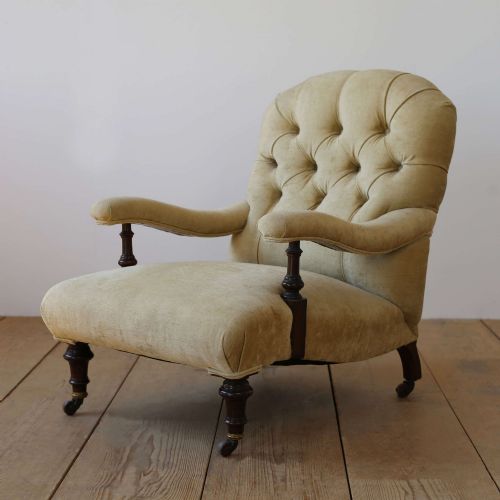
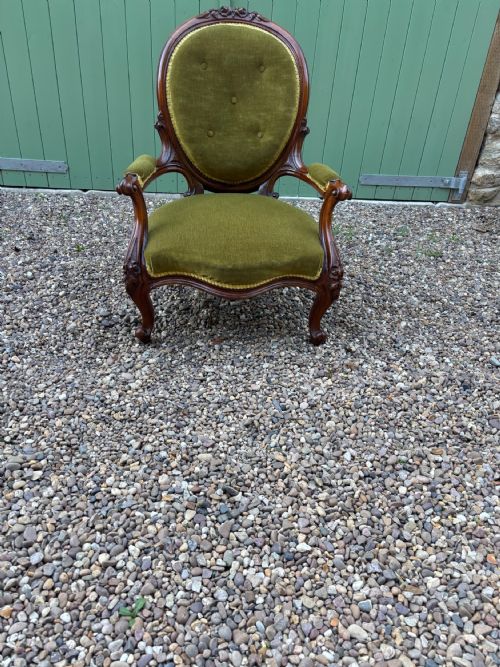
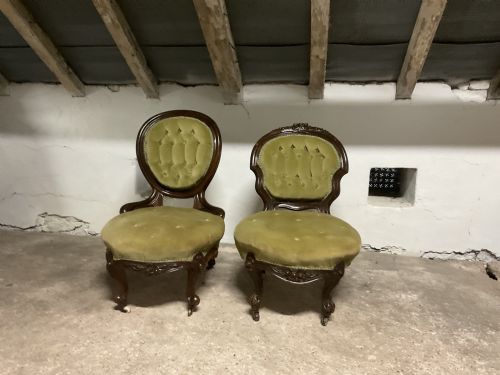
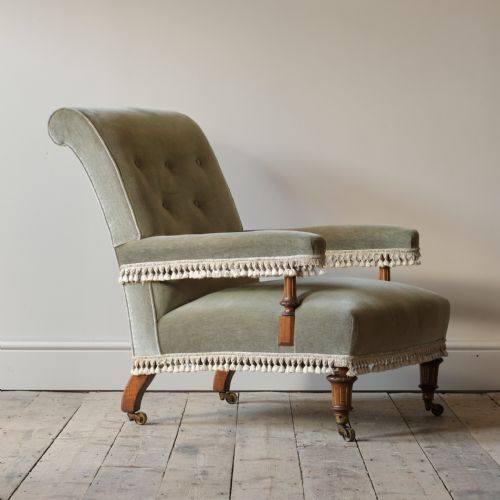
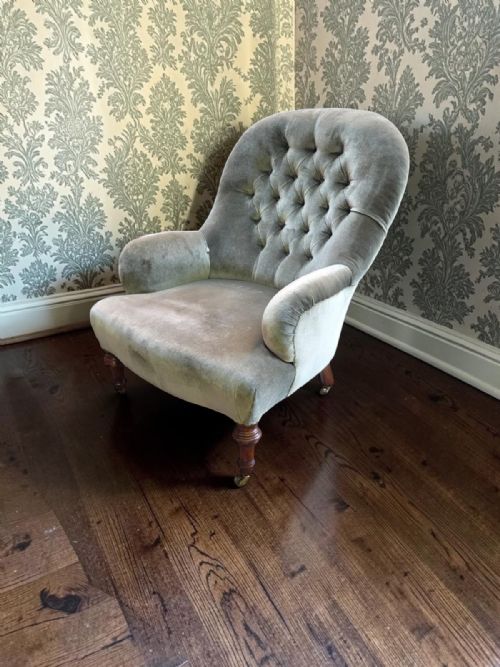
Victorian green velvet chairs appear across various forms, including armchairs, dining chairs, nursing chairs, and chaise longues. The selection leans heavily toward seating framed in rich timbers such as mahogany, walnut, and rosewood.
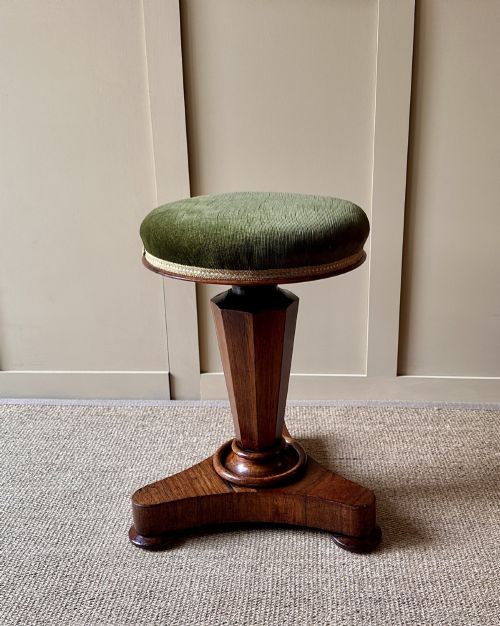
Makers and periods represented span the nineteenth century, encompassing early Victorian pieces alongside Regency and Edwardian examples. Buyers encounter everything from single library chairs to sets of dining chairs and revolving piano stools.
How they were made
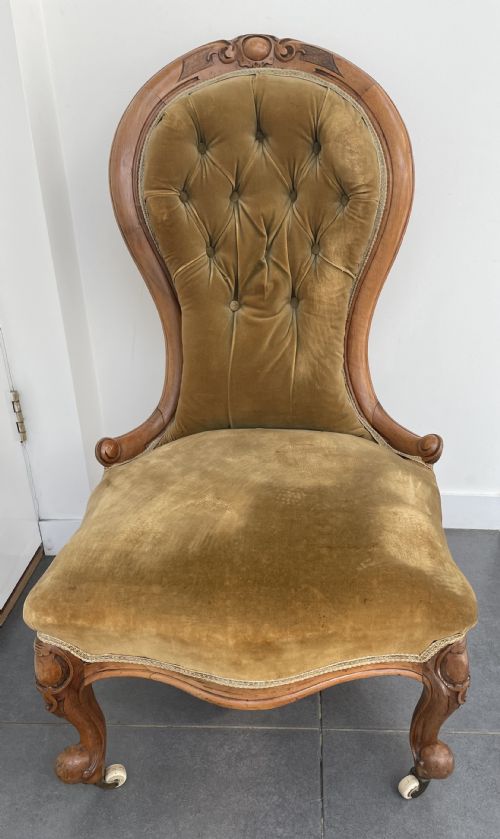
Frames are constructed from dense hardwoods like mahogany, walnut, and rosewood, often shaped with turned legs, barley twists, or carved cabriole supports. Ebonised wood and oak also feature among the framing materials.
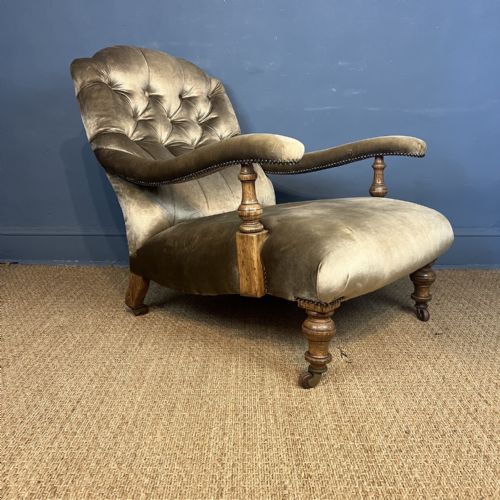
Upholstery relies on velvet fabric paired with supportive interior construction, occasionally accented with brass castors on legs for mobility.
Victorian Green Velvet Chairs Retail Price Guide 2026
Typical asking prices for victorian green velvet chairs among the pieces listed under this phrase on Sellingantiques today, from the lower quarter to the upper quarter. They describe what is for sale here now, not the wider market.
Object types range from dining chairs and armchairs to chaise longues, daybeds, piano stools, and prayer chairs.
What varies in quality
Quality rests in the crispness of timber carving, the choice of dense hardwoods, and the integrity of the frame construction. Pieces associated with documented makers show superior execution in joinery and design.
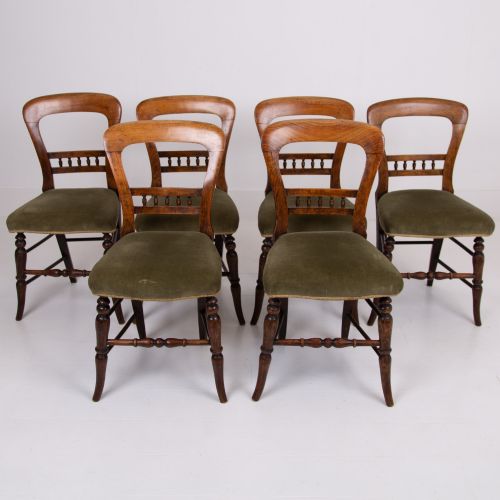
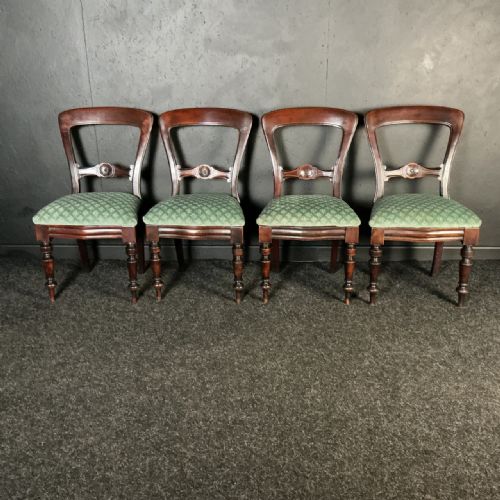
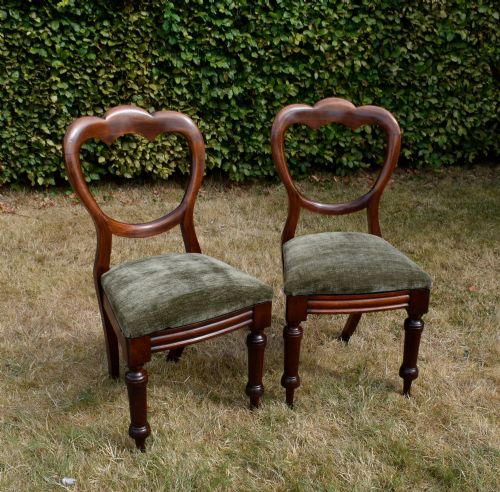
The sophistication of the silhouette, from simple balloon backs to elaborate button-backed armchairs and carved rosewood frames, distinguishes standard seating from finer examples.
Gillows·Hampton & Sons Pall Mall·C. Hindley & Sons·J. & T. Scott, Edinburgh
The Victorian Green Velvet Chairs Glossary
- Balloon back
- A chair back shaped like the profile of a hot air balloon, popular in nineteenth-century dining chairs.
- Chaise longue
- An upholstered long chair or daybed designed for reclining, often featuring a scrolled end.
- Cabriole leg
- A furniture leg that curves out and then in, resembling the leg of an animal.
- Barley twist
- A type of turning shaped like a helix, resembling a twisted rope or stalk of barley.
- Prie Dieu
- A low prayer chair designed with a high back or shelf for kneeling and devotions.
Victorian Green Velvet Chairs: Frequently Asked Questions
How do I identify a Victorian armchair?
Look for dense timber frames made of mahogany, walnut, or rosewood, often featuring button backs and turned or cabriole legs. Construction methods and stylistic flourishes align with nineteenth-century cabinet making.
Upholstery like green velvet complements the dark woods typical of the period, while details such as brass castors or barley twist supports point to specific decades.
Where were these chairs used?
Different forms served distinct rooms, from dining chairs gathered around large tables to low nursing and bedroom chairs placed near hearths. Chaise longues and daybeds furnished drawing rooms and libraries for resting.
Smaller occasional chairs and piano stools filled reception spaces and music rooms, matching the functional divisions of nineteenth-century homes.
Are these chairs comfortable for daily use?
Many nineteenth-century armchairs and fireside seats are heavily upholstered and built for sustained sitting. Button-backed designs and sprung frames offer substantial support.
Buyers should consider seat heights and depths, as Victorian proportions vary significantly between compact bedroom chairs and large library armchairs.
How do I care for velvet upholstery?
Velvet requires gentle brushing to maintain the nap and prevent flattening of the pile over time. Keep upholstered pieces away from direct sunlight to preserve the depth of the green colour.
Professional cleaning is recommended for antique textiles to protect the delicate fibres of the fabric and the underlying frame.