



Victorian Green Glass Bottle
When searching for a victorian green glass bottle, collectors encounter a rich assortment of apothecary vessels, scent bottles, and table decanters.
Victorian Green Glass Bottle
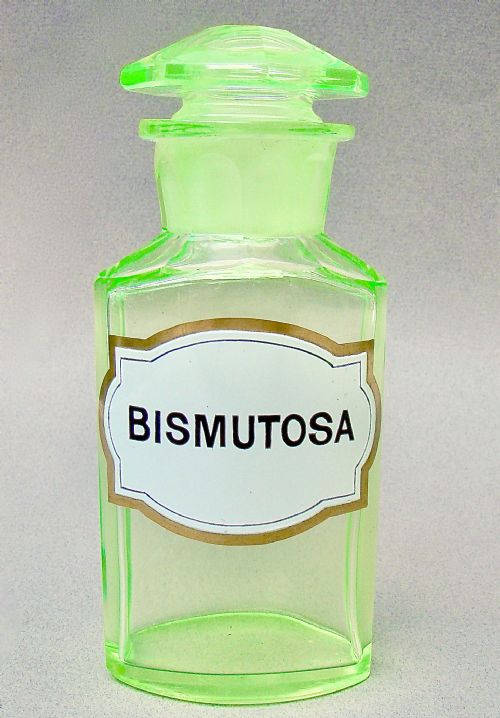
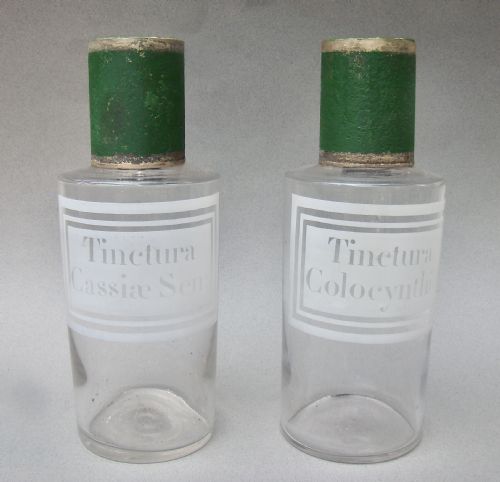
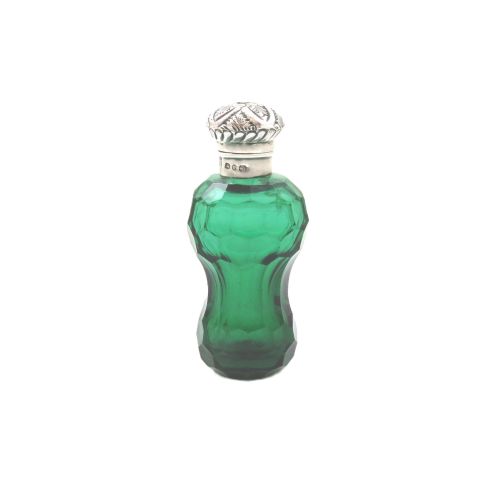
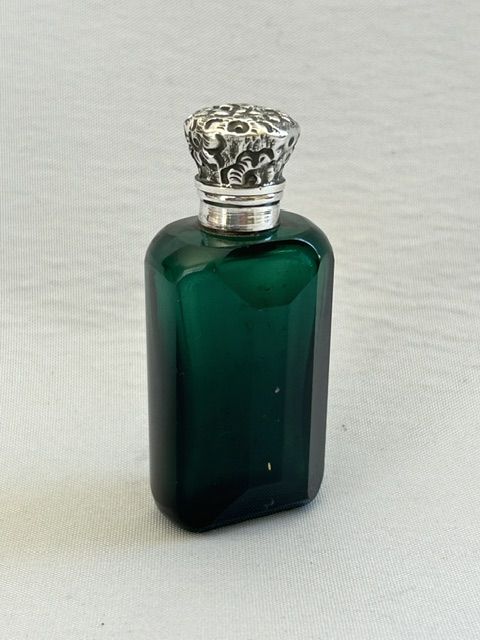
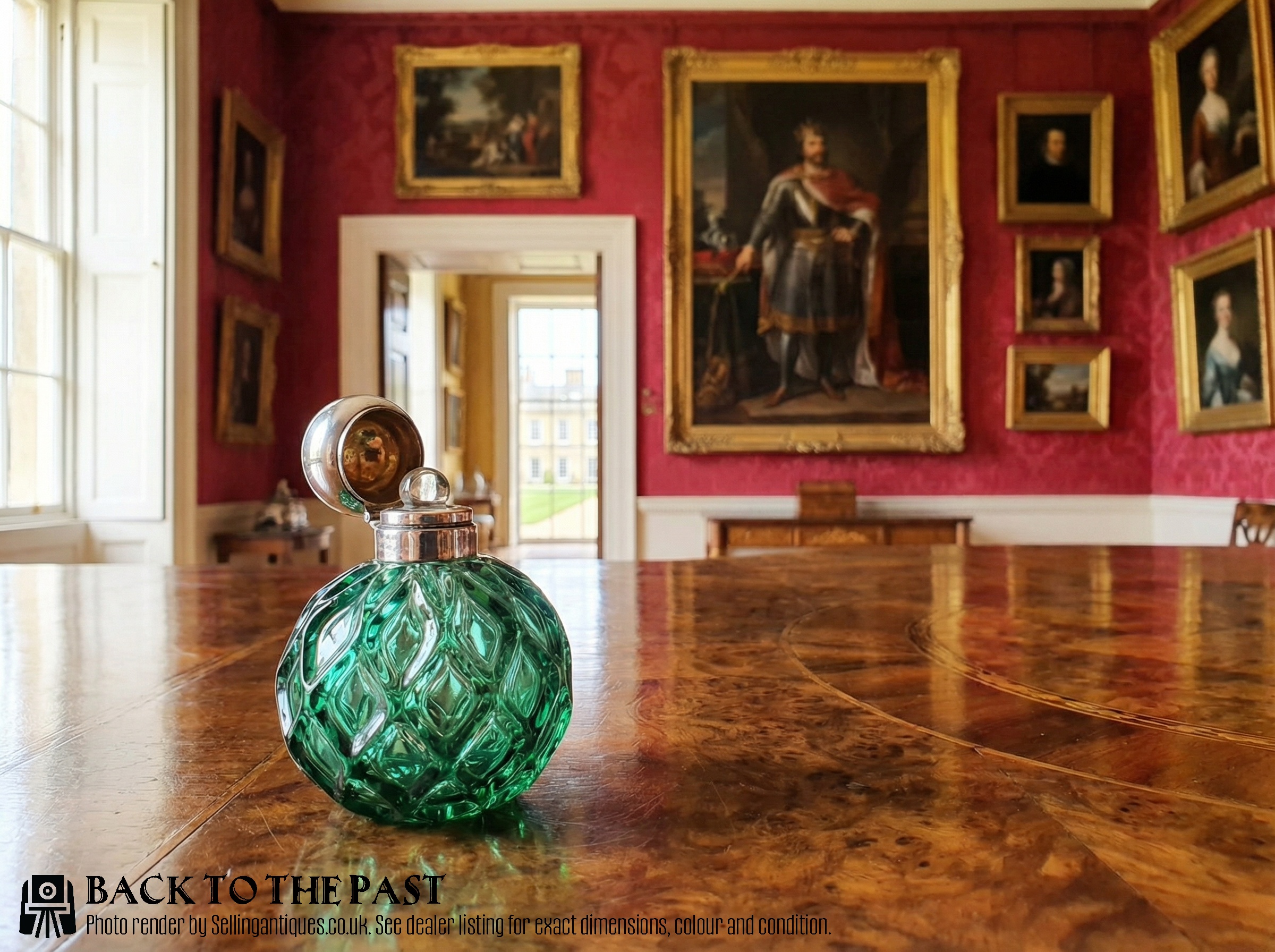
A victorian green glass bottle encompasses diverse domestic and medicinal forms, ranging from tall spirit decanters and wine flagons to pocket-sized scent bottles and heavy apothecary jars. Many examples integrate sterling silver mounts, hinged caps, or engraved glass bodies.
The selections on this page bridge everyday utility and dressing table elegance, frequently spanning the nineteenth century from the eighteen-sixties through the eighteen-nineties. Buyers frequently find handled ewers, colour-over-crystal hock decanters, and solid glass dumps alongside functional drug containers.
Origins stretch across English, French, and Bohemian workshops, reflecting distinct regional palette preferences from deep Bristol green to bright lime, teal, and vaseline tones. These items served both practical storage roles and decorative display functions in nineteenth-century interiors.
Assessing Quality and Craftsmanship
Quality rests upon the crispness of the glass cutting, the depth of colour overlay, and the integration of metal hardware with the glass body. Finer examples display precise wheel-cut facets, hand-etched motifs, and well-fitted silver mounts bearing clear assay hallmarks.
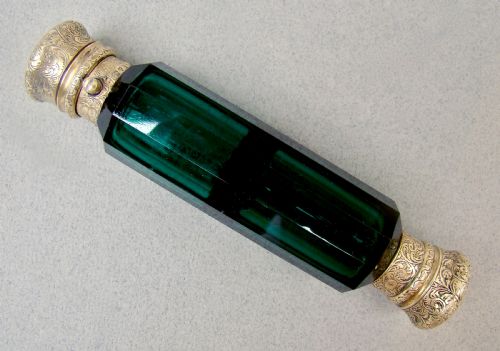
Proportion and weight differentiate standard utility pieces from exhibition items, such as multi-layered Bohemian overlay glass or delicate double-ended scent bottles equipped with intact interior stoppers.
Victorian Green Glass Bottle Retail Price Guide 2026
Typical asking prices for victorian green glass bottle among the pieces listed under this phrase on Sellingantiques today, from the lower quarter to the upper quarter. They describe what is for sale here now, not the wider market.
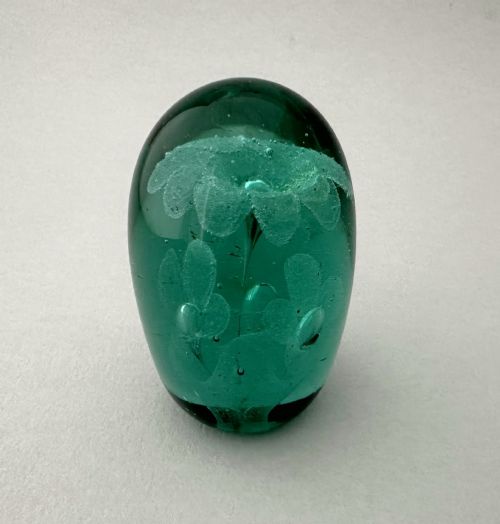
Victorian glass dumps were heavy glass paperweights manufactured from leftover factory melt, offering a solid decorative home for thistles and roses.
Mousley Brothers·J Grinsell and Sons·Moser·Charles May·Richardsons·Saunders and Shepherd
The Victorian Green Glass Bottle Glossary
- Carboy
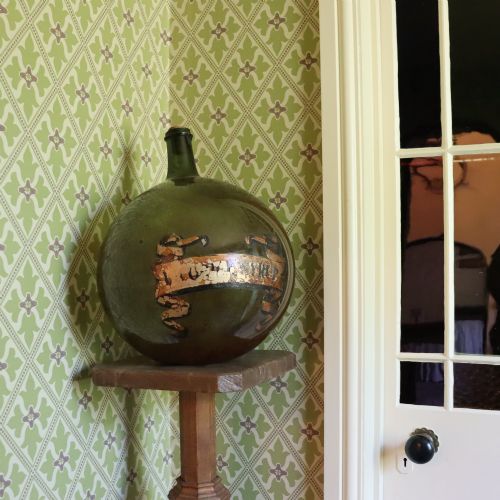
- A large, bulbous glass vessel enclosed in a protective basket or standing independently, utilised historically for storing chemical substances.
- Sulphide
- A small white ceramic cameo embedded within clear or coloured solid glass during manufacture, producing a three-dimensional silvery relief effect.
- Overlay
- A technique involving a layer of coloured glass cased over a distinct base layer of clear or contrasting glass, then selectively cut away to expose the underlayer.
- Vaseline glass
- A transparent yellowish-green glass containing uranium dioxide that exhibits a distinct greenish fluorescence under ultraviolet light.
- Wrythen
- A decorative spiral pattern moulded into the body of glassware while the material remains hot and malleable.
Victorian Green Glass Bottle: Frequently Asked Questions
How do I clean an antique scent bottle?
Gentle washing with warm water and a soft brush preserves both the glass body and any delicate metal mounts. Harsh chemical cleaners can damage historical silver-plate or strip enamel details.
Interior residue requires patience and mild soapy water rather than abrasive tools. Avoiding complete submersion protects cork stoppers and internal paper labels where present.
What distinguishes Bristol green glass?
Bristol green refers to a distinct deep, rich green hue traditionally associated with glasshouses operating in the Bristol region during the eighteenth and nineteenth centuries. This coloration was achieved through specific mineral oxides added to the molten batch.
While many nineteenth-century factories produced this shade, the term remains a useful descriptor for the intense emerald tones seen on decanters and scent flasks.
How are double-ended scent bottles used?
Double-ended bottles feature two separate compartments accessible from opposite ends, allowing a Victorian lady to carry two distinct perfumes or smelling salts simultaneously. Each end typically uses a tightly fitted hinged silver cap to prevent leakage.
When handling these pieces, checking both hinged caps ensures the internal stoppers remain secure. They represent ingenious examples of portable nineteenth-century vanity accessories.
Can I date a bottle by its silver mount?
Hallmarks stamped on silver collars, caps, or mounts provide precise dating clues through assay office symbols, date letters, and maker marks. British sterling silver legally required testing and stamping, offering reliable chronological markers.
Comparing the style of the glass body alongside the silver assay year helps confirm whether the mount is original to the piece. Many Victorian bottles retain well-documented maker stamps from Birmingham and London.