



Emerald Green Glass Bottle
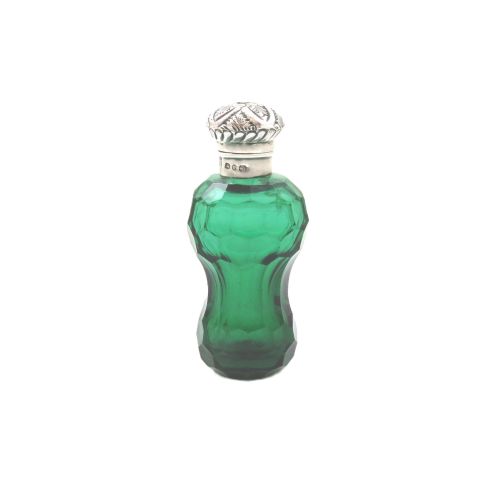
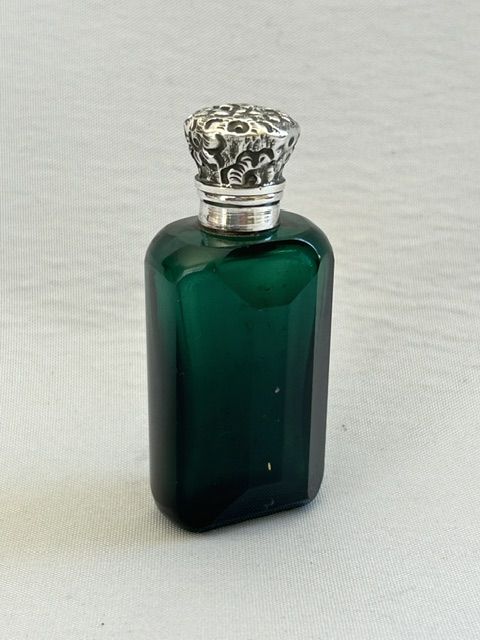
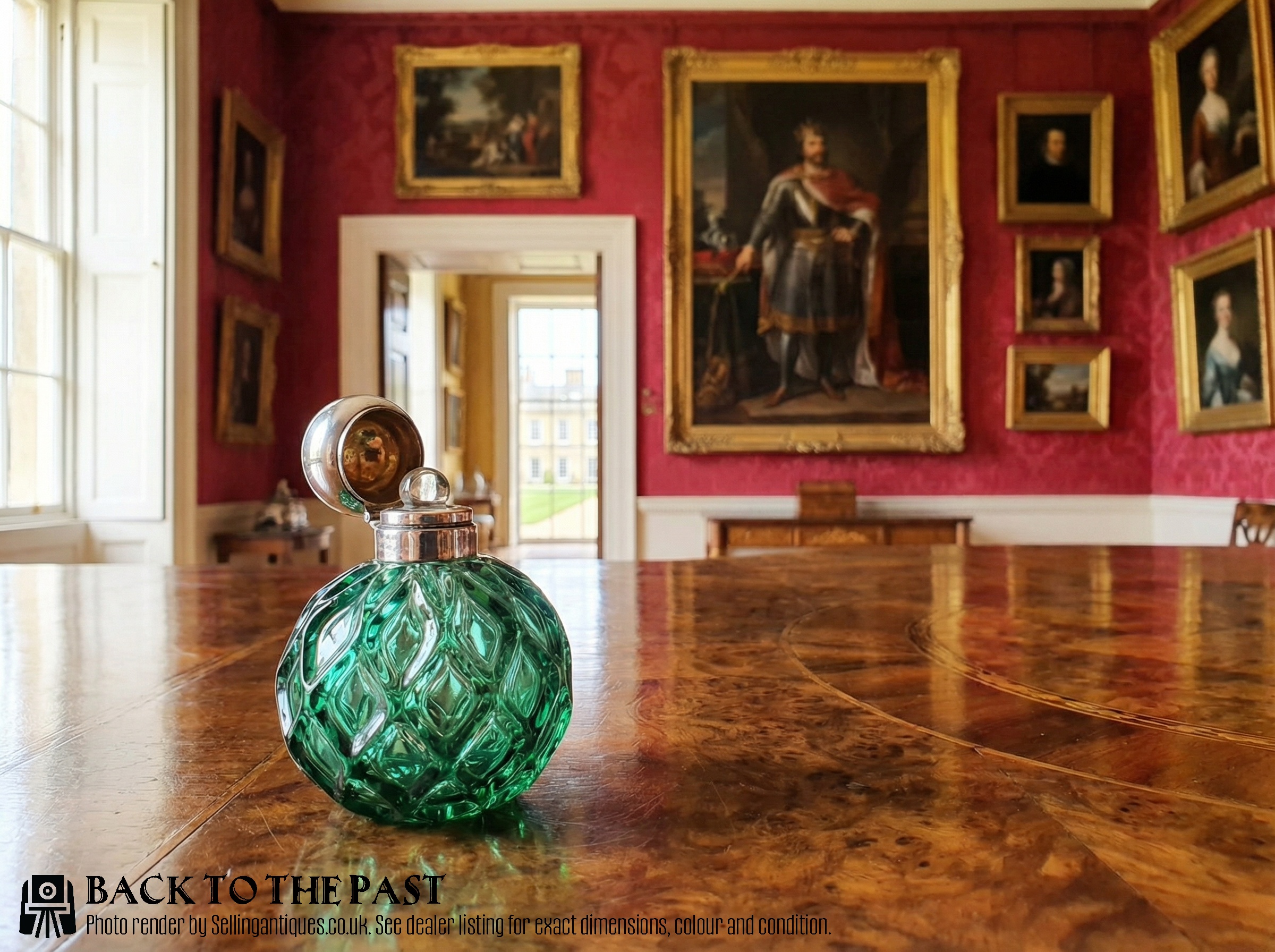
An emerald green glass bottle brings intense colour to a room, whether you choose a Victorian scent vessel with silver mounts or an Art Deco perfume flask.
Emerald Green Glass Bottle
When you search for an emerald green glass bottle, you are looking at hollowware produced primarily during the Victorian and Art Deco periods, ranging across the nineteenth and twentieth centuries. These objects span several distinct forms, including scent and perfume bottles, ewers, decanters, apothecary drug containers, vases, paperweights, and dressing table sets.
You are most likely to meet Victorian examples fitted with sterling silver necks, hinged lids, or decorative mounts. The selection also includes coloured glass ewers, cut glass designs, and pieces bearing enamel or gold leaf decoration.
The material character shifts from deep Bristol and teal tones to intense emerald shades. Pieces often incorporate metalwork additions such as silver collars or plated lids, linking utilitarian glassware with domestic vanity and apothecary use.
How they were made
The manufacture of these vessels relies on coloured glass forming techniques combined with metalworking for mounts and collars. Glass was blown or moulded into shapes such as bullet profiles and bulbous decanter bodies, sometimes utilising cut glass methods to create faceted surfaces that catch the light.
Silver mounts and sterling silver tops were fabricated separately and fitted to the glass necks. Certain pieces display surface enrichment through enamel work, gold leaf application, or sulphide inclusions like the thistle motif found in glass dumps.
Emerald Green Glass Bottle Retail Price Guide 2026
Typical asking prices for emerald green glass bottle among the pieces listed under this phrase on Sellingantiques today, from the lower quarter to the upper quarter. They describe what is for sale here now, not the wider market.
A solitary thistle sulphide trapped forever inside a heavy green glass dump proves that glassworkers enjoyed leaving little surprises in their end-of-day leftovers.
What varies in quality
Quality in these vessels rests upon the depth and saturation of the glass colour, the precision of any cut facets, and the integrity of the associated silver mounts. Pieces decorated with enamel or gold leaf demand careful execution to retain crisp detail across the design.
The presence of named makers or marked silver sterling components elevates a piece, as does the survival of original fitted lids and collars. Maker attribution, such as work associated with Karl Palda or William Hutton & Sons, separates standard production items from distinguished studio or factory output.
Karl Palda·William Hutton & Sons
The Emerald Green Glass Bottle Glossary
- Bristol green
- A deep, rich shade of green traditionally associated with glass production in the West Country. It provides the characteristic strong hue seen on many nineteenth-century scent and wine bottles.
- S sulphide
- A small white ceramic cameo or plaque embedded inside solid glass during manufacture. They frequently depict floral motifs or thistles within heavy glass weights.
- Mary Gregory
- A style of glass decoration featuring white enamel silhouettes of children or figures amidst foliage. The technique appears on nineteenth-century green glass ewers and dressing table pieces.
- Sterling silver mount
- A collar, cap, or hinged lid cast in standard British silver and fitted to the neck of a glass bottle. These mounts often bear hallmarks indicating the year and place of assay.
Emerald Green Glass Bottle: Frequently Asked Questions
How do I date a green glass bottle?
Dating relies on stylistic clues, glass hues, and metal hallmarks. Victorian pieces often feature sterling silver collars with clear date letters, whilst Art Deco items display geometric forms typical of the 1930s.
Form and decoration offer further guidance. Mary Gregory enamel work and sulphide inclusions point securely to the nineteenth century, whereas modernist silhouettes reflect later twentieth-century manufacturing.
Were these bottles used for perfume?
Many smaller emerald glass vessels served as scent or perfume bottles on dressing tables. Their fitted silver lids and inner stoppers helped prevent evaporation.
Larger examples functioned differently, serving as wine bottles, decanters, or apothecary containers for storage. The scale and presence of a pouring lip or stopper determine the original domestic or medicinal purpose.
How should I clean my glass bottle?
Gentle washing in lukewarm water with mild soap preserves both the glass surface and any applied gold leaf or enamel. Avoid abrasive scourers that can scratch the material.
Sterling silver mounts require separate care using a soft cloth to avoid touching the surrounding glass. Keeping moisture away from old cork liners inside silver caps prevents deterioration.
What is a glass dump?
A glass dump is a heavy, solid piece of decorative glass formed from excess material at the end of a working day in the glasshouse. They often contain trapped air bubbles or embedded sulphide figures like thistles.
These dense objects served primarily as doorstops or decorative paperweights. Their deep emerald colour makes them a distinct subset among nineteenth-century glassware.