
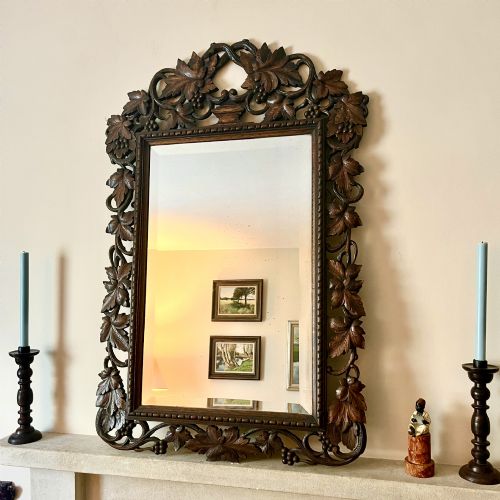
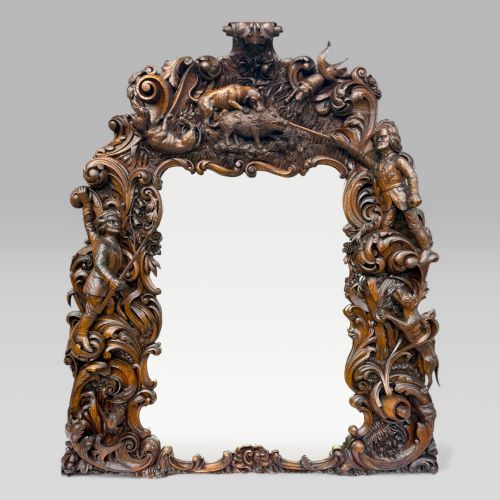
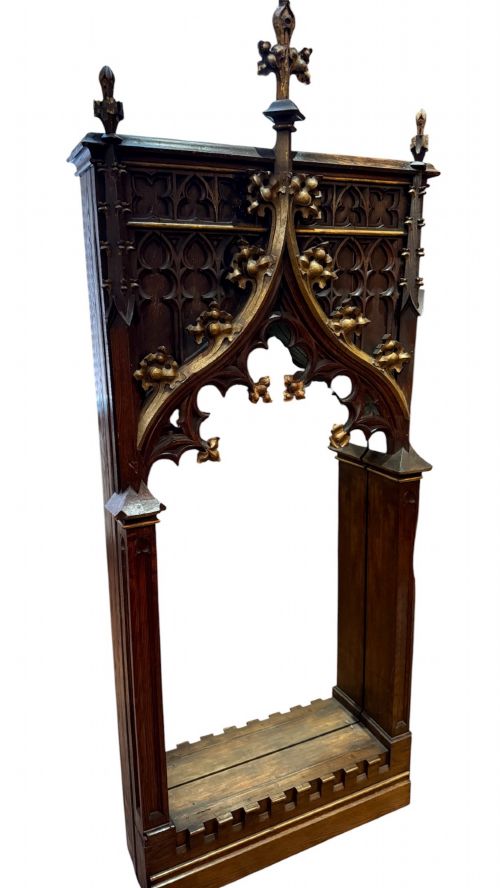
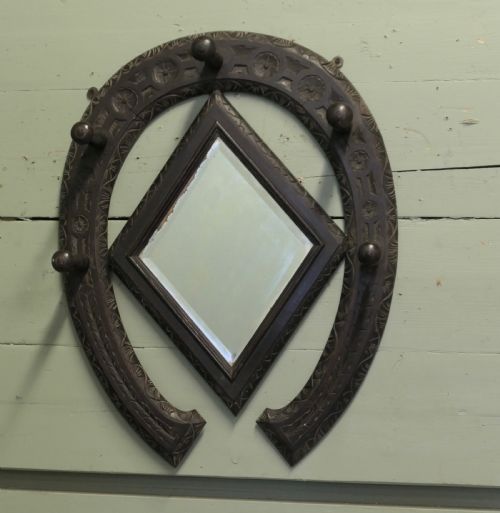


Victorian Gothic Wall Mirror
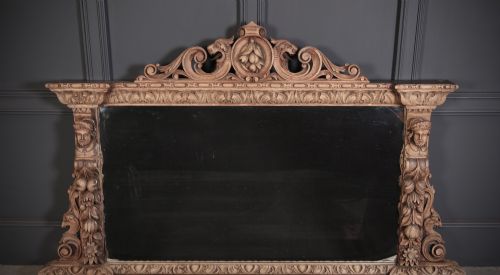
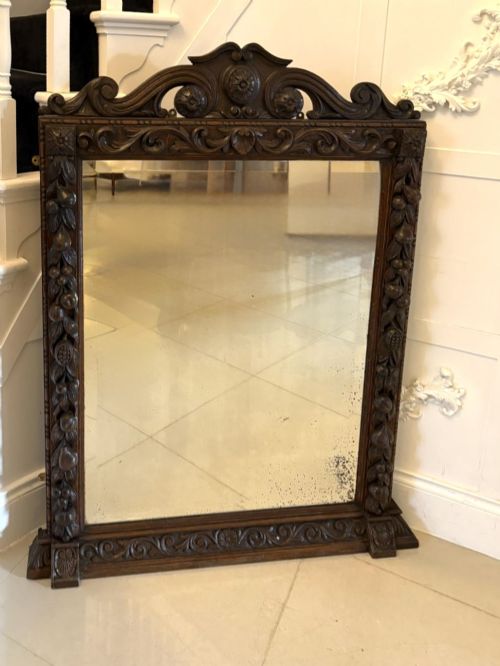
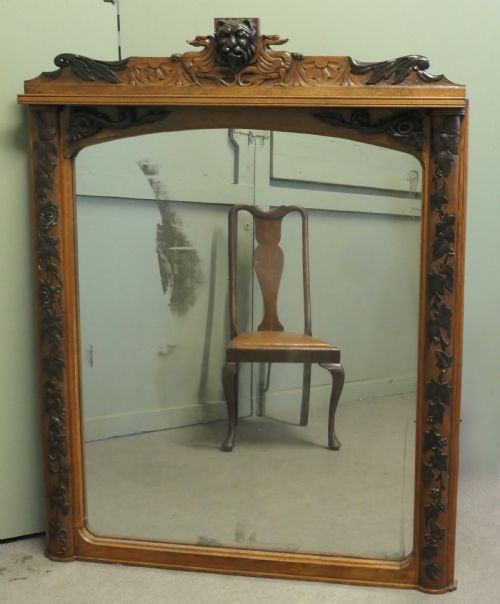
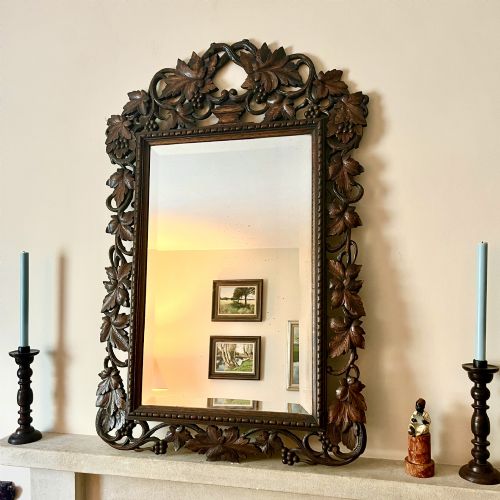
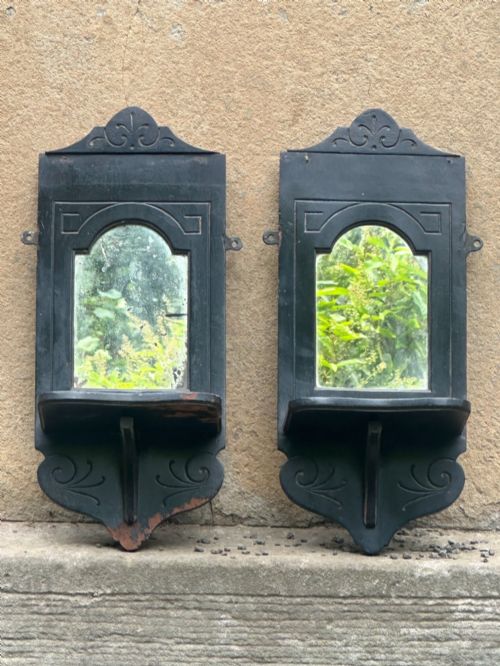
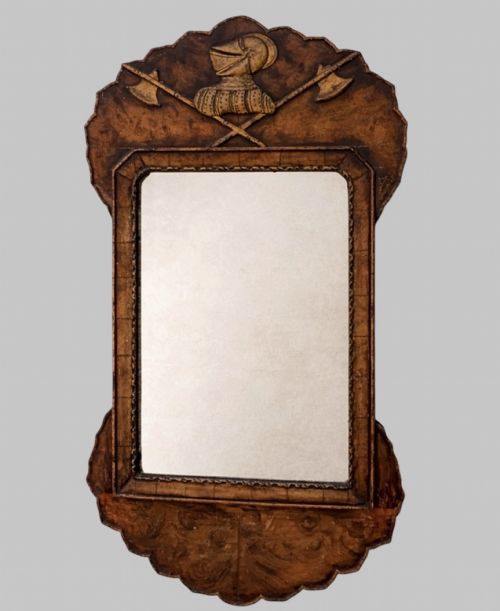
These Victorian gothic wall mirror pieces bring historic architectural presence into a room, combining deep timber carving with dark romantic drama.
Victorian Gothic Wall Mirror
A victorian gothic wall mirror typically takes the form of a substantial architectural frame built to anchor a room or hallway. The selection spans straightforward wall hanging plates and imposing overmantels designed to sit above a fireplace.
Oak dominates the selection, frequently carved with deep linenfold panels, pointed arches, tracery, and heraldic motifs. Walnut, mahogany, and giltwood also appear, alongside specialised forms such as coat racks and circular gesso frames.
The aesthetic bridges several nineteenth-century movements, drawing heavily on Gothic Revival, Puginesque designs, and the Arts and Crafts tradition. Pieces range from domestic wall mirrors to large hunting lodge overmantels and heraldic shield forms.
Materials and Construction
Makers built these heavy frames using solid timbers like oak, walnut, and mahogany, joining them with traditional cabinetmaking techniques to support substantial glass plates. Many examples incorporate carved gesso details or giltwood finishes to accentuate the architectural mouldings.
The archive records span standard domestic wall mirrors through to grand hunting lodge overmantels and heraldic shield forms.
Judging Quality and Execution
The depth and sharpness of the hand carving separate standard commercial frames from exceptional architectural examples. Crisp undercut details in the oak foliage and heraldic elements indicate superior workshop production.
The proportion of the timber frame relative to the mirror glass determines the visual balance of the piece. Substantial, well-seasoned oak boards that resist warping and retain integrated crests represent the upper tier of the range.
Cottier and Co·L Blondie
The Victorian Gothic Wall Mirror Glossary
- Gothic Revival
- An architectural and decorative style drawing inspiration from medieval design. It employs pointed arches, trefoils, and heavy structural framing.
- Overmantel Mirror
- A large mirror designed specifically to hang on the wall directly above a fireplace mantelpiece. These pieces often span the width of the hearth.
- Gesso
- A plaster-like material applied to wood frames and carved or moulded into intricate decorative reliefs. It provides a smooth base for gilding or painting.
- Puginesque
- A design style associated with Augustus Pugin, champion of the Gothic Revival. It prioritises structural truth and medieval architectural forms in domestic objects.
- Girandole
- A branched wall bracket holding candles or lights, often attached to a mirrored backplate to reflect illumination. They appear paired in nineteenth-century interiors.
Victorian Gothic Wall Mirror: Frequently Asked Questions
Where should I hang a large overmantel mirror?
These large overmantel mirrors anchor a principal reception room when mounted directly above a fireplace mantelpiece. Their substantial weight requires secure fixing into solid masonry or substantial wall studs.
Positioning the glass opposite a window maximises natural light distribution across the interior space. The architectural proportions demand adequate wall clearance to let the carved timber frame read clearly.
How do I care for antique carved oak frames?
Dust the deep recesses of the wood carving regularly using a soft, dry brush to prevent dirt accumulation. Avoid liquid polishes and silicone sprays, which build up in the carved grain over time.
Maintain stable room humidity to protect both the timber frame and the original mirror plate from moisture damage. Natural beeswax applied sparingly preserves the dry finish of nineteenth-century oak.
What distinguishes Puginesque design from general gothic revival?
Puginesque pieces adhere strictly to medieval architectural principles championed by Augustus Pugin. The decoration stems directly from the construction rather than appearing as applied surface ornament.
These mirrors feature authentic pointed arches, structural joinery, and austere timber work. The aesthetic avoids frivolous ornamentation in favour of robust ecclesiastical gravity.
Are original mirror plates common on these pieces?
Many nineteenth-century frames retain their original mercury or early silvered glass plates, which often display light foxing and oxidation. This natural ageing manifests as small dark spots and soft distortion across the reflection.
While some collectors prize the undisturbed character of an original plate, others accept later glass replacements if the historic frame remains intact. Inspect the backing boards and securing pins to determine the relationship between glass and frame.