
Victorian Gothic Revival Seating
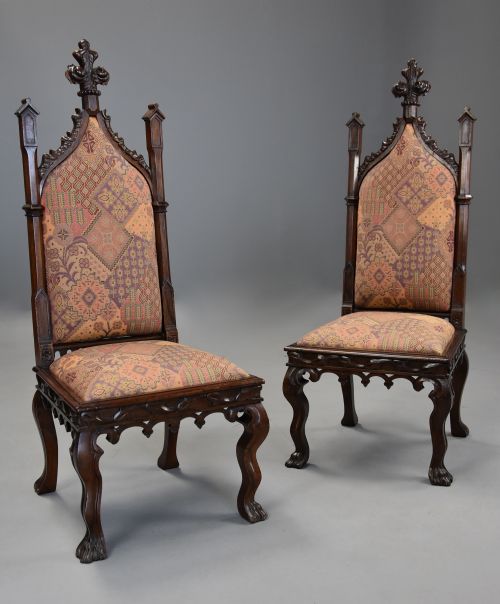
Victorian gothic revival seating brings architectural presence and heavy timber construction into domestic interiors through pointed arches, tracery and robust frames.
Victorian Gothic Revival Seating
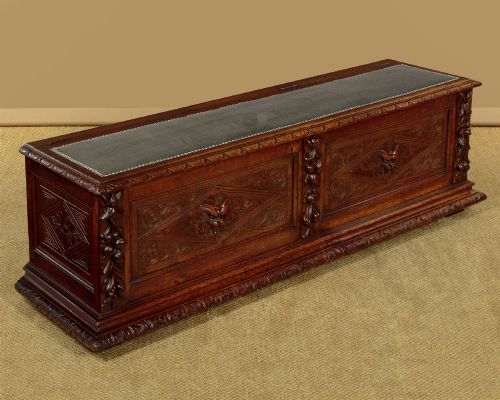
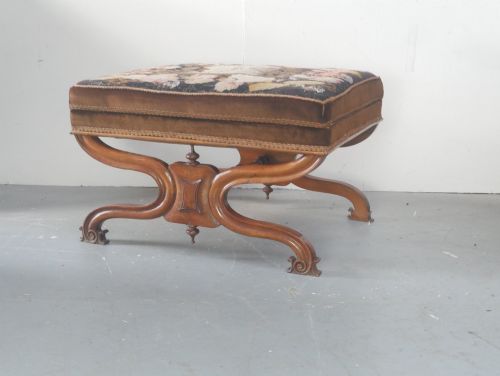
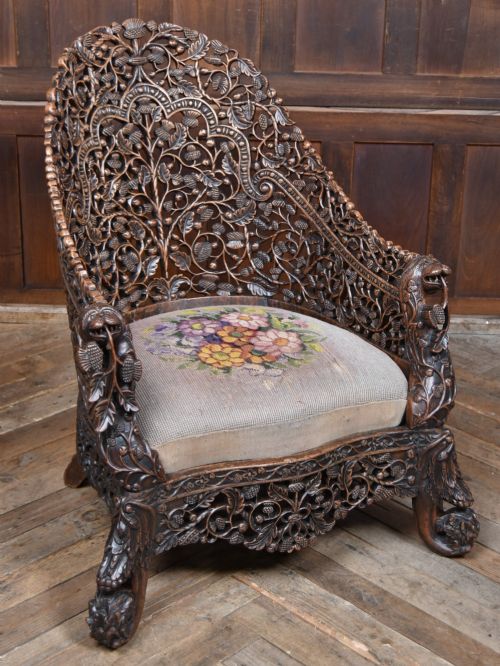
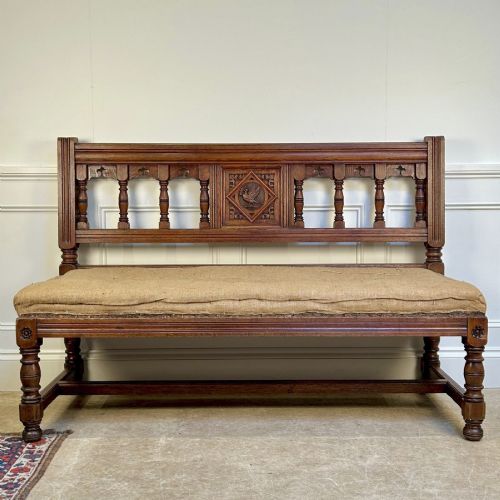
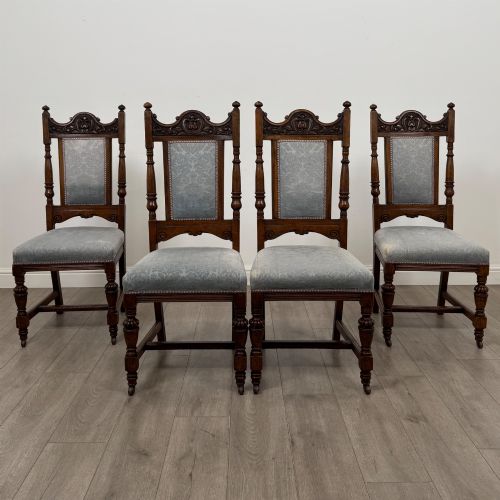
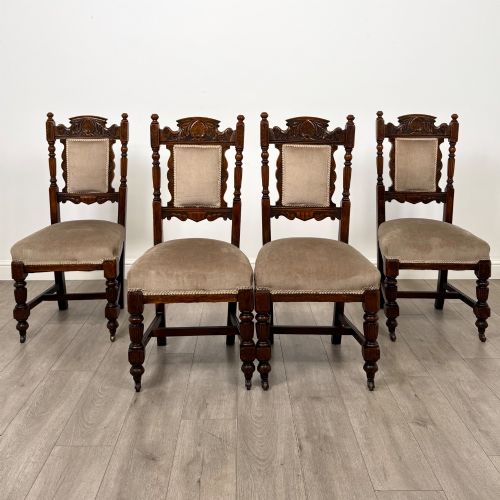
Victorian gothic revival seating encompasses chairs, benches, stools and pews produced primarily across the nineteenth century, drawing heavily on medieval ecclesiastical and secular architecture. Buyers seeking pieces under this search phrase encounter substantial forms built for halls, dining rooms and libraries, ranging from strict architectural hall chairs to deeply carved armchairs.
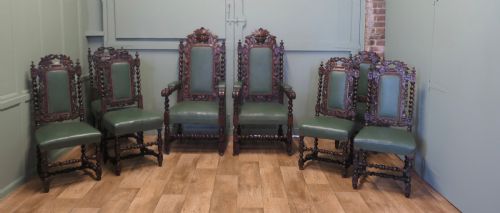
Oak dominates the surviving forms, frequently supported by walnut, rosewood, pitch pine and occasional cast iron or metal frames. The selection spans single reception seats, paired library chairs and complete dining sets of four to eight pieces, alongside architectural benches and church pews.
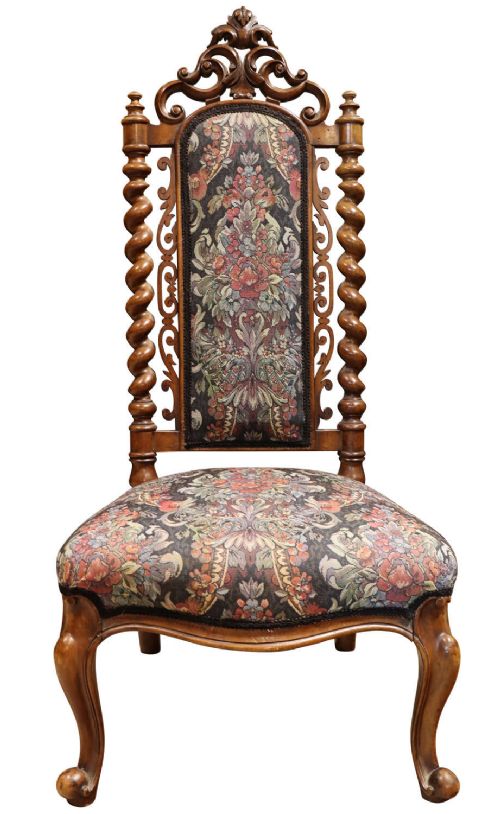
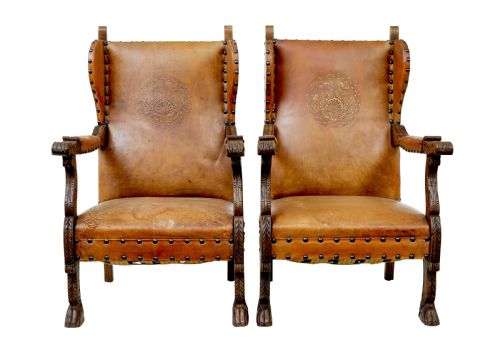
The style absorbs related nineteenth-century idioms including Scottish Baronial, Jacobean Revival, Renaissance Revival and Arts and Crafts, often bearing high backs, embossed leather or tapestry upholstery, and pivotal elements such as turning or revolving mechanisms.
Materials and Technique
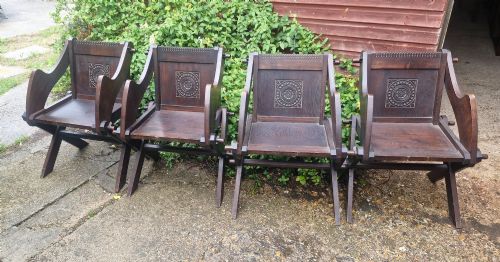
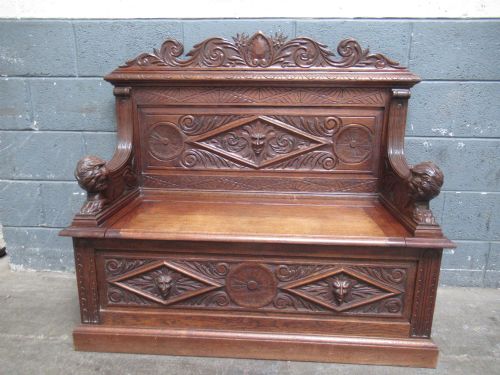
Makers relied heavily on solid English oak, walnut, rosewood and pitch pine, shaping dense timbers into rigid frameworks with pegged mortise and tenon joints. Carving formed the primary decorative vocabulary, executed directly into the structural wood to produce tracery, quatrefoils, linenfold panels and heraldic lion heads.
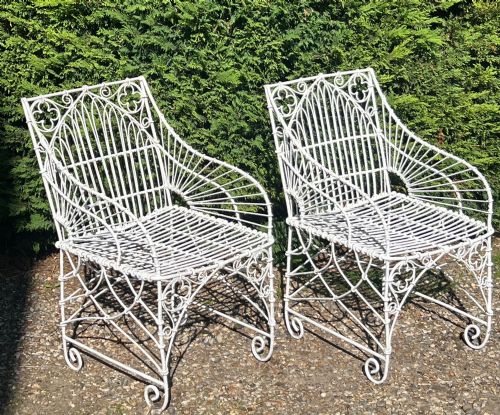
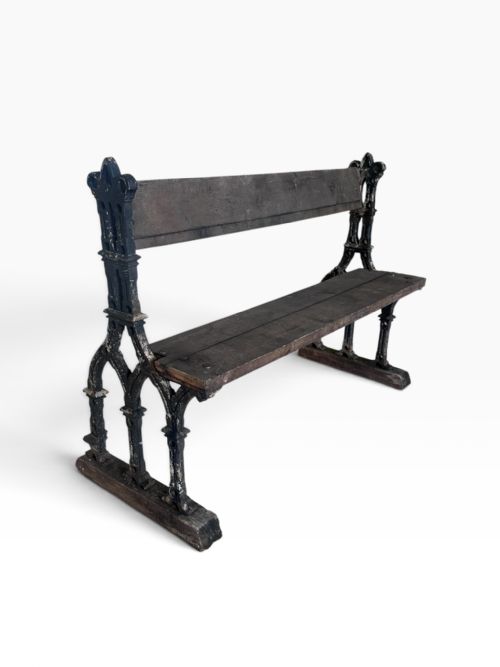
Upholstered variants incorporated fabric, tapestry and embossed leather held by brass tacks or studs, while metal examples utilised cast iron for garden benches and chairs. Secondary supports utilised brass fittings and structural iron brackets to reinforce heavy high-backed dining and hall chairs.
Listings feature oak, walnut, rosewood, pitch pine and cast iron applied across hall chairs, armchairs, benches, pews and revolving desk chairs.
Distinctions in Execution
Quality rests upon the depth and sharpness of the hand-carved architectural details, where crisply defined quatrefoils and deep relief mouldings distinguish superior workshop output from mechanical or shallow production. The choice of timber grain and the integrity of heavy mortise and tenon joinery dictate the structural survival of large oak benches and high-backed chairs.
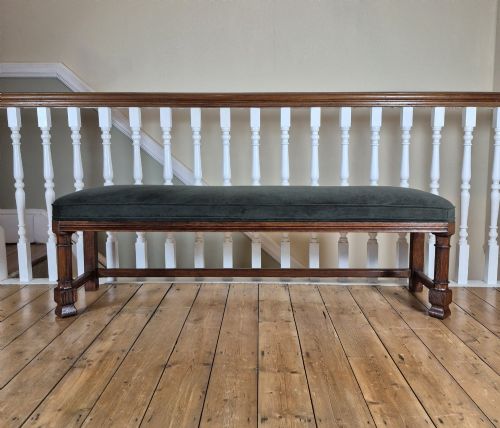
Maker attribution and documented provenance elevate certain pieces markedly, particularly works associated with known cabinetmakers or specific commissions for cathedral and institutional settings. The harmony between the gothic structural form and the original leather, tapestry or fabric upholstery further separates utilitarian seating from high-status library and dining pieces.
Gillows·Bruce James Talbert·W A Willcocks
The Victorian Gothic Revival Seating Glossary
- Gothic Revival
- An architectural and decorative style drawing inspiration from medieval forms, pointed arches and ecclesiastical motifs. It dominated nineteenth-century design through ecclesiastical buildings and domestic furniture.
- Scottish Baronial
- A nineteenth-century revival style incorporating fortified Scottish castle architecture into domestic furniture. It frequently utilises massive proportions, heavy oak and heraldic carving.
- Glastonbury Chair
- A type of folding armchair with X-framed legs and a sloping panel back. This form gained popularity during the nineteenth-century gothic revival and is often built in oak or pitch pine.
- Hall Chair
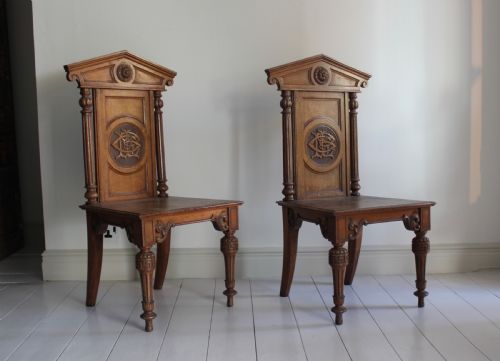
- A rigid, wooden, high-backed seat intended for entrance halls and reception rooms. These pieces often feature solid timber seats and carved armorial crests.
- Linenfold
- A style of wood carving that imitates folded linen cloth. It appears frequently on panels within gothic revival cabinets and seating.
Victorian Gothic Revival Seating: Frequently Asked Questions
Where were these chairs placed originally?
These pieces were designed primarily for grand entrance halls, libraries, dining rooms and ecclesiastical settings. Their heavy timber frames and architectural motifs suited formal public spaces rather than private chambers.
Smaller side chairs and hall chairs stood along corridor walls, while massive armchairs and benches anchored principal reception rooms.
How do I identify a genuine period piece?
Examine the timber construction for hand-cut joinery, pegged mortise and tenon joints, and uniform ageing consistent with the nineteenth century. Look for tool marks and structural wear appropriate for heavy oak and walnut.
Check for maker labels, stamps or institutional markings on the underside of the seats or frames to verify origin.
Are these chairs comfortable for daily use?
Most pieces feature upright wooden backs and solid timber seats intended for formal posture rather than lounging. Upholstered variants with leather or tapestry provide softer seating but retain strict vertical frames.
Library and desk variants offer slightly more ergonomic support through pivoting mechanisms or padded armrests.
How should I care for antique oak seating?
Maintain stable indoor humidity levels to prevent the dense timbers and joined panels from splitting or warping. Apply appropriate furniture wax sparingly to nourish the wood grain.
Protect leather and fabric upholstery from direct sunlight and dust accumulation using soft brushes and professional cleaning methods.