
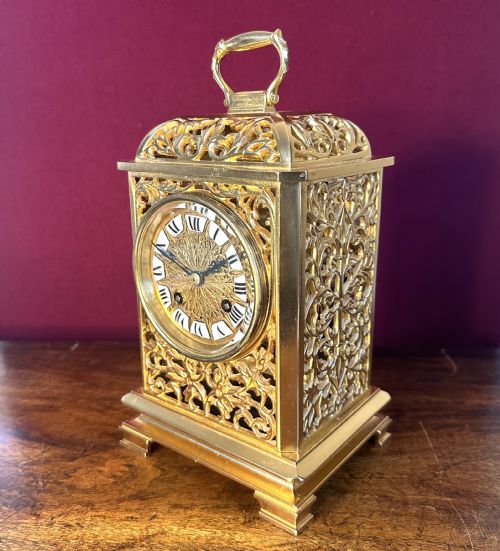


Victorian Gothic Revival Clock
A victorian gothic revival clock brings architectural authority and intricate historicism to a room, combining medieval ecclesiastical motifs with precise nineteenth-century timekeeping.
Victorian Gothic Revival Clock
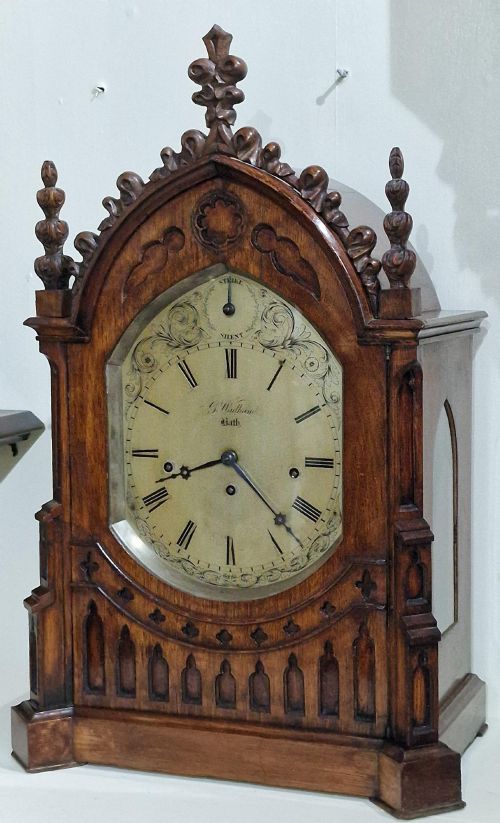
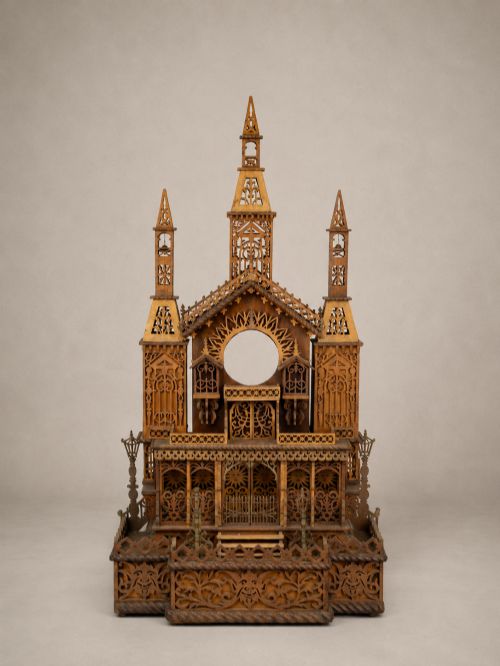
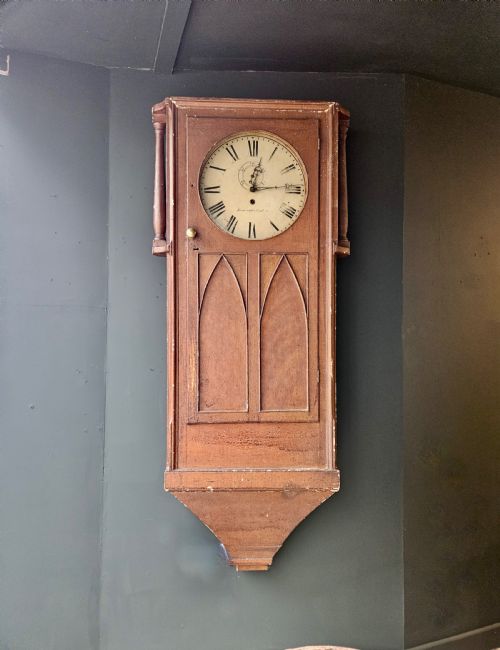
A victorian gothic revival clock typically manifests as a mantel, bracket, or architectural desk timekeeper drawn from nineteenth-century design sources. These pieces often incorporate pointed arches, spire-like details, and carved tracery that echo medieval stone buildings.
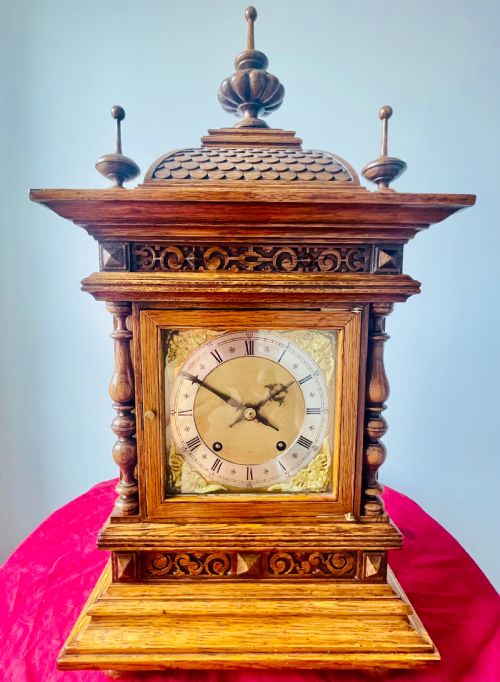
The versions most commonly met on this page range from modest timber table pieces to imposing quarterly striking bracket clocks housed in mahogany, oak, or bronze cases. Makers adapted architectural vocabulary into domestic scales, creating cathedral-arch profiles and steepled wooden housings.
While the majority of pieces adhere strictly to Victorian taste, the selection also encompasses related aesthetic movement interpretations and earlier transitional forms. Buyers encounter both restrained ebonised wood designs and large, heavily carved structural cases.
Materials and Construction
Cases rely heavily on substantial hardwoods such as oak, mahogany, rosewood, and ebonised timber, frequently paired with cast bronze, brass mounts, and protective glass domes. Metal components such as dials, bezels, and fusee movements provide mechanical durability within the heavy wooden framework.
Makers utilised skilled joinery, hand-carving, and fretwork to execute intricate cathedral arches and architectural motifs directly onto the wood. Dial faces commonly feature enamelled numerals and subsidiary rings, while movements incorporate triple or double fusee systems to drive bells and striking trains.
Some mantelpieces occasionally had to accommodate a king watching time pass from within a hand-carved Gothic surround.
Craftsmanship and Proportion
Quality separates along the precision of the architectural proportions and the ambition of the internal movement. Superior examples display crisp hand-carving, well-balanced casework, and complex quarter-striking or triple fusee mechanisms by noted makers.
Lesser pieces feature simpler box constructions with standardised movements and minimal decorative detailing. The integration of bronze mounts, original glass domes, and high-grade enamel dials elevates a piece above standard production models.
George Wadham Bath·Winterhalder·Bryson Edinburgh·Edwards Of London·Christie of Perth·W Davis And Sons
The Victorian Gothic Revival Clock Glossary
- Fusee
- A conical pulley used in clock movements to maintain even tension on the chain or gut line as the mainspring unwinds. This mechanism improves timekeeping accuracy across the power reserve.
- Bracket clock
- A portable timekeeper originally designed to sit on a wall bracket or table. These pieces often feature substantial movements and detailed wooden or bronze cases.
- Garniture
- A set of matching decorative objects, frequently including a central clock flanked by matching vases or candelabra. They form a cohesive ornamental display on a mantelpiece.
- Ebonised
- Wood treated with a finish to imitate ebony. This dark, uniform surface was particularly popular during the later nineteenth century for aesthetic movement designs.
- Skeleton clock
- A timekeeper constructed with an exposed movement held between open brass frames. This design allows light to pass through the mechanism and reveals the gear trains in action.
Victorian Gothic Revival Clock: Frequently Asked Questions
What is a fusee movement?
A fusee movement employs a conical pulley and a chain to equalise the power delivered by the mainspring as it unwinds. This mechanical arrangement ensures steady force reaches the escapement from a fully wound state down to the end of the reserve.
Such systems indicate higher manufacturing standards and are commonly found in better quality English bracket and table clocks from the nineteenth century.
How do I care for a mechanical clock?
Mechanical timepieces require a stable surface away from direct sunlight, dampness, and sudden temperature shifts. Regular winding according to the specific movement type keeps the gear train functioning properly.
Professional servicing every few years ensures that pivot holes and brass components remain clean and lubricated. Avoid moving the clock without securing the pendulum or internal delicate parts.
Where were these clocks placed?
These pieces traditionally occupied prominent locations in domestic interiors, such as library desks, entrance halls, or drawing room mantelpieces. Larger bracket and architectural clocks commanded central positions in boardrooms or formal dining spaces.
Their substantial weight and imposing profiles meant they functioned as both reliable timekeepers and major decorative focal points within a room.
How do I distinguish Gothic Revival from Aesthetic Movement?
Gothic Revival pieces draw inspiration from medieval architecture, featuring pointed arches, tracery, crockets, and heavy carved wooden or bronze facades. They emphasise structural mass and ecclesiastical motifs.
Aesthetic Movement pieces tend to feature cleaner lines, ebonised surfaces, and restrained ornamentation focused on form and visual harmony rather than historic architectural revival.
What does skeleton clock mean?
A skeleton clock exposes its gear trains, wheels, and escapement between open brass or bronze frames rather than enclosing them within a solid wooden box. This design allows light to pass through the entire mechanism.
Many examples sit beneath glass domes to protect the delicate exposed works from dust while displaying the intricate mechanics from all angles.