
Victorian Gothic Hall Chair
A victorian gothic hall chair brings architectural weight, pointed arches and heavy timber into an entranceway.
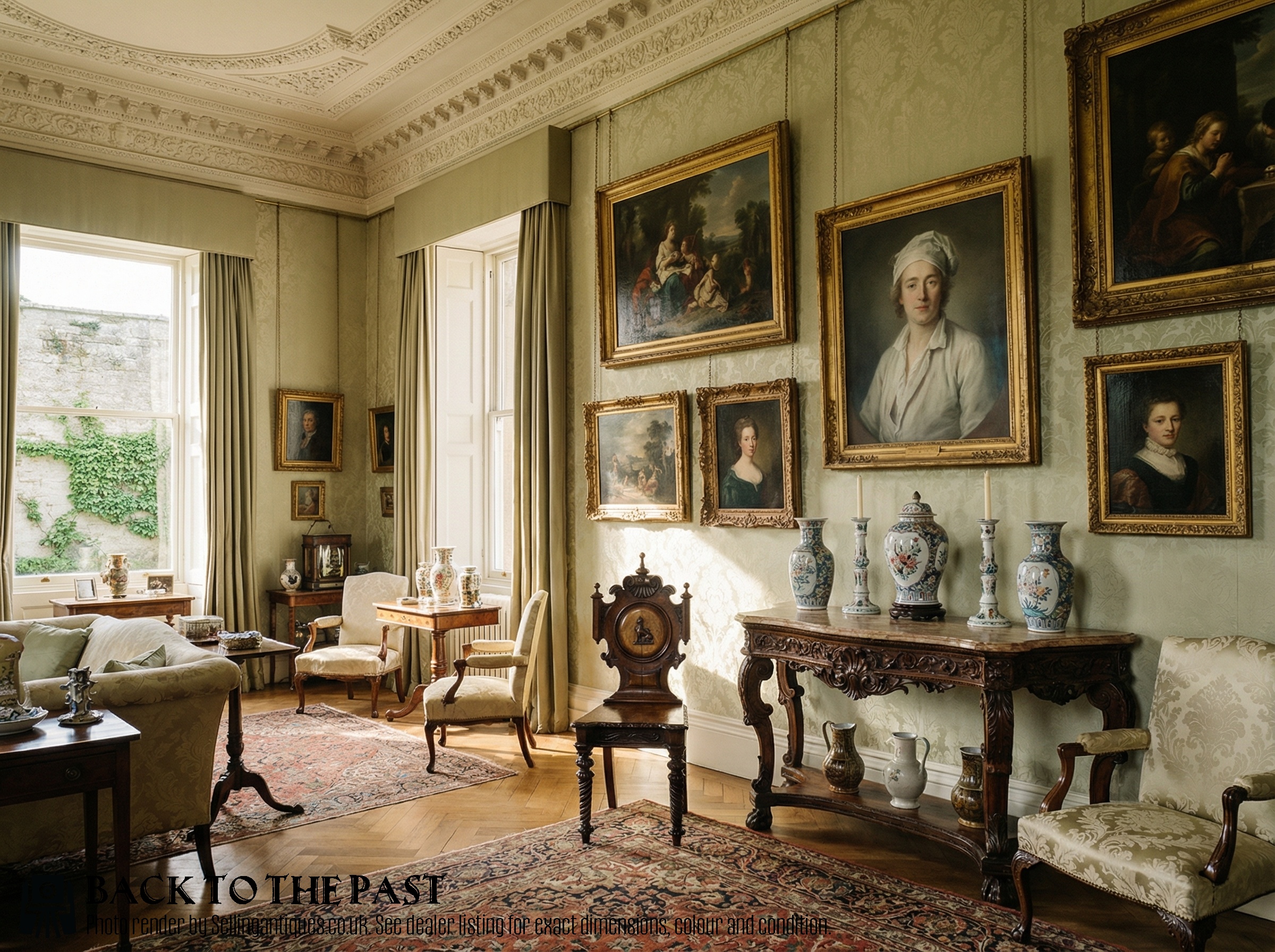
Victorian Gothic Hall Chair
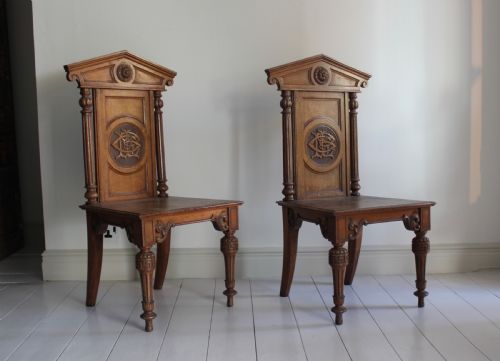
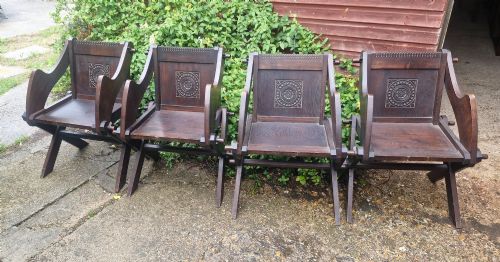
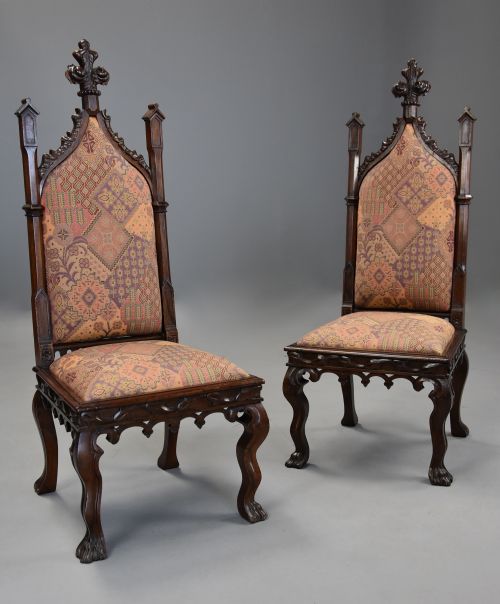
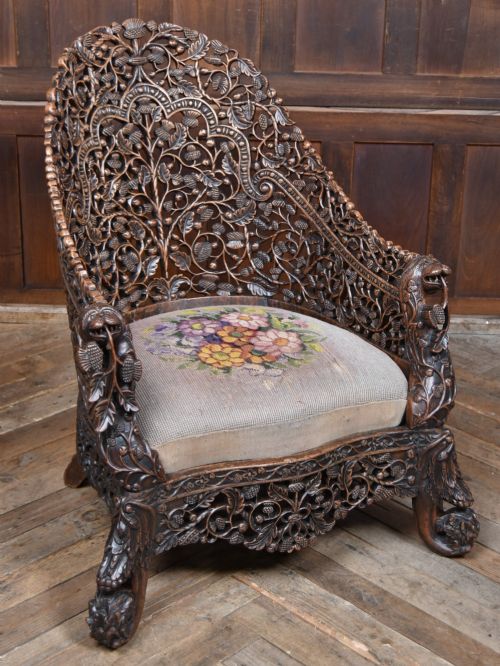
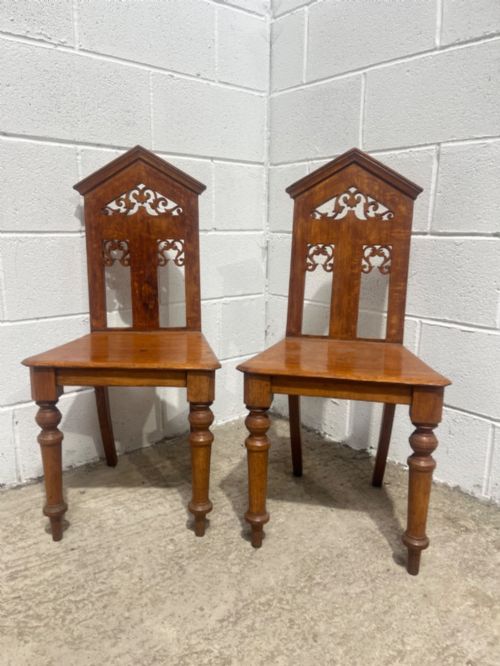
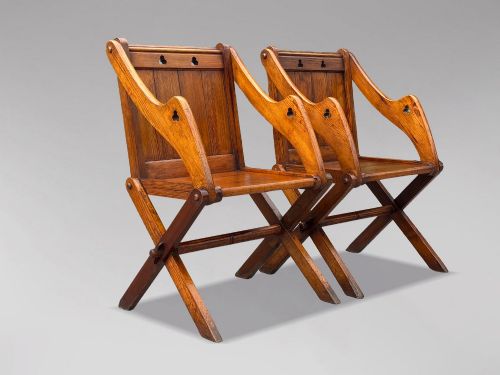
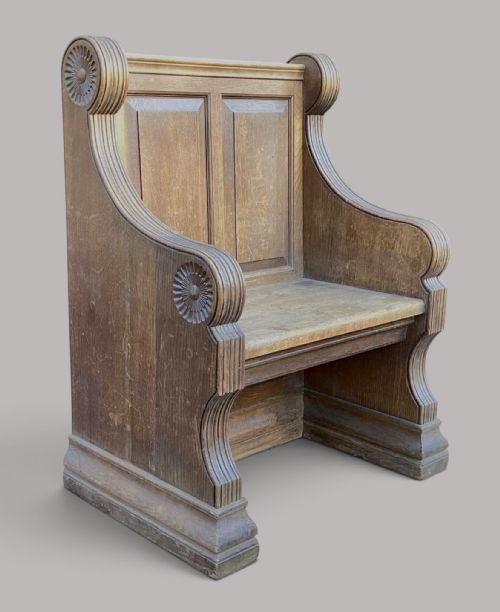
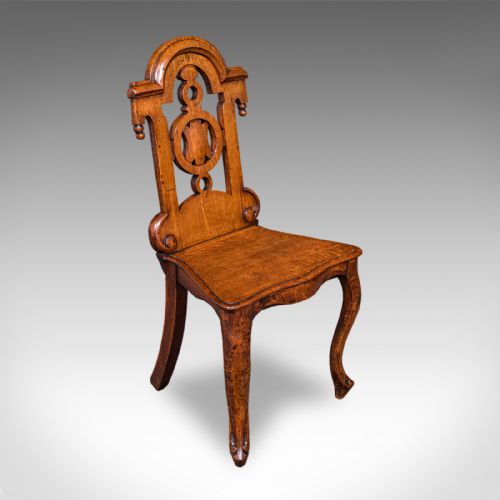
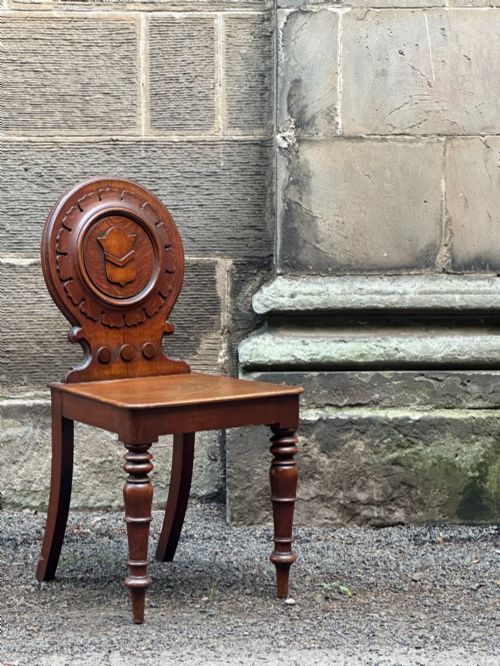
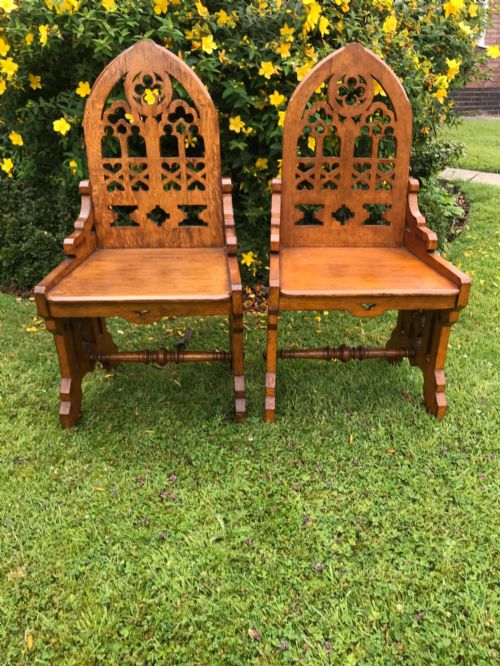
A victorian gothic hall chair stands as a rigid wooden seat designed for an entrance hall, vestibule or reception space during the nineteenth century. These pieces draw heavily on medieval ecclesiastical architecture, displaying pointed arches, trefoils and heraldic shield backs.
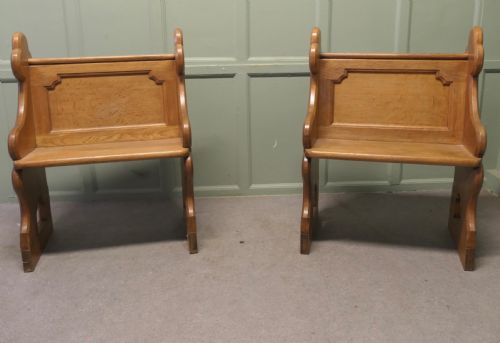
Most examples encountered on this page emerge in solid oak, occasionally executed in mahogany, walnut or pitch pine. They frequently appear as matched pairs rather than single items, reflecting their original placement flanking a hallway table or doorway.
Materials and construction
Cabinet makers built these seats primarily from dense English oak, though select workshops utilised walnut, rosewood or pitch pine. Timber sections were joined using traditional mortise and tenon construction to withstand the rigours of a busy entranceway without loosening.
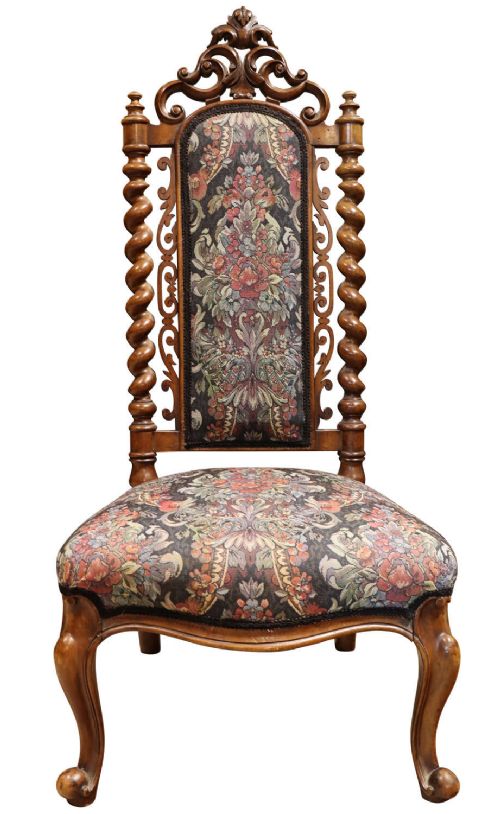
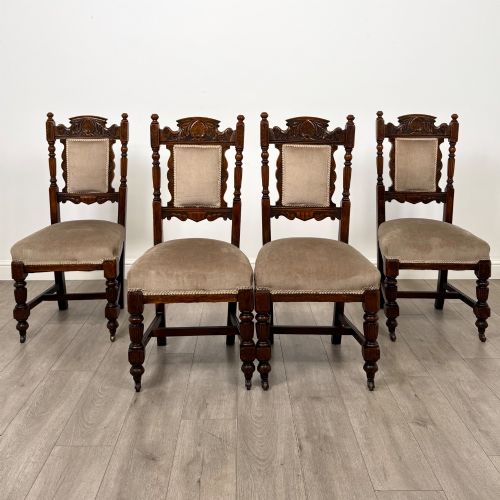
Carving serves as the principal decorative technique, applied directly into the solid wood backrests to render linenfold panels, tracery and crockets. Certain iterations incorporate leather or velvet upholstery fastened with brass tacks along the seat pads.
Victorian Gothic Hall Chair Retail Price Guide 2026
Typical asking prices for victorian gothic hall chair among the pieces listed under this phrase on Sellingantiques today, from the lower quarter to the upper quarter. They describe what is for sale here now, not the wider market.
Listings demonstrate a strong predominance of nineteenth-century English oak construction, complemented by occasional walnut and mahogany variants.
Judging the execution
The distinction between standard commercial production and finer work rests entirely upon the depth and crispness of the timber carving. Superior examples display undercut mouldings and sharp architectural details executed by skilled hands, while lesser items rely on shallow, machine-routed stamping.
Structural integrity also separates the grades, visible in the thickness of the seat timber and the stability of the joints. Chairs retaining maker stamps or original ecclesiastical provenance command greater interest from collectors.
W A Willcocks·Bruce Talbert·Gillows of Lancaster
The Victorian Gothic Hall Chair Glossary
- Gothic Revival
- An architectural and decorative style popular during the nineteenth century that revived medieval forms, pointed arches and structural motifs.
- Tracery
- Openwork stonework patterns translated into wood carving on the backs of chairs, imitating cathedral window designs.
- Heraldic shield
- A crest or shield shape incorporated into the timber backrest, frequently left blank for a family coat of arms.
- Crocket
- A decorative projecting carved element shaped like a curved hook or bud, placed along the edges of spires or gables.
- Pitch pine
- A resinous North American pine used by nineteenth-century makers for robust institutional and domestic furniture.
Victorian Gothic Hall Chair: Frequently Asked Questions
Where were these chairs placed originally?
These seats stood primarily in grand entrance halls, corridors and reception rooms of Victorian residences. They served as formal waiting spots for visitors rather than comfortable lounging furniture.
Their upright postures and rigid wooden bases kept callers upright while waiting to be announced by household staff.
How do I date a victorian gothic hall chair?
Dating relies upon examining the timber choice, construction marks and the specific severity of the Gothic ornament. Pieces from the middle decades tend to feature heavier oak with deep, hand-chiselled tracery.
Later nineteenth-century examples often incorporate lighter proportions and influences from the Aesthetic Movement or Jacobean Revival.
Are these chairs comfortable to sit on?
Most of these pieces were constructed with solid wooden seats and high, vertical backs designed for brief usage rather than relaxation. They prioritise architectural presence and heraldic display over ergonomic comfort.
Some variants include padded leather or upholstered seat inserts fastened with brass studs for added cushioning.
Did these chairs belong to churches?
Certain examples were commissioned specifically for ecclesiastical settings, cathedrals and chapels rather than private domestic homes. Such pieces often bear maker marks, engraved plaques or institutional stamps relating to their original locations.
Domestic versions share the same Gothic architectural vocabulary but typically lack religious inventory markers.