




Victorian Gothic Candle Holders
These victorian gothic candle holders bring heavy ecclesiastical presence and architectural metalwork into domestic rooms.
Victorian Gothic Candle Holders
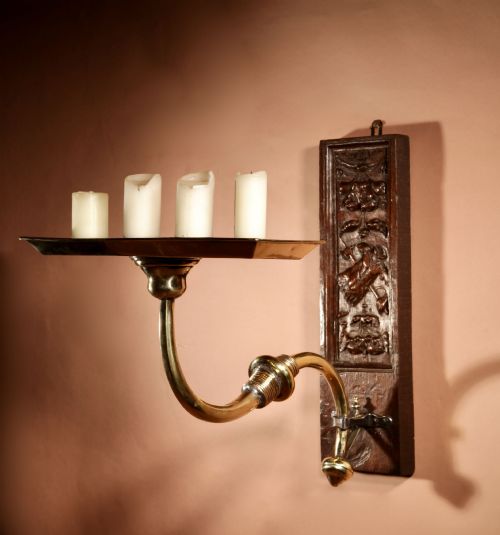
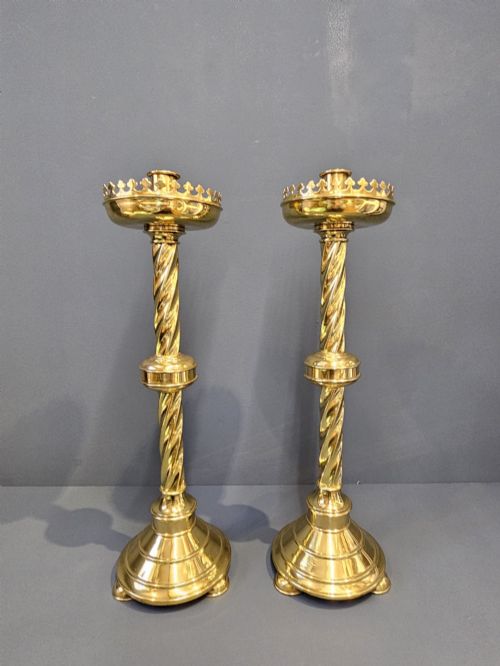
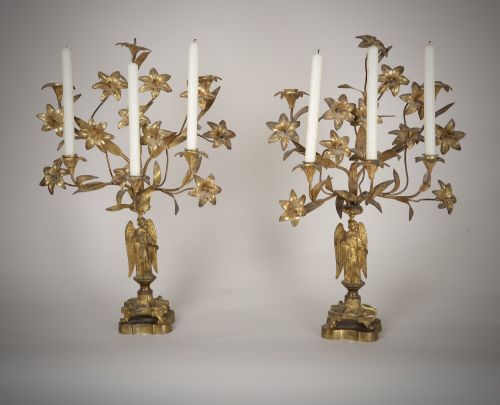
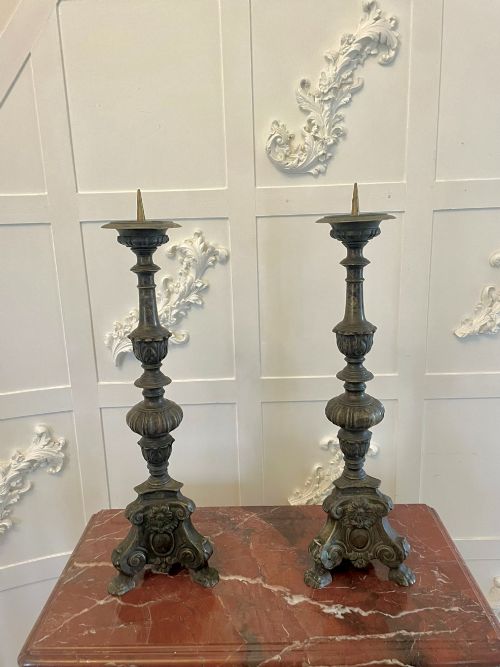
Victorian gothic candle holders span a range of ecclesiastical and domestic lighting forms, drawing directly on medieval architecture and church furnishings. Buyers looking for victorian gothic candle holders will encounter substantial altar sticks, multi-light candelabra, floor-standing pricket sticks, and chamber sticks.
The objects appearing in this selection lean heavily towards church brassware and heavy bronze or wrought iron items designed during the nineteenth century. Alongside standard candlesticks, the evidence includes articulated designs, table lamps adapted from church pieces, and items linked to the Arts and Crafts and Aesthetic movements.
Most examples originate from the broader Victorian and Edwardian periods, stretching from the mid-nineteenth century into the early twentieth century. Pairs dominate the selection, offering symmetrical arrangements suitable for mantelpieces, side tables, and altars.
Metals and Construction
Makers utilised cast brass, heavy bronze, and wrought iron as the primary structural metals to achieve the substantial weight and dark patination associated with the style. Gilt brass, ormolu, and copper appear alongside treen walnut and hand-carved wood in specific domestic pieces.
Casting methods allowed workshops to produce ornate ecclesiastical details, heraldic motifs, and architectural tracery rooted in Gothic Revival design. Articulated joints and mechanical shields, such as patent candle shields, demonstrate functional engineering built into the metalwork.
Victorian Gothic Candle Holders Retail Price Guide 2026
Typical asking prices for victorian gothic candle holders among the pieces listed under this phrase on Sellingantiques today, from the lower quarter to the upper quarter. They describe what is for sale here now, not the wider market.
A bronze patinated spelter pair depicts medieval characters balancing on stilts.
Assessing the Pieces
Quality rests on the crispness of the casting and the integrity of the metal, where sharper architectural details and heavier gauges of brass or bronze distinguish finer workshop output. Simpler commercial items contrast with substantial church altar pieces and designs attributed to known makers.
The retention of original patination, matching components in pairs, and the complexity of multi-light configurations or pricket spikes dictate the standing of individual examples within the range.
Wm. Tonks & Sons·Dr Christopher Dresser
The Victorian Gothic Candle Holders Glossary
- Pricket candlestick
- A candlestick featuring a sharp metal spike at the top designed to impale the base of a wax candle rather than holding it inside a socket. This form appears frequently on church altars and heavy ecclesiastical sticks.
- Candelabra
- A branched lighting fixture holding multiple candles on separate arms. These pieces often feature articulated joints or elaborate cast details.
- Gothic Revival
- An architectural and decorative style reviving medieval forms, pointed arches, and heavy ecclesiastical motifs during the nineteenth century. This movement heavily influences the design of these metal items.
- Ecclesiastical brassware
- Metal objects originally manufactured for church use, including altar candlesticks and processional crosses. These items form a major portion of surviving nineteenth-century metalwork.
- Aesthetic Movement
- A late nineteenth-century design current emphasising visual and material qualities over strict historical revival. Pieces from this movement often incorporate copper and stylized decorative elements.
Victorian Gothic Candle Holders: Frequently Asked Questions
What is a pricket candlestick?
A pricket candlestick uses an upright metal spike instead of a socket to secure the candle.
This format is common on heavy church and altar pieces from the nineteenth century.
How do I date these metal items?
Dating relies on stylistic markers from the Gothic Revival, Victorian, and Arts and Crafts periods alongside manufacturing techniques.
Ecclesiastical brass and bronze pieces often span the mid to late nineteenth century.
Were these made for churches?
Many surviving examples originated as church altar candlesticks, pricket sticks, and processional furnishings.
Other items were produced for domestic use in Victorian and Edwardian homes.
How do I clean antique brass?
Most collectors prefer to leave the natural patination and aged surface intact on nineteenth-century metalwork.
Aggressive polishing removes the historical character built up over decades.