



Patinated Metal Candlestick Pair
A patinated metal candlestick pair brings sculptural depth and warm illumination to a room, drawing the eye with rich surfaces forged from bronze, brass, and spelter.
Patinated Metal Candlestick Pair
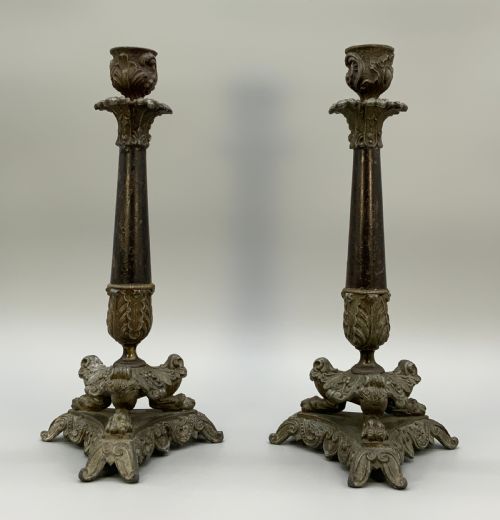
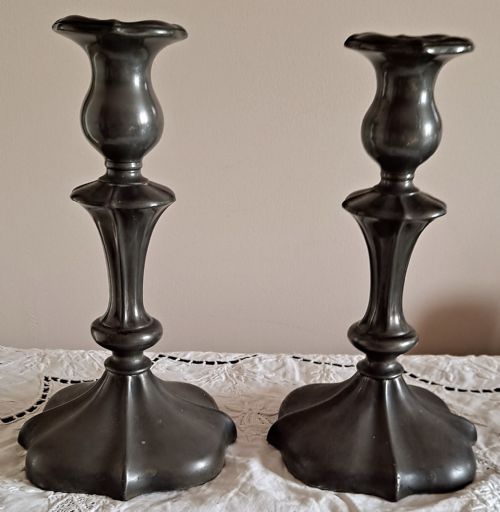
The versions most commonly met on this page date from the Regency and Victorian periods, spanning the nineteenth century and extending into Edwardian designs. Forms range from simple classical brass columns to elaborate French Empire castings and figurative spelter sculptures.
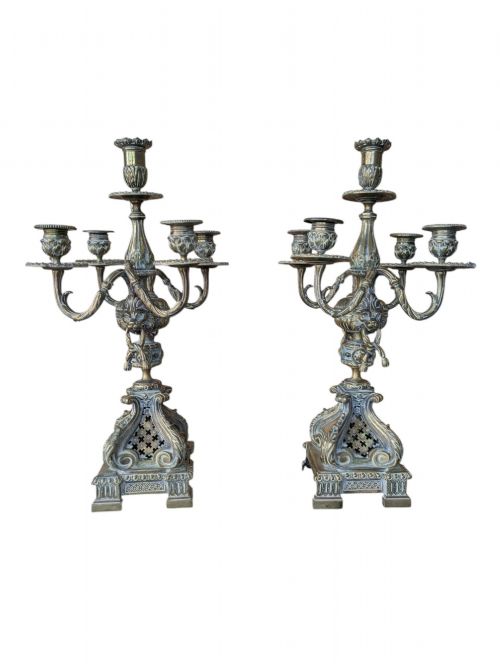
Alongside standard single-socket candlesticks, the selection includes multi-light candelabra configurations offering grander illumination. Makers from various European traditions employed motifs from Gothic, Renaissance, and Art Nouveau styles to shape these pairs.
Manufacturing methods and materials
Metal components were typically produced through foundry casting, utilising bronze, brass, or spelter to achieve sturdy forms with intricate relief details. Artisans often combined cast elements with ormolu, gilt bronze, or slate bases to add visual contrast and structural weight.
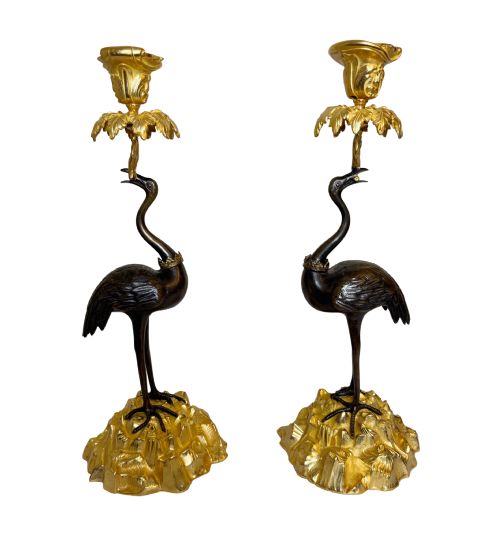
Surface patination was achieved through chemical treatments or natural ageing processes, darkening the base metal to create subtle tonal variations. Gilt highlights and applied motifs, such as flamingo figures or medieval characters, were then integrated to enhance the decorative scheme.
Patinated Metal Candlestick Pair Retail Price Guide 2026
Typical asking prices for patinated metal candlestick pair among the pieces listed under this phrase on Sellingantiques today, from the lower quarter to the upper quarter. They describe what is for sale here now, not the wider market.
One standout pair depicts medieval characters balancing precariously on stilts.
Determinants of quality
Quality rests on the crispness of the casting and the depth of the metalwork, where finely chased details outshine softer, moulded surfaces. Superior examples demonstrate careful hand-finishing, well-balanced proportions, and integrated components rather than crude assembly.
The integrity of the surface patination and the harmony between paired elements dictate the aesthetic success of the objects. Weight and material density, particularly in solid bronze versus lighter spelter, further distinguish higher grades of production.
The Patinated Metal Candlestick Pair Glossary
- Patination
- The natural or chemically induced ageing of a metal surface over time. This process creates a distinctive darkened layer that enhances the texture of the casting.
- Spelter
- An alloy primarily composed of zinc, frequently used as a cost-effective substitute for bronze in nineteenth-century sculptural pieces. It allowed for intricate casting but typically requires careful handling due to its relative softness.
- Ormolu
- A technique of applying finely ground high-carat gold to a bronze object using a mercury amalgam. It yields a rich golden finish seen on grander French Empire and Regency pieces.
- Candelabra
- A branched lighting fixture designed to hold multiple candles simultaneously. These pieces often feature central shafts supporting several arms for enhanced illumination.
Patinated Metal Candlestick Pair: Frequently Asked Questions
How do I clean patinated metal?
Dust the surface gently with a soft, dry cloth to prevent the accumulation of grime without disturbing the aged finish.
Avoid using commercial metal polishes or abrasive cleaners, as these harsh agents will strip away the historic patination and damage the underlying metal.
Where should I display them?
These pairs look particularly striking placed symmetrically on a mantelpiece, sideboard, or dining table where their sculptural forms can be fully appreciated.
Keep them away from direct heat sources and excessive moisture to preserve the stability of the metal and the surface finish.
How do I identify Regency pieces?
Regency designs frequently display classical architectural motifs, clean lines, and restrained neoclassical ornamentation inspired by ancient Greek and Roman forms.
Examine the weight, construction joints, and patination characteristics, which typically reflect early nineteenth-century British and continental craftsmanship.