



Victorian Gothic Benches
Victorian gothic benches bring architectural presence into a room, combining ecclesiastical gravity with the domestic utility of 19th-century seating.
Victorian Gothic Benches
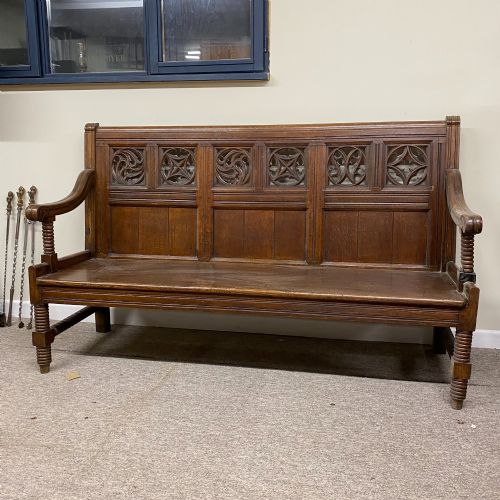
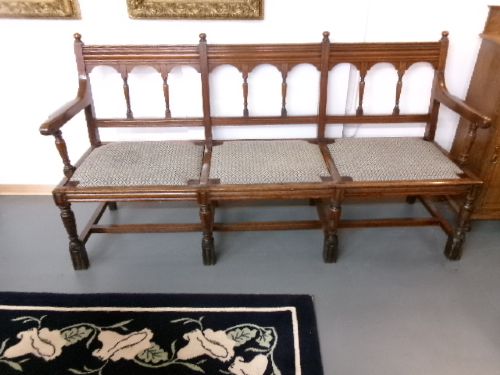
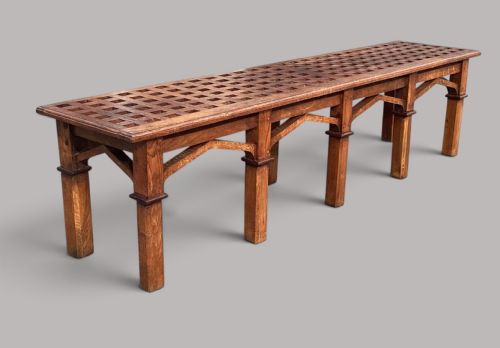
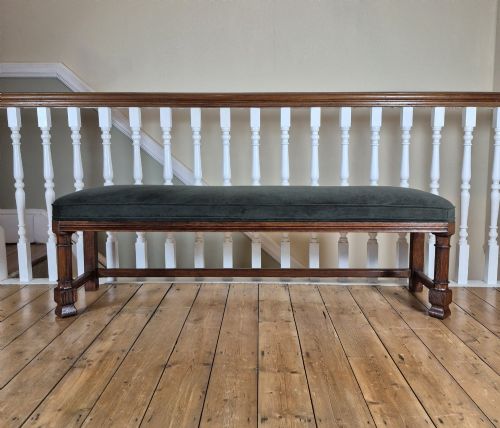
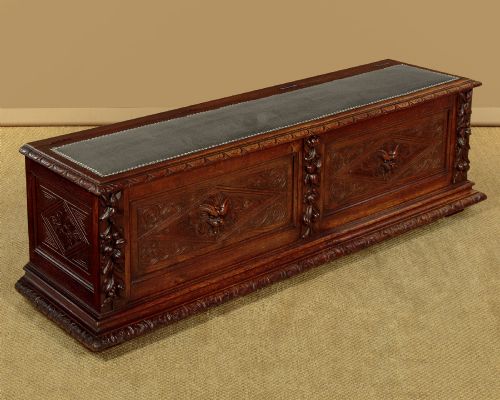
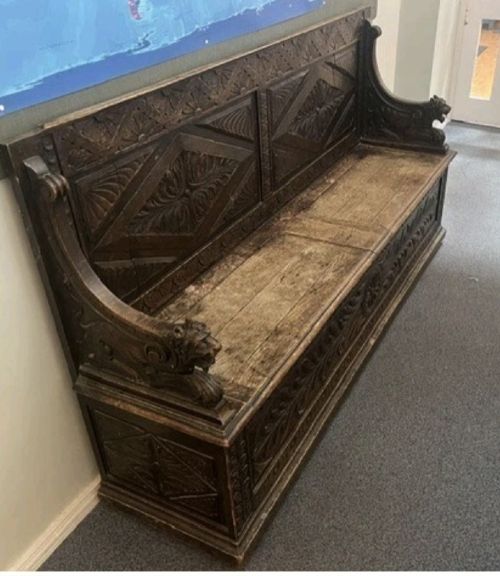
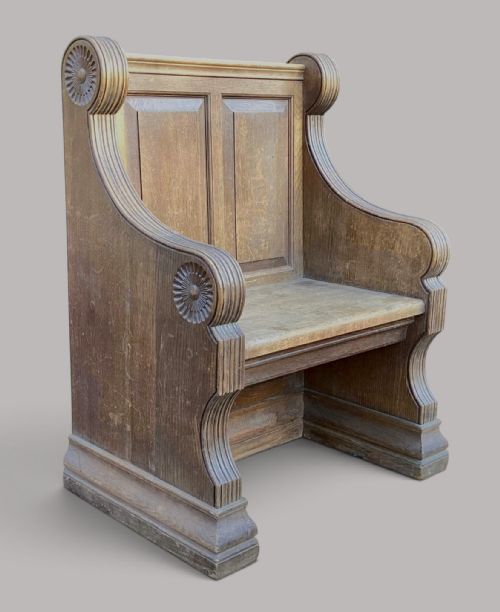
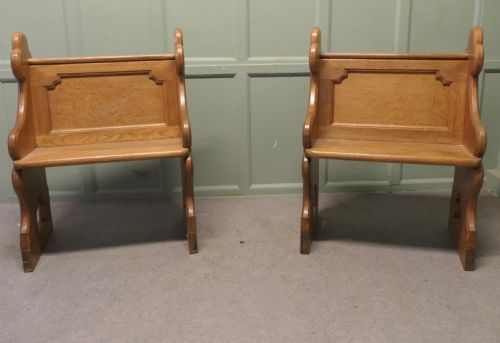
Victorian gothic benches encompass heavy wooden seating produced during the 19th century under the influence of medieval architectural forms and the Gothic Revival. When searching for victorian gothic benches, buyers typically encounter robust hall furniture, settles, and church pews fashioned for domestic or ecclesiastical interiors.
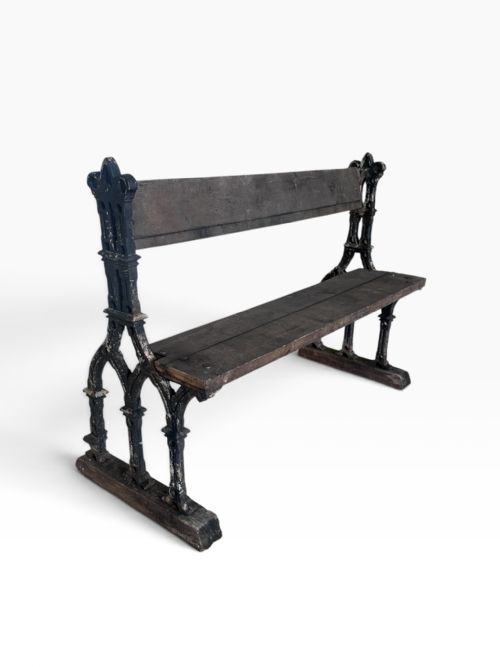
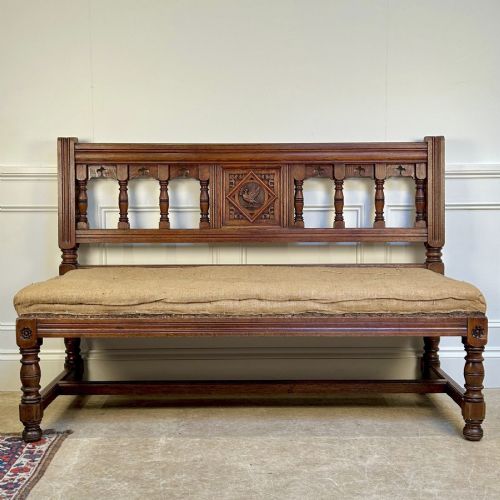
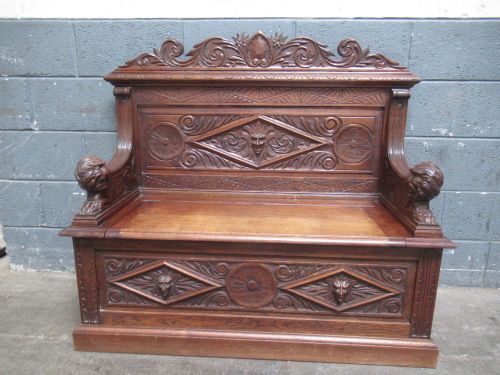
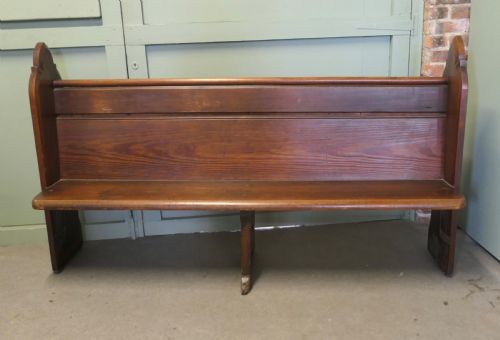
The pieces appearing on this page span the Victorian era alongside related Arts & Crafts and ecclesiastical examples. Oak dominates the selection, appearing in large hall seats, settles, and carved benches alongside pitch pine church pews and occasional cast iron garden designs.
How they were made
Carpenters and cabinet makers constructed these seats primarily using solid English oak, pitch pine, and walnut, often joining the heavy timbers with traditional mortise and tenon joints. Carved ornamentation such as linenfold panels, tracery, and figurative details like Green Man motifs were hand-chiselled directly into the structural woodwork.
Metal components played a structural and decorative role, with cast iron utilised for robust garden frames and brass applied for hardware or pew end rails. Upholstered variants incorporated materials such as leather and heavy fabric fixed to sprung or padded seats.
Victorian Gothic Benches Retail Price Guide 2026
Typical asking prices for victorian gothic benches among the pieces listed under this phrase on Sellingantiques today, from the lower quarter to the upper quarter. They describe what is for sale here now, not the wider market.
Listings feature oak as the primary timber, complemented by pitch pine, walnut, and cast iron across 19th-century periods.
What varies in quality
The standard of carving determines much of the distinction between ordinary utility seating and ambitious salon or hall pieces. Crisp, deep relief work executed by skilled hands contrasts sharply with mechanical or superficial surface decoration.
Timber selection and structural integrity set the hierarchy among surviving examples. Dense, well-figured oak and burr elm retain their stability and presence better than soft pine alternatives subject to heavy ecclesiastical wear.
GIllows·Pugin
The Victorian Gothic Benches Glossary
- Settle
- A high-backed wooden bench with solid arms and a closed base designed to block draughts in large hallways. It often includes a lift-up seat revealing storage beneath.
- Pew
- A long wooden bench traditionally found in churches and chapels, typically constructed from pitch pine or oak with panelled ends. Many surviving examples retain open backs and simple linear forms.
- Monks bench
- A convertible piece of furniture functioning as a table with a hinged back that tilts down to form a seat and backrest. It combines seating and surface utility in compact spaces.
- Prie-dieu
- A small devotional desk or prayer chair equipped with a sloping shelf for books and a padded kneeling rail. These pieces reflect the high church and Gothic Revival movements of the 19th century.
- Tracery
- Openwork ornamentation based on the stonework patterns found in Gothic cathedral windows. Carpenters translated these pointed arches and geometric foils into wooden panels.
Victorian Gothic Benches: Frequently Asked Questions
Where should I place a heavy oak hall bench?
These large wooden seats anchor entrance halls, wide corridors, and reception rooms where their substantial proportions balance open space. They provide practical drop zones for hats, boots, and everyday items.
Keep them away from direct heat sources and strong sunlight to protect the aged timber and prevent the solid oak panels from splitting.
How do I tell church pews apart from domestic benches?
Church pews usually show extended lengths, simple pine construction, and enclosed ends designed to align in rows within ecclesiastical spaces. Domestic hall benches typically feature carved backrests, armrests, and smaller proportions suited to individual rooms.
Ecclesiastical pieces often bear minor wear patterns from generations of kneeling and sitting in institutional settings.
What is the difference between a settle and a hall bench?
Settles feature high solid backs and enclosed bases built originally to shield occupants from cold draughts in unheated halls. Hall benches generally offer more open construction, sometimes incorporating umbrella stands or shoe storage.
Both forms served as formal seating near the entrance of a 19th-century home.
Can I use an antique church pew for everyday dining?
Pitch pine and oak pews work well alongside long rustic dining tables when matched for height and leg clearance. Their fixed length accommodates multiple diners without requiring individual chairs.
Ensure the seat height aligns comfortably with your table before pairing them together.