

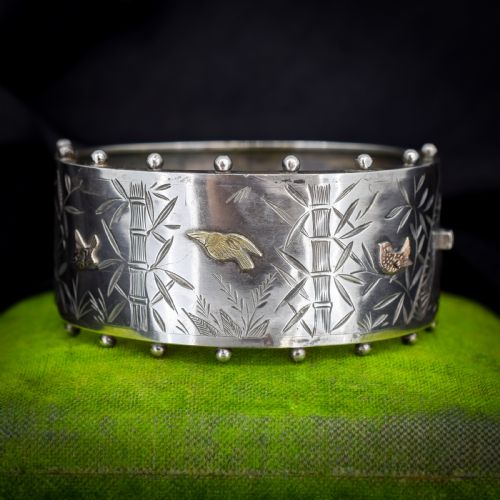


Victorian Gold Hinged Bracelet
These robust victorian gold hinged bracelet designs combine secure mechanical closures with rich golds, offering a tangible link to nineteenth-century jeweller's craft.
Victorian Gold Hinged Bracelet
A victorian gold hinged bracelet represents a solid circular wrist ornament engineered with a pivot and a clasp for ease of wear. The pieces listed here span the nineteenth century, including specific dates such as eighteen eighty and eighteen ninety.
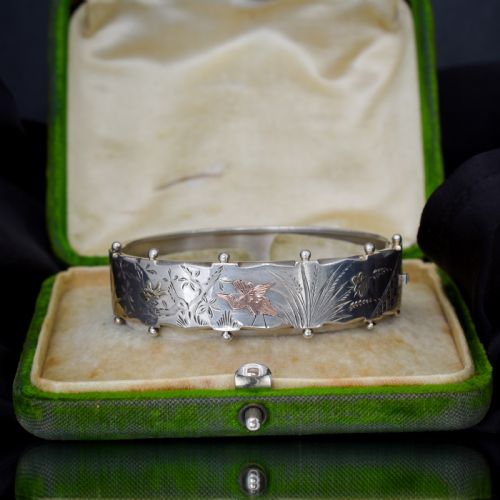
Buyers frequently encounter variations incorporating rose gold, yellow gold, or higher purities like fifteen carat and eighteen carat gold alongside silver settings. Forms range from plain polished bands to elaborate cuff bangles ornamented with botanical and avian motifs.
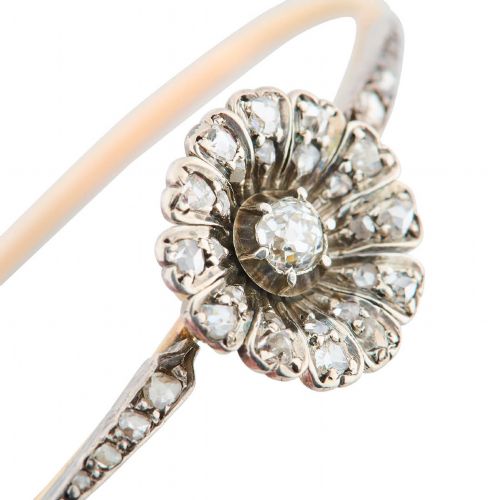
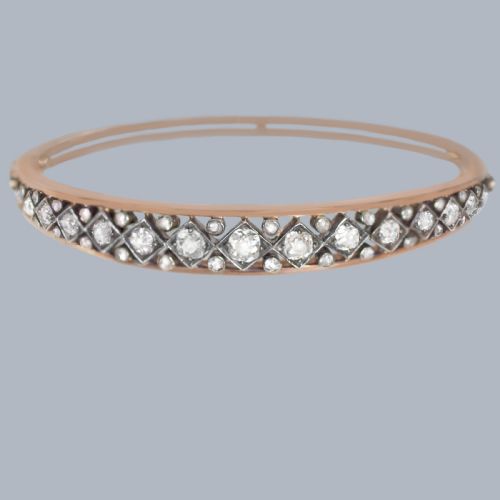
Many examples integrate gemstones such as diamonds, seed pearls, rubies, amethysts, citrines, moonstones, and opals into floral, cluster, or double heart configurations. The inventory contains both unadorned structural metalwork and richly embellished versions set with precious stones.
Construction and Materials
Makers constructed these bangles around a concealed hinge and a snap-in clasp mechanism, frequently pairing gold with silver settings to enhance the brilliance of old mine cut and rose cut diamonds. Metal standards vary from nine carat and twelve carat gold filled up to fifteen carat and eighteen carat gold.
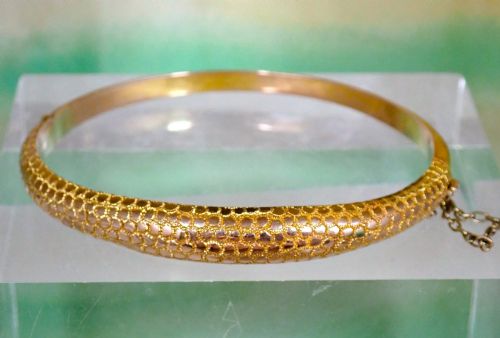
Goldsmiths utilised chasing, engraving, and applied wirework to create textured surfaces like bamboo patterns or floral reliefs. Gemstones were securely flush-set, bezel-set, or claw-set into the gold and silver matrices, accompanied by delicate seed pearl work.
Listings feature periods from the nineteenth century, including specific dates such as eighteen eighty and eighteen ninety, alongside Edwardian examples.
Evaluating Quality
Quality in a victorian gold hinged bracelet rests on the structural integrity of the hinge and the snugness of the spring clasp closure. Superior pieces retain their original mechanical strength without play or distortion in the metal hoop.
The artistry of the goldwork and the calibre of the set stones distinguish finer examples from standard production. Well-matched natural gemstones, crisp hand-engraving, and higher gold purities elevate the overall standard of the piece.
The Victorian Gold Hinged Bracelet Glossary
- Hinged Bangle
- A rigid circular bracelet that opens via a metal pivot to fit over the hand before latching securely. This mechanical design became exceptionally popular during the nineteenth century.
- Old Mine Cut
- An early diamond cut characterised by a cushion shape, a high crown, and a small table facet. Jewellers hand-polished these stones to catch candlelight.
- Seed Pearl
- A very small, naturally occurring pearl used extensively in cluster and floral arrangements during the Victorian period. These tiny gems are typically drilled and strung or pegged onto gold.
- Rose Gold
- An alloy of gold and copper valued for its warm reddish hue. This metal alloy gained widespread favour in Victorian and Edwardian jewellery manufacture.
- Cuff Bangle
- A wide, substantial form of bracelet that sits prominently on the wrist. They often feature elaborate surface decoration, piercing, or applied bird and floral motifs.
Victorian Gold Hinged Bracelet: Frequently Asked Questions
How do I open the clasp?
Most designs feature a hidden tongue clasp that releases when you gently lift or press the safety catch opposite the hinge.
Check for a tiny side safety chain which often accompanies these mechanisms to prevent accidental drops.
Can I wear mine every day?
Daily wear is possible if you handle the antique hinge and clasp with care during fastening and removal.
Consider removing the bracelet during heavy manual tasks to protect delicate seed pearls and claw-set stones.
How do I know the gold purity?
Look closely inside the inner hoop for small stamped hallmarks or numerical stamps denoting carats like nine, fifteen, or eighteen.
Some antique pieces may bear rubbed marks or lack stamps entirely, requiring professional testing to confirm the metal standard.
What is the difference between Edwardian and Victorian pieces?
Victorian examples tend to display heavier, warmer gold tones and robust ornamentation like floral motifs and textured cuffs.
Edwardian pieces often embrace lighter frames, platinum accents, and intricate openwork diamond settings reflecting the transition into the twentieth century.
Were these always worn alone?
Historical portraits show that nineteenth-century wearers frequently paired multiple rigid bangles together on the same wrist.
Mixing different gold colours and gemstone types was a common practice during the height of their popularity.