




Victorian Seed Pearl Bracelet
A victorian seed pearl bracelet brings together delicate white spheres and warm gold, offering an understated elegance collectors seek for everyday wear.
Victorian Seed Pearl Bracelet
A victorian seed pearl bracelet comprises fine, tiny pearls set into gold links, bangles, and heart motifs. These pieces date principally from the Victorian and Edwardian eras, spanning the late nineteenth and early twentieth centuries.
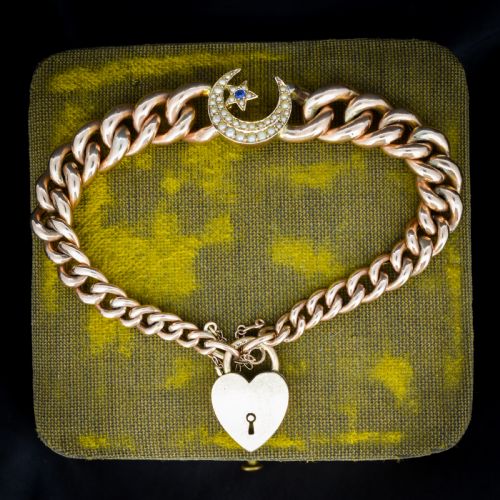
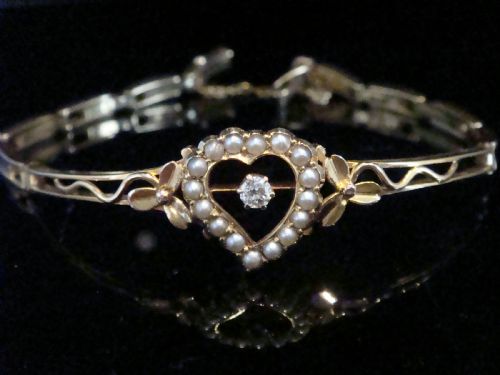
Buyers will most frequently encounter flexible curb links or rigid hinged bangles incorporating turquoise, amethyst, and citrine alongside the pearls. Many examples feature romantic motifs such as lovers' knots, double hearts, and crescent moons.
The selection extends from delicate rose gold ribbon bracelets to substantial cuff bangles housed in original boxes. These jewels reflect the sentimental craftsmanship characteristic of nineteenth-century workshop production.
Materials and Construction
Goldsmiths utilised 9ct and 15ct gold, frequently working with distinct rose or yellow hues to create curb links, snake chains, and hinged bangles. Seed pearls were meticulously drilled and secured onto fine pins or wired directly into intricate floral and geometric clusters.
Accompanying gemstones such as turquoise, amethyst, and aquamarine were often bezel-set or flush-set adjacent to the pearl work. Artisans combined these materials with silver enamel or rolled gold in specific regional styles, notably Austro-Hungarian designs.
Current listings span the Victorian, Edwardian, and 1910 periods, utilising 9ct gold, 15ct gold, silver, and seed pearls.
Evaluating Quality and Craftsmanship
Quality rests upon the uniformity and lustre of the seed pearls, alongside the structural integrity of the gold mountings. Pieces retaining every tiny pearl in its original setting without replacement indicate careful preservation.
The refinement of the metalwork, from delicate openwork lovers' knots to robust hinged bangles, separates standard production from superior artistry. Original boxes and documented provenance further distinguish exceptional survivals.
The Victorian Seed Pearl Bracelet Glossary
- Seed Pearl
- A tiny, naturally formed pearl measuring under two millimetres in diameter. These small spheres form the delicate pavé surfaces characteristic of nineteenth-century jewellery.
- Curb Link
- An interlocking chain pattern featuring flattened, uniform links. This sturdy construction provides the flexible foundation for many antique charm and gemstone bracelets.
- Lovers Knot
- A decorative motif formed by two interlaced strands tied in an overhand knot. It symbolises eternal attachment and appears frequently in Victorian gold jewellery.
- Bangle
- A rigid circular or oval bracelet that slips over the hand or opens with a hinged clasp. Antique examples often incorporate safety chains alongside secure box locks.
- Rolled Gold
- A manufacturing technique fusing a thin layer of gold to a base metal core under heat and pressure. This method provided durable access to gold jewellery for a broader market.
Victorian Seed Pearl Bracelet: Frequently Asked Questions
Can I wear a Victorian seed pearl bracelet daily?
These delicate antique pieces require mindful handling due to their age and intricate construction. Reserve them for gentle, occasional wear rather than rigorous daily activities.
Removing the bracelet before swimming, exercising, or sleeping prevents undue strain on the fine gold links and tiny pearl settings.
What does a double heart motif mean?
The double heart motif, frequently paired with seed pearls and coloured gemstones, symbolises mutual affection and romantic union. It gained immense popularity during the Victorian era.
Jewellery featuring this design was often exchanged as a token of betrothal or deep sentimental attachment among couples.
How can I tell the difference between eras?
Victorian pieces often display rich rose gold, intricate lovers' knots, and deep gem colours like amethyst and turquoise. Edwardian designs lean towards lighter yellow gold, delicate diamond accents, and refined openwork.
Maker marks, gold purity stamps, and accompanying original presentation boxes also help establish the exact period of manufacture.