





Victorian Glass Trumpet
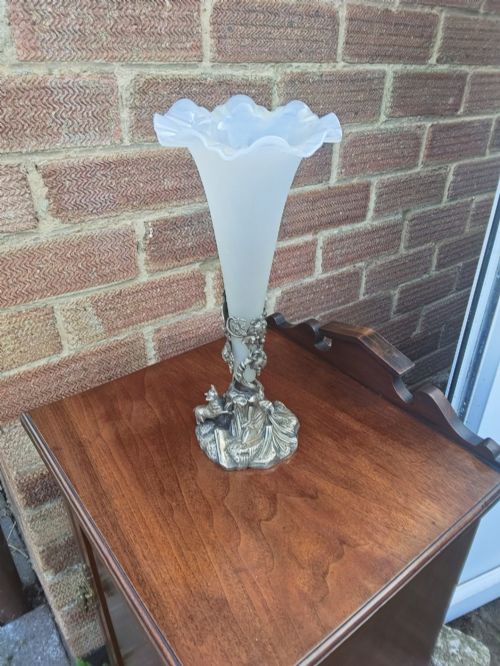
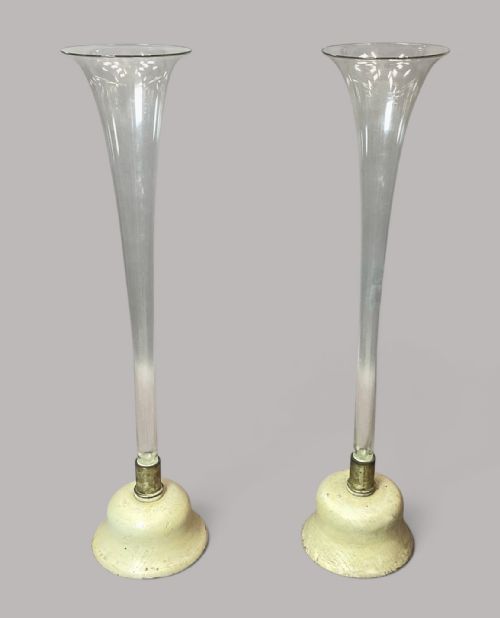
These striking victorian glass trumpet pieces bring vivid colour and height to a room, drawing the eye with their slender, flaring forms.
Victorian Glass Trumpet
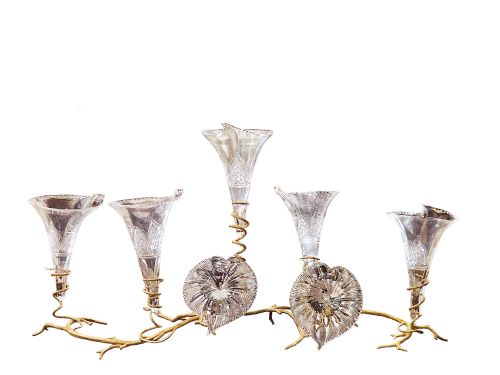
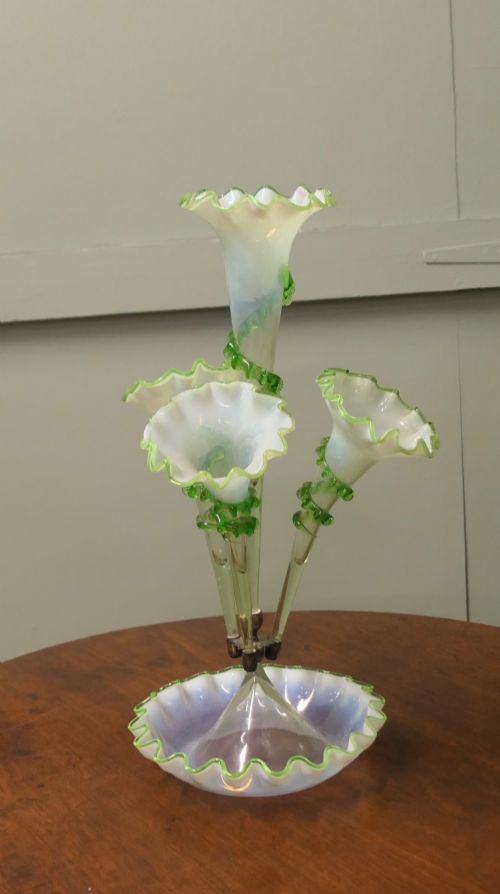
When you search for a victorian glass trumpet, you encounter tall, slender vessels designed to hold single stems or form the detachable flutes of grand table epergnes. These pieces emerge from the nineteenth century, spanning decades from the eighteen-sixties through to nineteen-hundred.
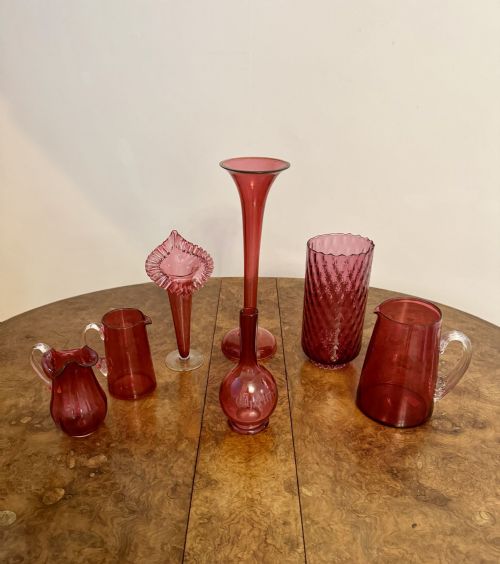
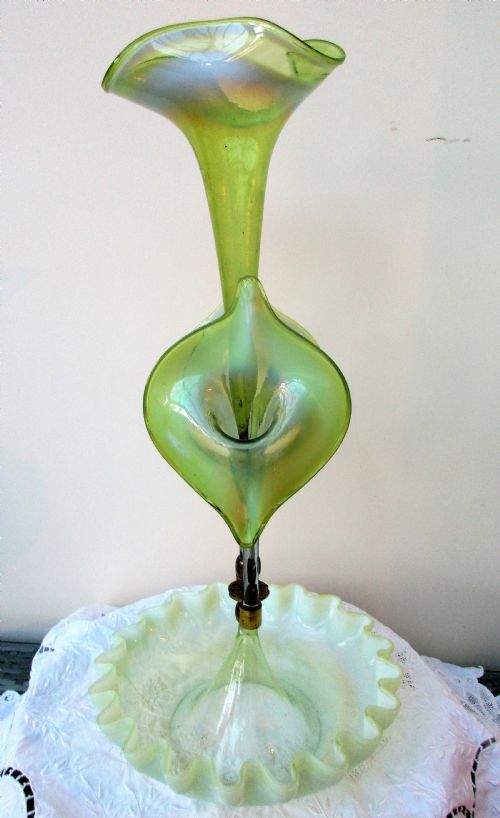
The most common form on this page is the standalone cranberry glass trumpet vase, alongside multi-trumpet epergnes and tall lily vases in pink, green, and vaseline glass. They appear as singular display items or paired sets intended for dramatic table centrepieces.
Originating largely from English and French workshops, these items reflect the exuberant decorative tastes of the Victorian era and the transition into Art Nouveau styling.
How they were made
Glassmakers utilised techniques such as hand blowing and cased glass methods, fusing layers of different coloured glass together to achieve rich tones like cranberry and opaque white. Some vessels incorporate delicate trailing, white cane decoration, or engraving and gilding upon the surface.
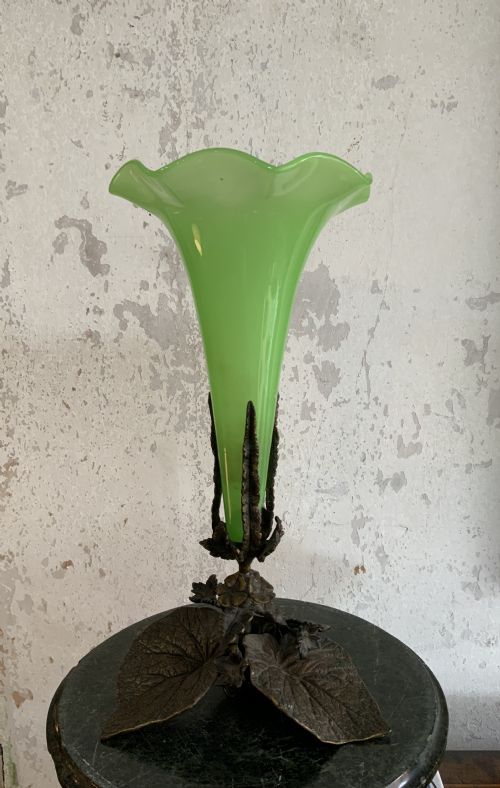
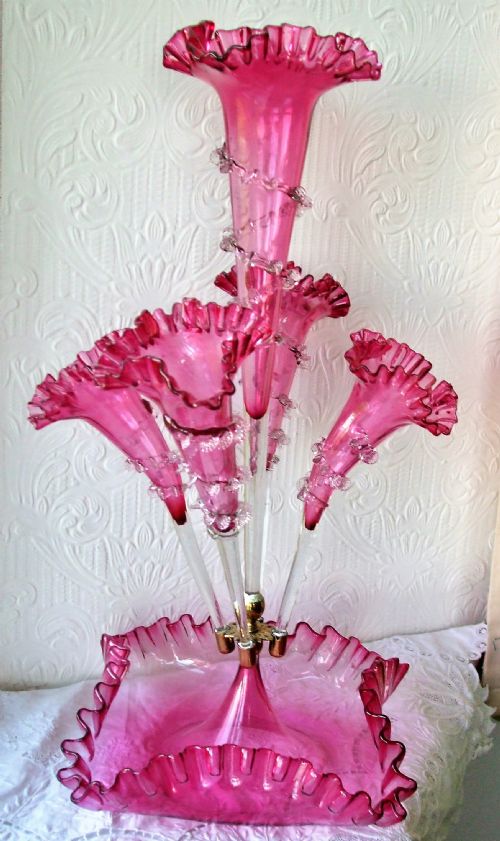
Many trumpets combine glass components with metal mounts, incorporating brass, bronze, silver, or white metal to support the fragile blown glass flutes. Epergnes frequently mount these glass trumpets into central bowls or frames alongside mirrors and carved wooden bases.
Victorian Glass Trumpet Retail Price Guide 2026
Typical asking prices for victorian glass trumpet among the pieces listed under this phrase on Sellingantiques today, from the lower quarter to the upper quarter. They describe what is for sale here now, not the wider market.
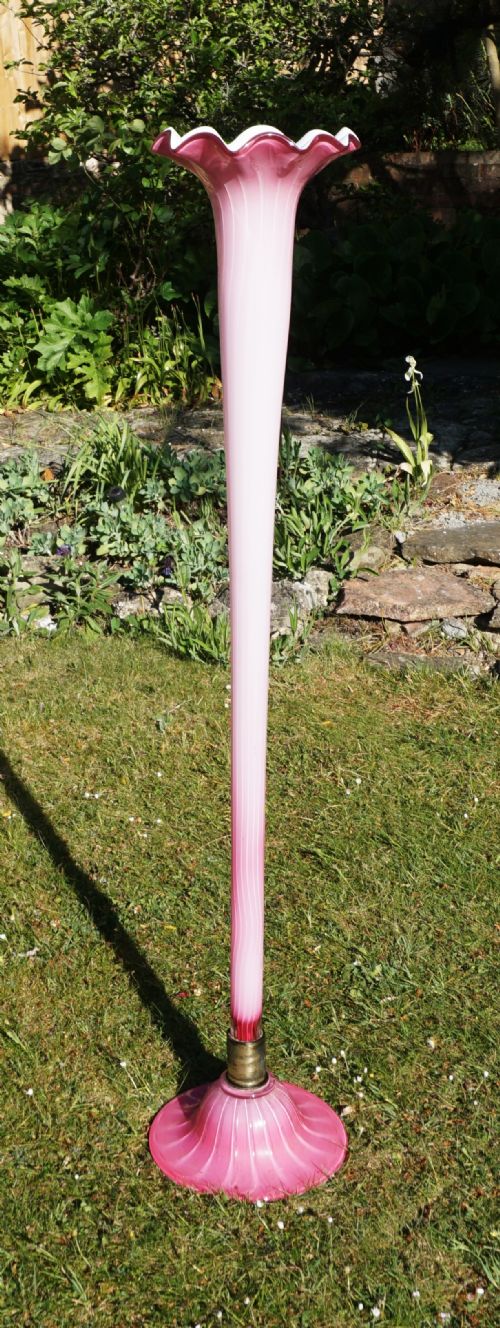
Some nineteenth-century trumpets stretch forty inches tall, demanding remarkably high ceilings and steady table manners.
What varies in quality
Quality rests upon the depth and saturation of the glass colour, particularly in cranberry and vaseline varieties, alongside the crispness of any applied trails or engraving. Heavier, more substantial metal mounts and bases indicate superior craftsmanship.
The complexity of the form dictates distinction, separating simple single vases from elaborate multi-trumpet epergnes featuring baccarat crystal or intricate silver work.
Josiah Williams And Co·Powell Or Nazeing·Baccarat
The Victorian Glass Trumpet Glossary
- Cranberry glass
- A rich red-pink transparent glass coloured with gold chloride during the melting process. It remains a defining hallmark of Victorian decorative glassware.
- Epergne
- A large table centrepiece featuring a central bowl with multiple detachable arms or trumpet vases for holding fruit, sweets, or flowers.
- Vaseline glass
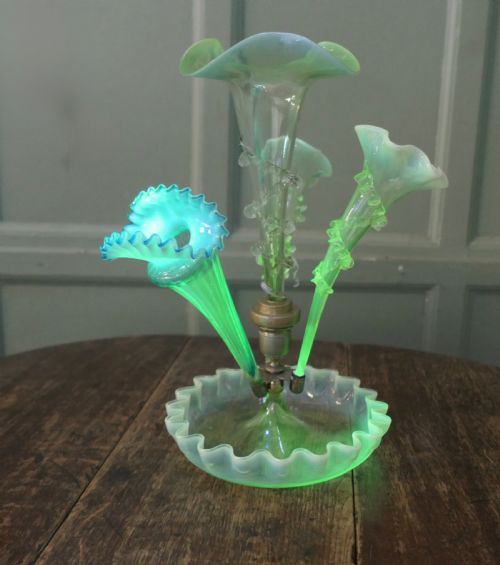
- A yellow-green transparent glass containing uranium dioxide that glows under ultraviolet light. It appears frequently in nineteenth-century decorative pieces.
- Lily vase
- A tall, slender glass vase with a flared rim mimicking the shape of a lily flower. These often reach significant heights on table settings.
- Cased glass
- A vessel comprising two or more distinct layers of different coloured glass fused together while hot. This technique allows exterior engraving to reveal contrasting base colours.
Victorian Glass Trumpet: Frequently Asked Questions
What is a glass epergne?
An epergne is a large, multi-tiered table centrepiece designed to hold fruit or sweetmeats, featuring several detachable glass trumpet vases radiating outwards.
These pieces served as dramatic table decorations during formal Victorian dining occasions, combining utility with visual display.
How do I identify cranberry glass?
Cranberry glass displays a distinct translucent pinkish-red hue derived from gold content in the glass mixture.
It appears frequently in nineteenth-century trumpet vases and epergnes, often paired with clear glass or silver mounts.
What is vaseline glass?
Vaseline glass is a distinctive yellow-green transparent material that owes its pale colour and greenish glow to uranium content.
Victorian makers utilised this glass for posy vases and epergne trumpets to achieve striking optical effects under daylight.
How were these vases displayed?
These vessels stood as table centrepieces, mantelpiece ornaments, or paired decorative items flanking mirrors and furniture.
Their height and bright colour made them focal points in Victorian interiors, frequently holding single stems or lily blooms.