



Victorian Glass Paperweight
A victorian glass paperweight is a miniature dome of colour and air, built to anchor your papers and catch the light.
Victorian Glass Paperweight
When you search for a victorian glass paperweight, you encounter small desk accessories shaped as solid domes, heavy dumps, or flowerpots designed to hold down loose sheets. These objects originate from the nineteenth century, spanning decades from the middle years through to the late Victorian period.
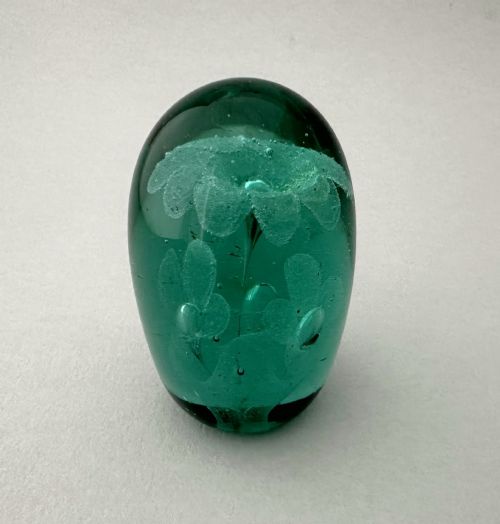
The versions you meet most often on this page take the form of heavy green glass dumps enclosing internal floral or thistle patterns. Alongside these sturdy dumps, you find French factory pieces, English cane work, and novelty items incorporating sulphide motifs.
Makers across England and continental Europe produced these decorative objects using distinct regional methods, resulting in varied weights and distinct internal arrangements. Collectors select them for their density, optical clarity, and the intricacy of their encased designs.
Materials and construction
Glassmakers created these heavy objects using hand-blown glass, crystal, and bottle-glass, shaping the molten material into thick domes. This dense medium acted as a lens, magnifying the decorative elements suspended within the core.
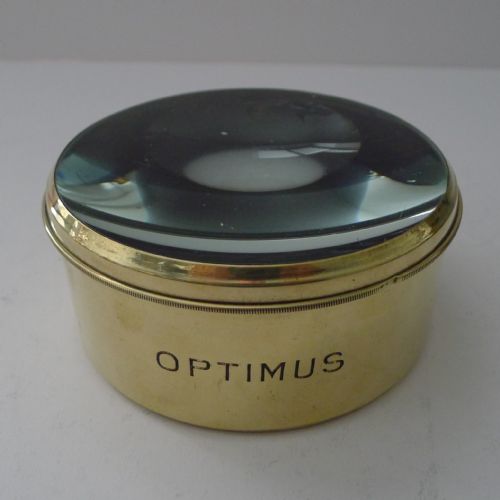
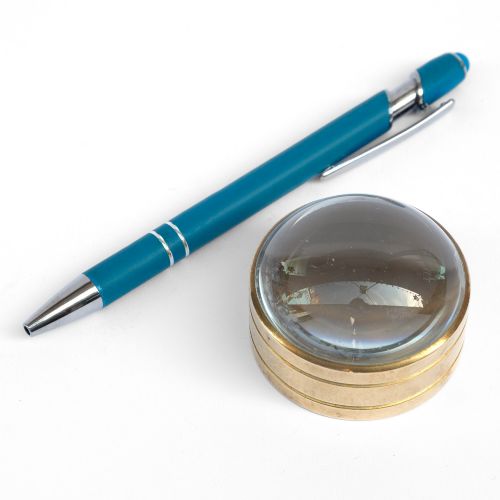
Artisans incorporated cane glass, coloured glass, and sulphide plaques to build up internal patterns like flowers, pansies, and thistles. Some pieces received additional mounts of brass or silver to serve double duties as inkwells or magnifying lenses.
Victorian Glass Paperweight Retail Price Guide 2026
Typical asking prices for victorian glass paperweight among the pieces listed under this phrase on Sellingantiques today, from the lower quarter to the upper quarter. They describe what is for sale here now, not the wider market.
Listings feature items from the mid-nineteenth century onward, incorporating glass, brass, ceramic, and crystal across desk accessories.
Markers of quality
Quality rests upon the clarity of the surrounding glass and the precision of the internal cane work or sulphide placement. Superior examples display minimal internal bubbling and sharp, clean outlines within the floral or geometric motifs.
The complexity of the interior design dictates the standing of the piece, moving from simple single-flower dumps to multi-layered millefiori arrangements. Maker attribution and historical factory origin also elevate certain items far above standard domestic wares.
St. Louis·Baccarat·Webb's
The Victorian Glass Paperweight Glossary
- Sulphide
- A small ceramic cameo encased within clear glass, appearing silvery and reflective. These motifs often depict thistles, roses, or historical figures.
- Millefiori
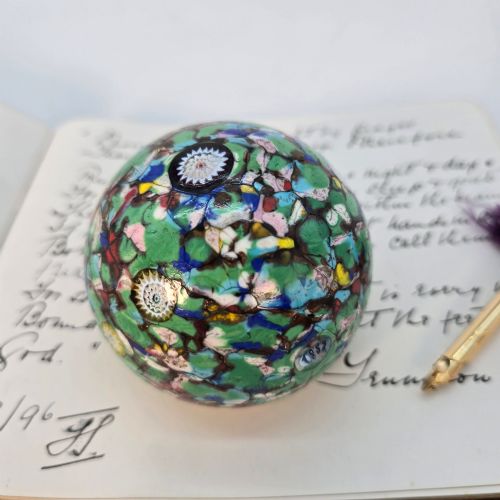
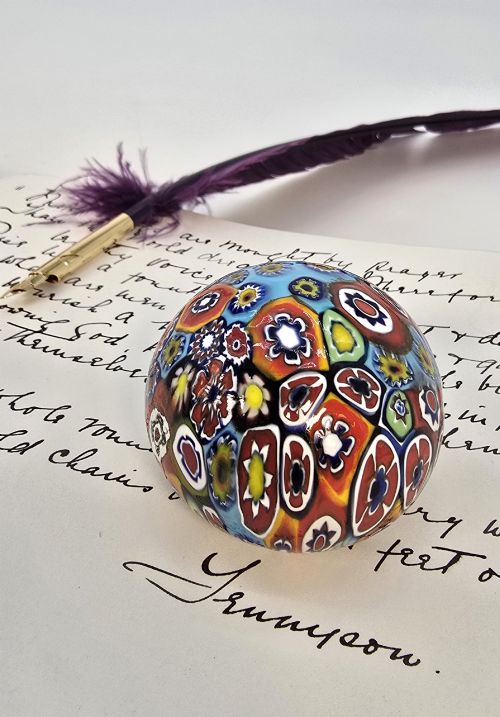
- Multicoloured glass canes sliced across to reveal starry or floral patterns. Makers arranged these slices tightly inside the molten mass before sealing them.
- Dump
- A heavy, thick-walled glass paperweight typically blown from dark green or amethyst bottle-glass. These utilitarian items often contain bubbles or simple internal flowers.
- Cane glass
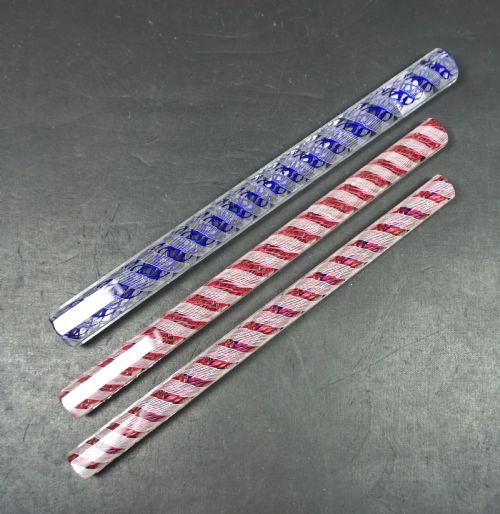
- Thin rods of coloured glass fused together and drawn out before being cut into sections. They form the building blocks for intricate internal designs.
- Facet cut
- Polished flat planes ground onto the exterior surface of a glass dome. These cuts create internal reflections and alter how light passes through the piece.
Victorian Glass Paperweight: Frequently Asked Questions
How do I spot a real Victorian piece?
Examine the base for a pontil mark where the glass rod was snapped off during manufacture, which should show appropriate wear for its age.
Check the weight and the optical distortion of the glass, as nineteenth-century metal formulas differ noticeably from modern substitutes.
What is a glass dump?
A dump is a heavy, solid paperweight made from surplus molten glass at the end of a working day. Workers often used dark green bottle-glass for these practical desk weights.
Many dumps contain trapped air bubbles arranged as flowers or plants, created by pressing instruments into the hot base.
How should I display them?
Place your paperweight near a window or beneath a focused lamp so that natural light passes through the dome. The curved glass acts as a magnifying lens, illuminating the internal colours and canes.
Keep them away from direct heat sources and edge surfaces where heavy glass might roll or slide off.
What are sulphides?
Sulphides are small relief plaques made from a white earthenware paste that tolerate high temperatures without melting. When encased in molten glass, they capture a silvery, metallic sheen.
Victorian makers frequently used this technique to depict botanical subjects like roses and thistles inside heavy glass weights.