
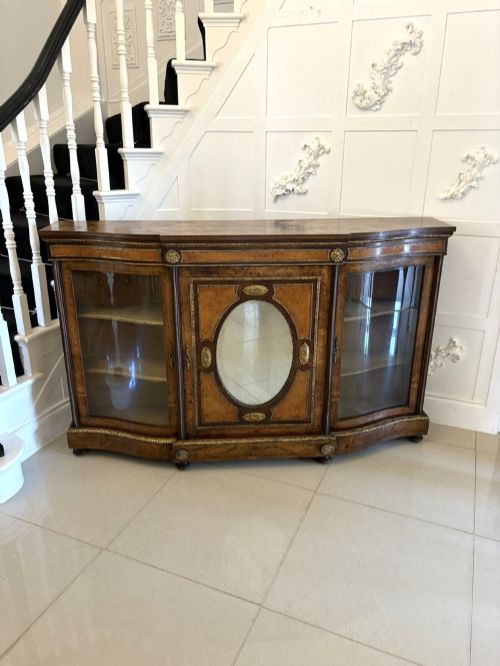
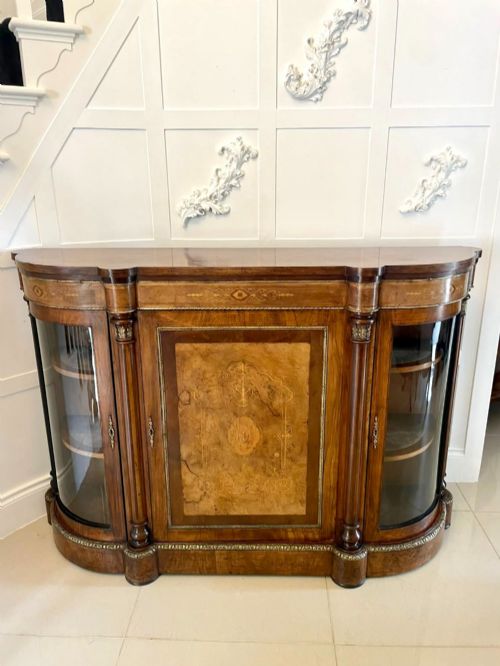
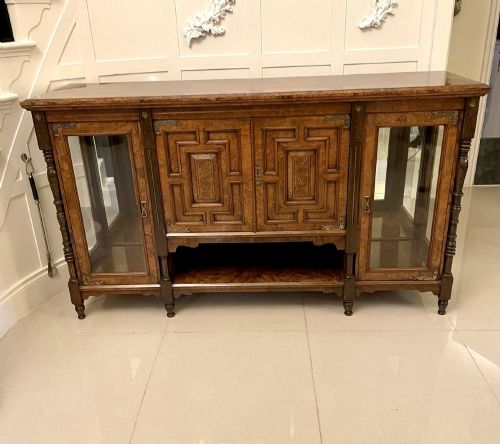
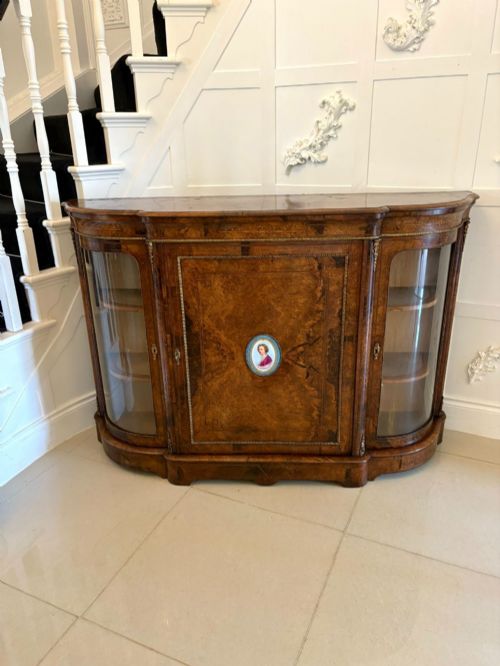


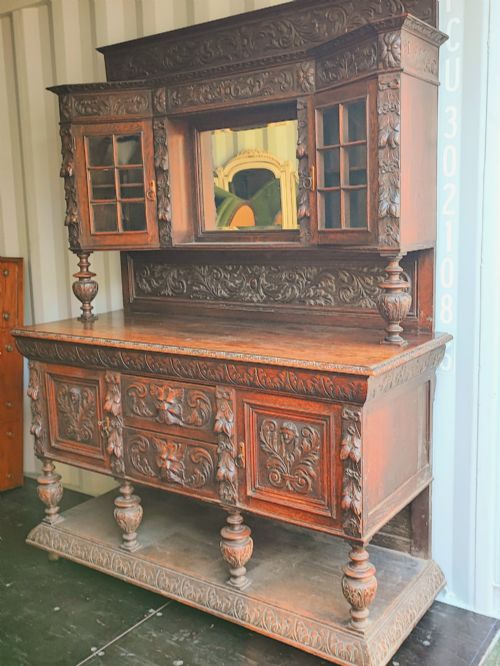
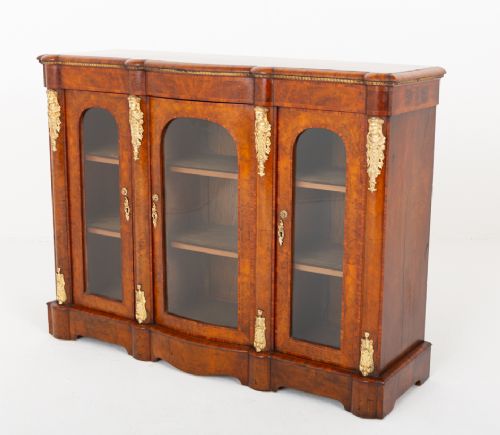
Victorian Glass Display Sideboard
A victorian glass display sideboard brings architectural presence to a room, offering polished timber and glazed compartments designed to showcase prized collections.
Victorian Glass Display Sideboard
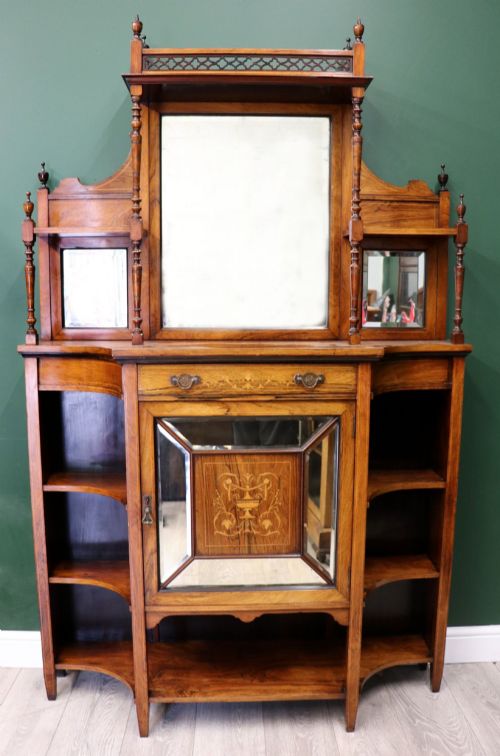
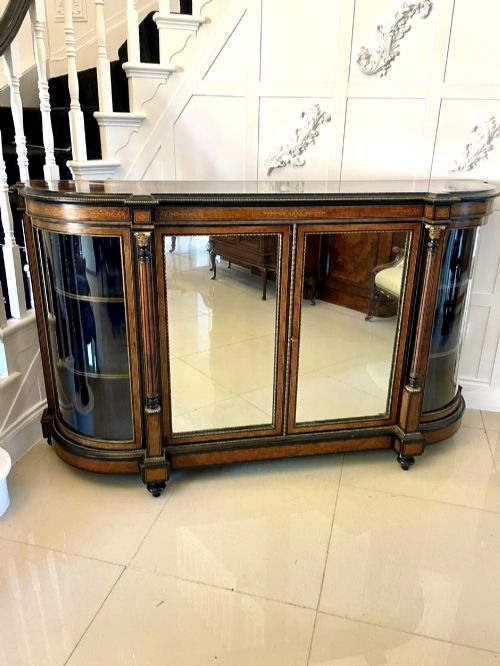
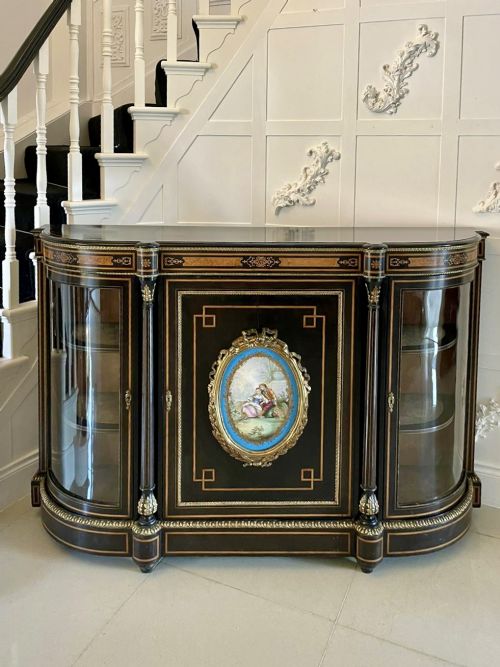
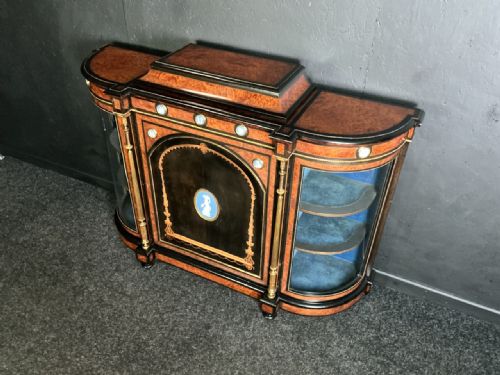
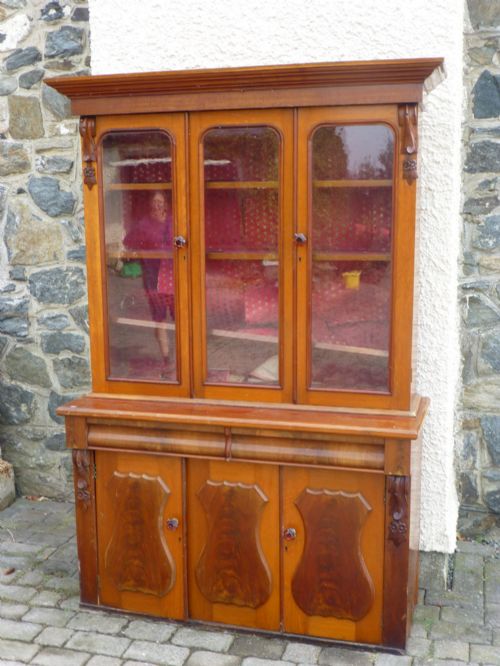
A victorian glass display sideboard generally appears as a credenza, pier cabinet, or mirror-back side cabinet produced across the nineteenth century. These low-profile storage pieces combine glazed central or flanking doors with open display surfaces, serving formal reception rooms and parlours.
Burr walnut dominates the selection, frequently paired with ebonised wood, mahogany, or oak across various revival styles including Aesthetic Movement and French Revival. Pieces span decades from the mid-nineteenth century through to nineteen hundred, showing distinct shifts in decorative restraint and timber selection.
Materials and Technique
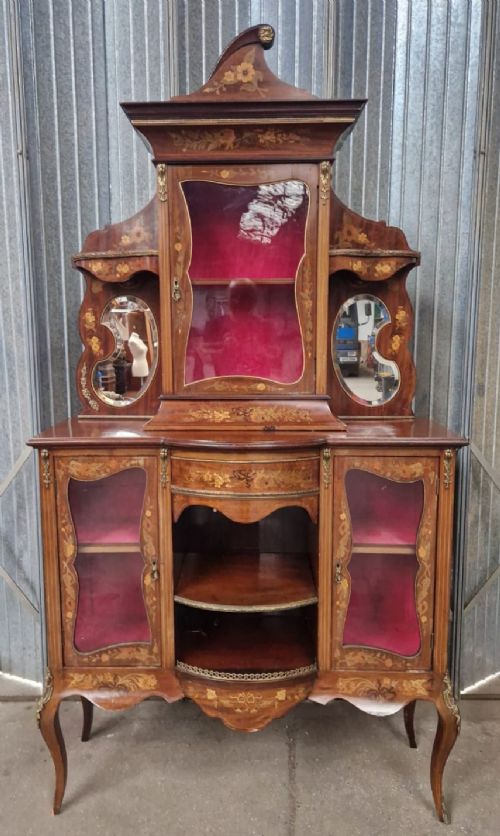
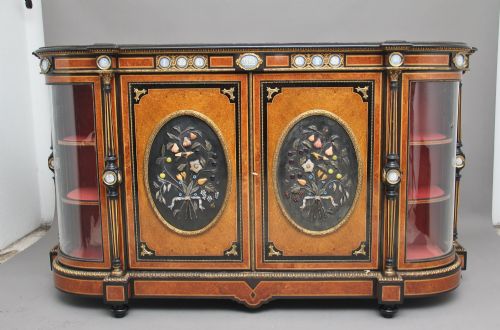
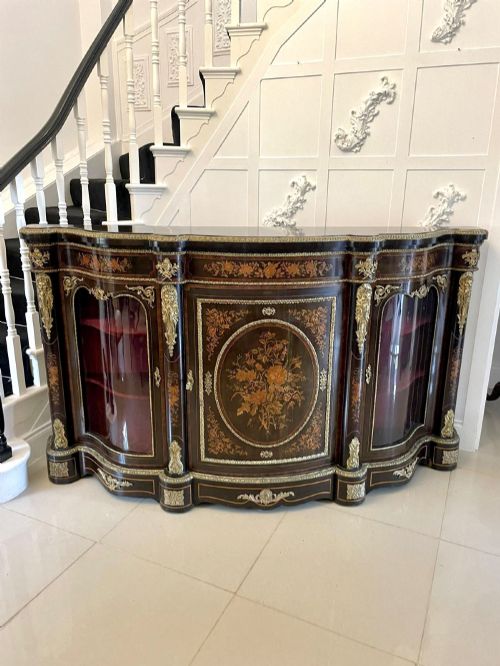
Cabinet makers utilised figured timbers such as burr walnut, amboyna, and burr yew as veneers over solid secondary woods, laying intricate boxwood and floral marquetry inlay across curved surfaces. Ormolu mounts cast in bronze provide gilded decorative accents around glazed doors and plinths.
Glass panels are set within shaped wooden frames or secured behind glazed central doors, whilst marble tops and mirrored backs appear on specific exhibition pieces. Ebonised finishes and Boulle marquetry add tonal contrast, reflecting popular continental influences of the period.
Listings demonstrate cabinet production ranging from eighteen fifty through to nineteen hundred, spanning mid-Victorian walnut credenzas to late Arts and Crafts side cabinets.
Distinctions in Execution
Quality rests upon the selection of timber veneers and the precision of the marquetry work, where finer pieces display intricate floral motifs and matched grain patterns across serpentine fronts. The weight and chasing of ormolu mounts further separate standard production from exhibition pieces.
Structural complexity, such as breakfront timber carcasses and curved glass panels, indicates higher ambition in the workshop. The integration of porcelain plaques and carved architectural details distinguishes standard utility cabinets from elaborate salon credenzas.
Liberty & Co.·Maison Gagneau
The Victorian Glass Display Sideboard Glossary
- Credenza
- A low cabinet featuring glazed display doors flanked by cupboards, originating as a formal dining room or parlour piece during the nineteenth century. It frequently incorporates ormolu mounts and marquetry inlay.
- Ormolu
- Gilded bronze mounts applied to cabinet furniture for decorative emphasis. These metal elements outline panels and highlight architectural corners.
- Marquetry
- Inlaid wood veneers arranged to form pictorial or floral patterns across flat and curved surfaces. Artisans cut contrasting timbers like boxwood into the primary veneer.
- Pier Cabinet
- A narrow display cabinet designed to fit wall spaces between windows. These upright pieces rely on glazed doors to protect porcelain and ornaments.
- Boulle
- An intricate marquetry technique combining tortoiseshell and brass inlay. It appears on ebonised timber carcasses.
Victorian Glass Display Sideboard: Frequently Asked Questions
Where did these cabinets sit in a home?
These pieces found their place principally in the formal drawing room or dining parlour, where hosts displayed fine ceramics and glassware behind glass panels. Their low profile allowed light to pass freely across the room.
They served both as storage for tableware or linens and as prominent display surfaces for decorative ornaments and clocks.
How do walnut and ebonised pieces differ?
Walnut versions rely on the warm, figured grain of burr timber combined with boxwood inlay to create rich natural patterns across the doors and curved front panels. They reflect a traditional aesthetic popular throughout the Victorian era.
Ebonised cabinets substitute dark painted or stained finishes to imitate ebony, frequently providing a stark backdrop for gilt ormolu mounts and Boulle brass work influenced by French design.
What is the difference between a credenza and a pier cabinet?
Credenzas provide a wide, low silhouette featuring a central glazed door flanked by matching side cupboards or display compartments. They dominate long wall spaces in reception rooms.
Pier cabinets stand taller and narrower, designed specifically to occupy wall spaces between architectural windows. They typically feature a single glazed door protecting tiered interior shelves.
How should I care for timber and ormolu?
Polished timber surfaces require occasional application of traditional beeswax to nourish the veneer and maintain a soft sheen without creating buildup. Avoid synthetic sprays that can degrade historic polishes over time.
Ormolu mounts benefit from gentle dusting with a soft, dry brush to prevent dirt accumulation within the cast crevices. Moisture should be kept away from both gilt metal and delicate wood veneers.