




Victorian Glass Case Bird
When you search for victorian glass case bird, you enter a parlour world of preserved plumages and quiet domestic dioramas designed to bring wild nature indoors.
Victorian Glass Case Bird
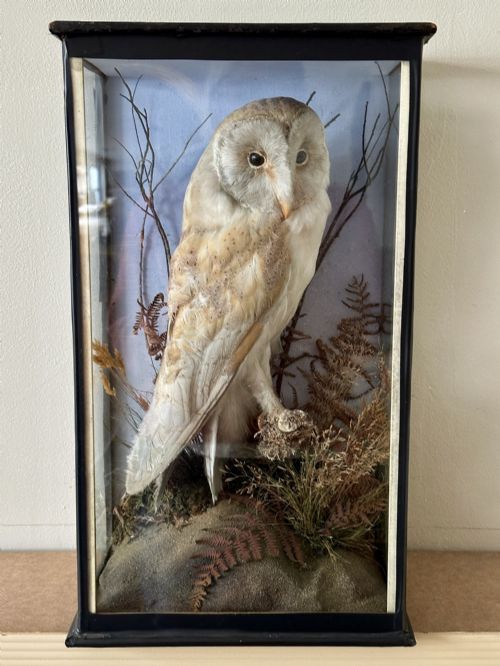
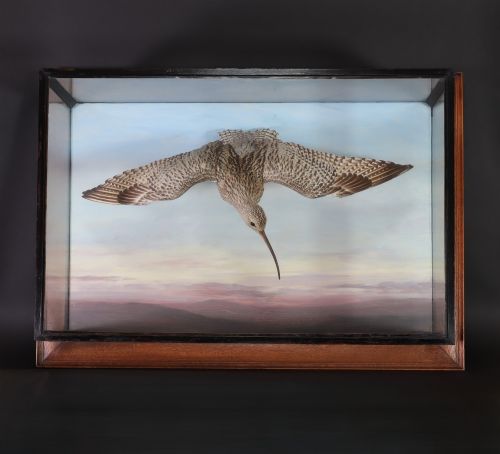
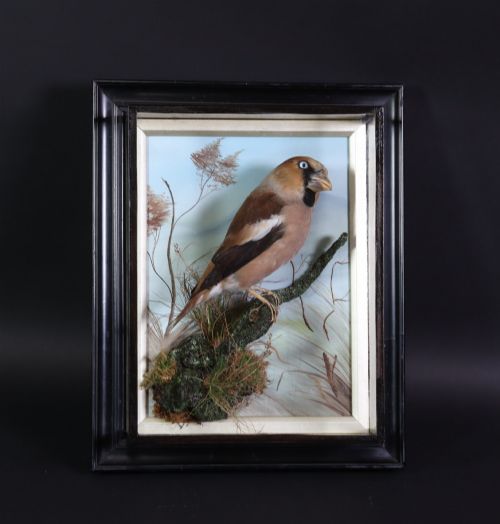
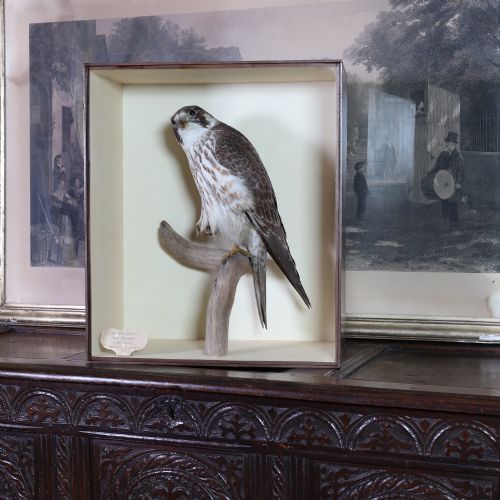
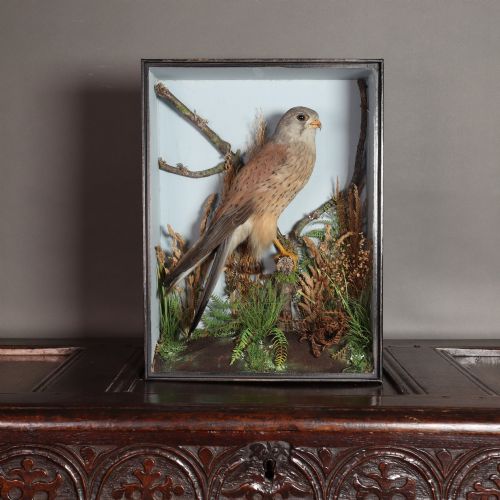
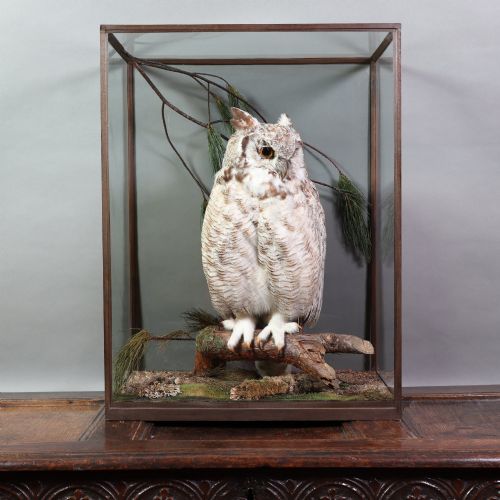
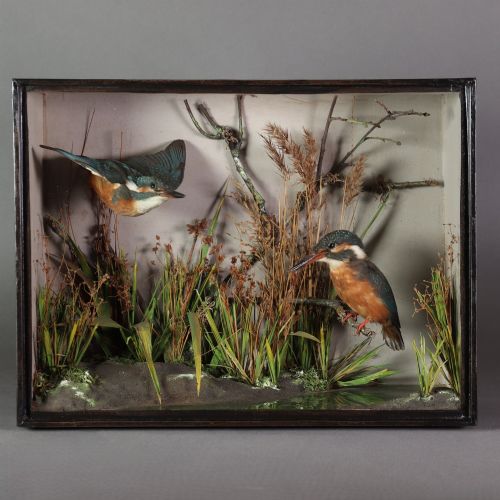
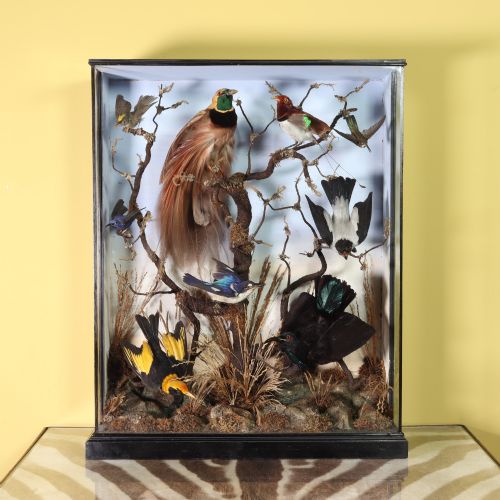
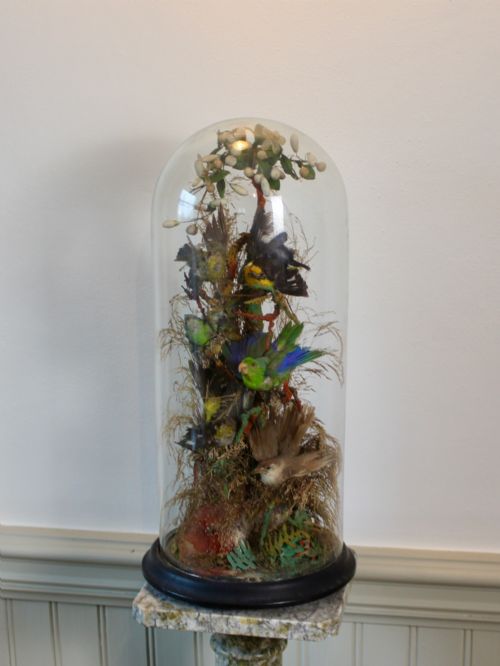
A victorian glass case bird brings the natural history enthusiasm of the nineteenth century directly into the home through carefully preserved specimens mounted behind protective glass. You encounter these creatures arranged either singly or in intricate multi-species compositions inside glass domes, wall cases, or flat-sided enclosures.
The specimens on this page span from the Victorian era into the Edwardian period, recording both British garden wildlife and exotic imports from New Guinea, South America, and Australia. Makers placed them within recreated habitats utilising natural flora, moss, and paper to mimic the outdoors.
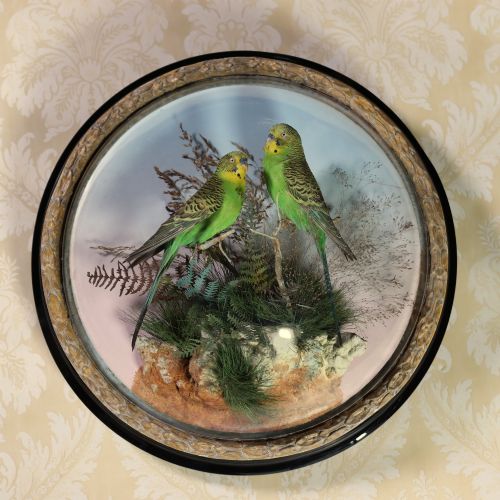
The forms range from wall-mounted domes housing budgerigars or owls to substantial cases containing herons, moorhens, and colourful mixed compositions. Each Victorian glass case bird survives as a distinct testament to taxidermy skill and nineteenth-century interior display habits.
Materials and Construction
Taxidermists built these displays around preserved animal skins supported on wire and plaster frames, arranging the feathers by hand to recreate lifelike postures. They housed the finished specimens within timber frames, often utilising ebonised wood for contrast, and sealed them beneath blown or sheet glass to protect the delicate plumage from dust and moisture.
The internal landscape typically relied on foraged elements such as real moss, dried flora, and painted paper backgrounds to establish a convincing illusion of a natural habitat. Makers mounted snow scenes or woodland floors using plaster and sand, fixing the birds securely to internal perches.
Victorian Glass Case Bird Retail Price Guide 2026
Typical asking prices for victorian glass case bird among the pieces listed under this phrase on Sellingantiques today, from the lower quarter to the upper quarter. They describe what is for sale here now, not the wider market.
Listings feature glass, wood, feathers, moss, paper, ebonised wood, flora, and plaster across the Victorian and Edwardian periods.
Assessing Quality and Execution
The distinction between ordinary taxidermy and masterwork pieces rests heavily on the anatomical accuracy of the bird and the naturalism of its pose. Top-tier workshops achieved lifelike posture and expression, whereas lesser examples suffer from rigid postures and stiff, unconvincing feather arrangements.
The ambition of the internal arrangement also separates the tiers, with major makers building complex multi-bird compositions complete with detailed simulated foliage and painted backgrounds. The quality of the surrounding woodwork and the clarity of the original glass enclosure further determine the standing of the piece.
P. Spicer of Leamington Spa·Cullingford of Durham·Rowland Ward Ltd·T. E. Gunn·James Gardner
The Victorian Glass Case Bird Glossary
- Dome
- A blown glass bell jar used to cover and protect taxidermy specimens. These sat upon circular wooden bases to seal the interior.
- Ebonised wood
- Timber treated with a dark stain or finish to imitate ebony. This material was frequently used for Victorian display bases and case frames.
- Taxidermy
- The art of preparing, stuffing, and mounting the skins of animals for display. Victorian practitioners elevated this craft to a fine art.
- Flat-sided dome
- A glass enclosure with flattened sides that allowed for wider viewing angles without the optical distortion of a round bell jar.
- Plumage
- The layer of feathers covering a bird. Preserving its colour and natural sheen was the primary technical challenge for nineteenth-century mounters.
Victorian Glass Case Bird: Frequently Asked Questions
Where should I place my case?
Keep your display away from direct sunlight and strong heat sources. Ultraviolet light causes historic plumage to fade rapidly over time.
Stable room temperatures prevent the old timber and paper backing from warping or cracking. A quiet hallway or a study provides an ideal setting.
Are these birds native species?
The listings include both familiar British garden birds and exotic specimens from distant continents. Nineteenth-century collectors prized colourful parrots and birds of paradise alongside native kingfishers and owls.
This mix reflects the global reach of natural history collecting during the Victorian era. Each specimen records what travellers and explorers brought back to British workshops.
How do I date these pieces?
Look closely at the framing materials, the style of the wooden base, and any trade labels pasted underneath. Victorian and Edwardian makers often signed their work on paper tags inside the case.
Construction methods such as hand-blown glass versus later sheet glass also offer strong clues to the decade of manufacture. Compare these details against known working dates of documented taxidermists.