


Victorian Gilt Chairs
Victorian gilt chairs bring dramatic shine and carved presence into a room, offering both historic seating and rich visual texture.
Victorian Gilt Chairs
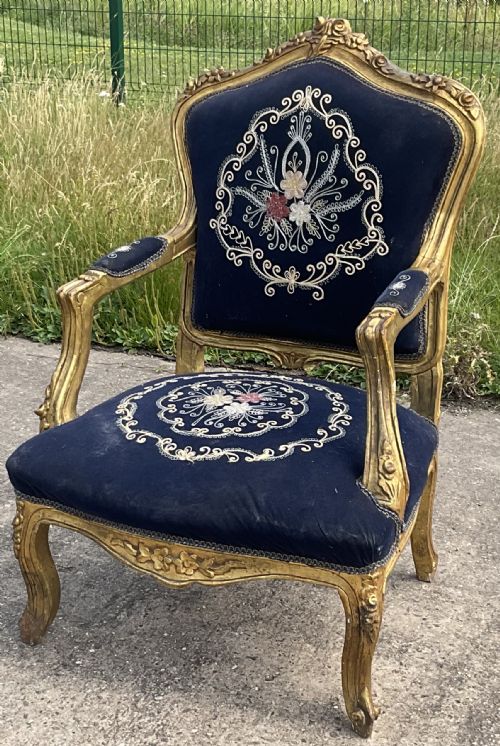
Victorian gilt chairs encompass a diverse group of seating furniture produced during the nineteenth century, featuring gold leaf or metallic paint applied to wood. Buyers seeking this phrase encounter various seating forms designed for parlours, salons and bedrooms.
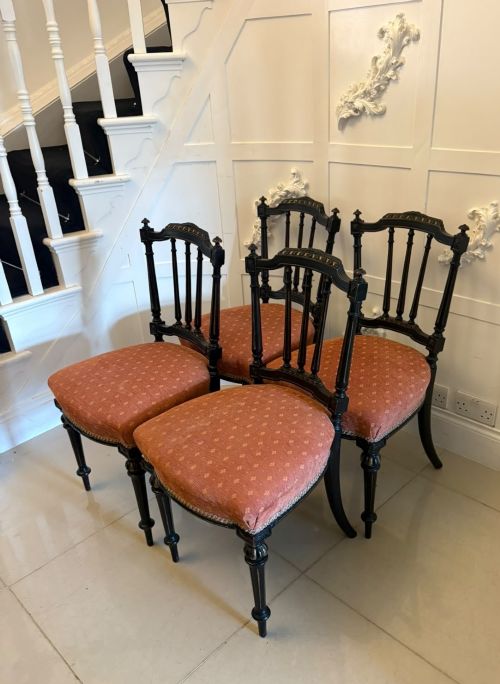
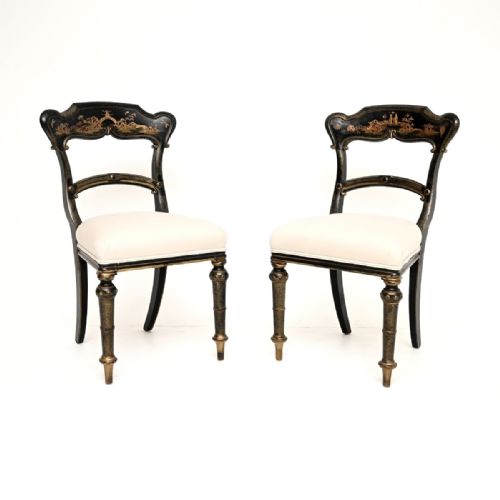
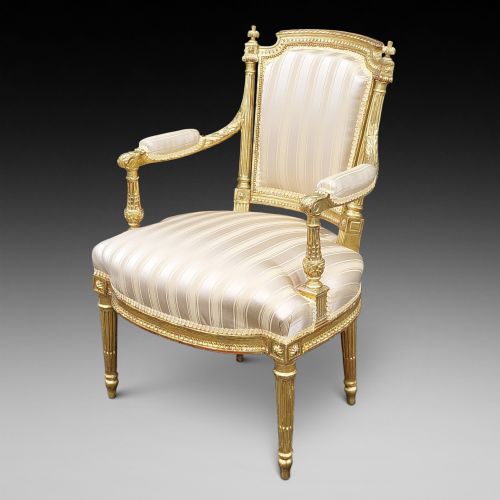
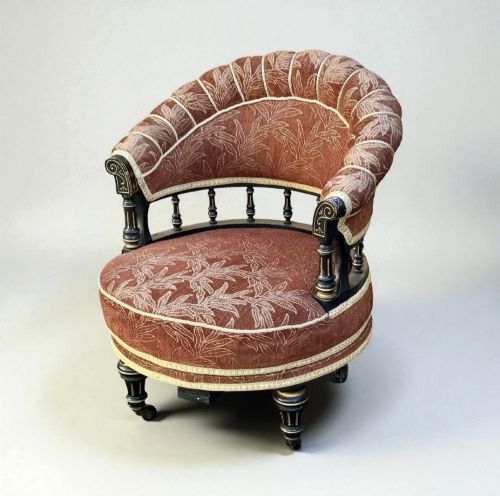
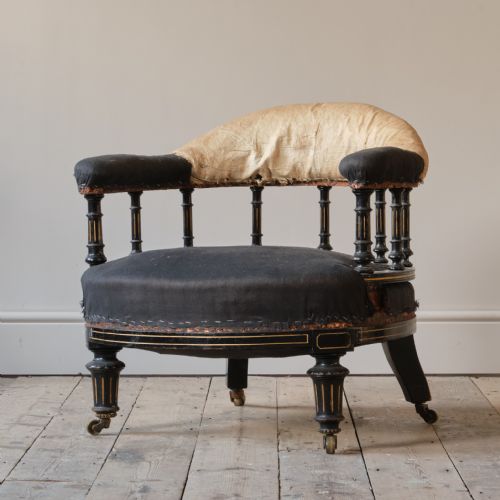
The selection ranges from grand giltwood armchairs and low nursing chairs to ebonised dining chairs highlighted with gilding, alongside papier-mâché and lacquer pieces. French revival styles and Aesthetic Movement designs appear frequently among the nineteenth-century stock.
Most examples date from the mid to late nineteenth century, reflecting eclectic Victorian revivals such as Louis XVI, Rococo and Chinoiserie. These chairs function equally well as decorative accents or as occasional seating in traditional and modern interiors.
How they were made
Maker's workshops built these frames predominantly from hardwoods like beech, rosewood and walnut, often applying ebonised finishes to contrast with gold leaf. Giltwood execution involved laying thin sheets of gold leaf over a prepared gesso and bole ground on carved wooden frames.
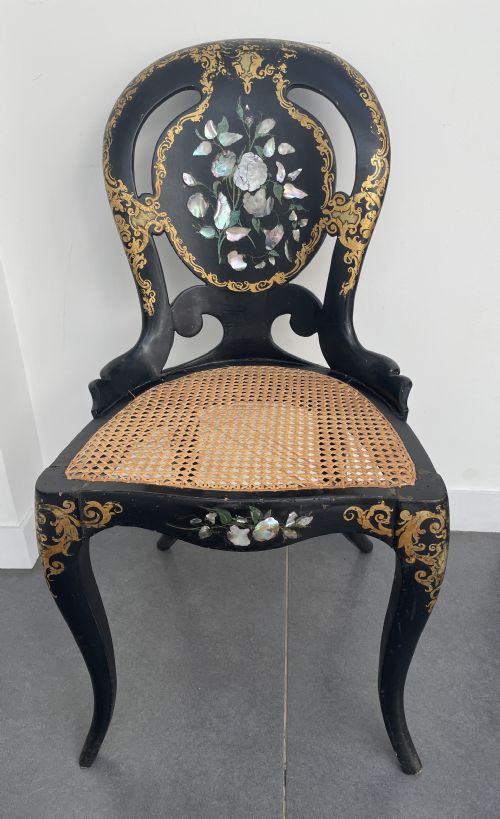
Upholstery methods utilised traditional stuffing materials and springs covered in silks, velvets, tapestry or leather, secured with decorative brass or iron tacks. Papier-mâché components were moulded and lacquered, frequently incorporating inlaid mother-of-pearl details.
Several miniature chairs made for children survive from the nineteenth century, proving that Victorians believed toddlers deserved gilded seats too.
What varies in quality
Quality in Victorian gilt chairs rests primarily on the depth and crispness of the wood carving and the integrity of the gilding application. Superior pieces display hand-carved relief work rather than shallow moulding, with gold leaf retaining its luminous warmth rather than turning flat or brassy.
The structural robustness of the joinery and the authenticity of the original upholstery materials also dictate distinction. Pieces bearing maker attributions or stamps from established cabinet makers demonstrate higher workshop pedigree.
Gillows·Lamb of Manchester·Holland and Sons
The Victorian Gilt Chairs Glossary
- Giltwood
- Timber coated with gold leaf over a prepared gesso base. This traditional finish gives nineteenth-century salon furniture its characteristic warm metallic brilliance.
- Ebonised
- Wood stained or painted black to imitate ebony. Cabinet makers frequently combined this dark finish with gilt highlights during the Aesthetic Movement.
- Fauteuil
- An open-framed armchair with upholstered back and armrests, originating in France. Victorian makers produced many revival versions of this classic seating form.
- Nursing chair
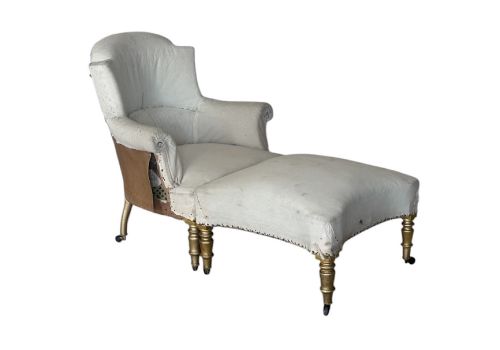
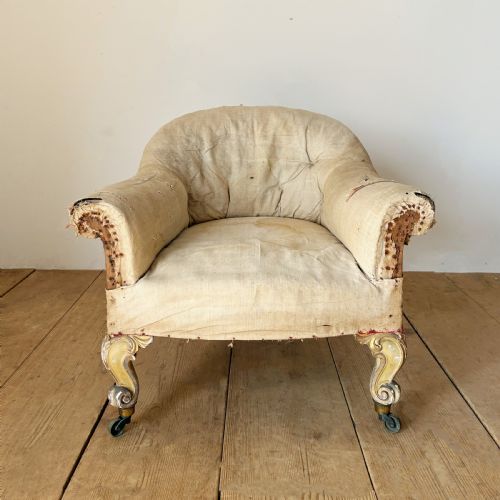
- A low-seated chair designed for comfort and ease of tending to infants or sewing. These pieces often feature sprung upholstery and decorative gilt frames.
- Papier-mâché
- A composite material made from paper pulp mixed with glue and resin, pressed into moulds. Victorian manufacturers used it for lightweight, highly decorated chairs inlaid with mother-of-pearl.
Victorian Gilt Chairs: Frequently Asked Questions
Where were Victorian gilt chairs used in the home?
These decorative seats primarily furnished formal spaces such as drawing rooms, parlours and music rooms where guests were received.
Smaller variants like nursing chairs and bedroom chairs were placed in private chambers to provide comfortable, elegant seating.
How do I care for antique giltwood?
Keep gilt chairs away from direct sunlight and damp environments to protect the fragile gold leaf and underlying gesso layers from flaking.
Dust gently with a dry, soft feather duster and avoid applying modern liquid polishes or chemical cleaners to the gilded surfaces.
Can these chairs be used daily?
Many nineteenth-century chairs remain sturdy enough for regular sitting, though delicate papier-mâché or heavily carved salon pieces suit lighter occasional use.
Checking the stability of the frame and modern internal webbing helps determine whether a chair can safely support everyday weight.
How do I distinguish revival styles?
Rococo Revival pieces display asymmetrical curves, naturalistic floral carvings and elaborate scrollwork typical of mid-century excess.
Louis XVI revival items feature straighter neoclassical lines, fluted legs and oval backs reminiscent of eighteenth-century French royal furniture.